Views: 222 Author: Rebecca Publish Time: 2026-02-11 Origin: Site
Content Menu
● What Is CNC Machining Precision?
● How Does Precise CNC Machining Work?
● Typical CNC Tolerances vs Other Processes
● Precision CNC Milling: How Accurate Can It Be?
● Precision CNC Turning: Strength in Cylindrical Accuracy
● CNC vs Manual Machining: Why CNC Is More Precise
● CNC vs 3D Printing: Accuracy and Surface Finish
● CNC vs Injection Molding: Tolerances at Volume
● Ultra‑Precision and Micro‑Manufacturing: When Standard CNC Is Not Enough
● Practical Design Tips to Achieve High CNC Precision
● How to Choose the Right Manufacturing Method for Your Tolerances
● Work With a Precision‑Focused OEM Partner
● FAQs About CNC Machining Precision
>> FAQ 1: How precise is CNC machining compared to 3D printing?
>> FAQ 2: What tolerance can CNC machining realistically achieve in production?
>> FAQ 3: Is injection molding more accurate than CNC machining?
>> FAQ 4: How does material choice affect CNC precision?
>> FAQ 5: How can I design parts to take advantage of CNC precision?
CNC machining is one of the most precise mainstream manufacturing methods, routinely achieving tighter tolerances and better repeatability than traditional machining, 3D printing, and standard injection molding for complex metal and plastic parts. For OEM buyers, engineers, and overseas brands, understanding how CNC precision compares with other processes is essential to choosing the right production method, managing quality risk, and controlling cost.

In manufacturing, “precision” usually refers to how closely produced parts match their nominal dimensions and how consistently those dimensions are repeated across many pieces. Two key concepts matter most:
- Tolerance: The allowable deviation from the nominal dimension, for example ±0.01 mm, defined on engineering drawings and controlled by process capability.
- Repeatability: The ability to produce the same dimension again and again across a batch, critical for assemblies with tight fits and for interchangeable spare parts.
Modern CNC machines can commonly hold tolerances in the range of ±0.025 mm to ±0.1 mm for many metals and plastics, depending on part geometry, setup, and material. For high‑end installations with optimized fixturing and environmental control, tolerances tighter than ±0.01 mm are achievable on critical features, especially for aerospace, medical, and precision tooling components.
CNC machining is a subtractive process where computer-controlled tools remove material from a solid block or bar to create the final geometry. A typical workflow includes:
1. CAD model and engineering drawing with defined tolerances.
2. CAM programming to generate toolpaths that respect those tolerances and tool limits.
3. Machine setup, fixturing, and tool selection matched to the material and feature sizes.
4. Controlled cutting with closed‑loop feedback and compensation strategies.
The combination of rigid mechanics, servo control, and repeatable toolpaths allows CNC machines to execute thousands of identical movements without fatigue, which is the foundation of their precision and consistency. Environmental controls, such as temperature management and tool wear compensation, further tighten the effective tolerances on critical features.
The table below summarizes common tolerance ranges for mainstream processes in 2025–2026. Values are typical, not absolute limits, and can vary by supplier, material, and design.
| Process | Typical tolerance range (standard production) | Notes on precision and use cases |
|---|---|---|
| CNC machining (milling/turning) | ±0.025–0.10 mm | Tightest tolerances among flexible processes; ideal for critical fits and assemblies. |
| Manual machining | Around ±0.05–0.10 mm or looser, operator‑dependent | Strongly affected by skill, fatigue, and manual setup; less consistent for large batches. |
| Injection molding | ±0.10–0.30 mm standard; ±0.025 mm on critical features with optimized tools | Excellent for mass production once the mold is tuned; less flexible for design changes. |
| Industrial 3D printing | Around ±0.05–0.20 mm for many systems; some micro‑AM systems reach ±0.01–0.025 mm | Great for complex geometries and rapid prototyping; often needs CNC post‑machining on critical faces. |
| Ultra‑precision machining / micro‑manufacturing | Can reach micron‑level tolerances (±0.001–0.010 mm) in specialized setups | Used for optics, microfluidics, and high‑end scientific or medical components. |
For most industrial OEM parts, CNC machining offers a practical balance between tight tolerances, design flexibility, and cost, especially at low to medium volumes.
CNC milling uses rotating cutting tools to remove material from a fixed workpiece, creating complex 2D and 3D features such as pockets, slots, bosses, and contours. High‑quality vertical and 5‑axis mills can routinely maintain tolerances in the ±0.025–0.05 mm range on properly designed parts, with fine surface finishes straight off the machine.
Key contributors to CNC milling precision include:
- Multi‑axis control: 3‑axis, 4‑axis, and 5‑axis machines reduce the number of setups and allow features to be machined in a single clamping, minimizing stack‑up error.
- High‑grade tooling: End mills, drills, and reamers with tight manufacturing tolerances, advanced coatings, and stable holders reduce run‑out and vibration.
- Closed‑loop feedback: Encoders and linear scales monitor axis positions and allow the control to correct deviations in real time.
For buyers and engineers, this means CNC milling is suitable for parts with complex surfaces, tight positional tolerances between features, and demanding cosmetic or sealing surfaces.
CNC turning rotates the workpiece while a stationary cutting tool removes material, making it particularly strong for shafts, bushings, threaded parts, and other cylindrical components. Because the geometry is dominated by rotational symmetry, a well‑configured CNC lathe can achieve excellent concentricity, roundness, and straightness alongside tight diametral tolerances.
Typical benefits of CNC turning for precision:
- Fewer degrees of freedom: Simpler kinematics than milling reduce opportunities for positioning errors, especially along the main axis and diameter.
- High concentricity and roundness: Turning inherently produces features with high axial and radial symmetry, crucial for bearings, rotating assemblies, and sealing interfaces.
- Fine surface finish: Continuous rotation and stable tool engagement often deliver better surface finishes than other processes on cylindrical features.
If your design includes tight‑fit shafts, bushings, or threaded connectors, CNC turning is often the most accurate and cost‑effective choice for the primary geometry.
Traditional manual machining relies heavily on operator skill, visual measurements, and manual feeds, which naturally introduce variation and limit achievable precision across batches. In contrast, CNC machining uses programmed toolpaths and servo‑controlled movements to repeat the same motion many times with minimal variation.
In practice:
- CNC machining can hit very fine tolerances in optimized setups, while conventional manual machining typically holds looser tolerances in everyday production.
- Automated CNC processes reduce scrap, rework, and labor dependence, which indirectly supports tighter and more consistent quality control.
For OEM buyers, this translates into more predictable part quality, better interchangeability, and easier scaling from prototype to mass production using the same process window.
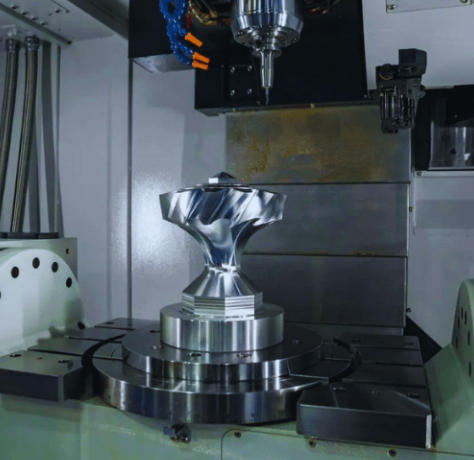
3D printing (additive manufacturing) has transformed prototyping and low‑volume production, especially for complex geometries that are difficult or impossible to machine. However, when you compare precision and surface finish directly, CNC machining still has a clear advantage for tight‑tolerance functional components.
Key differences:
- Dimensional tolerances: Industrial CNC machining commonly delivers ±0.025–0.125 mm, while many 3D printing processes sit around ±0.05–0.20 mm, depending on technology and part size.
- Surface finish: CNC machining typically provides smoother surfaces and sharper edges without additional finishing, whereas many 3D prints require sanding, machining, or coating to reach similar finishes.
- Hybrid approach: A common strategy is to 3D‑print near‑net‑shape parts, then CNC‑machine critical faces or interfaces to bring them within strict tolerances.
If you need complex prototype shapes quickly, 3D printing is powerful; if you need precise, load‑bearing components that must fit with other parts, CNC machining usually remains the preferred choice.
Injection molding is highly efficient for high‑volume plastic parts and can achieve very consistent dimensions once the mold is fully tuned. Standard injection molded parts often run at tolerances around ±0.1–0.3 mm, while critical features in demanding applications may reach tighter tolerances with optimized tooling and process control.
By comparison:
- CNC machining maintains tighter standard tolerances across a wide range of materials without requiring a dedicated mold.
- For early‑stage development and low‑volume runs, CNC machining lets you adjust dimensions and tolerances in CAD instead of cutting a new mold, significantly reducing lead time and cost.
Many OEM programs use CNC machining for prototypes, engineering validation tests, and small batches, then shift to injection molding for very high volumes once the design and tolerances are fully locked.
In certain sectors, such as optics, high‑end sensors, and advanced medical devices, standard CNC tolerances are not sufficient. In these cases, manufacturers turn to ultra‑precision machining or micro‑fabrication techniques that can reach micron‑level accuracies.
For example:
- Some micro‑manufacturing technologies can work in the ±10–25 µm range, pushing beyond typical CNC capabilities.
- High‑end CNC setups with temperature‑controlled environments and advanced feedback systems can approach extremely tight tolerances on specific features.
These processes are specialized and costly, so they are reserved for critical applications where the performance justification is clear.
To get the full benefit of CNC machining precision, part design and process planning must work together. Consider the following best practices when you create or review drawings:
- Specify tolerances only where necessary: Over‑tightening tolerances across the entire part drives up cost; focus tight tolerances on functional fits and critical interfaces.
- Respect tool and machine limits: Avoid deep narrow slots, extremely thin walls, or tiny radii that force delicate tools or multiple setups, which can reduce accuracy.
- Align geometry with the process: For cylindrical parts, prefer turning for primary diameters; for prismatic parts, use milling and limit the number of re‑clampings.
- Consider material stability: Different metals and plastics respond differently to machining heat and stress, affecting distortion and final dimensions.
An experienced CNC supplier can help you adjust tolerances, wall thicknesses, and feature details to balance precision, manufacturability, and cost.
When you select a manufacturing process based on precision, look beyond a single tolerance number and assess the full picture.
Key factors to evaluate:
1. Critical vs non‑critical dimensions: Use CNC machining or ultra‑precision processes for critical fits while allowing looser tolerances or alternative processes for non‑critical areas.
2. Production volume: For prototypes and low to medium volumes, CNC machining is often the most flexible and precise choice, while injection molding becomes attractive at very high volumes.
3. Geometry complexity: 3D printing excels at intricate shapes, but CNC still leads in tight tolerances and surface finish for load‑bearing parts; hybrid workflows can combine both.
4. Budget and timeline: Tooling‑heavy methods like injection molding or some micro‑fabrication techniques involve higher upfront cost and longer setup but lower per‑piece cost in mass production.
For many OEM projects, the optimal solution is a staged approach: CNC machining for early samples and validation, then a transition to molding, casting, or hybrid routes once the design and tolerances are fully verified.
For overseas brands, wholesalers, and equipment manufacturers, achieving the required tolerances is not only about the machine, but also about the engineering team, process control, and quality system supporting it. A capable OEM partner should combine:
- Multi‑axis CNC milling and turning for metals and engineering plastics.
- Complementary processes such as plastic molding, silicone parts, and metal stamping to cover full assemblies.
- Robust measurement capabilities to verify and document precision against your drawings.
If you are planning a new project or looking to optimize an existing part for better precision and cost, you can share your 2D drawings and 3D models with a specialized CNC OEM team for a manufacturability and tolerance review.
Action call: If you need high‑precision CNC machined parts, plastic or silicone components, or metal stamping with tightly controlled tolerances, send your RFQ, drawings, and target quantities to our engineering team. We will review your requirements, suggest practical tolerance and process options, and provide a clear quotation and lead time tailored to your project.
Contact us to get more information!
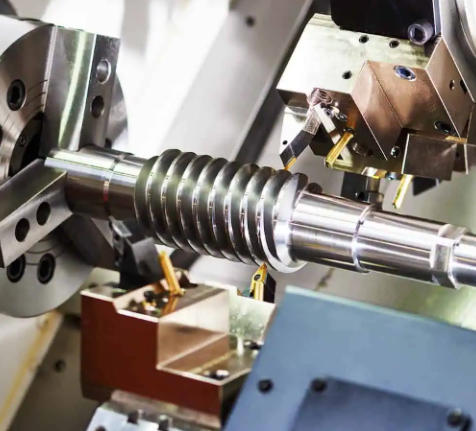
CNC machining typically delivers tighter tolerances and smoother surfaces than most industrial 3D printing processes. For parts with critical fits, a common approach is to 3D‑print near‑net shapes and then CNC‑machine key interfaces to final tolerance.
For many standard projects, CNC shops quote tolerances around ±0.05–0.10 mm, while high‑precision features can be held to about ±0.01–0.025 mm with optimized setups. In specialized ultra‑precision environments, even tighter tolerances are possible but usually reserved for niche applications.
Once the mold is fully optimized, injection molding can deliver very consistent parts, but its typical standard tolerances are generally looser than those of CNC machining. Some critical molded features can reach tighter tolerances, but this requires high‑end tooling and careful process control, and changes are more expensive than updating a CNC program.
Different materials expand, contract, and relieve stress differently during machining, which can influence final dimensions and stability. Metals like aluminum and steel are usually easier to hold tight tolerances on than soft plastics or thin‑wall parts, which may need special fixturing and adjusted cutting strategies.
Focus tight tolerances only on critical features, align geometries with milling or turning strengths, and avoid unnecessary complexity that forces difficult setups. Early collaboration with a CNC OEM partner helps you adjust radii, wall thickness, and datum schemes to achieve reliable precision without inflating cost.


