Views: 222 Author: Rebecca Publish Time: 2026-01-16 Origin: Site
Content Menu
● Key Properties of TPU for HP MJF
● TPU vs Other Flexible 3D Printing Materials
● Common TPU 3D Printing Applications
● Industries Best Suited for TPU 3D Printing
● Advantages of TPU with HP Multi Jet Fusion
● Practical Design Guidelines for TPU 3D Printing
● Process Considerations and Challenges
● Post‑Processing and Finishing Options
● Real-World Use Cases for TPU 3D Printing
● When TPU Is (and Is Not) the Right Choice
● Call to Action: Explore TPU 3D Printing for Your Next Project
>> 1. What is TPU in 3D printing?
>> 2. Is TPU good for functional end-use parts?
>> 3. Can TPU 3D printed parts withstand outdoor use?
>> 4. How smooth are TPU parts printed with HP MJF?
>> 5. When should TPU not be used?
Thermoplastic polyurethane (TPU) is a flexible, rubber-like engineering plastic used in 3D printing to produce parts that must bend, compress, or absorb impact without breaking. It combines the elasticity of rubber with the toughness of conventional thermoplastics, making it ideal for functional prototypes and end-use components in demanding environments.

TPU's performance profile is defined by a combination of mechanical, chemical, and thermal properties that make it stand out among flexible 3D printing materials.
- Exceptional flexibility and elasticity: TPU can stretch significantly and repeatedly without cracking, ideal for hinges, seals, and wearable components.
- High durability: The material resists impact, tears, and punctures, enabling long service life under mechanical stress.
- Chemical resistance: TPU withstands oils, greases, and many industrial solvents, supporting use in automotive and industrial environments.
- Broad temperature tolerance: TPU maintains performance across low and high temperatures, making it suitable for indoor and outdoor applications.
The table below highlights how TPU compares with common flexible 3D printing materials in terms of performance and typical use cases.
| Material type | Flexibility level | Durability & wear | Chemical resistance | Typical 3D printing use cases |
|---|---|---|---|---|
| TPU (thermoplastic polyurethane) | High elasticity with strong rebound. | Excellent tear and abrasion resistance. | Good against oils, greases, many solvents. | Wearables, seals, gaskets, footwear, soft grips. |
| Generic flexible TPE | High flexibility, softer feel | Moderate durability | Moderate resistance | Simple grips, basic flexible housings |
| Flexible PLA blends | Limited flexibility | Lower tear resistance | Low chemical resistance | Cosmetic flexible parts, low-load prototypes |
| Rubber-like photopolymer resins | Very soft, gel-like feel | Poor long-term durability | Limited resistance | Visual prototypes, short-life wearable mockups |
This comparison underscores why TPU is often selected when engineers need a balance of flexibility, toughness, and long-term stability in functional parts.
TPU's property set makes it valuable across multiple industries where comfortable, impact-absorbing, or seal-forming components are needed.
- Wearable devices: Flexible and skin-contact-friendly TPU is used for fitness tracker straps, smartwatch bands, and soft wearable mounts.
- Automotive components: TPU is chosen for flexible hoses, seals, bellows, gaskets, and interior protective elements that must resist oils and temperature cycles.
- Medical and healthcare parts: Its biocompatibility and flexibility support custom orthotics, prosthetic covers, cushioning elements, and tubing.
- Footwear and sports gear: TPU midsoles, insoles, outsoles, cleats, pads, and mouthguards leverage the material's impact absorption and rebound.
- Consumer products and electronics: Phone cases, protective bumpers, cable management accessories, and soft-touch handles benefit from TPU's pleasant tactile feel.
While TPU is widely usable, some sectors gain particularly strong ROI from integrating TPU 3D printed parts into product lines or production workflows.
- Medical industry: TPU is valued for body-safe use cases, excellent flexibility, and durability, enabling personalized, patient-specific devices with long service life.
- Automotive: The combination of chemical resistance, fatigue resistance, and stable performance under temperature swings supports under-the-hood parts and interior components.
- Consumer goods and wearables: Brands use TPU for cases, grips, and straps that must feel comfortable in hand and withstand daily wear and drops.
- Sports and footwear: TPU's energy return and impact resistance drive adoption in high-performance shoes and gear that must be both light and durable.
When TPU is processed using HP Multi Jet Fusion (MJF), manufacturers get a powerful combination of material performance and production efficiency.
- High precision and detail: HP MJF delivers high-resolution TPU parts with accurate geometries, fine features, and stable dimensional tolerances.
- Fast production speed: MJF's layer-by-layer fusion process allows rapid production of multiple TPU parts in a single build, reducing lead times versus traditional molding.
- Cost-effective for low–medium volumes: For small to mid-sized batches, additive manufacturing with TPU can reduce tooling costs and material waste compared with injection molding.
- Design freedom: HP MJF supports complex internal channels, lattice structures, and organic geometries that are difficult or impossible to achieve with conventional processes.
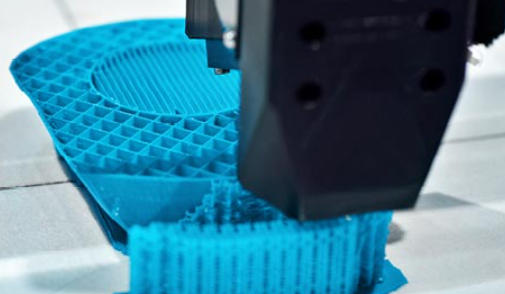
To fully leverage TPU's capabilities in HP MJF 3D printing, designers should follow a few practical rules of thumb.
1. Wall thickness
- Keep critical walls thick enough to avoid collapse under load while preserving flexibility where needed.
- Use slightly thicker walls in areas exposed to repeated bending or compression.
2. Minimum feature sizes
- Avoid extremely thin pins or sharp edges that may not fully form in flexible materials.
- For snap fits and living hinges, test and iteratively refine dimensions to achieve the desired “snap” feel.
3. Lattice and cushioning structures
- Use lattice infills to tune cushioning, impact absorption, and weight reduction in midsoles, pads, and protective housings.
- Vary cell size and density in different zones to customize local stiffness.
4. Assemblies and mating parts
- Account for TPU's flexibility when designing press fits or overmold-style interfaces with rigid components.
- Add small lead-in chamfers or fillets to guide assembly and reduce stress concentrations.
These design guidelines help convert TPU's raw material advantages into reliable, repeatable product performance.
TPU is highly capable but requires specific process controls to achieve consistent, high-quality parts in production.
- Material handling: TPU's inherent flexibility can make powder handling and part removal more demanding, requiring tuned print settings and careful post-processing.
- Support and part stability: Elastic parts may need additional support or strategic orientation during printing to maintain shape and avoid warping.
- Surface finish: HP MJF TPU parts typically have a slightly rougher surface than some rigid materials, so secondary finishing may be necessary for consumer-facing components.
- Equipment investment: While part cost can be competitive, organizations must factor in the capital cost, maintenance, and operational expertise needed for HP MJF systems.
Well-planned post-processing can significantly improve the aesthetic and functional performance of TPU 3D printed parts.
- Cleaning and depowdering: Thorough removal of residual powder ensures consistent surface texture and avoids contamination in moving assemblies.
- Surface smoothing and tumbling: Mechanical finishing helps reduce roughness and enhance the feel of grip surfaces and wearable components.
- Dyeing and coloring: TPU parts can often be dyed to match brand colors or differentiate product variants, improving perceived value and user recognition.
- Coatings and treatments: Selected coatings can enhance scratch resistance, UV stability, or chemical resistance where required.
Integrating finishing into the design and production plan improves both user experience and brand presentation.
Practical, application-driven use of TPU 3D printing demonstrates its business value across development and production.
- Rapid prototyping of flexible components: Teams validate fit, comfort, and flexibility of seals, straps, and pads before committing to expensive tooling.
- Bridge production prior to tooling: TPU MJF is used to supply small–medium batches while injection molds are being designed and built, enabling faster time-to-market.
- Customization and personalization: Brands create customized comfort zones, sizes, or patterns in wearable products without modifying tooling.
- Spare parts and on-demand manufacturing: Flexible components such as gaskets or vibration-damping elements can be printed on demand to support long-tail service needs.
These scenarios show how TPU supports both innovation and operational resilience in modern supply chains.
Choosing the right 3D printing material requires aligning application requirements with material capabilities.
Best fit for TPU 3D printing:
- Parts needing flexibility, cushioning, or impact absorption.
- Components that see repetitive bending, compression, or vibration.
- Devices requiring a comfortable, soft-touch interface with human contact.
Less suitable use cases:
- Very high-temperature environments beyond TPU's thermal limits.
- Structural parts that must carry high static loads with minimal deflection.
- Applications requiring extreme stiffness, where filled nylons or metals are better choices.
Being clear about where TPU excels helps engineers select it confidently and avoid misapplication.
For engineering teams, product designers, and OEMs who need flexible, durable 3D printed parts, TPU with HP Multi Jet Fusion offers a powerful path from prototype to production. If you are evaluating materials for wearables, automotive components, medical devices, or performance footwear, now is the time to integrate TPU into your design and validation workflow.
Partner with an experienced manufacturing team that understands TPU's behavior, design constraints, and post-processing requirements, and request a consultation or sample run to validate TPU for your specific application.
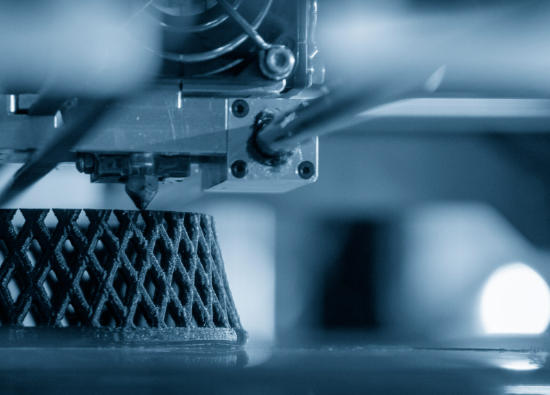
TPU (thermoplastic polyurethane) is a flexible thermoplastic used in 3D printing to create elastic, impact-resistant parts that behave similarly to rubber while retaining thermoplastic processability.
Yes, TPU's combination of flexibility, durability, and chemical resistance makes it well-suited for functional end-use parts such as seals, gaskets, grips, and wearable components.
TPU offers good abrasion and impact resistance and maintains performance over a wide temperature range, making it suitable for many outdoor applications when designed correctly.
TPU parts printed with HP MJF typically have a slightly textured surface that can be improved with post-processing methods such as tumbling, blasting, or coating when a smoother finish is required.
TPU is not ideal for high-temperature structural parts or applications that demand minimal deflection under heavy loads; in those cases, stiffer engineering plastics or metals are better choices.


