Views: 222 Author: Rebecca Publish Time: 2026-01-08 Origin: Site
Content Menu
● What Is High Speed Machining Tooling
● Why Tool Systems Matter in HSM
● Chip Formation Basics in High Speed Machining
● Heat Generation and Dissipation at High Speed
● High Speed Cutting Parameters and Safety
● Cutter Geometry and Coatings for HSM
● Toolholder Interfaces: V-Flange and HSK Concepts
● High Speed Toolholders and Spindle Growth
● Rigidity and Dynamic Stability in HSM
● Symmetrical Toolholding and Clamping Methods
● Chip Thickness Control and Toolpath Strategy
● Coolant, Air, and Chip Evacuation in HSM
● Practical Recommendations from High Speed Machining Research
● How OEM Partners Can Apply These Principles
● FAQ: High Speed Machining Tool Systems
>> 1. What is a high speed machining tool system?
>> 2. Why are hollow shank interfaces often preferred in high speed machining?
>> 3. Is coolant always required for high speed machining?
>> 4. How important is chip thickness in high speed machining?
>> 5. What insert geometry is recommended for hardened steel at high speed?
High speed machining is only as good as the tool system connecting the cutting edge to the spindle, especially when shops push for higher metal removal rates, tighter tolerances, and better surface finishes. For global OEMs and brands, optimizing cutters, holders, and clamping as a system is critical to achieving stable high speed machining with predictable quality and cost.

High speed machining typically replaces heavy cuts with fast, shallow passes at very high spindle speeds and feed rates, which makes the complete tool system far more interdependent. From cutting edge to spindle nose, each component must work together to control heat, vibration, chip evacuation, and dimensional accuracy.
- A high speed machining tool system includes cutting tool material and geometry, coatings, shank style, toolholder interface, and clamping method.
- For international OEM projects, a well-designed system minimizes downtime, extends tool life, and maintains consistent quality across batches and plants.
Once the machine delivers the cutter to the workpiece, it is the tool system that actually makes the chips and the profit. At high speed, small weaknesses anywhere in the system amplify into chatter, premature wear, or broken tools.
- Higher spindle speeds increase centrifugal force, thermal growth, and dynamic loads on cutters and holders.
- Proper matching of cutter, holder, and spindle interface allows shops to safely use longer tools, higher radial engagement, and more aggressive side-milling strategies.
Effective high speed machining depends on controlling how chips are formed and evacuated at high speed. Understanding the shear zones and heat flow helps engineers choose the right tooling and cutting conditions.
- The primary shear zone is where plastic deformation occurs as the cutting edge meets the material, causing the chip to shear from the parent metal.
- The secondary shear zone forms as the chip slides along the rake face, where friction can raise temperatures to about 1200 degrees Celsius when cutting tool steel.
- A tertiary shear zone develops under and behind the cutting edge due to spring back of the material and associated residual stresses.
Predicting when and how this deformation occurs allows engineers to estimate cutting forces and select suitable tool geometry, feeds, and speeds. It also supports better decisions about how heat is shared between the chip, tool, and workpiece.
At high cutting speeds, most of the energy put into the cut is converted into heat, which strongly affects tool life and workpiece quality. The distribution of heat sources and sinks changes significantly as spindle speed increases.
- Around 80 percent of heat is generated by the mechanical deformation that creates the chip, 18 percent at the chip/tool interface, and 2 percent at the tool tip.
- Approximately 75 percent of heat leaves with the chip, 5 percent enters the workpiece, and 20 percent is conducted through the tool.
Tool coatings can redirect heat flow by reducing thermal conductivity into the tool and forcing more heat into the chip and workpiece. This balance is critical because excessive tool temperature quickly degrades cutting edges and coatings in high speed machining.
As cutting speed increases, both thermal and mechanical loads rise sharply, making cutter design and operating windows critical for safe high speed machining. Standards and in-house guidelines often link maximum safe spindle speed to cutter diameter.
- For cutters with 6 to 8 millimeter diameter, recommended top speeds are around 45,000 to 50,000 rpm.
- For cutters with 12 millimeter diameter, typical upper speed limits are around 15,000 to 20,000 rpm.
Solid body cutters generally handle centrifugal forces better than indexable insert designs, but modern indexable cutters with reinforced bodies can also operate safely in high speed environments. Shops should always verify manufacturer rpm ratings and follow safety guidelines to avoid tool or spindle failures.
Cutter geometry and coating choice are central to achieving stable and productive high speed machining. Research has shown that the right combinations can significantly extend tool life in hardened tool steels.
- For hardened steels above about 45 Rc, neutral to positive cutting edges with a simple straight rake face tend to perform best, while chip breakers can weaken the edge and accelerate wear.
- Multi-layer coatings such as TiN, TiCN, and PVD TiN over CVD layers are recommended for steel, providing a balance of wear resistance and controlled heat transfer.
By choosing geometries that lower cutting forces and coatings that manage temperature, shops can reduce chipping, avoid built-up edge, and maintain consistent surface finishes at high speed.
The toolholder interface is a critical link in any high speed machining system, affecting runout, rigidity, and Z-axis accuracy. Different interface concepts are built around different ways of clamping the holder in the spindle bore.
- Steep taper holders are drawn into the spindle via a pull mechanism and seat on the spindle taper, providing primarily taper contact.
- Hollow shank designs such as HSK are engineered for simultaneous contact on both the spindle face and the taper, creating a two-plane connection.
Other interface solutions follow the same principle by extending the holder flange and spindle nose to close the typical small gap and achieve face and taper contact even with steep taper holders. This type of connection improves rigidity and better resists axial movement at high speeds.
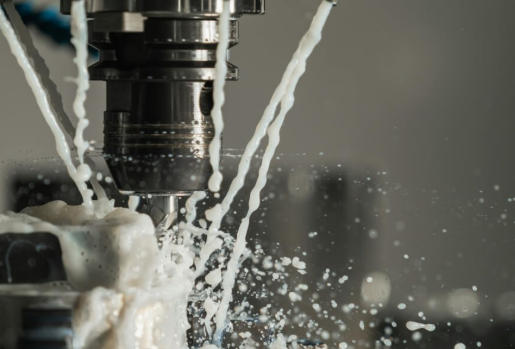
At high spindle speeds, centrifugal force causes the spindle bore to grow slightly, and this interacts differently with single-plane and two-plane toolholder systems. The resulting changes in tool position can be significant in precision operations.
- With taper-only contact, spindle growth can let the holder be drawn deeper into the bore by the pull mechanism, leading to stuck tools and Z-axis inaccuracy.
- Two-plane systems with face contact prevent the holder from being pulled further into the spindle because the face acts as a positive stop, even as the taper expands.
Hollow shank holders are designed to grow with the spindle under centrifugal loading, preserving the fit and maintaining rigidity. This behavior makes simultaneous fit interfaces increasingly important in advanced high speed machining environments.
Rigidity is a key performance factor in high speed machining because chatter and vibration quickly increase tool wear and reduce surface quality. Toolholders that support the cutter in both axial and radial planes provide a stiffer connection between tool and spindle.
- Face contact shifts the bending moment from deep inside the spindle to the outer face, increasing contact area and improving stability.
- Higher rigidity allows the use of longer tools and more aggressive side-cutting parameters while maintaining dimensional accuracy and surface integrity.
This improved dynamic stability is particularly valuable in applications with deep cavities, tall walls, and complex three-dimensional forms.
The way the cutter shank is clamped in the holder has a major impact on balance and vibration at high speed. Asymmetrical features that are acceptable at conventional speeds can become problematic in high speed machining.
- Holders with unequal drive notches or side-locking setscrews introduce imbalance that can lead to runout and chatter.
- Symmetrical systems such as shrink fit holders clamp the tool shank uniformly through thermal expansion and are widely used in high speed applications for their simplicity and rigidity.
Hydraulic chucks also grip the tool shank all around by using hydraulic pressure to actuate an internal membrane. In both cases, round shanks without flats and symmetrical holder designs help minimize vibration and extend tool life in high speed machining.
Maintaining a nearly constant chip thickness is one of the most effective levers for stabilizing high speed machining processes. Variations in chip load often show up as chatter, tool deflection, and inconsistent wear patterns.
- Constant chip thickness keeps cutting forces more uniform, reducing the risk of chatter and protecting the cutting edge from overload.
- Toolpaths that maintain a more constant engagement, especially in corners and tight radii, help avoid sudden spikes in cutting force.
With the right toolpath strategy, shops can run higher spindle speeds and feed rates without compromising process reliability or part quality.
At very high surface speeds, conventional flood coolant often cannot penetrate the cutting zone effectively. Under such conditions, its primary role shifts toward chip evacuation and lubrication rather than bulk cooling of the tool and workpiece.
- For many high speed machining operations, cutting without flood coolant and using high pressure air to clear chips is recommended.
- Air and oil mist systems provide lubrication and chip evacuation while reducing thermal shock to the cutting edge compared to traditional coolant.
Because a large share of heat leaves with the chip, effective chip evacuation is essential to protect both tool and workpiece from excessive temperatures and recutting.
Long-term research on hardened H13 tool steel around 46 Rc has generated a concise list of practical recommendations for high speed cutting. Many of these guidelines are widely applicable beyond molds and dies to other materials and components.
- Use symmetrical toolholder designs with wraparound connectors such as shrink fit or hydraulic systems, and avoid hold-down flats on shanks.
- Keep chip thickness as constant as possible by programming toolpaths that maintain a consistent chip load.
- Apply multi-layer coatings such as TiN, TiCN, and PVD TiN over CVD layers to increase tool life and tune heat transfer when cutting steels.
- Use inserts with a flat rake face and no chip breaker in hardened steels to avoid weakening the cutting edge and increasing rake-face wear at high speeds.
- Prefer high pressure air and air and oil mist for chip evacuation over flood coolant when high cutting speeds prevent coolant from reaching the cutting zone effectively.
These recommendations offer a structured basis for building and refining a robust high speed machining process across different machines and product lines.
OEMs, brands, and wholesalers increasingly rely on manufacturing partners who understand high speed machining as an integrated system. Applying research-based principles across tooling, holders, programming, and chip control is essential to achieving consistent performance.
- Qualified partners review components, materials, tolerances, and volumes to define tool system standards that fit each application.
- Coordinated control of geometry, coatings, interface type, and clamping helps standardize machining performance across multiple plants and extended production runs.
Embedding these practices into standard work instructions, setup sheets, and process audits supports stable quality, shorter cycle times, and longer tool life in global OEM supply chains.
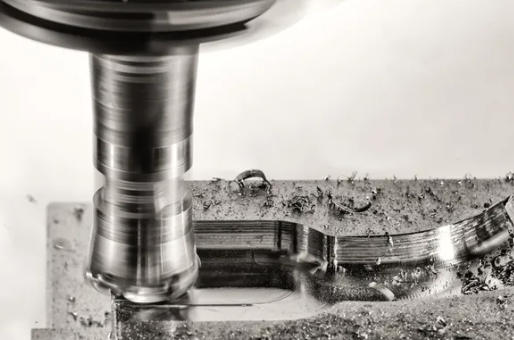
A high speed machining tool system is the complete chain from cutting edge to spindle nose, including tool material, geometry, coatings, shank, toolholder, and spindle interface. All elements must work together to control heat, vibration, and dimensional accuracy at elevated speeds.
Hollow shank interfaces are engineered for simultaneous contact on the spindle taper and face, which improves rigidity and prevents the holder from being pulled deeper into the bore as the spindle grows at high rpm. This two-plane connection helps maintain Z-axis accuracy and stability in high speed operations.
In many high speed applications, flood coolant cannot effectively reach the cutting zone, so its primary function becomes chip evacuation and lubrication rather than bulk cooling. High pressure air or air and oil mist is often more effective and introduces less thermal shock to the cutting edge.
Maintaining a nearly constant chip thickness is critical in high speed machining because it stabilizes cutting forces and reduces the risk of chatter, edge chipping, and premature wear. Toolpaths designed for more constant engagement are therefore essential.
For hardened steels above roughly 45 Rc, tests show that inserts with a simple flat rake face and no chip breaker provide better edge strength and wear behavior in high speed cutting. Chip breakers can weaken the cutting edge and increase rake-face wear under these conditions.


