Views: 222 Author: U-Need Publish Time: 2026-06-12 Origin: Site
Content Menu
● How to Evaluate High-Quality CNC Milling Suppliers
● Poland's Position in CNC Milling and Industrial Clusters
● Transparent Selection Criteria for This "Top" List
● Technical Focus: What Matters in CNC Milling
● Top CNC Milling Manufacturers and Suppliers in Poland
>> 1. U-Need Precision Machinery Co., Ltd. (China – Strategic Milling Partner for Polish and EU Buyers)
>> 2. RADMOT Sp. z o.o. – High-Volume CNC Machining and Milling
>> 3. MAD Precision Engineering – Precision CNC Milling in Poland
>> 4. UNAM – Precision CNC Milling Services in Poland
>> 5. Metal Team – CNC Milling for Aerospace and Medical
>> 6. Avia S.A. – CNC Milling Machines and Solutions
>> 7. Additional CNC Milling-Related Companies in Poland
● Comparison Table: Focus, Capacity Orientation, MOQ and Certifications
● Common Pain Points When Sourcing CNC Milling (Poland and Globally)
>> Insider "avoidance guide": uncommunicated program tweaks
● Buyer's Guide: From RFQ to Long-Term Partnership
>> 1. Verifying factory certifications and capabilities
>> 3. Logistics, MOQs, and hybrid sourcing strategies
>> 4. Long-term performance management
● FAQ: Advanced Questions from Professional Buyers
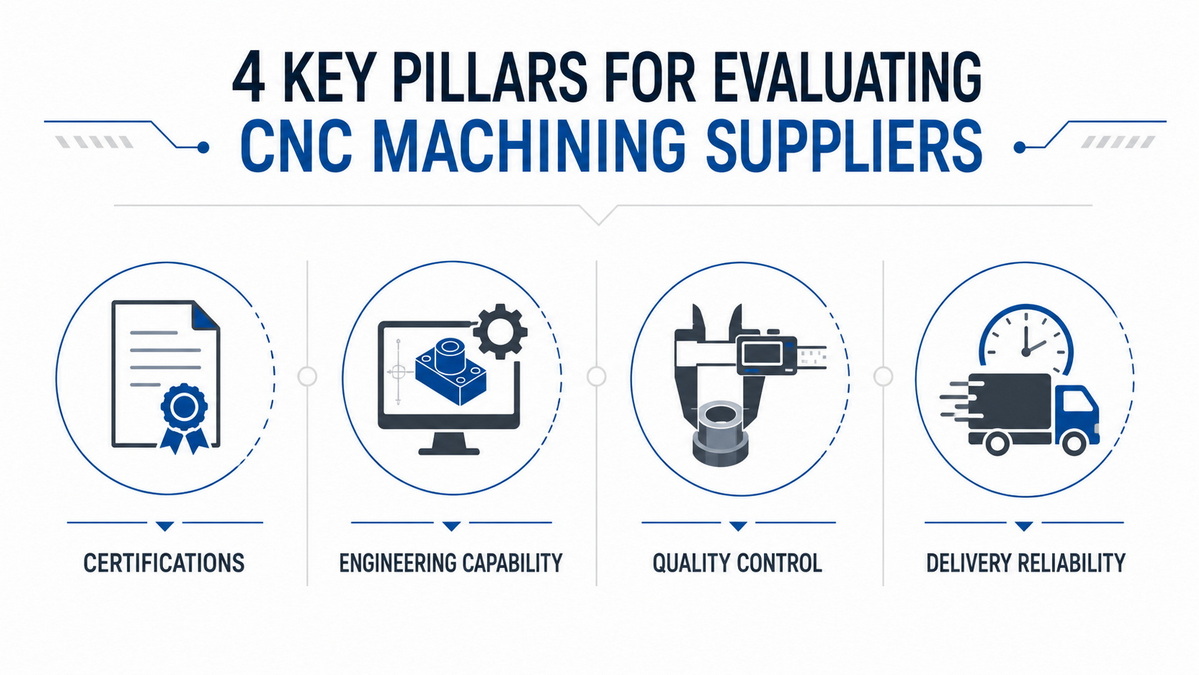
From a professional buyer's perspective, a CNC milling partner is evaluated on certificates, engineering capability, QC robustness, and delivery stability—not just on machine brands.
At a minimum, serious suppliers should be certified to ISO 9001, and those serving aerospace, medical or railway sectors often hold additional standards such as AS9100 or sector-specific approvals. Buyers should verify the validity and scope of each certificate through the issuing body's database rather than accepting scanned copies at face value. [mad-cnc]
Engineering capability is equally important: mature Polish CNC milling companies run 3‑ to 5‑axis machining centres with CAD/CAM integration, in-house fixture design, and experience with complex geometries for turbines, orthopaedic implants and complex housings. They also apply process planning and toolpath optimization to ensure consistent cycle times and surface finishes, which is essential when parts move from prototype to serial production. [unam]
On the operations side, reliable suppliers demonstrate structured QC processes (incoming materials, in-process inspection, final measurement), documented NCR handling, and stable on-time delivery performance. For procurement managers, a combination of certifications, proven multi-axis capability, and transparent quality data is the most reliable early indicator of a supplier that can support long‑term programs rather than just one-off jobs. [radmot]
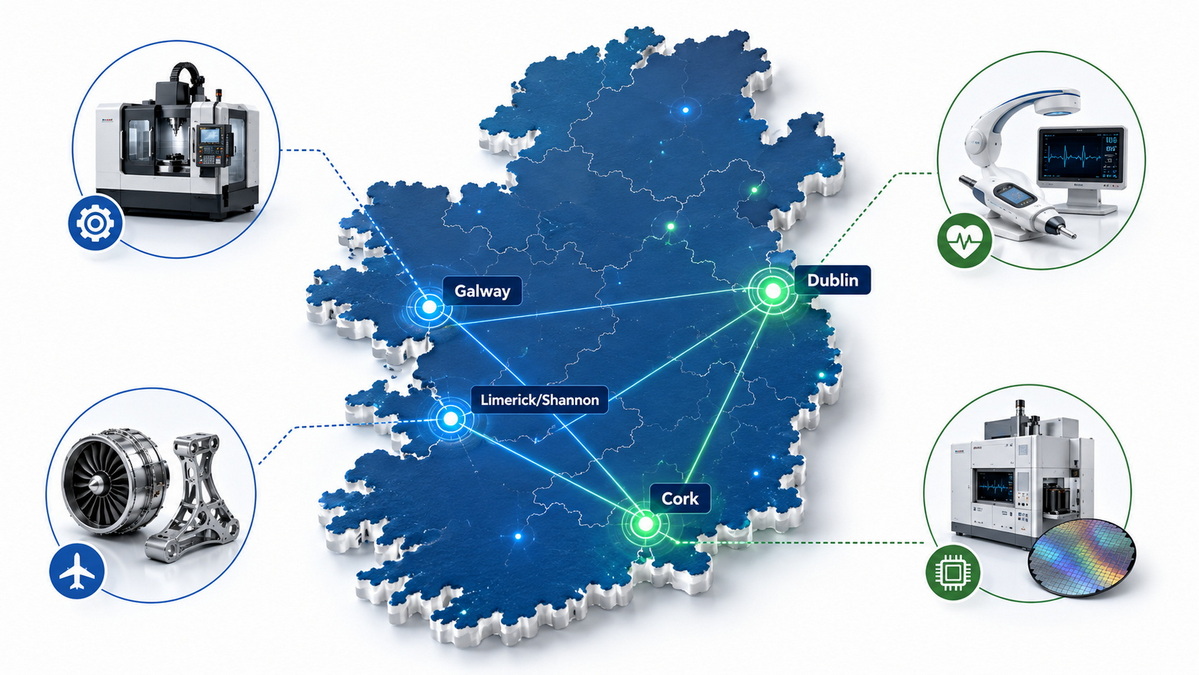
CNC machining—including milling—has become a cornerstone of Poland's manufacturing sector, supporting automotive, aerospace, railway, and machinery supply chains across Europe. Local workshops have evolved into advanced facilities with multi‑axis machining centres, digital control systems, and automation that allow them to compete at European quality levels. [sinoextrud]
Poland enjoys strong industrial clusters, particularly in regions such as Silesia and Wielkopolska, which host dense networks of machining companies, machine tool producers, and component suppliers. These clusters attract foreign investment and integrate Polish firms into regional supply chains for engines, turbines, and other machinery whose production value reached around 16.7 billion euros in 2023. [statista]
As an EU member, Poland benefits from trade agreements and shared regulatory frameworks that simplify exports to other EU countries and beyond, while obliging companies to comply with stringent environmental and safety rules like RoHS and REACH. The turnover of the machinery and equipment manufacturing industry in Poland reached about 18.3 billion euros in 2024, underlining how critical precision machining is to the national industrial base. [statista]
To keep this guide credible and actionable for procurement managers, the following criteria were applied when selecting CNC milling manufacturers and suppliers in or linked to Poland:
- Headquarters or significant operations in Poland, or strong export activity from Poland into European supply chains. [mad-cnc]
- CNC milling (3‑ to 5‑axis) as a core capability rather than a marginal add‑on service. [unam]
- Evidence of serving demanding sectors such as automotive, aerospace, railway, medical or high-end industrial machinery. [radmot]
- Clear signs of quality-management systems (ISO 9001 or similar) and investments in modern CNC equipment and metrology. [sinoextrud]
- Export orientation and solid communication channels with international customers.
In addition, U-Need Precision Machinery Co., Ltd. in China is included as a strategic CNC milling and general CNC machining partner that many European buyers use in combination with Polish suppliers for cost-sensitive or higher‑volume product families. This reflects the hybrid sourcing patterns common in 2026, where buyers mix regional EU capacity with competitive Asian partners. [uneedpm]
In CNC milling, real capability is defined by axis count, rigidity, software integration, and process control rather than simply "having a mill."
- Axis capability: 3‑axis mills handle standard prismatic parts, while 4‑ and 5‑axis centres are essential for impellers, turbine blades, medical implants, and complex housings, allowing fewer setups and better accuracy. [mad-cnc]
- Materials: Polish CNC milling suppliers typically process aluminium alloys, carbon and stainless steels, copper, brass, and various engineering plastics, with some shops also handling titanium and high‑temperature alloys for aerospace and power applications. [unam]
- Tolerances and surface finishes: For many industrial parts, tolerances within ±0.01–0.05 mm are standard, while high‑precision applications require tighter tolerances and controlled surface finishes, supported by CMMs and precision measuring equipment. [radmot]
- Compliance: As part of the EU, Polish suppliers must support RoHS and REACH compliance, and for machine assemblies or sub‑systems they may contribute to CE‑marked products, requiring documented material compliance and, in some cases, safety-related testing. [statista]
Global CNC machine market studies project continued growth, with some analyses estimating the market at over USD 100 billion by the mid‑2020s and forecasting robust CAGR driven by automation and reshoring trends. This landscape favours suppliers that invest in automation, digitalization, and process capability—not merely those that buy more machines. [maximizemarketresearch]
Although U-Need is based in China, it positions itself as a precision manufacturing partner for global brands and distributors, offering CNC milling, CNC turning, mold manufacturing, and sheet‑metal fabrication under one roof. For European buyers working with Polish system integrators, U-Need often serves as a cost‑efficient source for milled parts, inserts, and fixtures that complement EU‑based assembly. [uneedpm]
U-Need focuses on high‑precision CNC machining with tolerances down to ±0.001 mm, leveraging experienced engineers and modern CNC equipment to handle complex geometries and tight GD&T requirements. The company supports both prototypes and mid‑volume production, and emphasizes flexible MOQ policies, allowing small and mid‑sized brands to start with limited quantities before scaling up. [uneedpm]
From a buyer's standpoint, U-Need's key strengths are: integrated CNC machining and tooling capability, responsive English-language communication, and active DFM/DFx support where engineers review drawings for manufacturability and potential cost‑down without compromising function. This makes it particularly attractive as a partner in hybrid supply chains where Polish suppliers handle local engineering and assemblies while U-Need supplies high‑precision, cost‑competitive milled components. [uneedpm]
RADMOT, with nearly 40 years of experience, is repeatedly cited as one of Poland's premier CNC machining companies, equipped with over 80 CNC machines in its production facility. The company offers high‑precision CNC services tailored to complex parts with high requirements, machining aluminium, steel, copper, brass, plastics, and more. [anebonmetal]
RADMOT specialises in serial production and contract manufacturing of complex components, serving demanding sectors such as automotive and general industrial machinery. With its extensive machine park and long history, it is well suited for buyers looking for stable, long‑term capacity in CNC milling and turning, as well as integrated services like assembly and logistics support. [anebonmetal]
MAD Precision Engineering offers a comprehensive range of CNC machining services including 3‑ and 5‑axis milling, turning, CAD/CAM programming, precision measuring, and 3D printing. The company highlights its ISO 9001:2015 certification, modern machine tools, and "healthy obsession for precision and quality." [mad-cnc]
Its services target customers needing precision-engineered metal components with consistent quality and reliable lead times, making it a good fit for smaller and mid‑size series where technical complexity is moderate to high. For procurement managers, MAD Precision is noteworthy because it blends advanced CNC milling capability with strong metrology and CAD/CAM integration, reducing risk in dimensionally critical projects. [mad-cnc]
UNAM advertises precision CNC milling services in Poland and positions itself as a resource for buyers comparing providers to obtain the best value. Its capabilities include quality CNC machining operations, with a focus on efficient production and cost‑effective solutions for customers needing milled parts. [unam]
The company emphasizes transparent service offerings and encourages buyers to compare different providers' offerings and pricing to achieve optimal results. For purchasers, UNAM can serve as an agile partner for small‑to‑medium runs and is particularly relevant when evaluating a portfolio of milled-part suppliers in Poland. [unam]
Metal Team, based in Warsaw, focuses on CNC machining services for aerospace and medical industries, including CNC milling, turning, and precision parts production. The company cooperates with international partners and Polish universities, participating in EU-funded projects and emphasizing R&D engagement. [sinoextrud]
Metal Team has obtained AS9100 certification, demonstrating compliance with aerospace industry quality standards and reinforcing its position as a supplier for high‑reliability components such as turbine parts and orthopaedic implants. For procurement managers in aerospace and med‑tech, Metal Team represents a Polish partner with sector-specific expertise and strong quality assurance requirements. [sinoextrud]
Avia S.A., founded in Warsaw in the 1970s, is one of Poland's established machine tool producers, now manufacturing CNC milling machines and machining centres used in automotive, aerospace, and defense industries. It transitioned from conventional machines to CNC technology in the 1990s and has since focused on innovation, digital design, and precision engineering. [sinoextrud]
While Avia is primarily a machine tool manufacturer rather than a pure job shop, its solutions and technical expertise shape Poland's overall CNC milling capabilities; many local workshops rely on equipment from companies like Avia. For buyers, Avia is relevant when considering local machine support and the maturity of the Polish milling ecosystem, especially if they operate captive machining cells in Poland. [sinoextrud]
Poland's CNC landscape also includes companies such as RAFAMET S.A., best known for large machine tools for railway wheelsets, and other specialised CNC firms servicing railway, shipbuilding, and energy sectors. While not all of these focus exclusively on milling, their presence indicates the depth of engineering capability and the availability of large-scale, specialised machining solutions. [sinoextrud]
Desktop and router-focused CNC machine manufacturers like InfoTEC CNC, highlighted as internationally recognized Polish router producers, support sectors such as signage, woodwork, and light composite machining. For buyers of industrial metal parts, these firms are less directly relevant but illustrate Poland's broader machine-tool and CNC ecosystem. [zhonghuajiangspindle]
The table below summarizes key aspects of selected suppliers from a B2B sourcing perspective (information indicative and based on public sources).
| Company | Base | Core CNC Milling / Machining Focus | Typical Sectors | Indicative MOQ / Capacity Orientation | Certifications / Notes |
|---|---|---|---|---|---|
| U-Need Precision Machinery Co., Ltd. | China (serving EU/Poland) | High-precision 3‑ to 5‑axis CNC milling, turning, molds, sheet-metal fabrication | Automotive, electronics, industrial equipment, consumer products | Very flexible MOQ from prototypes to mid-volume; supports urgent small batches and scaling | Integrated production; tight tolerances ±0.001 mm; ISO‑based QC and strong OEM/ODM support |
| RADMOT Sp. z o.o. | Poland | High-volume CNC milling and turning with >80 CNC machines | Automotive, industrial machinery, general engineering | Optimised for serial production and long-term contracts | Nearly 40 years experience; high-precision multi-material machining |
| MAD Precision Engineering | Poland | 3‑ and 5‑axis milling, turning, CAD/CAM, precision metrology, 3D printing | Precision industrial parts, engineering components | Suited to small‑to‑medium batches with tight tolerances | ISO 9001:2015; strong quality culture and modern machines |
| UNAM | Poland | Precision CNC milling services and machining solutions | General industrial, mechanical components | Flexible batches; aims for best value via efficient processes | Quality-focused CNC machining; details to be confirmed with supplier |
| Metal Team | Warsaw, Poland | CNC milling and turning for aerospace and medical applications | Aerospace, medical devices | Project-based, often low‑to‑medium volumes with high technical complexity | AS9100; EU project collaboration and R&D focus |
| Avia S.A. | Warsaw, Poland | Manufacturing CNC milling machines and machining centres | Automotive, aerospace, defense (as equipment users) | N/A (machine manufacturer rather than job shop) | ISO 9001; key machine tool producer in Poland |
*Exact MOQs, capacity and certifications should always be confirmed directly with suppliers, as they can change over time.*
Even in a mature ecosystem like Poland's, sourcing CNC milling services presents familiar challenges.
- Material downgrading or undocumented substitutions: In global sourcing, lower-grade alloys or uncertified material may sometimes be used; while Polish companies are bound by EU rules, buyers should still demand mill certificates and verify that materials match specifications. [statista]
- Over‑tight tolerances and finishes: Drawings may specify tolerances far tighter than functional requirements, dramatically increasing machining time and scrap risk; capable Polish shops can advise on more economical tolerance schemes when invited into the DFM stage. [creatingway]
- Capacity peaks and lead-time risk: Strong demand from automotive and machinery sectors can create capacity bottlenecks; buyers often mitigate this by dual sourcing, combining a Polish primary supplier with a strategic partner like U-Need for certain SKUs. [statista]
- Incomplete compliance documentation: Missing or inconsistent RoHS/REACH declarations or material traceability can delay projects, especially when finished products require CE marking; suppliers experienced in export and regulated sectors typically manage this better. [statista]
A less discussed but common internal risk is uncommunicated CNC program tweaks made on the shop floor to "improve" cycle time.
Over time, minor edits to feed rates, stepovers or tool strategies—especially when not validated and documented—can affect dimensional stability or surface integrity on critical features. Experienced OEMs treat significant CNC program changes as controlled process changes, requiring limited validation runs and updated documentation.
As a buyer, you should ask suppliers how they manage CNC program versions, who is allowed to modify code, and what validation is required before changes are applied to production parts. Suppliers with disciplined program control are less likely to experience unexplained drifts in quality over the life of a project.
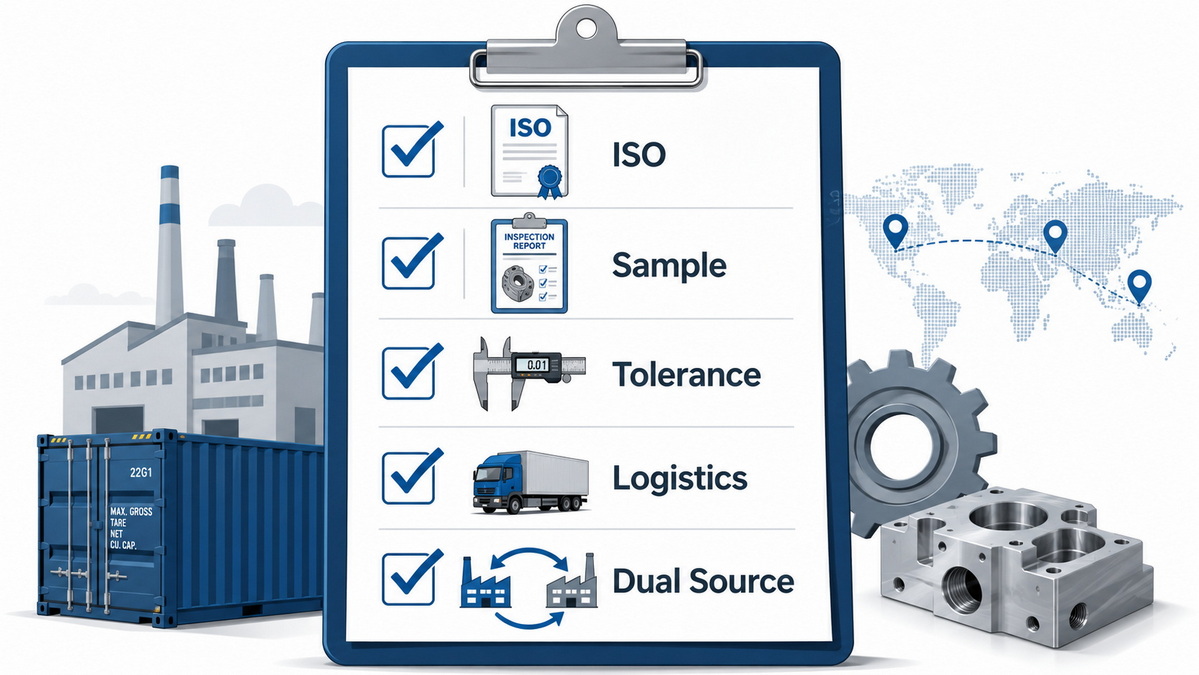
- Request updated ISO 9001 (and, where relevant, AS9100 or other sector-specific) certificates and validate them via certification bodies or national accreditation databases. [radmot]
- Confirm that the scope explicitly covers CNC machining, milling, and related processes rather than general "metalworking."
- Ask for a concise capability list: axis counts, machine models, maximum part envelopes, materials, and inspection equipment.
- Start with a structured pilot batch containing a mix of tight tolerances, complex features, and standard dimensions to get a realistic picture of capabilities. [radmot]
- Request full dimensional reports and, where relevant, roughness measurements and functional checks; compare results against your GD&T priorities.
- Repeat samples after a few months to verify process stability and detect any early drift, especially for long-term programs.
- For Polish suppliers, clarify standard and expedited lead times, shipping arrangements within the EU, and how they prioritise orders during peak periods. [statista]
- When integrating U-Need, align incoterms (for example, FOB, CIF, DAP), packaging and labeling requirements, and inspection levels, and consider allocating cost-sensitive, stable designs to U-Need while keeping complex, time-critical items in Poland. [uneedpm]
- Quote multiple volume levels in RFQs (for example, 50 / 200 / 1,000 pieces) to understand price breaks and help suppliers plan capacity. [youtube]
- Define KPIs such as on-time delivery, PPM, responsiveness to RFQs and ECNs, and frequency of improvement proposals.
- Hold periodic business and technical reviews to discuss performance, cost-reduction ideas, process improvements and any required changes to drawings or specifications. [creatingway]
- Encourage suppliers to proactively highlight risk points, such as challenging tolerances, material availability issues, or fixture limitations, before they become production problems.
1. How can I check whether a Polish CNC milling supplier's ISO certificate is valid and current?
Request a PDF copy, identify the certification body and certificate number, and verify it via the certification body's online database or the relevant accreditation authority; this will show validity dates and any suspensions. If you cannot locate the certificate, ask the supplier for clarification or contact the registrar directly. [mad-cnc]
2. What tolerance range is realistic for production CNC-milled parts in Poland?
For many industrial applications, tolerances in the range of ±0.01–0.05 mm are economical, while critical features in aerospace, medical or precision machinery may require tighter tolerances that only certain shops with advanced equipment and metrology can maintain. Capability studies (Cp/Cpk) and sample data are essential to confirm realistic performance. [unam]
3. How should I compare Polish suppliers with an overseas partner like U-Need on total cost and risk?
Construct a total cost model including unit price, tooling, logistics, tariffs, lead time and risk costs (for example, potential line stoppages or rework); Polish suppliers often provide shorter lead times within the EU and easier site visits, while U-Need may deliver significant unit-cost savings and flexible MOQs. Many buyers assign complex, high‑risk components to Poland and stable, cost-sensitive parts to U-Need. [statista]
4. How can I ensure that CNC milling processes stay stable over multi-year programs?
Beyond initial PPAP or FAI, request periodic capability data on key characteristics, monitor PPM trends, and ask suppliers to document and control CNC program, fixture, and tool changes with formal change-management procedures. Occasional audits and joint reviews of process FMEAs further reduce the risk of unexpected issues. [radmot]
5. What should a strong RFQ for CNC-milled parts include when approaching Polish and international suppliers?
Include 3D CAD models and 2D drawings with clear GD&T, material specs, surface finish requirements, expected annual volumes and batch sizes, tolerance priorities, packaging requirements, desired inspection documentation, and any compliance needs (RoHS, REACH, CE-related). A precise RFQ reduces back‑and‑forth and makes quotations across suppliers more comparable. [creatingway]
- Poland CNC machining and industrial context: [CNC Machining Poland – manufacturers and industry guide], [Statistics on metals and machinery in Poland]. [statista]
- Polish CNC and milling companies: [Top CNC machining manufacturers in Poland – overview including RADMOT], [RADMOT CNC services overview], [MAD Precision Engineering CNC services], [UNAM precision CNC milling services]. [anebonmetal]
- Global CNC market data and trends: [CNC Machine Market size and growth projections]. [marketresearchfuture]
- U-Need capabilities and positioning: [U-Need Precision Machining – custom CNC parts, molds and sheet metal]. [uneedpm]


