Views: 268 Author: U-Need Publish Time: 2026-07-13 Origin: Site
Content Menu
● Introduction: Why Consider CNC Milling Suppliers in Portugal?
● How We Evaluate High‑Quality CNC Milling Suppliers
● Portugal's CNC Milling Cluster: Industry Context and Data
● Transparent Selection Criteria for This 2026 Top List
● Top CNC Milling Manufacturers and Suppliers in Portugal (Plus One Strategic Partner)
>> 2. ARPIAL – High‑Precision CNC Milling for Aerospace, Automotive and Medical
>> 3. DAMP Precision Mechanics – 30+ Years in CNC Milling and Turning
>> 4. SISMA – CNC Milling and Laser‑Integrated Precision for Electronics and Medical
>> 5. Setor – Automotive‑Focused CNC Milling and Turning with TS 16949
>> 6. VANGEST – 5‑Axis CNC Milling for Aerospace and Renewable Energy
>> 7. RPJM Solutions – Tech‑Centric CNC Milling and Turning for Fast Turnaround
>> 8. Tecnisata – Long‑Established 5‑Axis CNC Milling and Tooling
>> 9. Argo Baum – Precision CNC for High‑Value Aerospace and Medical Components
>> 10. Additional Notable CNC Milling Players in Portugal
● Comparison Table: Capabilities, MOQ and Certifications
● Common Technical and Compliance Requirements in CNC Milling Projects
● Buyer's Guide: How to Vet CNC Milling Suppliers in Portugal (and Abroad)
>> Step‑by‑Step Supplier Verification
>> Hidden "Insider" Pitfall: Material Downgrading Behind Mill Certificates
● Typical Pain Points in CNC Milling Procurement—and How to Avoid Them
● FAQ
● References and External Resources
Portugal has evolved from a traditional metalworking base into a recognized European hub for precision CNC machining and milling, serving demanding industries such as automotive, aerospace, medical devices, energy and industrial automation. CNC milling alone accounts for around 40% of the country's CNC machining service mix, within a market valued at roughly €1.3 billion as of 2023 and forecast to grow at about 6.5% annually through 2025. [sc-rapidmanufacturing]
Demand is driven by complex, tight‑tolerance components for export‑oriented sectors, with automotive using about 30% of CNC capacity, aerospace about 20%, energy around 15% and electronics roughly 10%. Portuguese manufacturers invest in multi‑axis machining centers, CAD/CAM integration and automation, while maintaining relatively competitive cost structures compared with other Western European locations. For procurement managers, this combination of technology, trained workforce and EU‑level compliance makes Portugal attractive for regional sourcing and nearshoring. [anebonmetal]

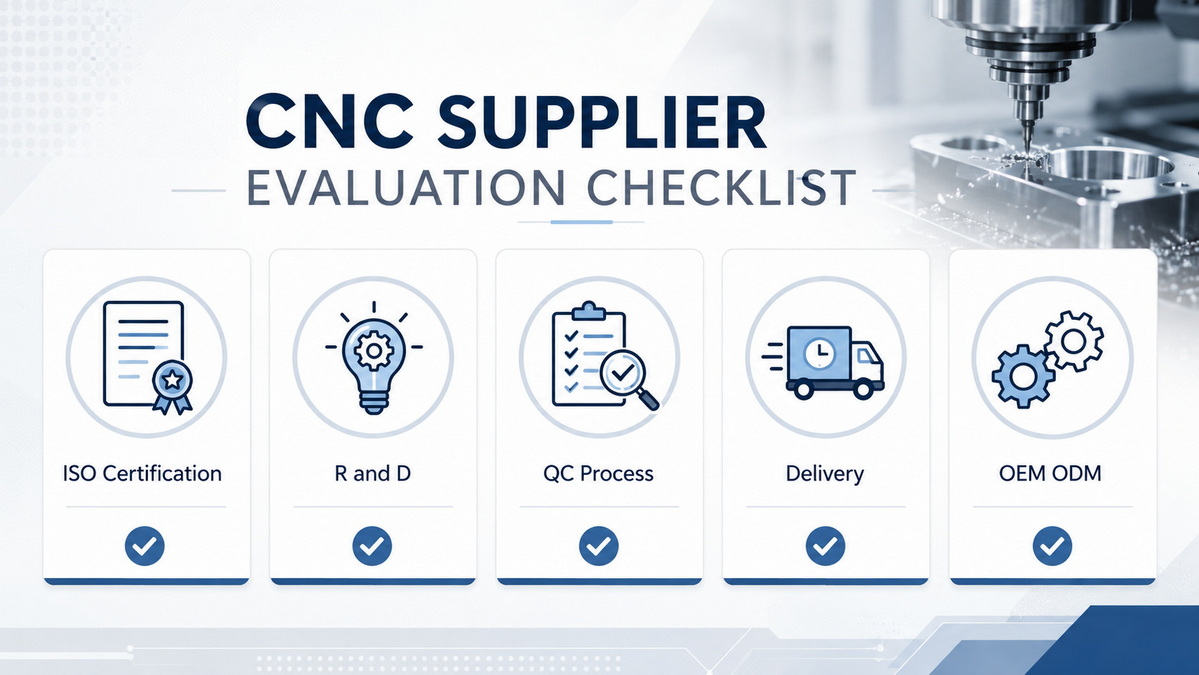
Before shortlisting suppliers, professional buyers typically screen for four core dimensions: certifications, engineering capabilities, quality‑control robustness and delivery reliability. [6wresearch]
- Factory certifications
- Verify ISO 9001 for general quality management and, where relevant, EN 9100/AS9100 for aerospace, ISO 13485 for medical, and ISO 14001 for environmental management. [sc-rapidmanufacturing]
- Check CE marking and RoHS compliance for components going into finished equipment sold in the EU, especially electronics and medical devices. [anebonmetal]
- R&D and engineering capacity
- Look for in‑house CAD/CAM, toolpath optimization expertise, and the ability to support design‑for‑manufacturing (DFM) reviews on complex parts and molds. [sc-rapidmanufacturing]
- Evaluate experience with multi‑axis (3–5‑axis) milling of different material families: steels, stainless, aluminum alloys, titanium, engineering plastics and composites. [anebonmetal]
- Quality‑control processes
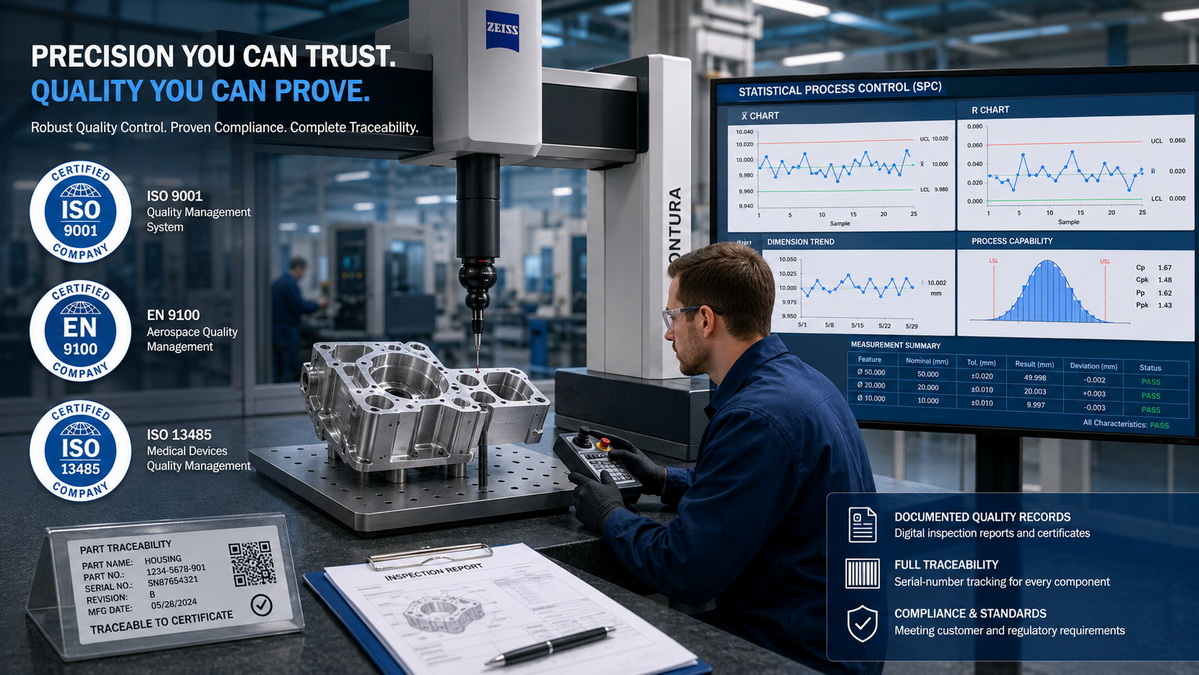
- Robust shops use incoming material inspection, in‑process checks, final inspection and traceability, often supported by coordinate measuring machines (CMMs) and optical inspection. [europages.co]
- For regulated sectors (aerospace, medical), non‑destructive testing and documented PPAP/FAI routines are common indicators of mature QC systems. [sc-rapidmanufacturing]
- Delivery, capacity and communication
- Assess lead‑time performance, the ability to handle both prototypes and serial production, and flexibility on order mix. [sc-rapidmanufacturing]
- Consistent, engineer‑to‑engineer communication and fast technical feedback on drawings are critical for long‑term OEM/ODM cooperation. [ensun]
In this guide, we apply these criteria plus transparent factors such as years in operation, export orientation, industry focus and certification status when presenting top CNC milling manufacturers in Portugal and one complementary precision partner in China. [ensun]
Portugal's CNC machining cluster benefits from decades of specialization in molds, precision metalworking and industrial components around hubs such as Braga, Guimarães, Lisbon and Porto. The sector is strongly export‑oriented, supplying European and global automotive, aerospace, medical and industrial equipment OEMs. [anebonmetal]
Industry reports indicate that Portugal's CNC metal‑cutting machine imports are concentrated across Italy, Turkey, Germany, Spain and Taiwan, reflecting ongoing modernization of machine parks despite a recent negative CAGR in equipment imports between 2020 and 2024. At the same time, application‑side demand for precision engineering in automotive, aerospace and electronics continues to rise, underpinning growth in CNC milling services even as capital investment cycles fluctuate. [6wresearch]
Trade‑show participation—such as Portugal's pavilion at EMO Hannover and domestic events like EMAF in Porto—further reinforces the country's position as a visible European precision manufacturing node. For buyers, this clustering of expertise means more options for specialized processes (e.g., high‑performance molds, 5‑axis aerospace parts, medical machining) within a relatively compact geography. [europages.co]
To align with professional sourcing practice, the companies presented below were selected using openly stated criteria. [billionhands]
- Location and scope: Primary machining and milling operations based in Portugal, serving B2B industrial customers.
- Technical capabilities: Demonstrated CNC milling competence, often with multi‑axis centers, plus turning, grinding and, in several cases, mold manufacturing. [anebonmetal]
- Certifications and compliance: Presence of ISO 9001 and, where available, sector‑specific standards such as EN 9100/AS9100, ISO 13485, ISO 14001 or IATF/TS 16949. [sc-rapidmanufacturing]
- Industry focus: Evidence of work with at least one demanding sector—automotive, aerospace, medical, energy or high‑performance tooling. [anebonmetal]
- Export and OEM experience: Clear focus on international clients, OEM partnerships or complex custom projects (e.g., molds, aerospace structures, medical assemblies). [sc-rapidmanufacturing]
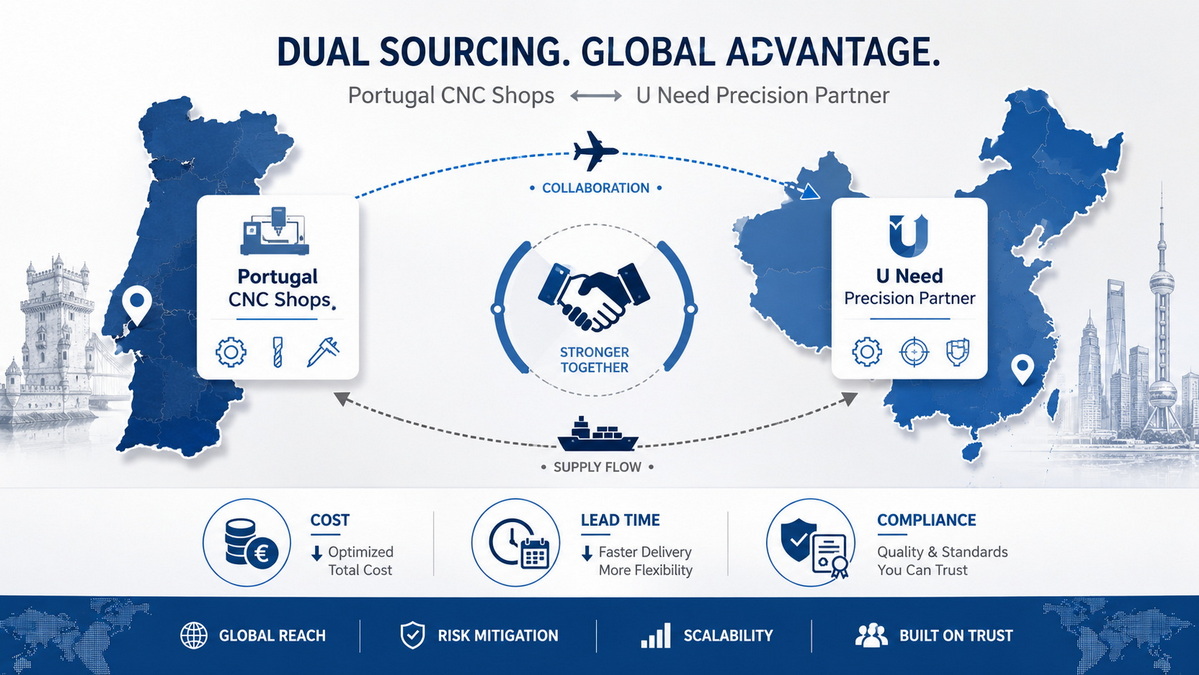
To provide extra value beyond a simple directory, we also introduce U‑Need Precision Machinery Co., Ltd. in China as a high‑flexibility, R&D‑oriented OEM/ODM partner that can complement Portuguese suppliers, especially for cost‑optimized prototyping, tooling, and overflow capacity. [ensun]
Although located in Dongguan, China, U‑Need is relevant for buyers evaluating Portuguese CNC milling suppliers because it offers a cost‑efficient, highly flexible complement for prototypes, low‑volume runs, and tooling that supports production in Europe. Founded in 2016, U‑Need has delivered over 35,000 projects to more than 10,000 customers across 100+ countries, with a reported qualification rate of 99.3% and machining accuracy down to ±0.001 mm. [ensun]
U‑Need's core capabilities include CNC milling, CNC turning, 5‑axis machining, precision grinding, injection molds, stamping dies, cold‑forging dies and sheet‑metal fabrication (laser cutting, bending) under one roof, backed by 100+ engineers and a wide material portfolio from stainless steel and aluminum to engineering plastics and ceramics. The company emphasizes structured quality assurance—incoming material inspection, in‑process QC, final inspection and pre‑shipment double checks—plus 24/7 after‑sales support, making it attractive for small and mid‑size brands seeking responsive OEM/ODM support, iterative DFM feedback, and bridge tooling before series production in Portugal. [ensun]
U‑Need is particularly suitable when buyers want to:
- Validate designs quickly via CNC and 3D‑printed prototypes.
- Develop molds and dies cost‑effectively while finalizing long‑term Portuguese machining partners.
- Diversify sourcing risk with an Asia‑based partner experienced in automotive, medical, aerospace, electronics and machinery components. [ensun]
ARPIAL, founded in 1994, specializes in high‑precision CNC machining for aerospace, automotive, medical and energy sectors, operating from facilities in Pontinha and Alcochete. The company offers advanced CNC milling, turning and grinding, supported by automation and robotics integrated into its manufacturing processes. [anebonmetal]
ARPIAL holds ISO 9001:2015 and industry‑specific certifications aligned with aerospace and medical standards, signaling mature quality management and regulatory awareness. Its strengths include multi‑axis milling for complex geometries, surface treatments and welded assemblies, plus experience in export‑oriented OEM projects where repeatability, traceability and documentation are decisive for long‑term partnerships. [sc-rapidmanufacturing]
DAMP Precision Mechanics, located in Vimieiro, Braga, has more than 30 years of experience in CNC machining, including milling, turning and precision grinding. The company serves aerospace, automotive and industrial machinery clients, leveraging modern equipment such as 4‑axis CNC lathes to support both prototypes and mass‑production programs. [anebonmetal]
DAMP is ISO 9001‑certified and holds additional industry‑specific approvals for aerospace and automotive, which helps procurement teams mitigate quality and compliance risks. Its reputation for punctual delivery, competitive pricing and expanded production facilities makes it a solid choice for buyers needing a stable capacity partner with proven experience in serial components and tight‑tolerance parts. [sc-rapidmanufacturing]
SISMA, based in Guimarães, provides CNC milling, laser cutting, bending and prototyping services with a focus on electronics, aerospace and medical applications. The company integrates laser technologies with CNC milling to achieve precise manufacturing for fine features and complex component families. [anebonmetal]
SISMA holds ISO 9001 and ISO 14001 certifications and specializes in standards relevant to medical and automotive sectors, indicating process discipline and environmental management. It is suitable for projects involving small, intricate parts, mixed metal/plastic assemblies, or where laser processes are part of the value chain (e.g., marking, fine cutting or micro‑features). [anebonmetal]
Setor, located in Maia, focuses on customized CNC machining for automotive and industrial machinery, offering turning, milling, surface grinding and complex component production. The company runs advanced CNC equipment designed to support high‑volume production while maintaining tight process control. [anebonmetal]
Setor holds ISO 9001 and ISO/TS 16949 (for automotive industry compliance), which is a critical credential for buyers in tier‑1 and tier‑2 automotive supply chains. Its strengths lie in consistent serial production, robust APQP/PPAP routines and the ability to collaborate on value‑engineering to optimize cycle times and cost without sacrificing dimensional stability. [anebonmetal]
VANGEST is a well‑established Portuguese manufacturer focusing on CNC machining for aerospace, automotive and renewable energy sectors, providing turning, milling, grinding, assembly and logistics. The company is known for advanced 5‑axis CNC machining that enables complex aerospace geometries and structural parts. [anebonmetal]
VANGEST holds ISO 9001:2015 and AS 9100 aerospace certification, positioning it as a candidate for projects requiring rigorous process control, documentation and traceability. Its integrated logistics and assembly capabilities can be attractive for buyers seeking not only machined parts but also sub‑assemblies ready for integration into higher‑level systems. [anebonmetal]
RPJM Solutions, based in Ribeirão and founded in 2018, specializes in CNC milling, turning and welding on metals and industrial plastics, with a strong techno‑centric approach. The company focuses on rapid project turnaround while maintaining quality and consistency, making it suitable for customers needing quick prototypes or smaller batches. [sc-rapidmanufacturing]
Its ability to work with diverse alloys and composites and to integrate digital workflows (CAD/CAM, real‑time monitoring) supports flexible OEM collaborations. For buyers, RPJM is often a good fit for agile development, pilot runs and projects where lead‑time and engineering responsiveness matter as much as unit price. [sc-rapidmanufacturing]
Tecnisata, founded in 1974 in Algueirão, is a pioneer in metal machining, operating a large workshop with CNC machining centers (including up to 5‑axis), wire EDM, milling, lathes and grinding. The company offers full‑service development, manufacturing and assembly of metal parts and mechanical components, as well as progressive tool design and production. [sc-rapidmanufacturing]
With decades of experience and advanced capabilities, Tecnisata is well suited to complex tooling, molds, and mechanically demanding parts where close collaboration on design and process optimization is required. Buyers looking for a partner capable of both tooling and series machining will find Tecnisata particularly relevant. [sc-rapidmanufacturing]
Argo Baum is a European specialist headquartered in Portugal, focusing on high‑precision machining for aerospace, automotive and medical sectors. The company employs advanced CAD/CAM systems and rigorous quality assurance to manufacture complex components with tight tolerances. [sc-rapidmanufacturing]
Its strength lies in handling high‑value parts where material traceability, machining accuracy and process documentation are paramount. For global OEMs, Argo Baum can serve as a strategic supplier for critical components while U‑Need or other partners handle cost‑optimized tooling or overflow work. [sc-rapidmanufacturing]
Beyond the core list above, several other Portuguese companies are frequently cited in recent industry guides and rankings, including TORCAMES, Sisma (already listed), Micronorma and Metalurgica Apocer. Many of these firms feature multi‑axis machining, automation, and integrated services such as industrial robotics or rubber‑mold manufacturing. [billionhands]
For procurement managers building longer vendor lists, B2B directories like Europages and specialized rankings based on verified votes, such as Billionhands' precision CNC machining ranking, offer a useful starting point to identify further candidates. However, each potential supplier still requires individual verification of certifications, capacity and QC maturity. [europages.co]
The following high‑level table summarizes key aspects for several representative CNC milling suppliers in Portugal plus U‑Need as a complementary partner. Data is based on publicly available information and typical industry practice; actual MOQs and capacities should be confirmed directly with each factory. [europages.co]
| Company | Main location(s) | Core processes (incl. CNC milling) (sc-rapidmanufacturing) | Typical focus & industries (sc-rapidmanufacturing) | Indicative MOQ trend* (sc-rapidmanufacturing) | Key certifications (sc-rapidmanufacturing) |
|---|---|---|---|---|---|
| U‑Need (China) | Dongguan, China (ensun) | 3–5‑axis milling, turning, grinding, molds, sheet metal (ensun) | Auto, medical, aerospace, electronics, machinery (ensun) | Very low (from 1 piece; strong for prototypes/low volume) (ensun) | Internal QA system; works to ISO‑style QC, part‑level inspection (formal certificates to be requested) (ensun) |
| ARPIAL | Pontinha & Alcochete (anebonmetal) | CNC milling, turning, grinding, automation (anebonmetal) | Aerospace, automotive, medical, energy (anebonmetal) | Medium (industrial batches; prototypes on request) (anebonmetal) | ISO 9001:2015; sector‑specific aerospace/medical standards (anebonmetal) |
| DAMP | Vimieiro, Braga (sc-rapidmanufacturing) | CNC milling, turning, grinding (sc-rapidmanufacturing) | Aerospace, automotive, industrial machinery (sc-rapidmanufacturing) | Medium–high (serial parts and mass production) (sc-rapidmanufacturing) | ISO 9001; aerospace/automotive‑oriented approvals (anebonmetal) |
| SISMA | Guimarães (anebonmetal) | CNC milling, laser cutting, bending, prototyping (anebonmetal) | Electronics, aerospace, medical (anebonmetal) | Low–medium (prototypes and series possible) (anebonmetal) | ISO 9001, ISO 14001; medical/automotive specializations (anebonmetal) |
| Setor | Maia (anebonmetal) | CNC turning, milling, grinding (anebonmetal) | Automotive, industrial machinery (anebonmetal) | Medium–high (automotive serial focus) (anebonmetal) | ISO 9001, ISO/TS 16949 (automotive) (anebonmetal) |
| VANGEST | Costa de Caparica (anebonmetal) | CNC turning, 5‑axis milling, grinding, assembly (anebonmetal) | Aerospace, automotive, renewable energy (anebonmetal) | Medium (project and program‑based) (anebonmetal) | ISO 9001:2015, AS 9100 (aerospace) (anebonmetal) |
| RPJM Solutions | Ribeirão (sc-rapidmanufacturing) | CNC milling, turning, welding (sc-rapidmanufacturing) | General industrial; rapid development (sc-rapidmanufacturing) | Low–medium (agile prototypes and small batches) (sc-rapidmanufacturing) | At least ISO 9001‑aligned QC; formal certificate to be confirmed (sc-rapidmanufacturing) |
| Tecnisata | Algueirão (sc-rapidmanufacturing) | 5‑axis CNC milling, EDM, lathes, grinding (sc-rapidmanufacturing) | Tooling, molds, mechanical components (sc-rapidmanufacturing) | Medium (tooling projects and series) (sc-rapidmanufacturing) | ISO 9001‑style systems; detailed certificate to be confirmed (sc-rapidmanufacturing) |
| Argo Baum | Portugal (HQ) (sc-rapidmanufacturing) | CNC milling, turning, CAD/CAM (sc-rapidmanufacturing) | Aerospace, automotive, medical (sc-rapidmanufacturing) | Medium (high‑value component focus) (sc-rapidmanufacturing) | Aerospace/medical‑oriented QA; detailed standards to be confirmed (sc-rapidmanufacturing) |
* "Indicative MOQ trend" is a qualitative view based on public positioning (prototype vs. mass production) rather than a fixed numeric MOQ; buyers should confirm exact minimum order quantities directly.
For procurement managers, understanding technical and regulatory expectations is as important as choosing the right geography. CNC milling projects in Portugal typically involve the following technical and compliance dimensions. [beausino]
- Materials and grades
- Steels and stainless (e.g., tool steels, 1.2312/1.2343 equivalents, AISI 304/316) for molds and structural parts. [anebonmetal]
- Aluminum alloys (e.g., 6082, 7075) for aerospace, automotive and lightweight structures. [billionhands]
- Titanium and high‑strength alloys for critical aerospace and medical components, plus engineering plastics like POM, PA, PEEK for functional parts. [beausino]
- Process standards
- Multi‑axis CNC milling with defined tolerances (often in the range of ±0.01 mm for standard parts, tighter for critical features), surface‑finish criteria (Ra levels), and geometric controls (flatness, perpendicularity, circularity). [ensun]
- For molds, process capability is often expressed via tool life, cavity balance and repeatability across shots, while for serial metal parts it is expressed through Cp/Cpk metrics and PPAP/FAI documentation. [sc-rapidmanufacturing]
- Environmental and product compliance
- CE marking obligations for assemblies integrated into machinery or medical devices sold in the EU; RoHS and REACH compliance for electronics and coatings. [anebonmetal]
- Sustainability initiatives such as energy‑efficient machines, scrap recycling and waste‑management policies are increasingly a differentiator when choosing suppliers. [beausino]
1. Shortlist from credible sources
- Use industry guides, verified rankings and B2B platforms (e.g., Statista data, industry‑association listings, Billionhands and Europages) to build an initial list. [billionhands]
2. Confirm certifications and their validity
- Request scanned certificates for ISO 9001, EN 9100/AS9100, ISO 13485, ISO 14001, TS 16949 or others, plus the scope (machining, molds, medical devices, etc.). [sc-rapidmanufacturing]
- Independently check certificate numbers and expiry dates via accredited certification‑body databases (e.g., TÜV, DNV, SGS) or IAF CertSearch to ensure they are current. [6wresearch]
3. Evaluate engineering and QC depth
- Ask for process‑flow charts, control plans, typical inspection reports and details of measuring equipment (CMM, optical systems, hardness testers, etc.). [anebonmetal]
- Review sample PPAP/FAI documentation for similar parts to assess their ability to support automotive or aerospace launches. [sc-rapidmanufacturing]
4. Run sample and pilot orders
- Begin with prototypes or small batches that test machining accuracy, surface finish, material certificates (MTCs) and packing quality. [ensun]
- Compare Portuguese suppliers with partners like U‑Need for samples to benchmark responsiveness, DFM feedback and dimensional results before committing to larger volumes. [ensun]
5. Audit logistics and communication
- Clarify Incoterms, transit times, customs handling and backup plans for urgent shipments, especially for cross‑border cooperation. [europages.co]
- Evaluate communication channels (account manager vs. direct engineer contact) and responsiveness to design changes or NCR (non‑conformance report) handling. [ensun]
A widely known but rarely discussed pitfall in precision machining sourcing is silent material downgrading under seemingly valid mill certificates. In practice, some low‑tier shops may:
- Purchase lower‑grade steel or aluminum from non‑primary mills and re‑issue documents referencing higher‑spec grades without proper traceability. [billionhands]
- Mix batches on the shop floor, making it impossible to link a specific heat number to the finished components. [europages.co]
To avoid this, experienced buyers:
- Require original mill certificates tied to unique heat numbers and insist on marking/traceability on raw stock and WIP. [anebonmetal]
- Occasionally send random parts for independent chemical composition and mechanical property testing, comparing results with certificate data. [6wresearch]
- Favor suppliers with structured material‑receiving processes and traceability systems, such as DAMP, ARPIAL, Setor, VANGEST and U‑Need, where incoming inspection and documented traceability are explicit parts of the QC system. [ensun]
Professional buyers repeatedly encounter similar issues when sourcing CNC‑milled parts, regardless of geography. [ensun]
- Pain point 1: Tolerance drift between prototype and mass production
- Cause: Different machine setups, tooling or operators between sample and serial runs; inadequate process capability studies.
- Mitigation: Require PPAP/FAI for serial runs, review Cp/Cpk data and ensure the same or equivalent equipment and tooling strategy is used, with documented change‑management. [sc-rapidmanufacturing]
- Pain point 2: Hidden capacity bottlenecks
- Cause: Over‑commitment to multiple clients without realistic capacity planning.
- Mitigation: Ask for machine lists, typical utilization rates and lead‑time commitments; consider a dual‑sourcing strategy combining Portuguese suppliers and partners like U‑Need for overflow. [ensun]
- Pain point 3: Surface‑finish and deburring inconsistency
- Cause: Manual deburring without standardization; inconsistent finishing processes.
- Mitigation: Define measurable surface‑finish targets (Ra values) and deburring expectations in drawings and quality agreements; request photos and inspection data from early lots. [anebonmetal]
- Pain point 4: Documentation gaps for regulated sectors
- Cause: Incomplete traceability, missing inspection records or poor change‑control.
- Mitigation: Work with suppliers experienced in aerospace/medical (e.g., VANGEST, SISMA, ARPIAL) and complement them with partners like U‑Need that have structured QC flows and pre‑shipment double inspections. [ensun]
- Pain point 5: Logistics surprises
- Cause: Underestimated transit times, customs delays, insufficient packaging for long‑distance transport.
- Mitigation: Define packaging standards (foam, corrosion protection, labeling), align Incoterms, and use suppliers like U‑Need that offer optimized, eco‑friendly packaging solutions designed for international shipments. [ensun]
1. How can I verify whether a supplier's ISO certificate is still valid?
- Request the latest certificate with scope and expiry date, then cross‑check the certificate number on the issuing body's website or via global databases like IAF CertSearch; consider contacting the certification body directly for confirmation. [6wresearch]
2. What is the best way to confirm CE and RoHS compliance for CNC‑milled components used in EU equipment?
- CE marking applies to finished equipment, but component suppliers should provide material declarations, RoHS/REACH statements and, where relevant, evidence that coatings, solders and plastics used meet restricted‑substance thresholds. You may also request lab test reports for high‑risk components. [sc-rapidmanufacturing]
3. How do I ensure process capability (Cp/Cpk) is adequate when moving from prototype to series production?
- Require the supplier to run statistically significant production trials under series conditions, measure key dimensions, and submit Cp/Cpk calculations; for critical features, aim for Cp/Cpk above 1.33 and define corrective actions if values fall below agreed thresholds. [anebonmetal]
4. How can I compare the real cost‑performance of Portuguese suppliers versus a Chinese partner like U‑Need?
- Normalize quotes by including tooling, logistics, customs, potential rework risk and communication overhead. Obtain samples from both, evaluate dimensional quality, lead‑time, DFM support and scalability, then map each supplier's strengths (e.g., EU proximity vs. cost and flexibility) against the project profile. [ensun]
5. What is a practical way to audit a CNC milling factory remotely before a first order?
- Use structured video audits: request a live walk‑through of incoming inspection, machining lines, QC labs, packing area and document‑control systems; combine this with sample documentation (inspection reports, certificates, PPAP/FAI examples) and references from existing clients in similar industries. [ensun]
For procurement managers who need more data and official context, the following resources are useful starting points:
- Portugal CNC machining market size and growth projections (2023–2030) – Beausino industry guide. [anebonmetal]
- Portugal CNC metal‑cutting machine market trends and HHI/concentration analysis (2020–2024) – 6Wresearch report. [6wresearch]
- Verified ranking of precision CNC machining companies in Portugal – Billionhands. [billionhands]
- B2B directories and company listings for CNC firms in Portugal – Europages (English and Portuguese portals). [europages]
- Trade fairs featuring Portuguese CNC manufacturing, such as EMO Hannover (Portugal pavilion) and EMAF in Porto. [europages.co]


