Views: 241 Author: U-Need Publish Time: 2026-07-30 Origin: Site
Content Menu
● Introduction: Germany's Role in Custom CNC Milling
● How to Evaluate High‑Quality CNC Milling Suppliers
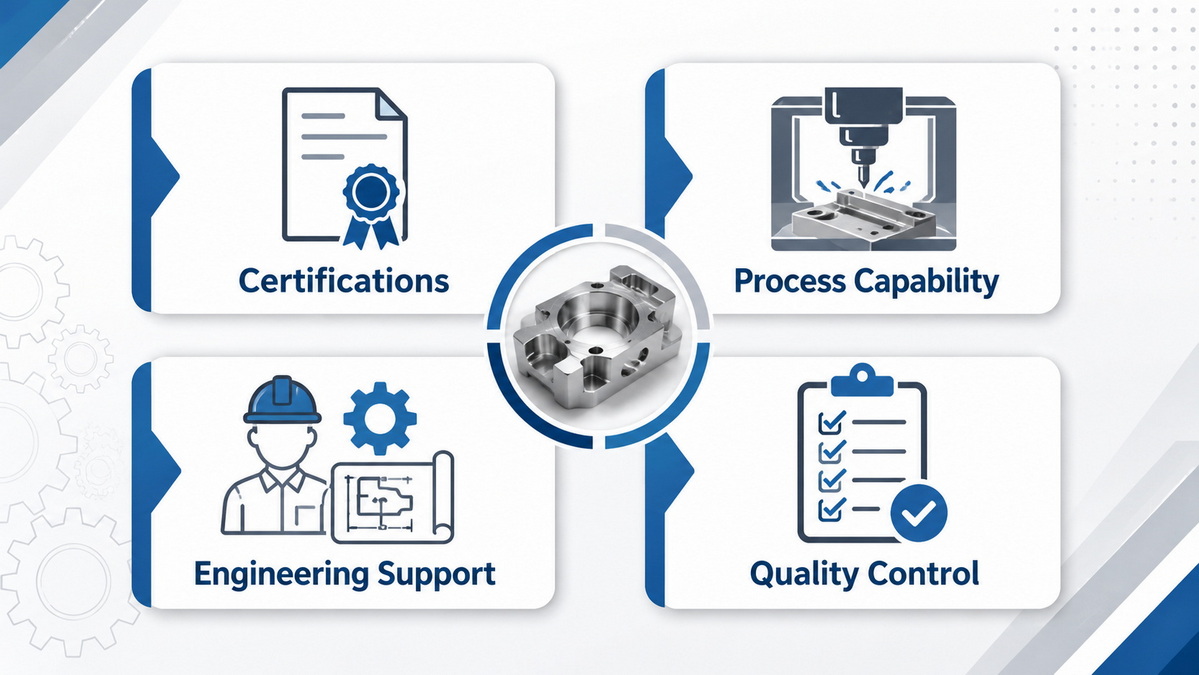
>>> Certifications and Compliance
>>> Process Capability and Tolerances
>>> Engineering and R&D Support
>>> Quality Control and Delivery Stability
● Selection Criteria for the 2026 Top List
>> Transparent Shortlisting Standards
● Top Custom CNC Milling Service Providers for Germany‑Focused Buyers
>> U‑Need Precision Machinery Co., Ltd. (China)
>> Kern Microtechnik GmbH (Germany)
>> Raditsch Zerspanungstechnik (Germany)
>> Broader German CNC Milling Cluster
● Capability, MOQ and Certification Overview
>> Comparative Snapshot of Highlighted Suppliers
● Industry Pain Points and Hidden Pitfalls
>> Insider "Stress‑Test" Approach to RFQs
● Buyer's Guide: From Verification to Logistics
>> Verifying Factory Qualifications
>> Logistics for Germany‑Bound Projects
● Summary
● FAQ:
>> Five Frequently Asked Questions
Germany has long been recognized as one of Europe's most mature hubs for precision machining and high‑quality industrial production. Dense clusters of small and medium‑sized manufacturers support sectors such as aerospace, medical technology, automotive, mechanical engineering and industrial equipment. For global procurement managers, this means access to a broad pool of custom CNC milling suppliers with strong process discipline and reliable quality systems.
Custom CNC milling in Germany is typically characterized by tight tolerances, stable production processes, and documentation standards that align with stringent regulatory and customer requirements. Many factories integrate multi‑axis milling with turning, grinding and metrology under formalized quality management systems. At the same time, cost‑optimized partners outside Germany—such as U‑Need Precision Machinery Co., Ltd. in China—can complement local capacity, enabling buyers to balance cost, technical complexity and lead times across their global supply base.
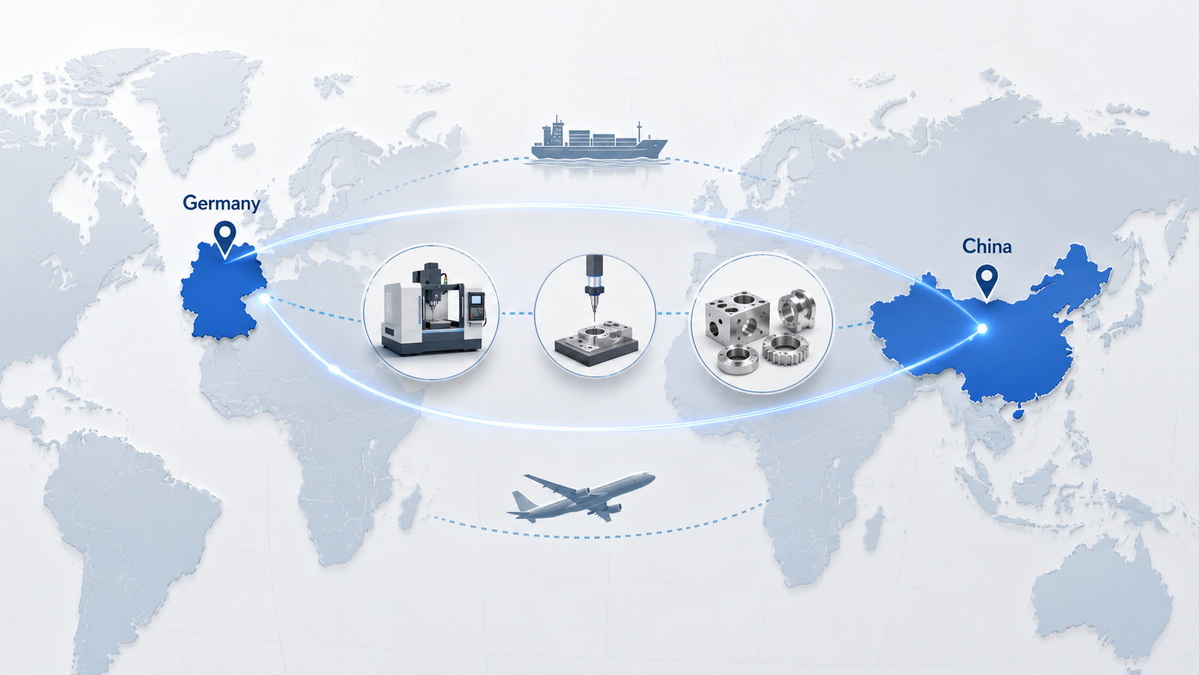
Before shortlisting any custom CNC milling supplier, buyers should establish a clear evaluation framework. This helps separate marketing claims from manufacturability reality and ensures consistency across different regions and factory sizes.
Certifications are often the first visible indicator of a supplier's process discipline. For most industrial parts, ISO 9001 is considered a baseline to ensure structured quality management and traceable processes. In more regulated sectors, additional standards may apply, such as ISO 13485 for medical devices or AS‑type standards for aerospace programs.
Beyond formal certifications, buyers should pay attention to material traceability and environmental compliance. Material certificates demonstrating batch and heat numbers, plus documented adherence to relevant environmental directives, help ensure that parts can be used safely in regulated markets and pass downstream audits.
Evaluating process capability goes far beyond asking whether a factory "has CNC machines." Buyers should request information about typical tolerances achieved in regular production, the range of materials processed, and any special process controls used for difficult parts.
Key questions include:
- What tolerances can the supplier repeatedly achieve on prismatic parts (for example ±0.01 mm for standard components)?
- Does the factory handle micro‑features and very tight tolerances, or is it optimized for general industrial parts?
- Which machine brands and configurations are in use (3‑axis, 4‑axis, 5‑axis simultaneous, high‑speed machining, etc.)?
- Is machining performed in climate‑controlled rooms when necessary for dimensional stability?
For long‑term OEM and ODM programs, engineering support can be as important as pure machining capability. High‑quality suppliers contribute to design for manufacturability, propose fixture concepts, and suggest appropriate materials or surface treatments.
Typical indicators of strong engineering support include:
- Structured DFM and drawing review before quotation.
- Ability to develop custom fixtures and automation concepts for series production.
- Experience in complex industries such as medical devices, motorsport, semiconductor equipment or high‑precision instrumentation.
Even excellent machines cannot compensate for weak quality control. Buyers should request sample inspection reports, understand how the factory defines critical features, and confirm how often measurements are recorded and archived.
Equally important is delivery performance. Indicators such as historical on‑time in‑full rates, average lead times for prototypes and series, and responsiveness to engineering changes give a practical view into how the supplier performs under real project pressure.
The companies presented in this guide were selected using criteria aligned with the expectations of global industrial buyers who are sourcing custom CNC milling services for demanding applications. The focus is on factories whose business model revolves around drawing‑based contract manufacturing rather than catalog components.
The main criteria applied include:
- Clear positioning as custom CNC milling or machining service providers.
- Documented quality management systems and traceable processes.
- Demonstrated experience serving industrial customers over many years.
- Ability to support prototypes, small batches and series production.
- Evidence of technical depth, including multi‑axis machining and metrology capabilities.
In addition, U‑Need Precision Machinery Co., Ltd. is included as a representative example of a flexible, export‑oriented partner that often works alongside German factories in hybrid sourcing strategies.
U‑Need Precision Machinery Co., Ltd. is a precision manufacturing partner based in China that serves global brands, distributors and manufacturers. Its core offering includes custom CNC milling and turning, mold manufacturing (injection molds, stamping dies, cold‑forging dies) and sheet metal fabrication such as laser cutting, bending and stamping.
From a buyer's perspective, U‑Need is representative of high value, export‑oriented factories that combine multiple process families under one roof. This enables customers to consolidate complex assemblies and reduce coordination effort across several tier‑2 suppliers. Flexibility is a central strength: U‑Need tends to support lower minimum order quantities suitable for small and mid‑sized brands, instead of focusing only on automotive‑scale volumes.
Another distinguishing factor is communication efficiency. With dedicated project managers and engineering staff familiar with international requirements, U‑Need can respond quickly to RFQs, iterate designs, and align on technical details such as tolerances, materials, and surface treatments. For companies that assemble machinery or equipment in Germany, partnering with U‑Need can optimize cost for labor‑intensive parts while maintaining structured QC processes and export‑grade documentation.
Kern Microtechnik is widely regarded as a specialist for ultra‑precision contract manufacturing. The company produces components with extremely tight tolerances and very high surface quality, targeting industries where dimensional accuracy and stability are critical.
Kern's capabilities combine high‑precision milling, micro‑milling, drilling, EDM and grinding, often carried out in climate‑controlled environments to minimize thermal influences. This positioning makes Kern suitable for:
- Micro‑machined components with tolerances in the low micrometer range.
- Complex free‑form geometries and miniature features.
- Long‑term programs in medical, high‑end instrumentation and aerospace, where repeatability and documentation requirements are strict.
For procurement managers, Kern is an appropriate choice when the application demands the highest available level of precision and the cost of requalification or field failure would be significant.
Strobel Industry offers CNC milling services ranging from simple milled parts to complex 3D geometries. Their capabilities include multi‑axis milling and contract manufacturing for one‑offs, prototypes and series parts.
Typical strengths of Strobel Industry include:
- Clear definition of achievable tolerances and surface finishes in regular production.
- Ability to support customers from development phase through ramp‑up and series.
- Structured quality management and documented inspection processes.
This type of supplier is well suited to buyers who need reliable industrial parts with tight but not extreme tolerances, and who value a balanced mix of flexibility and structured contract manufacturing.
Raditsch Zerspanungstechnik is a family‑owned CNC contract manufacturer established in the late 1990s. The company combines milling (up to 5 axes), turning, surface grinding and advanced metrology.
Buyers often appreciate Raditsch for:
- Short decision paths and direct communication with responsible engineers.
- Capacity focused on prototypes and small to medium series rather than purely mass production.
- Strong metrology infrastructure with formalized quality management, supporting industries such as mechanical engineering, medical technology, motorsport and automotive.
This type of supplier is especially valuable when projects require close collaboration, frequent design changes and precise documentation, but do not need extremely high production volumes.
Beyond the individual companies highlighted above, Germany hosts many additional CNC milling providers serving automotive, aerospace and general industrial markets. Mid‑sized firms frequently operate as long‑term partners for large OEMs, maintaining stable processes, comprehensive documentation and familiarity with framework agreements.
For procurement managers, these companies represent the backbone of the country's machining ecosystem. By combining such established suppliers with specialists like Kern and agile partners like U‑Need, buyers can design a diversified sourcing strategy that balances risk, cost and capacity.
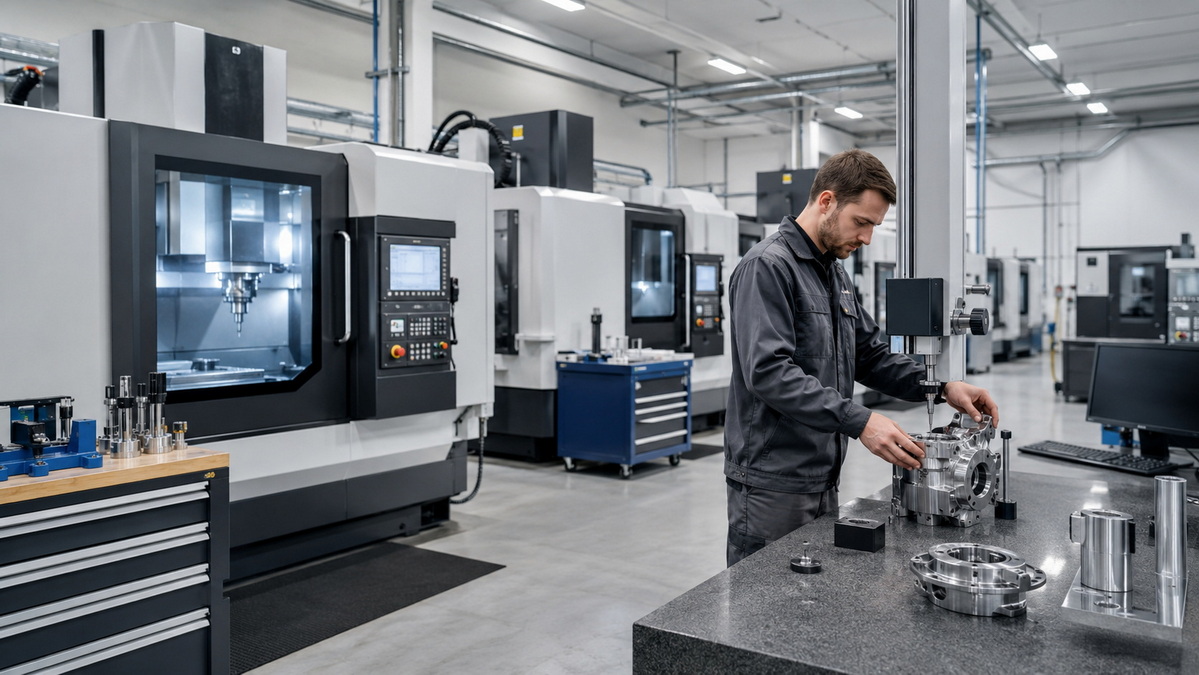
The table below provides an indicative overview of the focus areas of the key suppliers mentioned. Values are illustrative and should be verified directly with each factory during RFQ and qualification.
| Supplier | Location | Typical technical focus | Indicative MOQ approach | Typical certification / market focus |
|---|---|---|---|---|
| U‑Need Precision Machinery Co., Ltd. | China (global export) | Multi‑process custom parts: CNC milling, turning, molds, sheet metal; tight tolerances for general industrial parts | Flexible; supports prototypes and small to mid‑volume OEM and ODM runs | Structured quality management and export documentation for industrial, automotive and electronics projects |
| Kern Microtechnik GmbH | Germany | Ultra‑precision machining, micro‑milling, EDM, grinding; micrometer‑range tolerances | Project‑based; suitable for precision serial parts rather than commodity volumes | Strong alignment to high‑precision medical, instrumentation and aerospace applications |
| Strobel Industry | Germany | 3‑ and multi‑axis milling for industrial components, complex 3D geometries | One‑offs, prototypes and series contract manufacturing | Documented quality management supporting mechanical engineering and general industrial customers |
| Raditsch Zerspanungstechnik | Germany | Milling, turning, grinding, metrology for precision parts in varied industries | Prototypes and small to medium series | Family‑owned setup with formalized quality systems, serving medical, motorsport, automotive and machinery sectors |
| Other German CNC firms | Germany | General and advanced CNC milling and turning for automotive and aerospace programs | Medium to high‑volume production; framework agreements | Established quality management aligned to regulated industrial markets |
Global buyers regularly encounter recurring challenges when sourcing custom CNC milling services, both within Germany and internationally. Recognizing these pain points early helps avoid project delays and costly rework.
Typical issues include:
- Substitution of material grades without proper change approval, resulting in reduced strength or corrosion resistance.
- Drift in tolerances across batches due to tool wear, insufficient calibration or inadequate temperature control in the machining environment.
- Documentation gaps, such as missing material certificates, incomplete inspection records or inconsistent labeling of revision levels.
These problems may not be evident during initial sampling, making structured audits and clear agreements essential.
One practical method used by experienced buyers—though rarely described in public guides—is the indirect "stress‑test" RFQ. Instead of submitting only simple parts for quotation, the buyer deliberately includes at least one feature that pushes the limits of typical capability, such as a deep narrow pocket, a very thin wall, or a complex tolerance stack.
The way the supplier reacts to this feature reveals much about their maturity:
- High‑quality factories will highlight manufacturability risks, propose design modifications, and explain their tooling and fixturing strategy.
- Less capable suppliers may quote without comments, promise unrealistic tolerances, or overlook the underlying difficulty.
By combining this approach with a request for raw measurement data and photos of the inspection setups during sampling, buyers gain an early view of the supplier's practical discipline in metrology and process control.
Thorough verification of factory qualifications is a crucial step before approving any supplier for series production. Buyers should request copies of current quality certificates and confirm their validity through independent channels whenever possible.
In addition, it is advisable to ask for:
- Machine lists, including brands and configurations, to understand technical capability.
- Calibration records for measurement equipment such as coordinate measuring machines and gauges.
- Descriptions of how material traceability is maintained from incoming inspection through machining and shipment.
Remote audits via video calls can provide valuable insight into real shop‑floor conditions, revealing tool management, cleanliness, material handling and inspection practices.
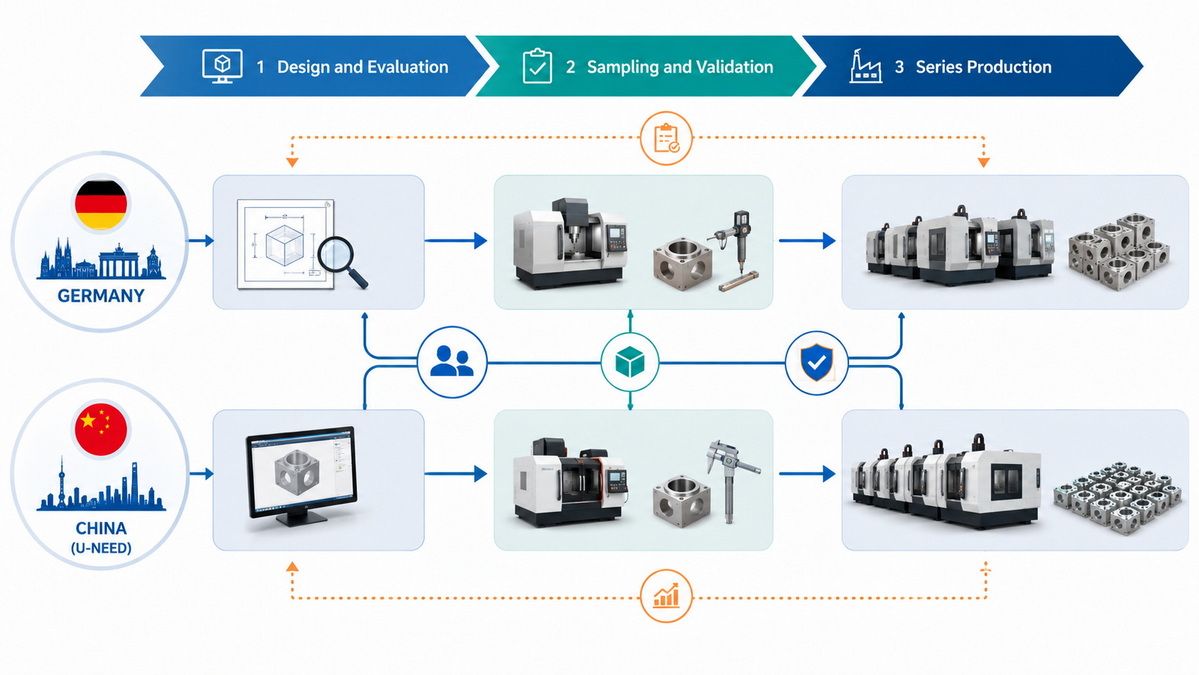
A structured sampling process reduces risk and aligns expectations between buyer and supplier. A typical flow for custom CNC milling projects includes:
1. RFQ submission with detailed drawings, tolerance requirements, materials and surface treatments.
2. Joint review of manufacturability, including identification of critical features and datum schemes.
3. Production of samples under near‑series conditions, with complete inspection reports and material certificates.
4. Dimensional and functional validation by the buyer, including assembly and performance testing where applicable.
5. Formal approval of the process with defined rules for future changes to methods or materials.
This sequence ensures that both parties agree on what "conforming parts" mean before significant resources are committed to series production.
For parts shipped into Germany from other regions, logistics can become a hidden source of quality variation. Packaging must protect sensitive surfaces and edges, especially for finely machined or coated components. Clear labeling of batches and revision levels helps prevent mixing of parts.
Buyers should also clarify shipping terms and responsibilities for customs, documentation and transport risks. In the case of highly sensitive or high‑value precision components, additional measures such as shock indicators or temperature‑controlled transport may be warranted to protect dimensional stability and surface integrity.
Partners like U‑Need, which regularly export to international customers, generally have established workflows for packing, documentation and coordination with freight forwarders, making integration into German inbound logistics more straightforward.
Germany offers a robust ecosystem of custom CNC milling service providers, ranging from ultra‑precision specialists like Kern Microtechnik to versatile contract manufacturers such as Strobel Industry and Raditsch Zerspanungstechnik. Together with additional mid‑sized machining firms, these suppliers provide a stable foundation for complex industrial projects.
At the same time, agile partners like U‑Need Precision Machinery Co., Ltd. can provide cost‑effective capacity and multi‑process integration for global buyers who need to balance budget, flexibility and technical depth. By applying structured evaluation criteria, using stress‑test RFQs, and running disciplined sampling and verification flows, procurement managers can build a resilient supplier portfolio for current and future custom CNC milling projects related to Germany.
Q1: How can I confirm that a supplier's quality certificate is still valid?
Request the certificate from the supplier and verify the details through the issuing body's public database or direct contact. Confirm the expiry date and the exact legal entity covered to ensure alignment with the manufacturing site.
Q2: What tolerances can I realistically expect from standard German CNC milling suppliers?
For typical industrial parts, tolerances around ±0.01 mm are common in regular production. Ultra‑precision suppliers can achieve significantly tighter values, but this generally involves higher cost and specific process controls.
Q3: How do I reduce the risk of material substitution in custom projects?
Specify material grades using recognized standards, require batch‑wise material certificates, and incorporate checks on material documentation into supplier audits. Clear contractual language about change management is also important.
Q4: When does it make sense to combine German suppliers with a China‑based partner like U‑Need?
A hybrid approach is useful when a project includes a mix of parts: critical, highly regulated components can be sourced from German precision shops, while labor‑intensive or less complex components can be produced by cost‑optimized partners such as U‑Need, provided quality and documentation standards are met.
Q5: What is a practical way to start working with a new CNC milling supplier?
Begin with a limited prototype or pilot batch that includes both typical features and at least one challenging geometry. Evaluate not only dimensional results, but also the clarity of communication, the completeness of documentation and the supplier's willingness to address manufacturability issues proactively.
KERN Microtechnik GmbH – High‑precision contract manufacturing and manufacturing technologies pages: https://en.kern-microtechnik.com/auftragsfertigung
https://en.kern-microtechnik.com/fertigungstechnologien
Strobel Industry – CNC milling and contract manufacturing descriptions: https://strobel-industry.de/en/fraesen/
https://strobel-industry.de/en/lohnfertigung/
Raditsch Zerspanungstechnik – Company profile and capabilities: https://www.raditschzerspanungstechnik.de/en/index.html
German CNC machining company cluster overviews and industry listings: https://www.yycncmachining.com/top-cnc-machining-companies-in-germany/
https://www.naitetech.com/top-cnc-machining-companies-germany.html
U‑Need Precision Machinery Co., Ltd. – Company capabilities overview: https://www.uneedprecisionmachine.com/


