Views: 258 Author: U-Need Publish Time: 2026-07-20 Origin: Site
Content Menu
● Understanding the Root Problem: Why Chip Buildup Occurs
● Consequences of Poor Chip Control
● Solution 1: Using Chip-Breaker Milling Cutters
>> How Chip-Breaker Tools Work
● Solution 2: Roughing End Mills for Aggressive Chip Reduction
● Choosing the Right Tool Strategy
● Enhancing Chip Evacuation with Coolant Optimization
● Process Optimization in Modern Manufacturing
● Practical Application in Mold and Precision Parts Manufacturing
● Precision Manufacturing Capabilities and Process Integration
● Key Takeaways for Improving Chip Control
● FAQs
>> 1. What is the main cause of chip accumulation in cavity machining?
>> 2. How do chip-breaker tools improve machining efficiency?
>> 3. Are roughing end mills suitable for finishing operations?
>> 4. Can adjusting cutting parameters alone solve chip problems?
>> 5. Why is chip control important for tool life?
In precision manufacturing, chip control during cavity and slot machining is a critical yet often underestimated factor that directly impacts surface quality, tool life, and machining efficiency. When machining deep cavities or narrow grooves, long chips frequently accumulate inside the cutting zone, leading to a chain of issues that compromise both productivity and product quality.
From real-world machining experience, unresolved chip evacuation problems often result in surface scratches, excessive cutting noise, repeated chip cutting, and accelerated tool wear. These challenges are especially common in mold manufacturing, precision parts machining, and complex component production, where tight tolerances and surface integrity are essential.

During cavity or slot machining, chips tend to form as long, continuous strands. These chips have limited space to escape, especially in deep or enclosed geometries.
Common causes include:
- Continuous cutting edges that produce long, string-like chips
- Restricted chip evacuation paths in deep cavities
- Improper cutting parameters, including feed rate and spindle speed
- Insufficient coolant flow or poor directionality
- Using standard tools in roughing operations
When chips cannot be removed efficiently, they begin to accumulate and interfere with the cutting process, often sticking to the tool or workpiece surface.
Failure to manage chip evacuation leads to several performance issues:
- Surface damage: Chips scratch finished surfaces, reducing part quality
- Re-cutting of chips: Tools repeatedly cut the same material, increasing resistance
- Increased cutting noise: Indicates unstable machining conditions
- Tool wear acceleration: Friction and heat shorten tool lifespan
- Thermal buildup: Affects dimensional accuracy and consistency
In high-volume production, these issues can significantly increase rework rates and downtime, reducing overall efficiency.
A highly effective method to address chip accumulation is the use of chip-breaker (segmented edge) milling cutters.
These tools feature grooves or notches along the cutting edge, designed to split long chips into smaller, manageable fragments during machining.
- Prevents chip entanglement around the tool
- Improves chip evacuation efficiency
- Reduces re-cutting and friction
- Lowers cutting noise levels
- Extends tool life by minimizing heat buildup
Because chips are smaller and lighter, coolant systems can remove them more effectively, keeping the cutting zone clean and stable.
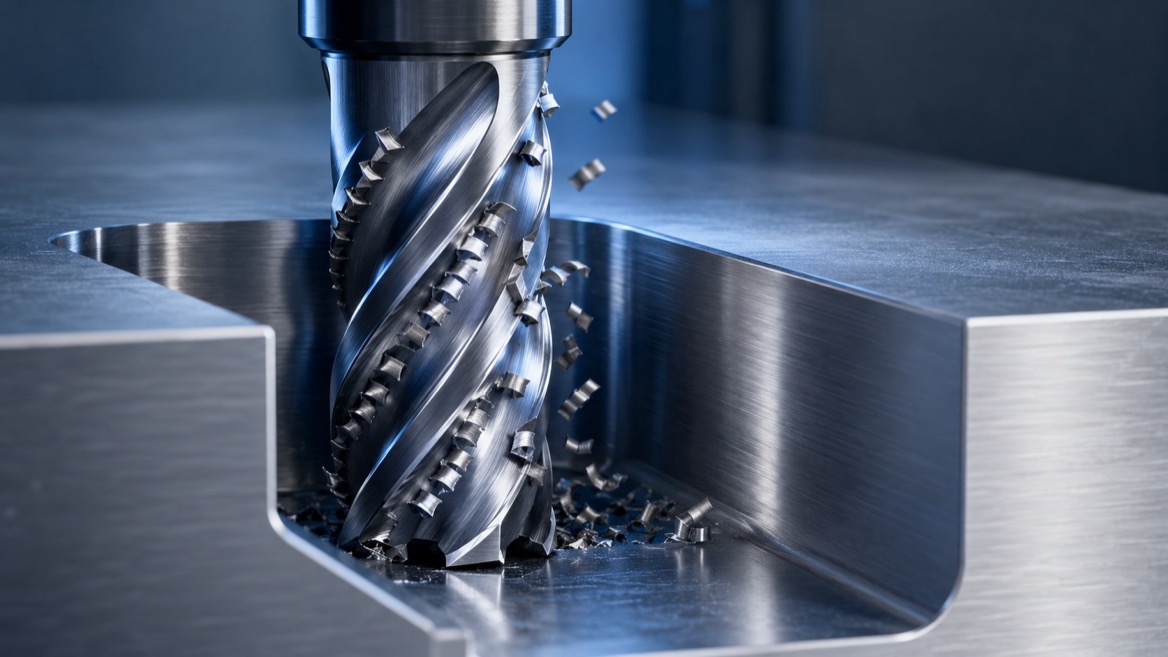
When chip size needs to be reduced even further, roughing end mills provide a more aggressive and efficient approach.
- Serrated or wavy cutting edges
- Optimized for high material removal rates
- Designed for rough machining operations
- Break chips into very small segments
- Enable higher feed rates and deeper cuts
- Reduce cutting forces and vibration
- Minimize chip packing in confined spaces
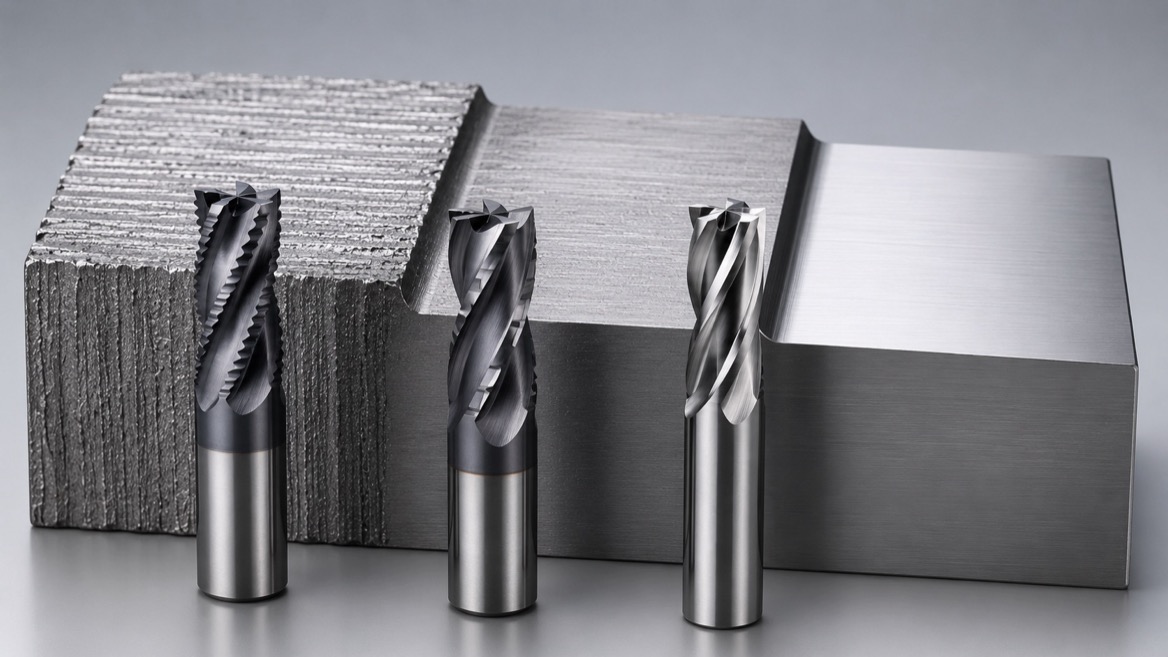
Compared with standard end mills, roughing tools significantly reduce the likelihood of chip accumulation and tool overload.
Selecting the appropriate cutting tool depends on the machining stage and desired outcome.
A practical approach includes:
1. Use roughing end mills for rapid material removal
2. Switch to chip-breaker cutters for semi-finishing
3. Apply standard or finishing tools for final surface quality
This staged process helps balance efficiency, tool life, and surface finish requirements.
Tool geometry alone cannot fully solve chip evacuation challenges. A well-designed coolant strategy is essential.
- Use high-pressure coolant systems for deep cavities
- Ensure precise coolant direction toward the cutting zone
- Consider through-tool coolant delivery for improved flushing
- Apply air blast or minimum quantity lubrication (MQL) where suitable
When combined with proper tooling, coolant systems can effectively remove chips before they accumulate, maintaining stable cutting conditions.
Advanced machining environments increasingly rely on integrated process optimization to address chip control challenges.
Key practices include:
- Toolpath optimization techniques such as adaptive clearing
- Simulation tools to predict chip flow behavior
- Standardized tooling strategies for repeatability
- Continuous process monitoring to detect inefficiencies early
This approach shifts machining from reactive troubleshooting to predictable and controlled production.
In mold and cavity machining, chip control is particularly critical due to the complexity of part geometry.
A typical improvement process may include:
- Replacing standard end mills with serrated roughing tools
- Introducing chip-breaking cutters for intermediate steps
- Optimizing coolant delivery systems
These adjustments can lead to:
- Reduced machining time
- Improved surface consistency
- Longer tool life
- Lower operational noise
Such improvements are especially valuable in injection mold production, stamping die manufacturing, and cold-forging applications.
A comprehensive approach to chip control is closely tied to broader manufacturing capabilities. Precision partners offering integrated services can better manage these challenges across different production stages.
Typical capabilities include:
- Custom precision parts machining
- Mold manufacturing, including injection molds, stamping dies, and cold-forging dies
- Sheet metal fabrication, such as laser cutting, bending, and stamping
By aligning tooling strategies with process planning, manufacturers can achieve consistent quality and efficient production workflows.
Improving chip evacuation does not require complex changes, but it does require the right combination of tools and process adjustments.
Key points to remember:
- Tool geometry plays a central role in chip formation
- Segmenting chips improves evacuation and reduces re-cutting
- Roughing tools are essential for high-volume material removal
- Coolant systems must support chip removal effectively
- Process consistency is critical for long-term performance
Focusing on these areas can significantly enhance machining stability and output quality.
Chip accumulation is mainly caused by long, continuous chips and limited evacuation space, especially in deep or enclosed machining areas.
They split long chips into smaller pieces, making it easier to remove them and reducing tool wear and cutting resistance.
No. Roughing end mills are designed for material removal, not for achieving fine surface finishes.
Not completely. While parameters help, tool design and coolant strategy are more critical factors.
Poor chip control leads to re-cutting and heat buildup, which accelerate tool wear and reduce lifespan.
1. Sandvik Coromant – Milling and chip control principles https://www.sandvik.coromant.com
2. Kennametal – Tooling solutions and chip formation insights https://www.kennametal.com
3. Modern Machine Shop – Deep cavity machining challenges https://www.mmsonline.com
4. Seco Tools – High-efficiency milling strategies https://www.secotools.com
5. U-Need Precision Manufacturing – Service overview https://www.uneedprecisionmachine.com/


