Views: 243 Author: U-Need Publish Time: 2026-09-12 Origin: Site
Content Menu
● Why Choose China for CNC Prototype Machining?
● How CNC Prototype Suppliers Are Evaluated
>> Prototype-to-Production Support
● Top 10 CNC Prototype Machining Services Companies in China
>> 1. U-Need Precision Machinery Co., Ltd.
>>> Typical Materials for U-Need CNC Projects
>>> Why U-Need Is Worth Including in an RFQ List
>> 2. WayKen
>> 4. HLH Rapid
>> 6. 3ERP
>> 7. Kaiao Rapid Manufacturing
>> 8. TiRapid
>> 10. RpProto
● CNC Prototype Machining Materials
>> Important Material Documentation
● Common CNC Prototype Sourcing Risks
>> Unclear Tolerance Requirements
● An Overlooked Machining Risk
>> Example: Critical Bore After Anodizing
● Buyer's Guide for CNC Prototype Orders
>> Prepare a Complete RFQ Package
>> Request Manufacturability Feedback
>> 1. How can I verify whether a CNC supplier's ISO 9001 certificate is expired?
>> 2. What tolerance can China CNC prototype machining suppliers realistically achieve?
>> 3. Should I use CNC machining or 3D printing for my prototype?
>> 4. What documents should I request with a CNC prototype order?
>> 5. How can I protect my product drawings and CAD files?
China remains one of the most important destinations for CNC prototype machining because it combines large-scale industrial capacity with a dense network of machining, mold-making, sheet metal, finishing, assembly, and export services.
For professional buyers, choosing a CNC prototype supplier should not be based only on the lowest unit price. A successful project depends on whether the supplier can understand drawings, use the correct material grade, control tolerances, provide inspection records, communicate efficiently, and support design changes without creating unnecessary delays.
A reliable CNC prototype machining partner can help a company move from early concept validation to functional prototypes, pilot batches, low-volume production, tooling development, and repeat manufacturing. This is especially valuable for industrial equipment manufacturers, electronics brands, automotive suppliers, medical-device developers, robotics companies, energy-system manufacturers, and OEM product teams.
China's manufacturing clusters provide a major advantage in this process. Shenzhen is widely known for electronics, smart hardware, and rapid product development. Dongguan is a major center for precision machining, mold manufacturing, metal components, and export-oriented OEM production. Zhongshan has strong links to consumer products, lighting, machinery, and industrial manufacturing. Together, these regions create a supply chain environment where buyers can source CNC machining, sheet metal fabrication, injection molds, finishing, packaging, and assembly through connected manufacturing resources.
However, the supplier-selection process still requires care. The purpose of this guide is to help buyers compare leading CNC prototype machining companies in China and identify the questions that should be answered before placing an order.
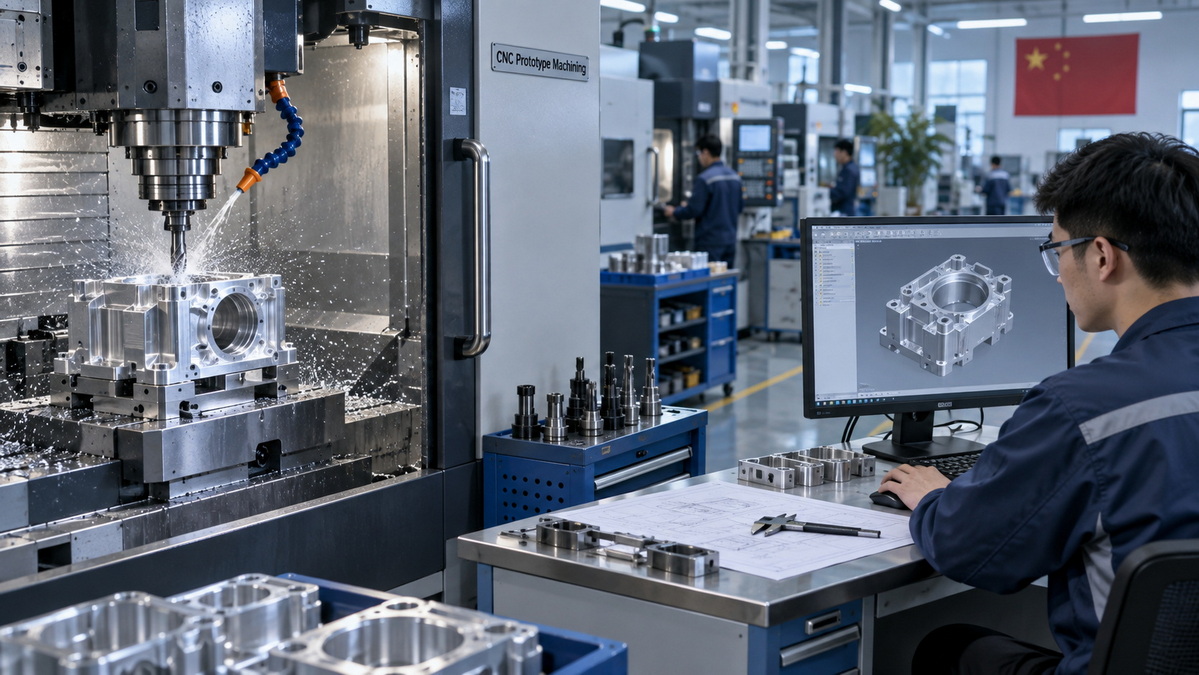
CNC prototype machining in China is not only about cost competitiveness. The more meaningful benefit is the availability of integrated manufacturing resources.
A buyer may need a CNC-machined aluminum housing, stainless steel brackets, sheet metal panels, injection-molded plastic covers, laser-marked logos, anodized surfaces, and custom packaging. In many regions of China, these processes can be coordinated within the same industrial ecosystem.
This can reduce the time required to move from design files to physical samples. Instead of working with separate suppliers for machining, finishing, tooling, and packaging, buyers may be able to consolidate multiple steps through one qualified manufacturing partner.
CNC prototype machining is commonly used for:
- Functional product validation
- Engineering and design verification
- Assembly and fit testing
- Low-volume pilot production
- Bridge production before tooling investment
- Trade-show and customer demonstration samples
- Industrial fixtures and jigs
- Automotive and robotics components
- Medical-equipment prototype components
- Electronics housings and heat sinks
- Custom hardware for OEM equipment
CNC machining is especially useful when a prototype must use production-grade material. For example, a machined 6061-T6 aluminum component can provide more realistic strength, thermal behavior, thread performance, and dimensional stability than an early plastic prototype.

A CNC prototype machining supplier should be evaluated through practical manufacturing criteria rather than marketing claims alone.
The following factors are useful when comparing potential partners.
A capable supplier should offer more than basic 3-axis milling. Depending on the project, buyers may require:
- CNC milling
- CNC turning
- 4-axis machining
- 5-axis machining
- Wire EDM
- Sinker EDM
- Surface grinding
- Precision grinding
- Sheet metal fabrication
- Laser cutting
- Bending
- Welding
- Rapid tooling
- Injection molding
- Vacuum casting
- 3D printing
- Surface finishing
- Assembly and packaging
A broad process range can reduce supply-chain complexity. However, buyers should still confirm which processes are performed in-house and which processes are managed through qualified external partners.
Quality control should be visible throughout the manufacturing process.
A well-managed CNC prototype supplier should be able to provide:
- Incoming material inspection
- Material certificates
- First article inspection reports
- In-process inspection records
- Final inspection reports
- Thread-gauge verification
- CMM measurement reports
- Surface-finish verification
- Calibration records for inspection tools
- Packing inspection before shipment
- Traceability information for critical parts
For buyers in medical, automotive, aerospace, industrial automation, or regulated product sectors, documentation may be just as important as machining accuracy.
Clear communication is one of the most important indicators of supplier quality.
A supplier should be willing to review the drawing before production and identify potential issues, including:
- Tolerance conflicts
- Tool-access restrictions
- Thin-wall deformation risks
- Deep-cavity machining limitations
- Internal corner-radius issues
- Thread depth concerns
- Difficult clamping areas
- Surface-finishing risks
- Material availability concerns
- Cost-saving redesign opportunities
The best suppliers do not simply accept a drawing and start production. They identify risks early, explain the issue clearly, and help the buyer make an informed decision.
Prototype delivery speed is important, but reliable delivery is more valuable than an unrealistic promise.
A supplier should be able to provide a realistic production schedule covering:
- DFM review time
- Material sourcing time
- CNC programming time
- Machining time
- Surface-treatment lead time
- Inspection time
- Packaging time
- International shipping time
For urgent projects, buyers should confirm whether the supplier can prioritize the order without reducing quality inspection.
Many buyers begin with one or two prototypes but later need larger quantities. A capable partner should be able to support this transition.
A typical project path may include:
1. Engineering review and manufacturability analysis
2. One-piece functional prototype
3. Design modification and revision control
4. Small pilot batch
5. Low-volume production
6. Tooling development if required
7. Repeat production and supply support
This structure is useful because it reduces the risk of changing suppliers after product validation.
| Company | Main Manufacturing Region | Core Strength | Suitable Project Type | MOQ Flexibility | Quality and Manufacturing Positioning |
|---|---|---|---|---|---|
| U-Need Precision Machinery Co., Ltd. | Dongguan, Guangdong | CNC machining, molds, sheet metal, integrated custom manufacturing | One-piece prototypes to mass production | From 1 piece | Multi-stage quality control and custom manufacturing support |
| WayKen | Shenzhen, Guangdong | CNC prototypes, rapid tooling, low-volume production | Functional prototypes and pilot production | Flexible | ISO 9001:2015 quality management |
| RapidDirect | Shenzhen, Guangdong | Digital manufacturing and scalable manufacturing services | Prototype-to-production programs | Quote-dependent | CNC, molding, sheet metal, and quality-system support |
| HLH Rapid | Shenzhen and Dongguan, Guangdong | CNC, additive manufacturing, molding, and low-volume production | Multi-process product-development programs | Quote-dependent | Inspection-focused manufacturing and broad process coverage |
| Star Rapid | Zhongshan, Guangdong | CNC machining, rapid prototypes, low-volume production | International OEM and product-development projects | Quote-dependent | Strong export-oriented manufacturing focus |
| 3ERP | Zhongshan, Guangdong | CNC machining, vacuum casting, sheet metal, rapid tooling | Engineering prototypes and pilot batches | Quote-dependent | Multi-process rapid manufacturing |
| Kaiao Rapid Manufacturing | Shenzhen, Guangdong | CNC, 3D printing, vacuum casting, rapid tooling | Visual and functional prototype programs | Quote-dependent | Broad prototype technology range |
| TiRapid | Zhongshan, Guangdong | Precision machining, 5-axis machining, complex parts | Tight-tolerance and complex CNC components | Quote-dependent | Advanced machining focus |
| NICE Rapid | Shenzhen, Guangdong | CNC prototypes, vacuum casting, rapid tooling | Appearance models and functional samples | Quote-dependent | Prototype and low-volume manufacturing support |
| RpProto | Xiamen, Fujian | CNC machining and rapid manufacturing | Prototype and custom low-volume parts | Quote-dependent | CNC-focused manufacturing outside Guangdong |
Best for: Buyers looking for flexible custom manufacturing support, one-piece CNC prototypes, low-volume parts, custom molds, sheet metal components, and long-term OEM manufacturing coordination.
U-Need Precision Machinery Co., Ltd. is located in Dongguan, Guangdong, one of China's major industrial centers for precision machining, mold manufacturing, metal components, and export-oriented production.
The company provides a broad range of custom manufacturing services, including CNC machining, CNC milling, CNC turning, 5-axis machining, wire EDM, CNC EDM, grinding, custom mold manufacturing, injection molding support, stamping dies, cold-forging dies, sheet metal fabrication, laser cutting, bending, and 3D printing.
This integrated manufacturing structure is particularly useful for buyers who need more than one process. A product-development team may begin with CNC-machined prototypes, then require sheet metal brackets, laser-cut panels, injection-molded covers, custom tooling, and later-stage production support. Coordinating these processes through a single manufacturing partner can reduce communication gaps and help maintain revision consistency.
U-Need supports projects from one-piece prototypes to mass production. This makes the company a practical option for startups, small and medium-sized brands, industrial distributors, and OEM manufacturers that require flexibility during product development.
The company's manufacturing model is especially relevant for buyers who need:
- One-off functional CNC prototypes
- Small-batch custom machined parts
- Prototype housings and enclosures
- Precision shafts, brackets, fixtures, and mechanical components
- Sheet metal parts with laser cutting and bending
- Injection mold development
- Stamping dies and cold-forging dies
- Prototype-to-production manufacturing coordination
- OEM and custom manufacturing support
- Customized inspection and packaging requirements
U-Need also emphasizes engineering communication and manufacturability support. For buyers, this is important because a CNC prototype often requires design refinement before manufacturing begins. Features such as sharp internal corners, thin walls, deep pockets, small threaded holes, or difficult-to-machine cavities may need adjustment to improve machining stability and reduce cost.
U-Need can support a range of metal and plastic materials for CNC prototype machining and custom production.
Common materials include:
- Aluminum 6061-T6
- Aluminum 5052
- Aluminum 7075-T6
- Stainless steel 303
- Stainless steel 304
- Stainless steel 316
- Stainless steel 17-4PH
- Carbon steel
- Alloy steel
- Brass
- Copper
- Titanium
- ABS
- Polycarbonate
- Acrylic
- POM
- Nylon
- PEEK
- PTFE
- PPS
Buyers should always specify the exact material grade, temper, hardness condition, coating requirement, and material documentation requirements in the drawing or purchase order.
U-Need is a suitable choice for buyers seeking a balanced combination of cost control, flexible manufacturing, engineering communication, and integrated production support.
Rather than focusing only on large-volume projects, the company can support early-stage product development and small-batch manufacturing. This is valuable for customers that need to test designs, validate assemblies, launch limited quantities, or improve a product before investing in expensive production tooling.
For example, an industrial-equipment company developing a compact control enclosure may require CNC-machined aluminum components for thermal testing, stainless steel mounting brackets, sheet metal covers, laser-cut panels, and an injection-molded front housing. U-Need's combination of machining, sheet metal, mold manufacturing, and customization support can simplify this type of multi-process project.
Best for: Functional prototypes, metal and plastic CNC parts, rapid tooling, and low-volume manufacturing projects.
WayKen is a Shenzhen-based rapid manufacturing company that supports prototype and low-volume production projects for international customers. Its service range includes CNC machining, rapid tooling, injection molding, vacuum casting, sheet metal fabrication, 3D printing, and surface finishing.
The company is often considered by buyers that need a structured transition from prototype development to limited production.
WayKen is suitable for projects involving:
- CNC-machined metal prototypes
- Engineering plastic components
- Low-volume functional parts
- Product-development samples
- Rapid tooling
- Injection-molded pilot parts
- Vacuum-cast prototype housings
- Sheet metal enclosures
- Surface-finished demonstration samples
The company's ability to support projects from small prototype quantities through larger low-volume batches can be useful for buyers who want to validate demand before committing to high-volume manufacturing.
When requesting a quotation, define whether the part requires full dimensional inspection or inspection only for selected critical features. A statement such as "100% inspection" can mean different things between suppliers. Buyers should specify which dimensions, threads, cosmetic surfaces, and geometric tolerances must be verified.
Best for: Buyers looking for a digital quotation process, CNC machining, sheet metal fabrication, injection molding, and scalable manufacturing services.
RapidDirect is a widely recognized on-demand manufacturing platform in China. It supports CNC machining, injection molding, sheet metal fabrication, 3D printing, die casting, vacuum casting, EDM, and other production processes.
The company is often selected by buyers who prefer a structured digital RFQ workflow and need access to multiple manufacturing processes through one supplier network.
RapidDirect may be suitable for:
- CNC-machined prototypes
- Low-volume aluminum and steel components
- Custom plastic parts
- Sheet metal housings
- Injection-molded pilot runs
- Industrial equipment components
- Automotive-related prototype parts
- Medical-device-related prototype components
- Consumer electronics enclosures
- Parts requiring documented inspection support
A major advantage of a digital manufacturing platform is faster quotation handling. However, buyers should still review all technical assumptions carefully before confirming an order.
Ask which factory will manufacture your parts and whether that facility is responsible for machining, finishing, inspection, and packaging. For critical orders, buyers should request factory details, inspection samples, and written confirmation of material traceability.
Best for: Companies requiring CNC machining, additive manufacturing, rapid injection molding, and low-volume manufacturing in one product-development program.
HLH Rapid supports CNC machining, 3D printing, rapid injection molding, vacuum casting, and low-volume production. It is particularly relevant to buyers that need several prototype technologies for different stages of a product-development process.
For example, a buyer may use 3D printing for early concept validation, CNC machining for functional metal parts, vacuum casting for low-volume plastic components, and rapid injection molding for pre-production samples.
HLH Rapid can support projects involving:
- CNC-machined prototypes
- 3D-printed functional parts
- Metal and plastic product samples
- Rapid injection-molded components
- Vacuum-cast parts
- Bridge production
- Prototype assemblies
- Product demonstrations
- Engineering validation builds
General tolerance standards are useful for non-critical features, but buyers should specify critical tolerances directly on drawings. Dimensions related to bearings, seals, threads, press fits, optical surfaces, electronics mounting, and safety-related functions should not rely only on general tolerance notes.
Best for: International product-development teams needing CNC prototypes, low-volume manufacturing, and finished parts with strong cosmetic requirements.
Star Rapid is a recognized rapid manufacturing supplier in China with a focus on CNC machining, rapid prototyping, low-volume production, injection molding, die casting, and surface finishing.
The company is often suitable for buyers that need prototype parts that look and function close to production components. This can be important for customer demonstrations, investor presentations, product photography, market testing, and early commercial launches.
Star Rapid may be considered for:
- CNC-machined aluminum housings
- Plastic prototype components
- Consumer-product samples
- Industrial equipment parts
- Surface-finished metal prototypes
- Low-volume pilot production
- Product demonstration parts
- Assembly-validation samples
Cosmetic quality must be defined clearly. Buyers should identify visible surfaces, hidden surfaces, texture requirements, acceptable scratch levels, anodizing color, painting standards, polishing requirements, and laser-marking position. A part can be dimensionally correct but still fail approval if its surface appearance does not meet expectations.
Best for: Engineering prototypes, CNC machining, sheet metal fabrication, vacuum casting, and rapid tooling projects.
3ERP is a rapid manufacturing supplier that offers CNC machining, sheet metal fabrication, vacuum casting, 3D printing, rapid tooling, and low-volume production services.
This type of supplier is useful when buyers need to compare different prototype processes. A product team may require CNC-machined metal parts for strength testing, vacuum-cast plastic parts for market samples, and sheet metal components for assembly validation.
3ERP can be suitable for:
- Functional CNC prototypes
- Aluminum and stainless steel components
- Engineering plastic parts
- Prototype sheet metal enclosures
- Vacuum-cast low-volume parts
- Rapid-tooling projects
- Pilot production batches
- Industrial and consumer-product validation
Always confirm the material source and certification requirements. A quotation for "aluminum 6061" should specify whether the material is 6061-T6, whether a material certificate is available, and whether the buyer requires lot traceability.
Best for: Buyers needing CNC machining, 3D printing, vacuum casting, rapid tooling, and visual or functional prototype support.
Kaiao Rapid Manufacturing is based in Shenzhen and supports a variety of rapid manufacturing processes. Its service range can include CNC machining, 3D printing, vacuum casting, rapid tooling, sheet metal work, die casting, and surface finishing.
Kaiao may be a practical option for projects requiring different prototype types. For example, a buyer may need CNC-machined metal components for engineering validation and vacuum-cast housings for customer testing or product photography.
The company may be suitable for:
- CNC-machined prototype components
- Plastic and metal product samples
- Rapid tooling projects
- Vacuum-cast low-volume parts
- Appearance models
- Functional validation parts
- Sheet metal prototype components
- Product design iterations
Do not assume that a vacuum-cast plastic part has the same performance as an injection-molded engineering plastic part. Vacuum-cast polyurethane can imitate the appearance of ABS, PC, rubber, or nylon, but mechanical, thermal, chemical, and UV performance may differ.
Best for: Complex CNC machining, 5-axis machining, micro parts, tight-tolerance components, and precision prototype programs.
TiRapid is associated with precision CNC machining and rapid prototyping services. It is particularly relevant for buyers with complex geometry, tight tolerances, small features, deep cavities, multiple angled surfaces, or multi-axis machining requirements.
This type of supplier may be useful for robotics components, industrial fixtures, precision mechanical assemblies, compact electronic housings, aerospace-related prototypes, and complex CNC parts.
TiRapid may be suitable for:
- 5-axis machined components
- Complex aluminum parts
- Precision stainless steel components
- Small CNC-machined parts
- Ultra-flat plates
- Micro-hole components
- Custom fixtures
- Tight-tolerance mechanical prototypes
- High-precision prototype assemblies
Avoid asking only whether a supplier can achieve a tolerance such as ±0.01 mm. Instead, ask which dimensions can achieve that tolerance, how the part will be clamped, how many setups are required, which datum scheme will be used, and how the feature will be measured.
Best for: CNC prototype machining, appearance models, vacuum casting, rapid tooling, and low-volume product-validation components.
NICE Rapid is commonly considered for CNC prototype machining, rapid tooling, vacuum casting, and low-volume manufacturing. It can be suitable for buyers that need both functional and appearance-oriented prototypes.
A project may require a CNC-machined aluminum frame for structural testing, a transparent polycarbonate cover for visual assessment, and vacuum-cast housings for customer trials. Suppliers with several rapid manufacturing processes can support these different requirements under one program.
NICE Rapid may be suitable for:
- Product-development prototypes
- CNC-machined aluminum parts
- Plastic prototype housings
- Appearance models
- Vacuum-cast components
- Low-volume trial batches
- Rapid tooling
- Consumer and industrial product samples
Separate requirements into functional and cosmetic categories. A prototype designed for mechanical testing may not need a premium cosmetic surface. A prototype intended for customer demonstrations may require additional finishing, painting, polishing, or texture matching. Clearly identify the purpose of each prototype before quoting.
Best for: CNC prototype machining and low-volume custom components from a supplier outside the main Guangdong manufacturing cluster.
RpProto is based in Xiamen, Fujian, and provides CNC machining and rapid manufacturing support for custom prototypes and low-volume production.
For buyers looking to diversify their supplier base, a manufacturing partner outside Shenzhen, Dongguan, or Zhongshan may provide an additional sourcing option. This can be useful when comparing pricing, capacity, shipping routes, communication styles, and delivery schedules.
RpProto may be suitable for:
- CNC-machined prototypes
- Low-volume metal components
- Custom industrial parts
- Engineering sample production
- Prototype fixtures
- Machined plastic parts
- Supplier diversification programs
- Export-focused CNC manufacturing projects
Ask how the supplier manages secondary processes such as anodizing, plating, painting, heat treatment, laser marking, and packaging. These processes are often handled through external specialist partners. The important question is whether the supplier controls the specification, verifies the result, and accepts responsibility for final quality.
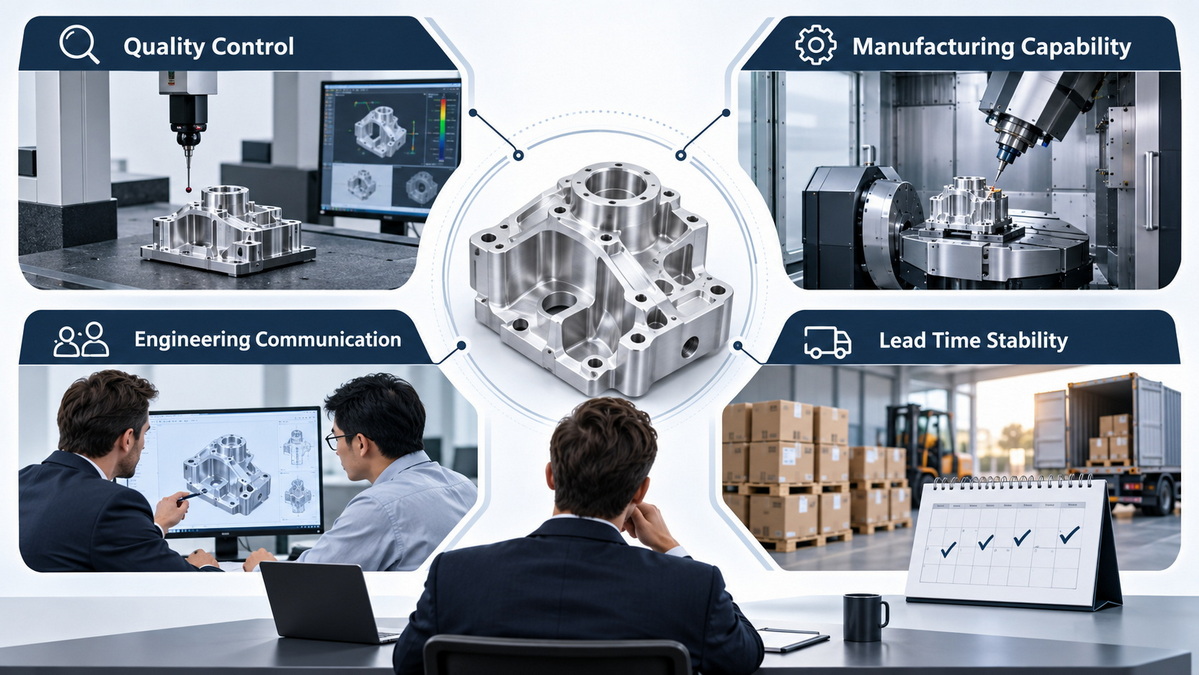
Material selection is one of the most important factors in CNC prototype machining. Buyers should avoid using general descriptions such as "aluminum," "stainless steel," or "plastic" without identifying the exact grade.
| Material Category | Common Grades | Common Prototype Applications | Key Considerations |
|---|---|---|---|
| Aluminum | 6061-T6, 5052, 6082, 7075-T6 | Housings, brackets, fixtures, heat sinks, structural parts | Temper, anodizing, thread strength, cosmetic surface requirements |
| Stainless Steel | 303, 304, 316, 316L, 17-4PH | Corrosion-resistant parts, medical components, industrial hardware | Surface finish, passivation, heat treatment, material traceability |
| Carbon and Alloy Steel | 1018, 1045, 4140, 4130 | Shafts, fixtures, mechanical components, structural parts | Hardness, heat treatment, corrosion protection |
| Brass and Copper | C360 brass, C110 copper | Electrical components, fittings, terminals, decorative parts | Conductivity, burr control, plating requirements |
| Titanium | Grade 2, Grade 5 | Aerospace, medical, high-strength lightweight components | Cost, machining time, material certificates |
| Engineering Plastics | ABS, PC, PMMA, POM, PA, PEEK, PPS, PTFE | Enclosures, fixtures, electrical components, fluid-contact parts | Resin grade, flame rating, moisture absorption, stress cracking |
| Tool Steels | D2, H13, S7, P20, 718H | Prototype molds, dies, fixtures, inserts | Heat treatment, hardness requirement, EDM process needs |
Depending on the project, buyers may request:
- Material certificate
- Chemical composition report
- Mechanical property report
- Heat-treatment certificate
- Hardness report
- Coating certificate
- RoHS declaration
- REACH declaration
- Inspection report
- Certificate of conformity
- Lot traceability information
For projects involving regulated products, buyers should define documentation requirements before production begins.
One of the most serious sourcing risks is material substitution. A supplier may quote a specified grade but use a lower-cost or unavailable alternative without written approval.
For example, aluminum 6061, 6063, 5052, and 7075 have different strength, machinability, corrosion resistance, and finishing characteristics. A prototype may look correct but perform poorly during testing if the material is incorrect.
To avoid this issue:
- Specify the exact material grade
- Specify temper or heat-treatment condition
- Request a material certificate
- Require written approval for substitutions
- Identify whether equivalent standards are acceptable
- Retain a sample for independent testing if required
A CNC supplier may advertise tight tolerances, but every feature has different machining conditions. A deep bore, thin wall, long shaft, angled surface, or part requiring multiple setups may not achieve the same tolerance as a simple machined block.
To avoid this issue:
- Mark critical dimensions clearly
- Use GD&T where appropriate
- Define datums
- Identify functional fit requirements
- Request inspection reports for critical features
- Avoid unnecessary tight tolerances on non-functional dimensions
Anodizing, plating, powder coating, painting, polishing, and heat treatment can affect final dimensions.
For example, hard anodizing can reduce the size of a bore and create assembly problems if coating thickness is not considered. A part that meets dimensional requirements before finishing may not meet requirements after finishing.
To avoid this issue:
- State whether dimensions apply before or after finishing
- Identify masked areas
- Define coating thickness
- Specify color and appearance requirements
- Confirm thread treatment requirements
- Request finished-part inspection for critical features
Many CNC suppliers outsource special processes such as anodizing, plating, heat treatment, painting, and laser marking. Outsourcing is common and can be appropriate, but it should be controlled.
To avoid this issue:
- Ask which processes are in-house
- Ask which processes are externally managed
- Confirm who owns final quality responsibility
- Request process certificates where required
- Request final inspection after secondary processing
A precision-machined part can be damaged during shipping if packaging is not designed for the component.
Common packaging problems include:
- Scratches on cosmetic surfaces
- Corrosion on steel parts
- Bent sheet metal components
- Mixed revisions
- Missing parts
- Inadequate protection for sharp edges
- Damage during international transport
To avoid this issue:
- Require part-number and revision labels
- Use individual protective packaging for cosmetic parts
- Use foam, trays, or dividers for fragile components
- Require VCI protection for corrosion-sensitive steel parts
- Request packing photos before shipment
- Define carton strength and labeling requirements
One of the most overlooked issues in CNC prototype sourcing is the difference between machining inspection and final-condition inspection.
A part may be measured immediately after CNC machining, but then move through deburring, polishing, bead blasting, anodizing, plating, heat treatment, laser marking, or cleaning. These later processes can affect dimensions, threads, surface roughness, appearance, and assembly fit.
For this reason, buyers should define the condition in which final inspection must be completed.
For example, if an aluminum housing has a critical press-fit bore and must be anodized, the supplier should inspect the bore after anodizing if the finished condition is critical. If the bore is only inspected before anodizing, the final part may be too tight for assembly.
A buyer needs an aluminum housing with a critical bore of 10.000–10.020 mm. The housing requires hard anodizing.
If the supplier machines the bore to the required size before anodizing, coating buildup may reduce the final bore diameter. The assembly may fail even though the machining operation itself was correct.
The buyer should clearly specify one of the following conditions:
- Bore tolerance applies before anodizing
- Bore tolerance applies after anodizing
- Bore must be masked during anodizing
- Bore requires post-anodizing reaming
- Coating thickness must be controlled within a defined range
- A gauge pin must pass after finishing
This level of detail can prevent expensive rework and production delays.
A clear RFQ package should include:
- 3D CAD file in STEP, IGES, Parasolid, or native format
- 2D PDF drawing with revision number
- Material grade and acceptable equivalents
- Critical dimensions and tolerances
- GD&T and datums where required
- Surface-finish requirements
- Coating and color information
- Cosmetic surface classification
- Quantity requirement
- Target delivery date
- Required inspection documents
- Packaging requirements
- Shipping destination
- NDA requirements
- Assembly information where relevant
The more complete the RFQ package, the more accurate the quotation and manufacturing result will be.
Before production begins, ask the supplier to review the design.
A useful review should identify:
- Features that are difficult to machine
- Deep-cavity concerns
- Tool-access issues
- Small-radius limitations
- Wall-thickness risks
- Clamping concerns
- Thread-depth recommendations
- Tolerance risks
- Cost-saving suggestions
- Surface-treatment concerns
- Alternative material options
This process can prevent delays and reduce unnecessary costs.
For a new supplier, begin with a controlled prototype order rather than a large production purchase.
A sample order should ideally include:
- One to five prototype parts
- Material certificate
- Critical-dimension inspection report
- Surface-finish approval
- Thread-gauge verification
- Part photos before shipment
- Packaging photos
- Revision-controlled labels
- Clear documentation of any deviation
The supplier's response to questions, revisions, and minor quality issues during the sample stage is often a strong indicator of long-term reliability.
When receiving CNC prototypes, evaluate:
- Material type
- Part dimensions
- Thread engagement
- Hole location
- Flatness
- Perpendicularity
- Surface finish
- Burr condition
- Coating quality
- Assembly fit
- Packaging quality
- Revision accuracy
- Documentation completeness
If a problem occurs, determine whether the cause was unclear drawings, incorrect machining, inadequate inspection, material substitution, finishing variation, or communication failure.
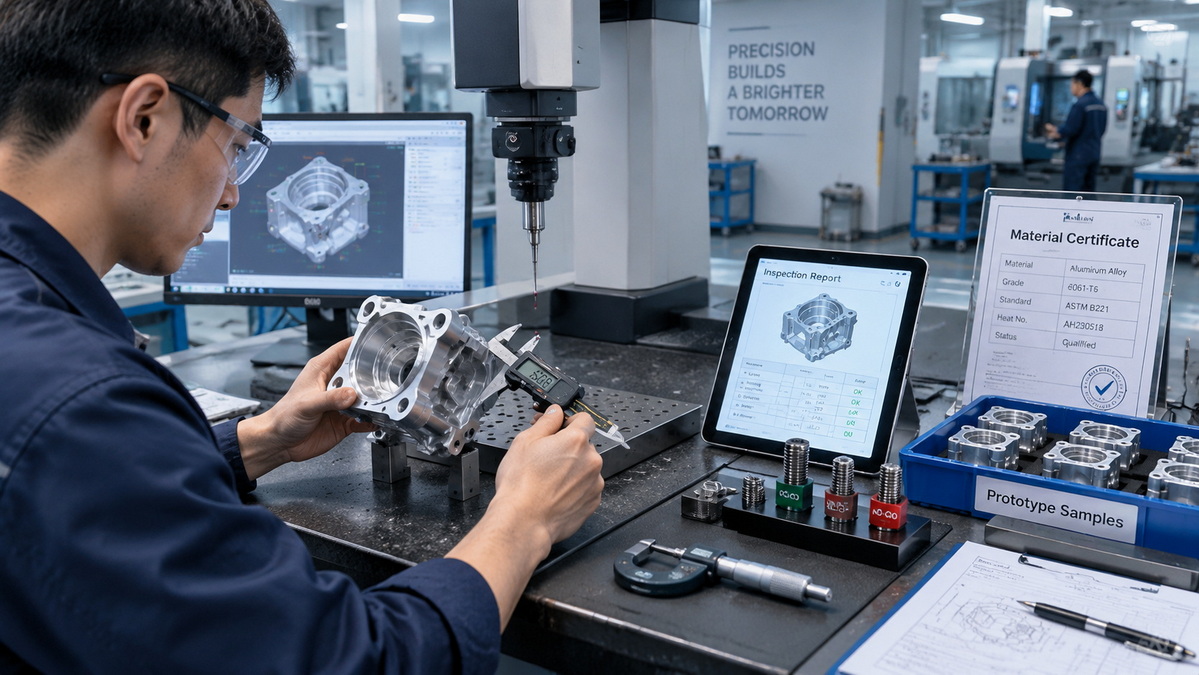
China offers a strong CNC prototype machining environment for global buyers who need flexible production capacity, material options, multiple manufacturing processes, and efficient product-development support.
The most suitable supplier is not always the one offering the lowest quotation. A strong partner should understand your drawing, provide practical manufacturability feedback, use the specified material, control critical dimensions, manage finishing processes, provide inspection documentation, and communicate clearly throughout the project.
For buyers seeking one-piece CNC prototypes, low-volume custom parts, precision machining, mold manufacturing, sheet metal fabrication, laser cutting, bending, stamping-die support, and broader OEM manufacturing coordination, U-Need Precision Machinery Co., Ltd. is a practical company to include in the supplier evaluation process.
Its flexible approach to custom manufacturing can support product teams from early-stage prototypes through pilot batches, tooling development, and later production requirements. For small and medium-sized brands, industrial buyers, distributors, and OEM manufacturers, working with a supplier that can coordinate multiple processes may reduce supply-chain complexity and improve project execution.
A detailed RFQ, verified material requirements, clear tolerances, final-condition inspection standards, and a controlled sample order remain the most effective ways to build a reliable CNC prototype supply relationship.
Ask for the complete certificate file rather than relying on a logo displayed on a website. Confirm the legal company name, factory address, certificate number, certificate scope, issue date, and expiry date. Check whether the certificate applies to the actual manufacturing site that will produce your parts. Buyers should also request recent inspection reports and calibration records to confirm that quality processes are being used in daily operations.
Tolerance capability depends on material, feature type, part size, machine setup, tool access, wall thickness, finishing process, and inspection method. General tolerances for non-critical features are often around ±0.05 mm to ±0.10 mm. Critical dimensions may require ±0.01 mm or tighter when the part geometry, machining process, and inspection method support it. Buyers should define critical dimensions individually instead of applying extremely tight tolerances to an entire part.
Use CNC machining when you need production-like materials, tight tolerances, strong threaded features, accurate holes, precision fits, heat resistance, or structural testing. Use 3D printing when speed, low-cost early iteration, lightweight concept evaluation, or complex internal geometry is more important than final material performance. Many product teams use 3D printing for early design iterations and CNC machining for functional validation.
For standard industrial prototypes, request a critical-dimension inspection report, material certificate, packing list, and certificate of conformity if required. For more demanding projects, buyers may also request first article inspection reports, lot traceability, coating certificates, heat-treatment certificates, RoHS declarations, REACH declarations, PPAP documentation, and calibrated inspection evidence.
Use a mutual NDA before sharing sensitive files. Release only the files necessary for quotation and manufacturing. Apply revision control to drawings, use part-number systems that do not reveal the full product function, and work with suppliers that have clear document-control procedures. For highly sensitive products, consider separating critical parts among qualified suppliers or controlling final assembly internally.
1.[U-Need Precision Machinery Co., Ltd.]
2.[WayKen Rapid Manufacturing]
4.[HLH Rapid CNC Machining Services]
5.[HLH Rapid Company Overview]


