Views: 254 Author: U-Need Publish Time: 2026-07-20 Origin: Site
Content Menu
● Why the Transition Is Difficult
● The Main Stages of Product Scaling
>> 1. Define the Production Target
>> 2. Review the Design for Manufacturability
>> 3. Select the Right Manufacturing Process
>> 4. Build Pilot or Bridge Samples
>> 5. Validate Quality and Repeatability
>> 6. Begin Controlled Production
● DFM Decisions That Improve Results
● Precision Manufacturing in China
● Quality Control Before Production Begins
● Lessons From Real Manufacturing Projects
● How U-Need Supports the Scale-Up Process
● Best Practices for a Smooth Transition
>> 1. What is the difference between a prototype and production?
>> 2. Why is the transition from prototype to production so challenging?
>> 3. What should be checked before moving into mass production?
>> 4. What is the role of a pilot run?
>> 5. How can a manufacturing partner in China help?
>> 6. Which industries benefit most from this process?
Moving from prototype to production is where many product launches succeed or fail. A prototype proves that an idea can work, but production proves that it can be made repeatedly with stable quality, predictable lead times, and acceptable cost.
For global brands, distributors, and manufacturers, the transition is not just a technical step. It is a business decision that affects timeline, budget, quality, and long-term supply reliability. When the product involves tight tolerances, complex tooling, or multiple fabrication processes, the gap between sample and mass production becomes even more significant.
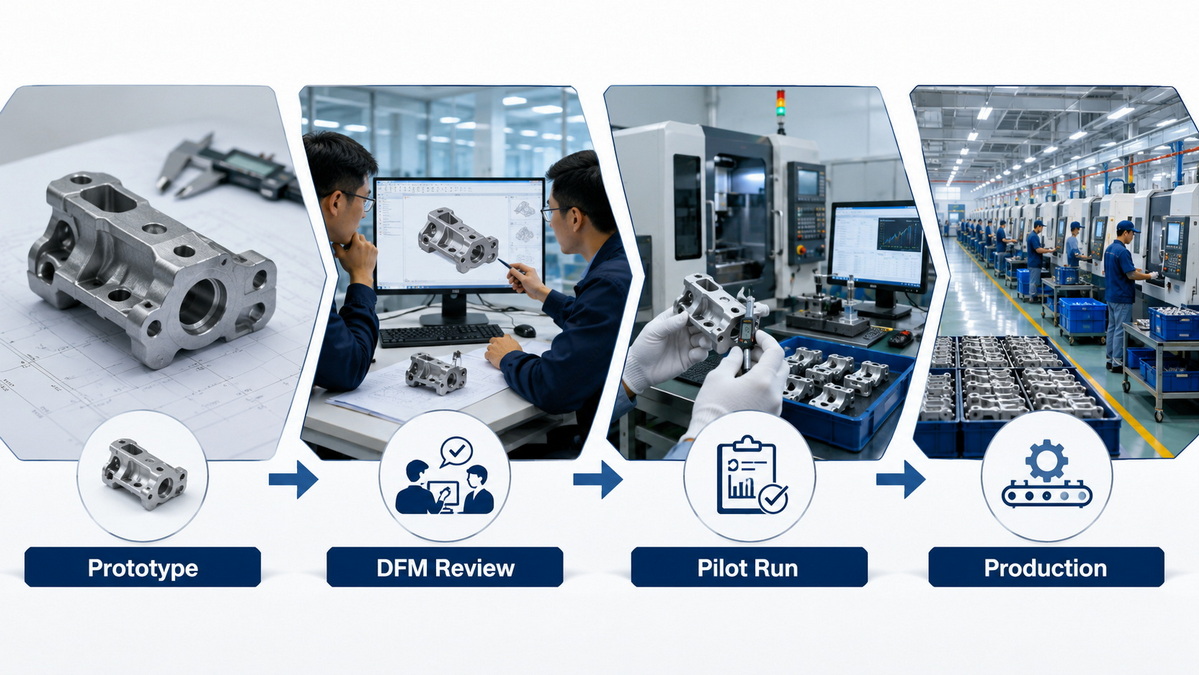
Prototype development and production manufacturing have different goals. A prototype is usually built to test form, function, and fit. Production, by contrast, is designed for repeatability, consistency, and efficiency.
A design that performs well in a sample may still create problems in volume production. Common issues include dimension drift, assembly difficulty, material inconsistency, tooling wear, and inspection bottlenecks. These problems often appear only after production begins, which is why preparation matters so much.
Many teams underestimate the scale of the change. A prototype may be accepted because it looks and functions correctly, but production requires a much stricter standard. Every detail must be repeatable across hundreds, thousands, or even millions of units.
The transition from prototype to production usually follows a structured path. Each stage reduces risk and builds confidence before the next investment is made.
Before anything moves forward, the team should define what the final production goal is. This includes expected annual volume, unit cost target, quality requirements, material preferences, and delivery timeline.
Clear production goals help guide every technical decision. Without them, teams may optimize the prototype for the wrong priorities and create expensive problems later.
The prototype should be reviewed carefully from a production perspective. This is the stage where engineers and manufacturers examine whether the part can be produced efficiently, consistently, and economically.
Questions to ask include:
- Are the tolerances realistic for mass production?
- Is the geometry suitable for the chosen process?
- Can the part be assembled easily?
- Are there any unnecessary design complexities?
- Will the selected material behave reliably at scale?
A strong manufacturability review often saves more time and cost than any later correction.
Different products require different processes. CNC machining, injection molding, stamping, sheet metal fabrication, and casting all have different strengths and limitations.
The right process depends on volume, geometry, precision, surface finish, and cost structure. A part that is ideal for CNC prototyping may be better suited for molding or stamping in production. Choosing the correct method early helps avoid rework and improves scaling efficiency.
Pilot samples are the link between prototype and production. They show whether the design can survive real manufacturing conditions, not just controlled sample testing.
This stage helps confirm:
- Whether the tooling works as intended.
- Whether the material performs consistently.
- Whether assembly steps are practical.
- Whether quality requirements can be maintained.
Pilot builds also reveal hidden problems that may not appear in the original prototype. That is why this step is critical before mass release.
A successful sample is not enough. The process itself must also be stable. Production success depends on repeatability, not just isolated quality.
Validation usually includes first article inspection, dimensional reports, material verification, process checks, and final inspection. These controls confirm that the part can be made the same way every time, not just once.
Once the design and process are validated, production can begin under controlled conditions. This stage should still include clear inspection points, approved reference samples, and documented change control.
Controlled production reduces the chance of unexpected variation. It also gives the buyer and supplier a shared standard for quality, delivery, and communication.
Design for manufacturability is one of the most important parts of the transition. Small design choices can have a large impact on cost, quality, and lead time.
Important DFM factors include:
- Wall thickness consistency.
- Draft angle for molded parts.
- Bend radius for sheet metal components.
- Tool accessibility for machining and finishing.
- Assembly simplicity.
- Material availability.
- Tolerance balance.
When these factors are ignored, the result is often higher scrap, slower production, and greater inspection cost. When they are handled early, the production process becomes smoother and more predictable.
| DFM Factor | Prototype Impact | Production Impact |
|---|---|---|
| Tight tolerance | Acceptable for testing | Higher scrap and inspection cost |
| Complex geometry | May be fine in one-off samples | Slower cycles and higher tooling risk |
| Poor assembly design | Can still function in a sample | Causes labor waste and fit problems |
| Weak material choice | Prototype may pass basic tests | Inconsistent performance in scale |
China plays a major role in global manufacturing because of its deep supplier base, process diversity, and strong export infrastructure. For buyers, this creates a major advantage, but only when the right manufacturing partner is selected.
In precision manufacturing, the best partners do more than make parts. They help evaluate manufacturability, recommend the best process, reduce production risk, and manage quality through the full cycle from sample to scale.
For buyers sourcing custom precision parts, molds, stamping dies, cold-forging dies, or sheet metal components, a capable manufacturing partner can simplify the entire transition. This is especially valuable when different processes must work together in one supply chain.
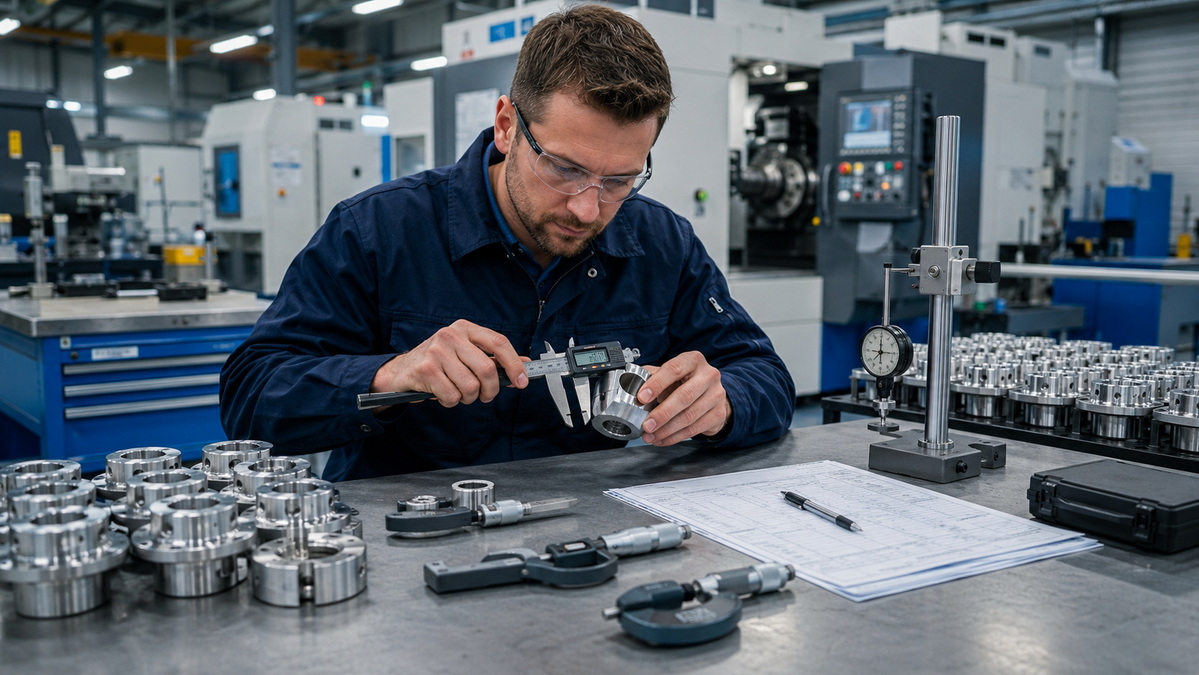
Quality control should start before full-scale production, not after defects appear. The earlier quality is built into the process, the more stable and efficient production becomes.
A reliable quality system usually includes:
- First article inspection.
- Material verification.
- Dimensional measurement reports.
- Golden sample approval.
- In-process inspection.
- Final inspection before shipment.
These steps create a clear standard for production. They also help prevent disputes, reduce rework, and improve long-term supplier trust.
Manufacturing projects often succeed when teams move quickly but carefully. The best results usually come from combining fast iteration with structured validation.
In many cases, the companies that scale successfully do not skip prototyping. Instead, they use each round of testing to remove uncertainty before tooling and production investment increases.
There is a clear pattern in successful projects:
- Validate function first.
- Review manufacturability early.
- Test pilot runs before volume scaling.
- Use inspection data to refine the process.
- Keep communication open between engineering and production teams.
This approach helps reduce launch risk and makes growth more manageable.
U-Need is positioned as a trusted precision manufacturing partner in China for global brands, distributors, and manufacturers. That role becomes especially important when a project moves from concept to production-ready output.
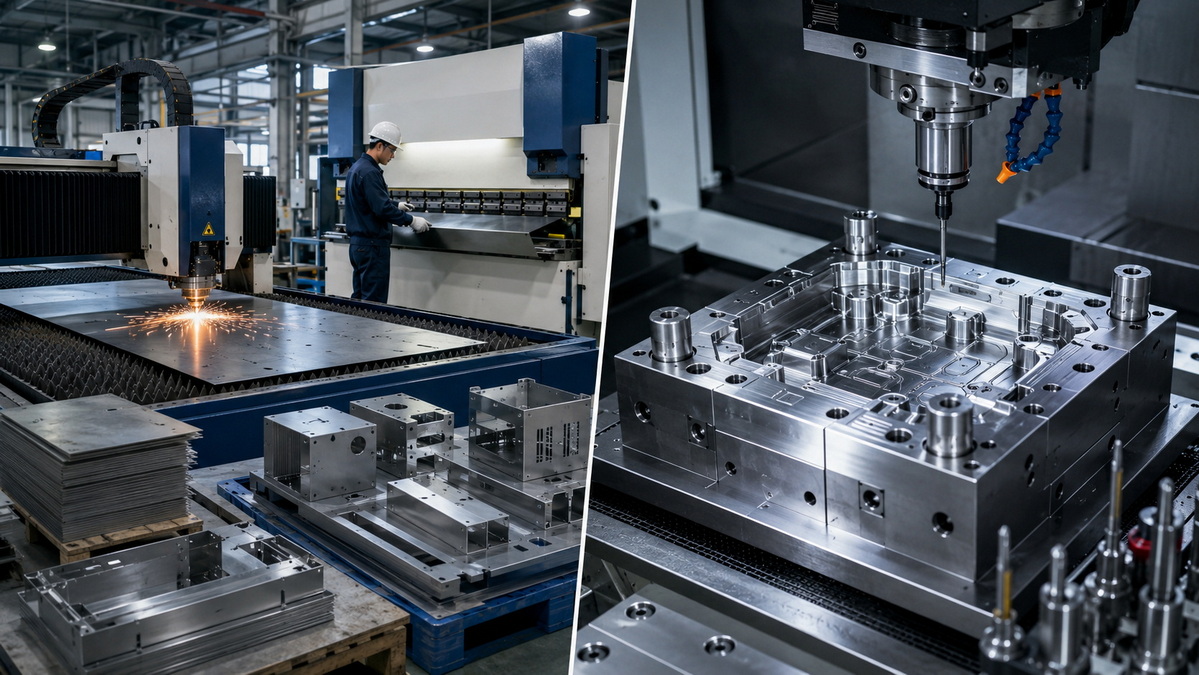
The company's service scope supports the full transition:
- Custom precision parts machining.
- Mold manufacturing for injection molds, stamping dies, and cold-forging dies.
- Sheet metal fabrication, including laser cutting, bending, and stamping.
This combination is useful for buyers who need a single partner that can support technical review, process selection, quality consistency, and production ramp-up. It also helps reduce communication gaps across different manufacturing stages.
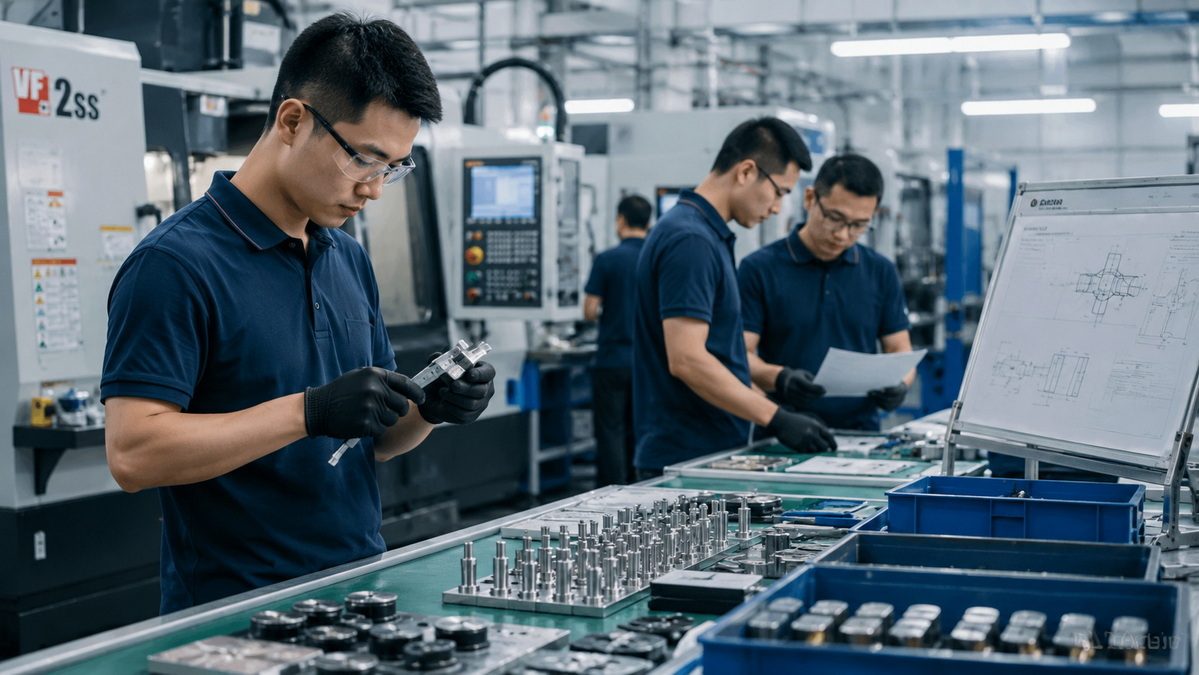
A practical transition process usually includes the following steps:
1. Confirm product requirements and production goals.
2. Review the prototype for manufacturability.
3. Select the right process and tooling strategy.
4. Create pilot samples or a bridge batch.
5. Inspect samples against approved standards.
6. Resolve issues before mass release.
7. Move into production with documented control points.
This sequence helps keep decisions organized and reduces the chance of late-stage surprises. It also gives both the buyer and supplier a clearer path from sample approval to stable output.
The path from prototype to production is not simply a matter of making more parts. It is a structured process that requires design discipline, process selection, validation, and quality control.
When managed well, this transition reduces risk, improves repeatability, and supports long-term manufacturing success. For businesses working with precision parts, molds, or sheet metal components, the right manufacturing partner can make the difference between a risky launch and a smooth scale-up.
A prototype is made to test an idea, while production is designed to make the same part repeatedly with consistent quality and cost control.
The transition is difficult because production requires repeatability, stable materials, predictable tooling behavior, and stricter quality standards.
The team should review tolerances, materials, tooling readiness, assembly method, inspection standards, and overall manufacturability.
A pilot run confirms whether the design and process work under real production conditions before full-scale manufacturing begins.
A strong partner can support process selection, reduce cost, improve communication, and manage the path from sample to stable production.
Industries such as automotive, electronics, industrial equipment, medical devices, packaging, and consumer products all benefit from a well-managed transition.
1.RapidDirect — From Prototype to Production: Key Ways to Be Successful
https://www.rapiddirect.com/blog/from-prototype-to-production/
2.Google Search Central — Creating helpful, reliable, people-first content
https://developers.google.com/search/docs/fundamentals/creating-helpful-content
3.Google Search Central — Our latest update to the quality rater guidelines: E-A-T gets an extra E for Experience
https://developers.google.com/search/blog/2022/12/google-raters-guidelines-e-e-a-t
4.Inventex Medical — Case Study
https://inventexmedical.com/case-study/
5.Product EVO — Rapid Product Development Case Study
https://www.productevo.io/rapid-product-development-case-study
6.Fictiv — B2B Case Studies & Customer Successes
https://www.casestudies.com/company/fictiv
7.Fresh Consulting — What is Rapid Prototyping? Methods, Strategy, and Best Practices for Product Development
https://www.freshconsulting.com/insights/blog/what-is-rapid-prototyping-methods-strategy-and-best-practices-for-product-developm


