From 1 piece to mass production, our one-stop custom services ensure a worry-free experience for you.
Help Center

Sheet Metal Fabrication

If you want to know more about the Sheet Metal Fabrication, the following articles will give you some help. These news is the latest market situation, trend in development, or related tips of the Sheet Metal Fabrication industry. More news about Sheet Metal Fabrication, are being released. Follow us / contact us for more Sheet Metal Fabrication information! Since its establishment, U-NEED has been adhering to the product and service concepts of “superior products”, “reasonable prices”, “punctual delivery” and “good reputation”. The products exported to Europe, America and Asia. U-NEED is firmly convinced that technological innovation is the lifeblood of enterprise development, quality of products and services is the core competitiveness of the enterprise. Service foremost and customer success is our endless pursuit!
  • Why Rapid Prototyping Is Essential Before Committing To Tooling
    Rapid prototyping reduces risk before companies invest in production tooling such as injection molds, stamping dies, and cold-forging dies. This article explains how prototypes validate form, fit, function, materials, assembly, and manufacturability. It also compares common prototyping processes, outlines a four-stage validation framework, and provides a practical checklist for determining whether a design is ready for production tooling.
    2026-09-02
  • What Is Sheet Metal Fabrication? Processes, Materials, Design Tips, And Supplier Selection
    This article explains what sheet metal fabrication is and how key processes—including laser cutting, CNC bending, stamping, welding, assembly, and surface finishing—transform flat metal sheets into custom functional parts. It also covers common materials, process selection, cost-control design tips, fabrication workflow, supplier evaluation, and integrated manufacturing support for global product development and production projects.
    2026-08-31
  • The Crucial Role of Post-Processing in Manufacturing: From Raw Parts To Production-Ready Components
    Post-processing transforms machined, molded, stamped, and fabricated parts into production-ready components. This guide explains how deburring, surface finishing, coating, secondary machining, inspection, and packaging influence part performance, corrosion resistance, appearance, assembly fit, and long-term manufacturing quality.
    2026-08-29
  • CNC Machining White Paper: A Practical Guide To Precision Parts, DFM, Tolerances, And Quality
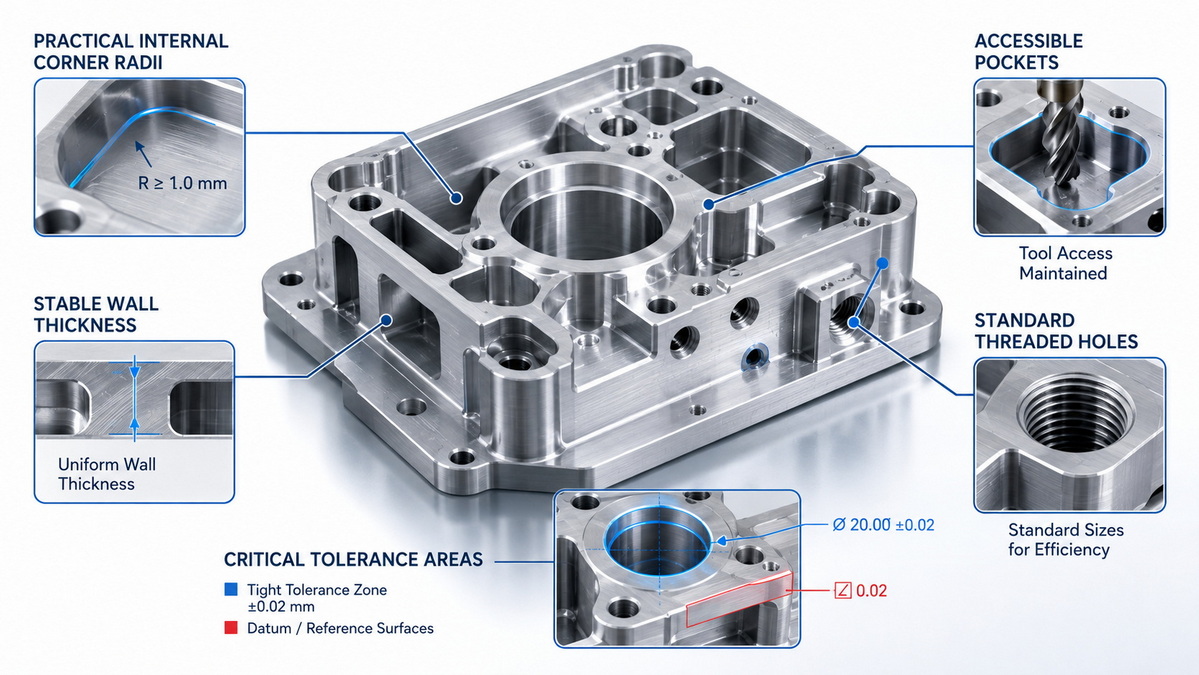
    This guide explains how CNC machining works, when to use 3-, 4-, and 5-axis machining, how to improve part manufacturability, select suitable materials, manage tolerances, and build a dependable quality-control process.
    2026-08-26
  • Precision CNC Machining Process Planning: 5 Practical Controls for Consistent Parts
    Learn five practical controls for reliable precision CNC machining: operation sequencing, datum alignment, efficient toolpaths, vibration response, and safe-height verification. Discover how U-Need supports custom machined parts, mold manufacturing, and sheet metal fabrication for global projects.
    2026-08-21
  • Can You Plasma Cut Aluminum? A Practical Guide To Quality, Safety, And Process Selection
    CNC plasma cutting is widely used for medium- and thick-gauge aluminum components where production speed, material utilization, and manufacturing cost matter. However, the final result depends on alloy type, thickness, gas selection, cutting parameters, edge-quality expectations, and any downstream operations such as welding, machining, bending, or finishing.
    2026-08-15
  • CNC Machining Vs Conventional Machining: Key Differences, Use Cases, And Expert Buying Guide
    If you are comparing CNC machining vs conventional machining, the right choice depends on part complexity, tolerance requirements, production volume, and total cost of ownership. In modern precision manufacturing, CNC machining usually delivers stronger consistency, scalability, and efficiency, while conventional machining still has a place in prototyping, repair work, and simple one-off parts.
    2026-08-05
  • Climb Milling Vs Conventional Milling: Which Method Is Better for CNC Machining?
    Climb milling and conventional milling are two basic milling directions with different cutting behaviors. Climb milling usually delivers better surface finish, lower cutting force, and cleaner chip evacuation, while conventional milling can be safer and more controllable on machines with backlash or weaker rigidity. The best choice depends on the machine condition, workholding strength, and the material being machined.
    2026-08-03
  • The 7 Most Common Anodizing Defects in Precision Manufacturing and How to Prevent Them
    This in-depth guide explains the 7 most common anodizing defects, their root causes, and practical solutions. Featuring expert insights, real industry cases, and actionable checklists, it helps manufacturers improve surface quality, reduce defects, and achieve consistent results in precision aluminum parts production.
    2026-08-02
  • CAD File Formats for CNC Machining: Best Practices, Common Mistakes, And Expert Preparation Tips
    This article explains the best CAD file formats for CNC machining, common export mistakes, and practical preparation methods that help reduce rework, improve quoting speed, and support smoother production for precision manufacturing projects.
    2026-08-01
  • Total 2 pages  Go to Page
  • Go
U-Need Precision Machinery Co., Ltd.
  +86 0769 23225585
 +86 15916761371
  contact@uneedpm.com
  Room 401-1, Building 4, SongHuZhiGu Research Center, No.6 Minfu Road, Liaobu Town, Dongguan City, Guangdong Province, China
523425

CAPABILITIES

RESOURCES

ABOUT

Subscribe
Copyright © U-Need Precision Machinery Co., Ltd. All rights reserved.     Privacy Policy  Sitemap