Views: 237 Author: U-Need Publish Time: 2026-09-14 Origin: Site
Content Menu
● Why Global Buyers Choose CNC Machining Services in China
● What Defines a Reliable CNC Machining Company in China?
>> Engineering Review Before Machining Begins
>> Tolerance Strategy and Manufacturability
>> Quality Control and Measurement Capability
● U-Need: Integrated Precision Manufacturing in China
>> Custom Precision Parts Machining
>> Mold Manufacturing Services
>> Sheet Metal Fabrication Services
● CNC Machining, Mold Manufacturing, or Sheet Metal Fabrication?
● How to Evaluate a CNC Machining Supplier Before Ordering
>> Prepare a Complete RFQ Package
>> Review the Supplier's Technical Questions
>> Start With a Prototype or Pilot Order
● Common Sourcing Mistakes to Avoid
>> Selecting a Supplier Only by Price
>> Overlooking Surface-Finish Requirements
>> Using Unrealistic Tolerances
>> Skipping Inspection Requirements
● Summary
>> What should I look for in a CNC machining company in China?
>> Can U-Need support both prototype and production projects?
>> What files are needed for a CNC machining quotation?
>> Is ±0.001 mm tolerance possible for all CNC-machined parts?
>> When is CNC machining better than injection molding?
>> When should I use sheet metal fabrication instead of CNC machining?
>> Can one supplier manage CNC machining, molds, and sheet metal fabrication?
Choosing a CNC machining services company in China is not simply a pricing decision. For global brands, distributors, product developers, and industrial manufacturers, the real challenge is finding a supplier that can consistently transform technical drawings into conforming parts, manage quality requirements, communicate clearly, and support the transition from prototype to repeat production.
China offers a mature manufacturing ecosystem with broad access to CNC milling, CNC turning, grinding, EDM, wire EDM, mold manufacturing, laser cutting, bending, metal stamping, finishing, assembly, and export packaging. However, machining capability can vary significantly between suppliers. A dependable partner should offer more than machines and a quotation. They should understand drawings, identify manufacturability risks, clarify technical requirements, and establish a controlled production process before material is cut.
U-Need supports international customers with integrated precision manufacturing solutions, including custom precision parts machining, injection molds, stamping dies, cold-forging dies, laser cutting, sheet metal bending, and metal stamping. By combining multiple processes under one manufacturing partner, buyers can reduce coordination complexity and improve consistency from prototype development through production.
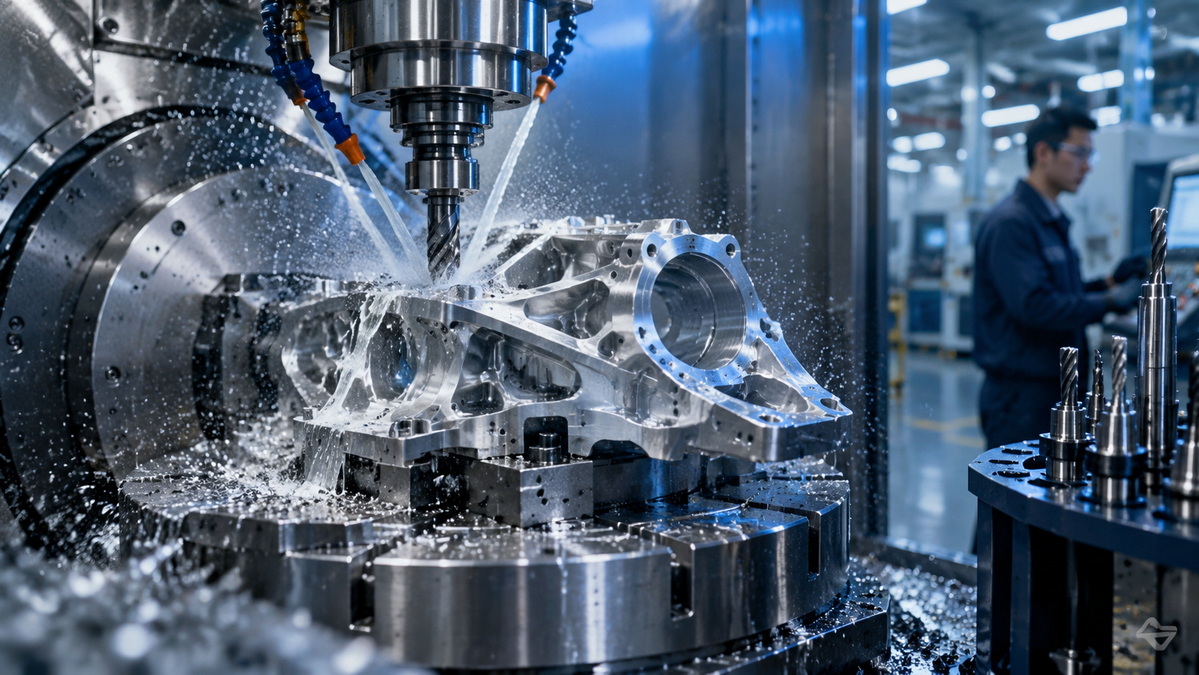
China remains a leading manufacturing destination because of its broad supply chain, skilled engineering workforce, process diversity, and ability to support projects ranging from one-off prototypes to repeat production programs.
A capable CNC machining supplier can provide a practical route from concept to finished part. This is especially important when a project involves several processes, multiple materials, strict dimensional tolerances, custom surface finishes, or short development timelines.
Typical applications for China CNC machining services include:
- Prototype metal and plastic components
- Automotive parts and fixtures
- Industrial automation components
- Robotics and motion-control parts
- Electronics housings and heat sinks
- Medical-device components
- Aerospace and defense-related prototypes
- Consumer-product enclosures
- Mechanical shafts, pins, sleeves, and brackets
- Mold inserts, cavities, cores, and tooling components
The strongest suppliers do not operate as basic job shops. They act as manufacturing partners that can review design files, recommend practical machining methods, identify high-cost tolerances, suggest suitable materials, and help customers avoid unnecessary rework.
For example, a product team may begin with CNC-machined aluminum housings for functional testing. Once the design is validated, the same project may need sheet metal samples for cost comparison, an injection mold for plastic housing production, or a stamping die for high-volume metal brackets. Managing these requirements through one coordinated supplier can reduce the risk of drawing-version errors, communication gaps, and inconsistent quality standards.
A reliable CNC machining company should have more than a long machine list. The true measure of capability is whether the supplier can control each stage of production: quotation, engineering review, material preparation, machining, inspection, finishing, packaging, and shipment.
A professional manufacturer should review the part carefully before confirming final production details. This early-stage review helps prevent misunderstandings that can lead to delays, unexpected costs, or nonconforming parts.
Before machining starts, the supplier should evaluate:
- 2D drawings and 3D CAD models
- Material grade and required material alternatives
- Critical dimensions and geometric tolerances
- Thread sizes and applicable standards
- Surface-finish expectations
- Heat treatment and coating requirements
- Part quantity and production forecast
- Inspection requirements
- Functional purpose of the component
- Packaging and shipping needs
A capable engineering team will often ask detailed questions about the drawing. This should be seen as a positive sign. It shows that the supplier is reviewing the part rather than making assumptions.
Not every feature on a drawing requires an ultra-tight tolerance. Overly restrictive tolerances can increase machining time, inspection effort, material waste, and total cost.
A skilled manufacturer helps customers identify which dimensions are truly critical to the part's function. For example, the bore diameter of a bearing seat may require tight control, while a non-contact exterior surface may not need the same level of precision.
The following factors influence achievable machining tolerance:
- Part material and hardness
- Overall component size
- Wall thickness and structural rigidity
- Machine type and setup method
- Tool access and cutting direction
- Required surface finish
- Inspection equipment
- Production quantity
- Environmental temperature and measurement conditions
Ultra-precision work may require additional grinding, EDM, wire EDM, specialized fixturing, controlled measuring conditions, and more time for inspection. Buyers should discuss critical dimensions at the quotation stage rather than assuming one tolerance value applies equally to every feature.
Precision manufacturing depends on a repeatable inspection process. Even a well-programmed CNC machine cannot guarantee conformity without effective measurement and documentation.
Depending on the project, a qualified machining company may use:
- Coordinate measuring machines
- Vision measurement systems
- Height gauges
- Micrometers and calipers
- Pin gauges and plug gauges
- Thread gauges
- Surface roughness testers
- Hardness testers
- Runout gauges
- Go/no-go gauges
- Custom inspection fixtures
For critical components, buyers may also request:
- First Article Inspection reports
- In-process inspection records
- Final inspection reports
- Material certificates
- Surface-treatment certificates
- Heat-treatment reports
- Batch traceability records
- Packaging inspection records
The goal is not to create unnecessary paperwork. The goal is to ensure that both the buyer and supplier share the same definition of an acceptable part.
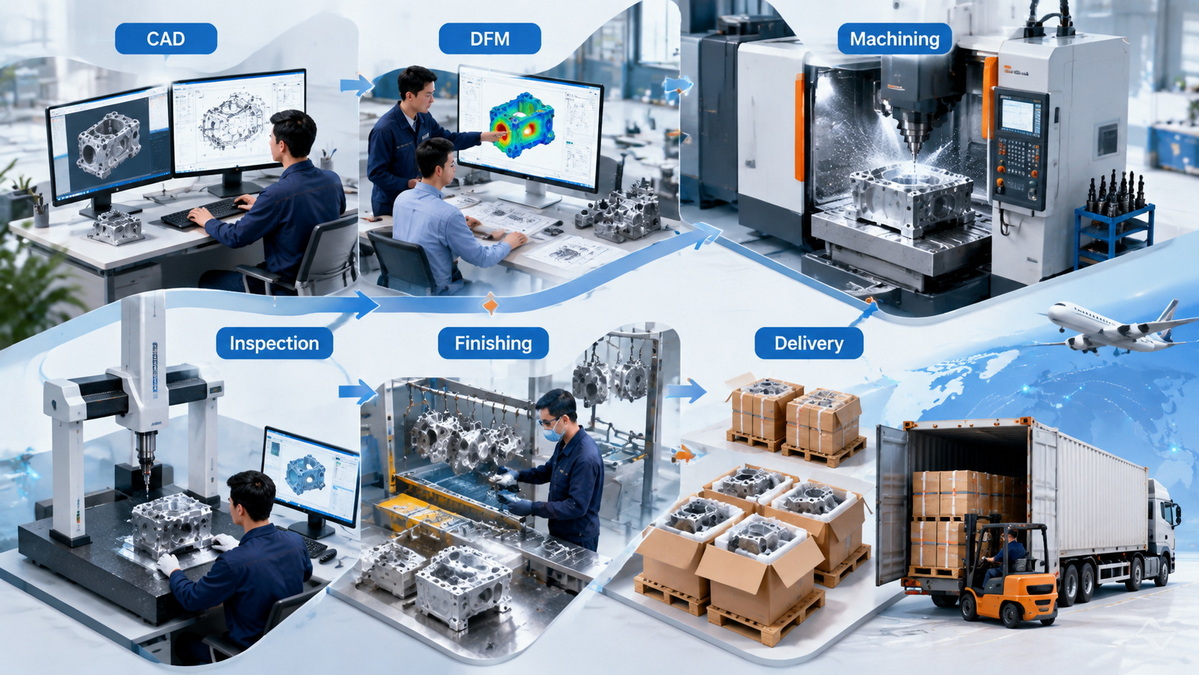
U-Need is a China-based manufacturing partner serving customers that require custom CNC-machined parts, tooling, and sheet metal fabrication. Its service scope is designed for companies that need reliable support across different project stages, from early prototypes to repeat orders.
Instead of relying on multiple unrelated suppliers, buyers can coordinate custom parts, molds, tooling, and fabricated metal components through one integrated manufacturing source.
Custom precision machining is suitable for components that require accurate dimensions, complex geometry, controlled finishes, and repeatable quality.
U-Need supports a range of custom precision part requirements, including:
- CNC milling
- CNC turning
- Multi-axis machining
- Precision grinding
- EDM machining
- Wire EDM
- Drilling and tapping
- Thread machining
- Deburring and polishing
- Custom fixture support
- Prototype and low-volume production
Precision machining can be used for aluminum, stainless steel, carbon steel, brass, copper, titanium, engineering plastics, and other materials depending on part design and application requirements.
Typical precision-machined parts include:
- Motor housings
- Mechanical shafts
- Precision pins
- Valve bodies
- Heat sinks
- Gearbox components
- Fixture components
- Tooling inserts
- Sensor housings
- Robotics components
- Custom brackets
- Medical-device prototypes
Mold manufacturing requires careful attention to material selection, dimensional accuracy, cooling design, mold structure, surface finish, and expected production volume.
U-Need provides mold-related manufacturing support for applications such as:
- Injection molds
- Metal stamping dies
- Cold-forging dies
- Mold inserts
- Cores and cavities
- Tooling fixtures
- Prototype molds
- Production molds
- Custom die components
Injection molds are commonly used for repeat production of plastic parts, including product housings, covers, caps, connectors, handles, and functional internal components.
Stamping dies are used to produce metal parts such as brackets, clips, terminals, washers, shields, and structural components. Cold-forging dies can support high-strength formed parts where the part geometry and material are suitable for the process.
A practical manufacturing partner should help determine whether a project is better suited for CNC machining, sheet metal fabrication, injection molding, stamping, or a combination of processes.
Sheet metal fabrication is often an efficient option for enclosures, brackets, panels, covers, frames, and structural assemblies. It can be especially useful when a part requires flat patterns, bends, holes, cutouts, formed features, or welded construction.
U-Need provides sheet metal fabrication solutions that can include:
- Laser cutting
- Sheet metal bending
- Metal stamping
- Punching
- Welding
- Deburring
- Grinding
- Surface finishing
- Assembly support
Common sheet metal materials include stainless steel, aluminum, carbon steel, galvanized steel, copper, and brass.
Sheet metal fabrication may be the better option when a component has relatively uniform wall thickness, multiple bends, flat-panel geometry, or when machining a solid block would create excessive material waste.
The right manufacturing process depends on part geometry, material, quantity, functional requirements, surface finish, and budget.
| Manufacturing Requirement | Recommended Process | Typical Benefit |
|---|---|---|
| Complex prototype housing | CNC milling | No dedicated mold or die required |
| Precision shaft or cylindrical component | CNC turning | Efficient machining of round features |
| Tight bore, hardened material, or narrow slot | EDM or wire EDM | High precision for difficult features |
| Metal bracket with bends and cutouts | Laser cutting and bending | Efficient fabrication with less material waste |
| High-volume plastic housing | Injection mold manufacturing | Lower unit cost after tooling investment |
| Repeat metal clips, terminals, or brackets | Metal stamping die | Suitable for high-volume production |
| High-strength formed metal part | Cold-forging die | Efficient shaping for applicable designs |
| Cosmetic metal enclosure | Sheet metal fabrication | Flexible finishing and design options |
A manufacturing partner should explain the trade-offs between these methods. The lowest-cost process is not always the most suitable process for the first production stage.
For example, producing 50 complex housings by CNC machining may be more practical than building an injection mold. However, once the design is stable and demand reaches a higher volume, mold manufacturing may reduce the per-part cost significantly.

A structured evaluation process helps buyers avoid preventable quality and delivery issues. The most effective approach is to compare suppliers based on technical evidence, communication quality, and production controls.
A detailed request for quotation creates a stronger foundation for accurate pricing and production planning.
Include the following items:
1. A dimensioned 2D PDF drawing with revision number.
2. A 3D CAD model in STEP, IGES, or another agreed format.
3. Material requirements and approved material alternatives.
4. Required quantity for prototype, pilot, and repeat production.
5. Surface treatment, heat treatment, marking, or assembly requirements.
6. Critical dimensions and functional requirements.
7. Required inspection reports and documentation.
8. Target delivery date and shipping destination.
9. Photos, assemblies, or functional explanations when needed.
The more clearly the buyer communicates requirements, the more accurately the supplier can assess machining method, cycle time, inspection needs, material availability, and production schedule.
A serious manufacturer will often ask questions before confirming the quotation. These questions may relate to tolerance, material, finish, inspection, packaging, or assembly function.
Useful questions from a supplier may include:
- Which dimensions are critical to function?
- What datum structure should be used for inspection?
- Are material certificates required?
- Is the part cosmetic or functional?
- Which thread standard applies?
- Does the component need corrosion resistance?
- Are burrs acceptable on non-cosmetic edges?
- Are there mating components or assembly-fit requirements?
- Does the surface treatment need masking?
- Is there an approved sample or golden sample for comparison?
Suppliers that do not ask any technical questions may still be capable, but buyers should confirm that all manufacturing assumptions are documented before production begins.
For a new supplier relationship, a prototype or small pilot order provides valuable information before a larger commitment is made.
A pilot order allows buyers to assess:
- Communication speed
- Drawing interpretation
- Material accuracy
- Dimensional quality
- Surface finish
- Inspection documentation
- Packaging protection
- Shipping reliability
- Responsiveness to nonconformities
- Ability to handle revisions
This approach is particularly useful before committing to high-value mold production, high-volume stamped components, or critical precision parts.
The lowest quotation may not include the same material quality, inspection level, surface treatment, packaging standard, or engineering support as another supplier's quotation.
Compare quotations based on the full manufacturing scope, including:
- Material grade
- Machining process
- Tolerance requirements
- Surface finish
- Inspection documentation
- Tooling requirements
- Packaging method
- Shipping terms
- Lead time
- Revision-control process
Terms such as "polished," "anodized," or "painted" can be too vague for precision manufacturing. Buyers should specify color, roughness, grain direction, coating thickness, masking areas, and cosmetic acceptance requirements whenever they affect the product.
Tight tolerances should be assigned to functional features, not every dimension. An unnecessarily strict tolerance can increase cost without improving product performance.
For critical components, buyers should clarify whether first article inspection, in-process checks, final inspection reports, material certificates, or special measurement records are required.
A precision-machined part can be damaged after passing inspection if packaging is inadequate. Discuss protective materials, separation methods, corrosion protection, labeling, and carton strength before shipment.
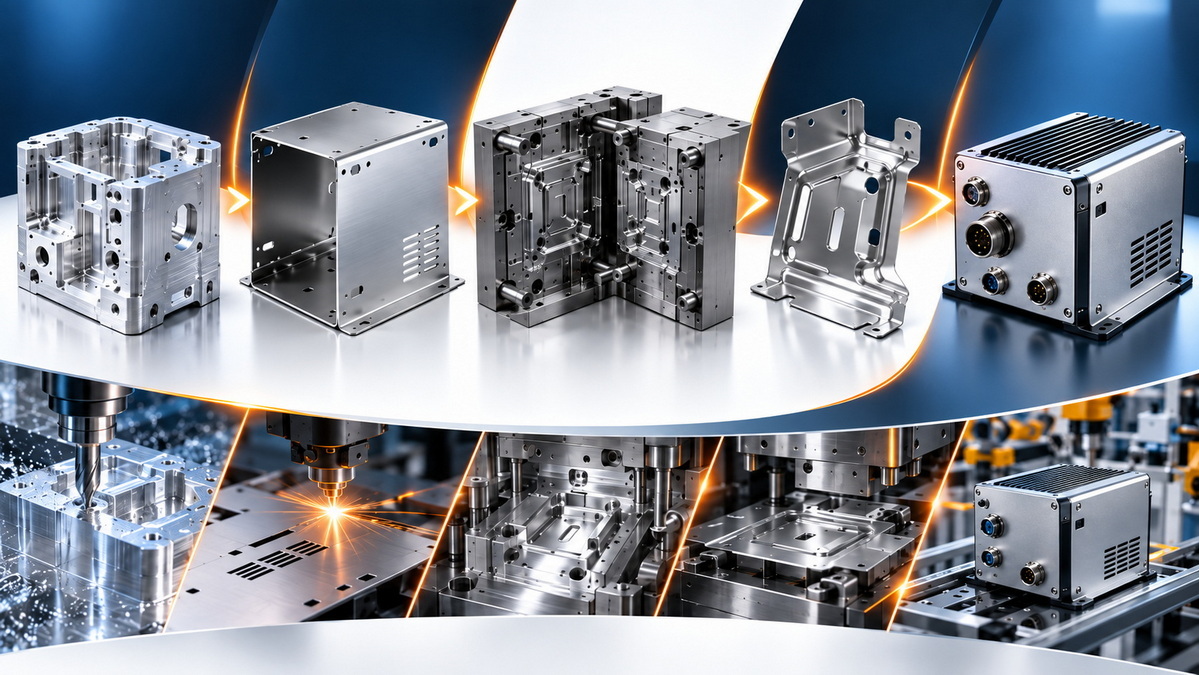
A dependable CNC machining company in China should provide more than low-cost manufacturing. It should combine engineering communication, controlled machining processes, inspection capability, material management, project coordination, and reliable delivery support.
U-Need offers a broad manufacturing scope for customers requiring custom precision parts machining, CNC milling, CNC turning, precision grinding, injection molds, stamping dies, cold-forging dies, laser cutting, bending, and metal stamping. This integrated model can help simplify procurement for projects that move from prototype parts to tooling and repeat production.
The most successful projects begin with complete drawings, clear material and quality requirements, realistic tolerances, and open technical communication. By selecting a manufacturing partner that understands both the technical and commercial requirements of the project, buyers can reduce risk, shorten development cycles, and improve the consistency of finished components.
For custom manufacturing projects, provide detailed drawings, CAD files, material specifications, quantities, critical tolerances, finish requirements, inspection expectations, and delivery timelines. A detailed technical review at the beginning of the project creates a stronger foundation for accurate manufacturing, controlled quality, and predictable delivery.
Look for engineering communication, relevant machining capability, inspection equipment, material traceability, documented quality procedures, reasonable delivery planning, and experience with your material and part type. A supplier should be able to explain how it will manufacture and inspect your component.
U-Need supports custom manufacturing projects that range from prototype parts and low-volume orders to repeat production requirements. Its combination of precision machining, mold manufacturing, and sheet metal fabrication can support different stages of product development.
A complete quotation package usually includes a 2D PDF drawing, a 3D CAD model, material specification, quantity, surface finish, tolerance requirements, inspection needs, and desired delivery date. STEP files and dimensioned PDF drawings are commonly preferred.
No. Extremely tight tolerances depend on material, geometry, component size, machine capability, fixture design, measurement method, and production process. Such tolerances may be achievable for selected features, but they should be evaluated on a project-by-project basis.
CNC machining is usually better for prototypes, low-volume production, engineering changes, and complex parts where mold investment is not yet justified. Injection molding becomes more cost-effective when the design is stable and production volume is high enough to justify tooling costs.
Sheet metal fabrication is often more suitable for enclosures, brackets, panels, covers, frames, and formed components with relatively uniform wall thickness. CNC machining may be more suitable for solid components, complex internal features, tight tolerances, and high-precision functional interfaces.
Yes. An integrated manufacturing partner can coordinate these processes under one project-management structure. This may reduce supplier handoffs, simplify drawing control, improve communication, and create a smoother transition from prototype development to repeat production.
1. [RpProto — Top 10 CNC Machining Services Company in China (2026 Updated)]
2. [U-Need — Precision Machining, Custom CNC Parts and Molds]
3. [U-Need — Custom CNC Machining Services]
4. [ISO — ISO 9001 Quality Management Systems]
5. [National Institute of Standards and Technology — Manufacturing and Measurement Resources]


