Views: 265 Author: U-Need Publish Time: 2026-09-05 Origin: Site
Content Menu
● Why China Is a Major Hub for Low-Volume Machining
>> Major Manufacturing Areas for Machining Projects
● How to Evaluate a Low-Volume Machining Supplier
>> Factory Capability and Equipment
>> Communication and Project Management
>> Flexibility for OEM and ODM Projects
● Comparison of 10 Low-Volume Machining Companies in China
● 1. U-Need Precision Machinery Co., Ltd.
● 3. 3ERP
● 5. RapidDirect / Protolabs Network
● How to Avoid Common Low-Volume Machining Problems
>> Incorrect Tolerance Interpretation
>> Surface-Finish Inconsistency
● The Less-Discussed Production Risk
● Practical Sample Approval Workflow
>> 1. Prepare a Complete RFQ Package
>> 2. Request a Manufacturing Review
>> 3. Confirm Quotation Assumptions
>> 6. Conduct Pilot Production
>> 7. Lock the Approved Version
● Summary
>> What is considered low-volume CNC machining?
>> Can low-volume machined parts use production-grade materials?
>> How can I verify whether a factory's ISO certificate is valid?
>> Can a machining supplier provide RoHS, REACH, or CE documents?
>> What quality documents should I request for critical machined parts?
>> How can I prevent drawing misunderstandings?
China remains one of the world's most practical sourcing destinations for low-volume machining, precision CNC parts, prototype manufacturing, sheet-metal fabrication, rapid tooling, and bridge production.
For global brands, distributors, product developers, and industrial manufacturers, the appeal is not limited to competitive pricing. China offers dense manufacturing clusters, mature supply chains, experienced machinists, broad material availability, export infrastructure, and access to complementary processes such as injection molding, die casting, stamping, laser cutting, anodizing, plating, powder coating, welding, and assembly.
However, not every machining supplier is suitable for long-term low-volume production. A reliable partner must do more than operate CNC machines. It should understand drawings, identify manufacturability risks, maintain material consistency, provide inspection documentation, support engineering changes, protect confidential designs, and keep delivery schedules stable.
This article introduces ten China-based companies that buyers may consider when sourcing low-volume machining services. The companies are selected based on their public manufacturing capabilities, process coverage, quality-management practices, OEM/ODM flexibility, communication readiness, and relevance to international procurement projects.
The list is intended as a practical supplier-research starting point. Buyers should still conduct their own qualification process, including certificate verification, sample testing, factory audits, and contract review, before placing significant orders.
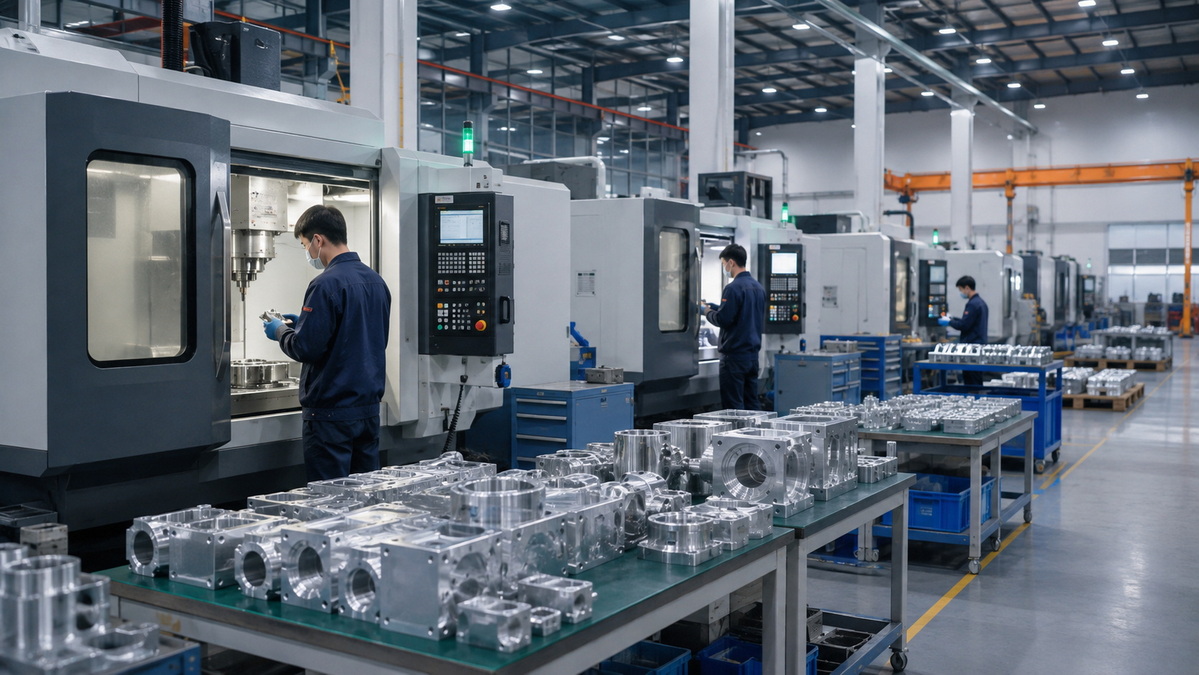
Low-volume machining generally refers to the production of small batches of custom parts, often ranging from one prototype to several thousand units. The exact quantity depends on the industry, product value, material cost, manufacturing process, and forecasted demand.
Typical low-volume machining projects include:
- Functional prototypes for engineering validation
- Pilot production before product launch
- Bridge production before injection-mold tooling is completed
- Custom replacement parts and service parts
- High-mix, low-quantity industrial components
- Pre-production samples for customer approval
- Limited-edition consumer products
- Medical, robotics, electronics, automotive, and automation components
- Customized OEM mechanical assemblies
- Product-testing and certification samples
CNC machining is especially valuable because it produces parts directly from engineering-grade materials. Unlike some prototype processes, CNC milling and turning can use the same aluminum, stainless steel, brass, titanium, POM, nylon, PC, ABS, PEEK, and other materials planned for later production.
This helps engineers test not only appearance, but also strength, heat resistance, wear resistance, sealing performance, thread durability, assembly fit, and real-world functionality.
China's manufacturing ecosystem is well positioned for this type of demand because machining suppliers often work closely with material distributors, mold makers, sheet-metal workshops, finishing providers, logistics companies, and assembly plants. This allows buyers to combine several processes under one project-management workflow.
| Manufacturing Area | Main Strengths | Common Low-Volume Applications |
|---|---|---|
| Dongguan, Guangdong | CNC machining, tooling, electronics supply chain, mold making, sheet metal, finishing | Consumer electronics, automation, robotics, EV components, housings |
| Shenzhen, Guangdong | Precision machining, rapid prototyping, electronics, hardware development, export services | Electronic enclosures, industrial equipment, startup hardware, smart devices |
| Zhongshan, Guangdong | CNC machining, vacuum casting, prototype injection molding, metal finishing | Product-development projects, consumer products, lighting, appliances |
| Foshan, Guangdong | Sheet metal, stainless steel fabrication, aluminum fabrication, furniture hardware | Brackets, frames, housings, architectural metal parts |
| Ningbo, Zhejiang | Die casting, machining, molds, automotive components | Pump parts, valve bodies, aluminum housings, industrial components |
| Suzhou and Shanghai Area | Precision machining, automation, medical-device supply chains, industrial engineering | Fixtures, jigs, semiconductor components, specialty assemblies |
| Xiamen, Fujian | CNC machining, prototype services, export manufacturing | Custom mechanical parts, prototypes, low-volume industrial products |
For buyers, the key is not simply finding a supplier in China. The key is choosing a supplier located in a manufacturing ecosystem that matches the product's technical and supply-chain requirements.

Selecting a low-volume machining company requires a more detailed review than comparing prices. A low quotation can become expensive if the supplier uses incorrect materials, misses tolerances, delays finishing, lacks inspection controls, or cannot repeat the approved quality level in later batches.
The following criteria provide a practical framework for supplier qualification.
A capable supplier should be able to explain which machines will make the part, what work envelope is available, whether 3-axis, 4-axis, or 5-axis machining is required, and whether the geometry requires turning, EDM, grinding, or special fixturing.
Important questions include:
- How many CNC milling and turning machines are available?
- Does the factory have 4-axis or 5-axis machining capability?
- Can it machine both prototypes and repeat production batches?
- What is the maximum machining size?
- Can it work with difficult materials such as titanium, Inconel, hardened tool steel, PEEK, or high-strength aluminum?
- Does it have EDM, grinding, laser cutting, bending, welding, or molding support?
- Can it provide fixture design for repeatability?
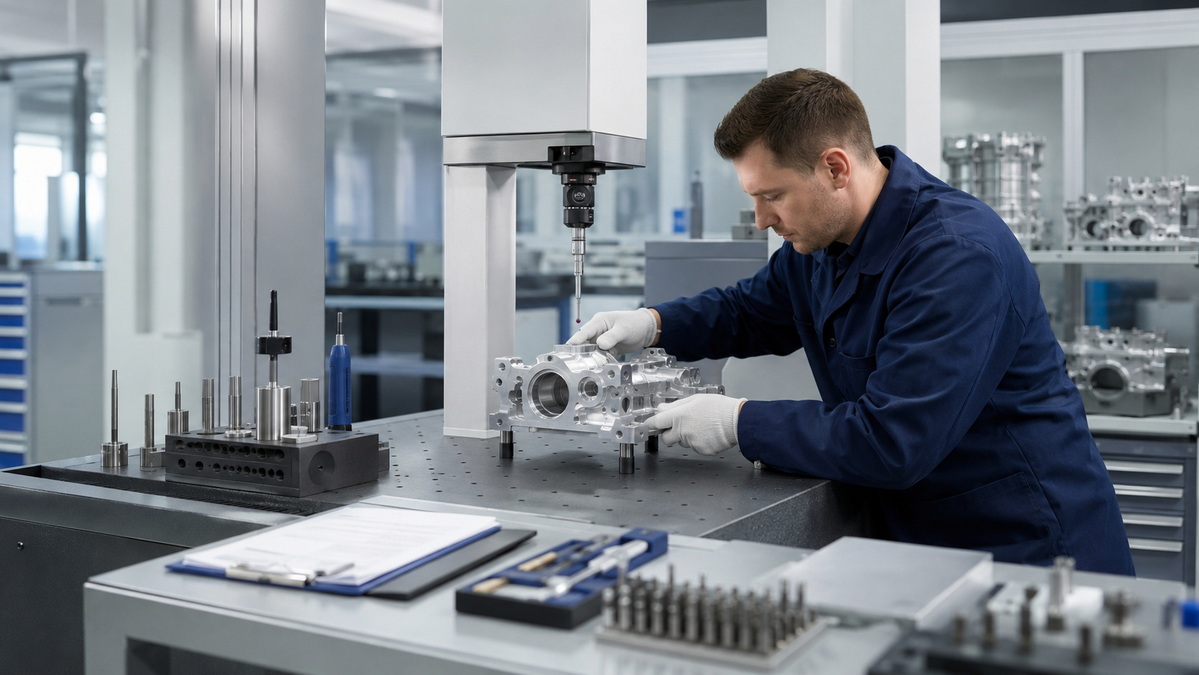
Quality should be built into the workflow rather than inspected only after production. A strong supplier should have incoming-material checks, first-piece inspection, in-process checks, final inspection, nonconforming-part control, calibrated measuring equipment, and shipment verification.
For critical components, buyers should request:
- First Article Inspection reports
- CMM inspection reports
- Material certificates
- Surface-treatment certificates
- Hardness test reports
- Roughness test reports
- Thread inspection reports
- Certificate of Conformance
- Lot traceability records
- Packaging photos before shipment
Low-volume production frequently involves design changes, unclear drawings, difficult tolerances, cosmetic requirements, material substitutions, and assembly challenges. The supplier should provide practical feedback before production begins.
A useful engineering review should identify:
- Deep cavities that are difficult to machine
- Sharp internal corners that require EDM
- Thin walls that may deform during machining
- Tolerance conflicts
- Unnecessary tight tolerances
- Surface-finish risks
- Complex fixturing requirements
- Difficult thread features
- Material availability concerns
- Cost-saving design alternatives
For overseas buyers, response quality matters. The supplier should provide clear quotations, controlled drawing revisions, realistic lead times, technical feedback, production updates, inspection records, and shipping documentation.
Poor communication often creates more risk than a minor price difference.
Many global buyers require more than a machining vendor. They need a partner that can support prototypes, small-batch production, design adjustments, tooling, sheet-metal components, injection-molded parts, surface finishing, assembly, branding, packaging, and shipping.
A flexible supplier can reduce the number of factories a buyer must manage.
| Company | Location | Established | Main Focus | Typical Order Flexibility | Quality Documentation to Request |
|---|---|---|---|---|---|
| U-Need Precision Machinery Co., Ltd. | Dongguan, Guangdong | 2016 | CNC machining, molds, sheet metal, custom tooling, prototype-to-production support | From 1 piece | Material certificates, CMM reports, process inspection records |
| WayKen | Shenzhen, Guangdong | Verify directly | Rapid prototyping, CNC machining, casting, vacuum casting, rapid tooling | Prototype and small-batch oriented | ISO certificate, FAI report, inspection plan |
| 3ERP | Zhongshan, Guangdong | Verify directly | CNC machining, injection molding, vacuum casting, sheet metal, 3D printing | Prototype and bridge production | Material traceability, CMM data, finishing records |
| HLH Rapid | Shenzhen/Dongguan, Guangdong | Verify directly | CNC machining, injection molding, 3D printing, sheet metal | High-mix, low-volume manufacturing | Certification scope, inspection reports, process controls |
| RapidDirect / Protolabs Network | China and global network | Verify operating entity | Digital manufacturing, CNC, injection molding, sheet metal | Flexible quantities depending on project | Named factory information, inspection process, compliance records |
| BE-CU Prototypes | Dongguan, Guangdong | More than 10 years publicly stated | CNC machining, tooling, sheet metal, molding, EDM | Prototype and low-volume orders | Current certification, material records, inspection reports |
| Firstpart | China | Verify directly | CNC machining and rapid prototyping | Project dependent | Quality records, automotive documents if required |
| RpProto | Xiamen, Fujian | Reported as 2002; verify directly | CNC prototypes and custom machining | Low-volume projects | Equipment list, sample reports, factory verification |
| Star Rapid | Zhongshan, Guangdong | Verify directly | CNC machining, tooling, molding, sheet metal | Prototype-to-production projects | Certificate validity, FAI, finishing documentation |
| Runsom Precision | Shenzhen, Guangdong | Verify directly | CNC milling, turning, 5-axis machining, prototyping | Project dependent | Machine list, CMM report, material traceability |
U-Need Precision Machinery Co., Ltd. is a custom manufacturing company based in Dongguan, Guangdong. Established in 2016, the company supports projects ranging from one-piece prototype orders to repeat production and larger manufacturing programs.
For buyers seeking a flexible manufacturing partner, U-Need is particularly relevant because it combines several key services under one workflow. Instead of sourcing CNC-machined parts, molds, sheet-metal components, and secondary processes from separate factories, buyers can coordinate a broader project through a single supplier relationship.
U-Need supports a wide range of manufacturing processes, including:
- CNC machining
- CNC milling
- CNC turning
- 5-axis machining
- Wire EDM
- CNC EDM
- Grinding
- Injection mold manufacturing
- Injection molding
- Stamping die manufacturing
- Cold-forging die manufacturing
- Sheet-metal fabrication
- Laser cutting
- Metal bending
- Metal stamping
- 3D printing
- Custom packaging coordination
This broad capability range makes U-Need suitable for OEM projects that include several component types. For example, a buyer developing an industrial product may require a CNC-machined aluminum housing, a bent sheet-metal bracket, a plastic cover, a stamping tool, and a small run of assembled samples. Managing these parts through one coordinated manufacturer can reduce handoffs, communication gaps, and shipment complexity.
U-Need's strength lies in flexibility and practical project support.
The company is positioned to support buyers who need small production quantities, custom parts, rapid engineering feedback, and a clear path from prototype development to later production. This is particularly helpful for small and medium-sized brands that may not meet the minimum order requirements of high-volume factories.
Key advantages include:
- Support for one-piece custom orders
- Broad metal and plastic manufacturing capability
- Flexible OEM customization
- Prototype-to-production support
- Tooling and mold-related capabilities
- Sheet-metal fabrication support
- Faster communication for drawing clarification
- Practical DFM feedback before production
- Quality-inspection process for incoming, in-process, and finished parts
- Suitability for export-oriented customer projects
U-Need may be a suitable option for buyers in:
- Industrial automation
- Robotics
- Consumer electronics
- Automotive accessories
- EV components
- Machinery and equipment
- Medical-device housings and non-implantable mechanical components
- Smart-home products
- Custom fixtures and jigs
- Hardware startups
- Replacement-part programs
- Distributor private-label projects
U-Need is particularly suitable for projects where buyers need more than basic machining. The company can support the transition from product concept to sample production, low-volume manufacturing, tooling, repeat orders, packaging, and larger-scale production planning.
For buyers who require confidential manufacturing support, it is advisable to use a mutual non-disclosure agreement, define drawing ownership, identify approved material specifications, and establish a written engineering-change process before releasing production files.
WayKen is a Shenzhen-based rapid manufacturing supplier specializing in prototype and low-volume production of metal and plastic parts. It is known for offering multiple manufacturing processes, including CNC machining, vacuum casting, 3D printing, rapid tooling, injection molding, sheet-metal fabrication, casting, and finishing.
The company is suitable for product-development teams that need functional prototypes, visual models, low-volume production samples, and multiple process options during the development stage.
- CNC machining for metals and engineering plastics
- Rapid prototyping and low-volume production
- Vacuum casting for short-run polyurethane parts
- Prototype injection molding
- Sheet-metal fabrication
- Surface finishing support
- Broad material selection
- Engineering feedback for manufacturability improvement
WayKen may suit industrial designers, consumer-product developers, hardware startups, robotics companies, electronics manufacturers, and engineering teams that need to test multiple designs before launching full production.
The company's process range can support projects that require CNC prototypes, plastic samples, metal components, limited-run molded parts, and cosmetic surface finishing. Buyers should clarify whether the same manufacturing route used for prototypes can also support repeat production after design approval.
3ERP is a rapid manufacturing company based in Zhongshan, Guangdong. Its service range includes CNC machining, vacuum casting, injection molding, 3D printing, sheet-metal fabrication, die casting, and surface finishing.
The company is a relevant option for buyers that require multiple rapid-manufacturing technologies within the same product-development project.
- CNC machining for custom metal and plastic parts
- Prototype injection molding
- Vacuum casting for low-volume polyurethane components
- Sheet-metal fabrication
- Die casting support
- 3D printing
- Surface finishing and post-processing
- Prototype-to-production workflow
3ERP may be suitable for global engineering teams developing consumer products, industrial equipment, automotive components, electronics, smart devices, and functional prototypes.
The supplier can support a project from early prototype machining through low-volume molding and post-processing. This can be useful for buyers who need to compare different production methods before investing in permanent tooling.
HLH Rapid is a rapid manufacturing provider with operations in southern China and an international-facing business structure. It offers a wide range of prototype and low-volume manufacturing services, including CNC machining, rapid injection molding, sheet-metal fabrication, SLA, SLS, SLM, and other additive-manufacturing technologies.
The company is particularly relevant for high-mix development programs where buyers need to evaluate metal, plastic, and additive-manufactured components at different stages of product development.
- CNC machining for metal and plastic components
- Low-volume injection molding
- Additive manufacturing options
- Sheet-metal prototyping
- Multi-process product-development support
- High-mix manufacturing capability
- International project communication
HLH Rapid may fit product-development teams in robotics, healthcare equipment, industrial equipment, consumer hardware, electronics, and advanced mechanical systems.
The company can support custom part manufacturing, prototype development, low-volume production, molding, and finishing. Buyers should clarify which processes are performed in-house and which are managed through qualified manufacturing partners.
RapidDirect and the broader Protolabs manufacturing network offer a digital manufacturing model for CNC machining, injection molding, sheet metal, and related production processes.
This option may appeal to buyers who prefer online quoting, faster early-stage DFM feedback, quantity-based price comparisons, and access to a wider manufacturing network.
- Digital quotation workflow
- DFM feedback
- CNC machining
- Injection molding
- Sheet-metal fabrication
- Flexible quantity options
- Manufacturing network capacity
- Suitable for prototype and production programs
This model may be useful for engineering teams that want fast initial quotations, multiple material options, and access to a broader manufacturing supply network.
Buyers can use the platform for prototype orders, bridge production, repeat parts, and larger manufacturing programs. For critical products, buyers should confirm the exact factory that will manufacture the order and establish whether the same facility will be used for future repeat production.
BE-CU Prototypes is a Dongguan-based manufacturer offering CNC machining, 5-axis machining, EDM, sheet-metal fabrication, injection molding, die casting, forging, stamping, 3D printing, and rapid prototyping services.
The company is a possible candidate for buyers who require metal prototypes, machining support, tooling, custom fabricated parts, and mixed-process manufacturing.
- Metal rapid prototyping
- CNC machining and 5-axis machining
- EDM and precision machining support
- Sheet-metal fabrication
- Injection molding
- Tooling and mold-related services
- Stamping and forging support
- Surface finishing coordination
BE-CU Prototypes may suit buyers in automotive-related industries, industrial equipment, automation, electronics, mechanical assemblies, and metal-product development.
The company can support custom machining, fabricated metal components, tooling, prototype development, and low-volume production. Buyers should request detailed information about current equipment, production capacity, inspection resources, and traceability procedures.
Firstpart is a China-based CNC machining and rapid prototyping supplier that may be relevant for industrial and automotive-related sourcing programs.
The company focuses on custom CNC parts, prototype manufacturing, and machining-related manufacturing support. It may be worth considering for buyers that need more structured quality documentation and repeatability for functional mechanical components.
- CNC machining
- Rapid prototyping
- Custom mechanical components
- Potential automotive supply-chain relevance
- Engineering support for part manufacturing
- Low-volume machining projects
Firstpart may be appropriate for industrial equipment manufacturers, automotive suppliers, machinery brands, engineering teams, and customers requiring custom-machined components.
The company can support custom machining projects, prototype production, and manufacturing-solution development. Buyers should ask about process documentation, incoming-material controls, production-part approval capability, and traceability for critical components.
RpProto is associated with CNC prototype manufacturing and low-volume custom machining services in Xiamen, Fujian. The company may be a useful option for buyers seeking a machining supplier outside the Pearl River Delta region.
Xiamen has a developed export environment and access to a range of manufacturing resources, including machining, molding, fabrication, packaging, and logistics support.
- CNC prototype machining
- Low-volume production support
- Custom metal and plastic components
- Export-oriented manufacturing environment
- Potential alternative to Guangdong-based sourcing
RpProto may be appropriate for buyers seeking prototypes, low-volume mechanical components, custom machined parts, and export-ready production support.
The supplier may support custom manufacturing projects from early prototype stages through repeat production. Buyers should request a current capability presentation, machine list, sample inspection report, and documentation package before placing high-value orders.
Star Rapid is a China-based rapid manufacturing provider often considered for CNC machining, rapid tooling, injection molding, sheet-metal fabrication, and prototype-to-production services.
Its service model may be suitable for buyers that need early-stage product development support and the ability to move from functional samples into controlled low-volume production.
- CNC machining
- Rapid prototyping
- Tooling support
- Injection molding
- Sheet-metal fabrication
- Surface finishing
- Prototype-to-production workflow
- International customer communication
Star Rapid may fit buyers in consumer goods, electronics, industrial design, robotics, automotive components, smart devices, and custom hardware development.
The company can support custom machining, rapid tooling, molded parts, sheet-metal prototypes, surface finishing, and assembly-related projects. Buyers should verify current production capability, quality documentation, and certificate scope directly before approving production.
Runsom Precision is associated with CNC machining, CNC turning, 5-axis machining, precision prototypes, and low-volume custom parts in the Shenzhen area.
It can be considered by buyers seeking a supplier for complex metal and plastic components, particularly when multi-axis machining, tight tolerances, and custom fixtures may be required.
- CNC milling
- CNC turning
- 5-axis machining
- Custom metal parts
- Engineering-plastic machining
- Prototype and low-volume production
- Shenzhen-area supply-chain access
Runsom Precision may be suitable for automation equipment, industrial machinery, robotics, electronics, automotive components, and mechanical product-development programs.
The supplier may support complex machining projects, prototype production, finishing, and repeat orders. Buyers should request machine specifications, production-part examples, inspection reports, and details about the fixturing strategy for critical parts.
Low-volume machining orders can fail even when the parts appear visually acceptable. The most serious issues often involve material quality, tolerances, finishing, documentation, repeatability, and communication.
A supplier may quote one material grade but use a lower-cost alternative. This can affect strength, corrosion resistance, conductivity, heat resistance, machining behavior, anodizing appearance, and product compliance.
For example, aluminum 6061-T6, aluminum 6063, and recycled aluminum stock may look similar after machining but perform differently. The same is true for stainless steel grades, brass alloys, engineering plastics, and flame-retardant materials.
To reduce this risk, buyers should specify:
- Exact material grade
- Relevant standard
- Temper or heat-treatment condition
- Required certifications
- Required mechanical properties
- Required color or surface-treatment outcome
- Material certificate requirement
- Lot traceability requirement
A part may pass a few individual dimensions but still fail during assembly. This often occurs when drawings do not clearly define functional datums, critical dimensions, flatness, concentricity, perpendicularity, position tolerances, or thread requirements.
To avoid this problem:
- Provide clear 2D drawings and 3D files.
- Identify critical-to-quality dimensions.
- Define functional datums.
- Use GD&T where necessary.
- Share mating-part information when relevant.
- Provide a fit-check fixture for highly sensitive assemblies.
- Confirm inspection methods before production.
Terms such as "black anodized," "brushed stainless steel," "sandblasted aluminum," or "powder coated" can produce very different results depending on material grade, process route, film thickness, gloss level, sealing method, and handling conditions.
Buyers should define:
- Finish type
- Color reference
- Surface roughness requirement
- Film thickness
- Gloss level
- Cosmetic surface areas
- Rack-mark allowance
- Scratch and dent acceptance standard
- Masking zones
- Required certificates
Many suppliers outsource processes such as anodizing, plating, heat treatment, welding, injection molding, and special grinding. Outsourcing is not necessarily a problem, but lack of control is.
A reliable supplier should know where outsourced processes are completed, how subcontractors are qualified, and how finished parts are inspected after returning to the factory.
A very fast quotation does not always mean a realistic production plan. Low-volume parts may require special material sourcing, custom fixtures, long-cycle machining, manual deburring, outside finishing, inspection, and packaging.
Buyers should ask for a lead-time breakdown covering:
- Material sourcing
- Programming
- Fixture preparation
- Machining
- Deburring
- Surface treatment
- Inspection
- Rework allowance
- Final quality check
- Packaging
- Dispatch
One important issue is often overlooked during prototype approval: a supplier may create an excellent sample without having a repeatable process.
For a very small prototype order, an experienced machinist may manually adjust machine offsets, hand-finish surfaces, select the best parts, and spend additional time solving individual problems. This can produce an attractive sample, but it does not automatically prove that the same supplier can produce hundreds of consistent parts later.
Before approving a sample, buyers should ask whether it was produced using the same equipment, fixtures, inspection process, material source, finishing route, and production method planned for future orders.
Important questions include:
- Was the sample made on the intended production machine?
- Were any dimensions manually adjusted?
- Was the part reworked after machining?
- Is the fixture method suitable for repeat production?
- Will future parts use the same material source?
- Will the same anodizing, plating, or coating supplier be used?
- Is there a documented in-process inspection plan?
- How will the supplier control variation between production batches?
- What happens if a finishing supplier changes its process or chemical line?
- How will engineering changes be approved and documented?
The goal is not only to approve one good part. The goal is to approve a stable manufacturing process.
A disciplined sample process can prevent costly production mistakes.
A proper RFQ package should include:
- 2D PDF drawings
- 3D CAD files
- Bill of materials
- Material specifications
- Surface-finishing requirements
- Color requirements
- Quantity for prototype and production stages
- Annual forecast if available
- Critical dimensions
- Inspection requirements
- Packaging requirements
- Destination country
- Required delivery date
- Required Incoterms
Ask the supplier to identify manufacturability risks before placing the order. This should include comments on tolerance feasibility, tool access, thin walls, internal corners, thread specifications, finishing risks, and cost-saving opportunities.
Before issuing a purchase order, confirm:
- Material grade
- Manufacturing process
- Surface finish
- Tolerance range
- Inspection level
- Lead time
- Packaging
- Shipping terms
- Payment terms
- Drawing revision
- Engineering-change process
For critical or repeat production parts, begin with a small sample batch. Evaluate part dimensions, material documentation, cosmetic quality, assembly fit, surface treatment, thread performance, packaging, and delivery reliability.
Do not approve a sample only through photographs. Review measurement data for critical dimensions and compare it against drawing requirements.
Before a larger order, place a pilot batch if the product is complex, highly cosmetic, regulated, safety-related, or expected to scale. Pilot production helps verify yield, repeatability, packaging, logistics, and communication.
Once approved, record the final drawing revision, material specification, finish sample, inspection plan, packaging standard, and change-control process.
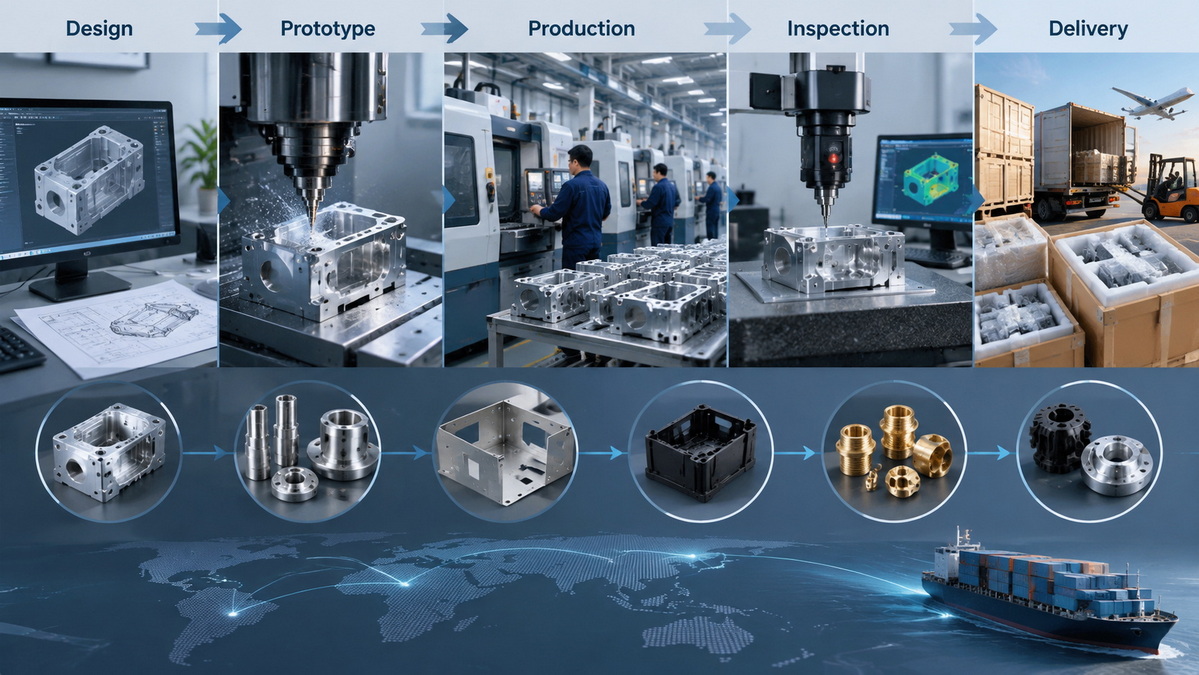
China remains a strong manufacturing destination for low-volume machining because buyers can access CNC machining, precision turning, 5-axis machining, EDM, sheet-metal fabrication, mold manufacturing, injection molding, surface finishing, assembly, and export logistics through mature industrial clusters.
The most reliable supplier is not necessarily the one with the lowest first quotation. A strong long-term partner should provide responsive engineering communication, transparent material specifications, stable quality control, realistic lead times, clear inspection documentation, flexible order quantities, and the ability to support future production growth.
U-Need Precision Machinery Co., Ltd. is a practical option for buyers looking for flexible low-volume manufacturing support in China. With capabilities spanning custom CNC machining, mold manufacturing, sheet-metal fabrication, laser cutting, bending, stamping, cold-forging dies, injection molding, 3D printing, and prototype-to-production coordination, it can support diverse OEM programs from initial samples to repeat manufacturing.
For a successful sourcing project, begin with a complete RFQ package, request a manufacturability review, verify the manufacturing process, approve documented samples, and select a supplier based on total quality, communication, reliability, and long-term production suitability.
Low-volume CNC machining usually refers to custom production orders ranging from one part to several thousand pieces. The actual quantity depends on the product, material, machining time, unit cost, required tooling, annual demand, and supplier capacity.
For some suppliers, an order of 50 parts is low volume. For others, 2,000 parts may still be considered low volume if the product is complex or has multiple variations.
Yes. One of the major advantages of CNC machining is that it can use production-grade materials, including aluminum alloys, stainless steel, carbon steel, brass, copper, titanium, POM, nylon, polycarbonate, ABS, acrylic, PTFE, PEEK, and other engineering plastics.
The exact material should be specified by grade, standard, temper, color, and required documentation.
Request the complete certificate and review the company name, factory address, certificate number, scope, issue date, expiry date, and certification body. Compare this information with the quotation, business license, invoice, and bank beneficiary details.
Buyers should also verify whether the certificate applies to the actual production facility rather than only a sales office, trading company, or related entity.
A supplier may provide material declarations, plating certificates, and related documentation. However, the exact compliance responsibility depends on the product category and destination market.
CE marking generally applies to certain finished products rather than to every individual machined component. RoHS and REACH may apply when materials are used in regulated electrical, electronic, consumer, industrial, or finished-product applications.
Buyers should define compliance requirements before production begins and request supporting documentation for relevant materials and finishes.
For critical parts, request a First Article Inspection report, CMM inspection report, material certificate, Certificate of Conformance, surface-treatment certificate, hardness report, roughness report, thread inspection report, and lot traceability information.
Additional documentation may be needed for automotive, aerospace, medical, defense, semiconductor, and safety-critical applications.
Provide both 2D drawings and 3D CAD files. Define critical dimensions, functional datums, material grade, finish requirements, thread specifications, cosmetic surfaces, tolerance standards, and drawing revision numbers.
For complex assemblies, provide mating-part data, an assembly drawing, a fit-check requirement, or a physical reference sample where possible.
1.U-Need Precision Machinery Co., Ltd. — [Custom Parts, Your Needs, We Meet!]
2.State Council of the People's Republic of China — [China's Machinery Industry Records Stable Growth in 2025]
3.Observatory of Economic Complexity — [Machines in China Trade]
4.Global Market Insights — [Machine Tools Market Statistics, 2026–2035 Report]
5.WayKen — [About WayKen]
6.3ERP — [About Us]
7.HLH Rapid — [Company Overview]
8.Protolabs / RapidDirect — [Rapid Manufacturing Services]


