Views: 212 Author: U-Need Publish Time: 2026-11-19 Origin: Site
Content Menu
● CNC Materials Selection Starts with the Manufacturing Process
● CNC Materials Comparison: Common Grades and Practical Trade-Offs
● Top CNC Materials for Custom Precision Parts
>> Aluminum: A Practical Starting Point for Lightweight Components
>> Stainless Steel: Select the Grade Around the Exposure
>> Carbon and Alloy Steel: Match Strength to Material Condition
>> Brass: Efficient for Many Turned Components
>> Copper: Choose It When Conductivity Drives Performance
>> Titanium: Use It Where Its Advantages Are Necessary
>> Cast Iron: Distinguish Gray Iron from Ductile Grades
>> Nickel Alloys: Reserve Them for Demanding Service
● How to Choose CNC Machining Materials in Five Steps
>> 1. Define the Service Requirements
>> 2. Specify the Grade and Condition
>> 3. Review Geometry Before Choosing an Expensive Alloy
>> 4. Plan Finishing and Critical Dimensions Together
>> 5. Compare Total Finished-Part Cost
● Three Practical Selection Scenarios
>> Lightweight Equipment Housing
● Material Verification and RFQ Checklist
● Discuss Your Material and Manufacturing Route with U-Need
>> 1. What Are the Most Common CNC Machining Materials?
>> 2. What Is a Good Starting Material for General-Purpose CNC Parts?
>> 3. Is 316 Stainless Steel Always Better Than 304?
>> 4. Can the Same Aluminum Grade Be Used for Machining and Bending?
>> 5. Why Can Titanium or Nickel Alloy Parts Be Expensive to Machine?
>> 6. What Material Information Should Be Included in a Drawing?
Choosing the right CNC materials for metal fabrication means balancing performance, machinability, finishing, and total production cost. Aluminum, stainless steel, carbon steel, brass, copper, titanium, cast iron, and nickel alloys all have useful roles. However, the best choice depends on the specific grade, material condition, and application—not simply the metal's name.
For global brands, distributors, and manufacturers sourcing custom precision parts, this decision affects everything from machining time to corrosion resistance and assembly reliability.
My starting point for material selection is straightforward: define what the finished component must do before deciding what it should be made from. This guide turns that principle into practical comparisons and purchasing steps.
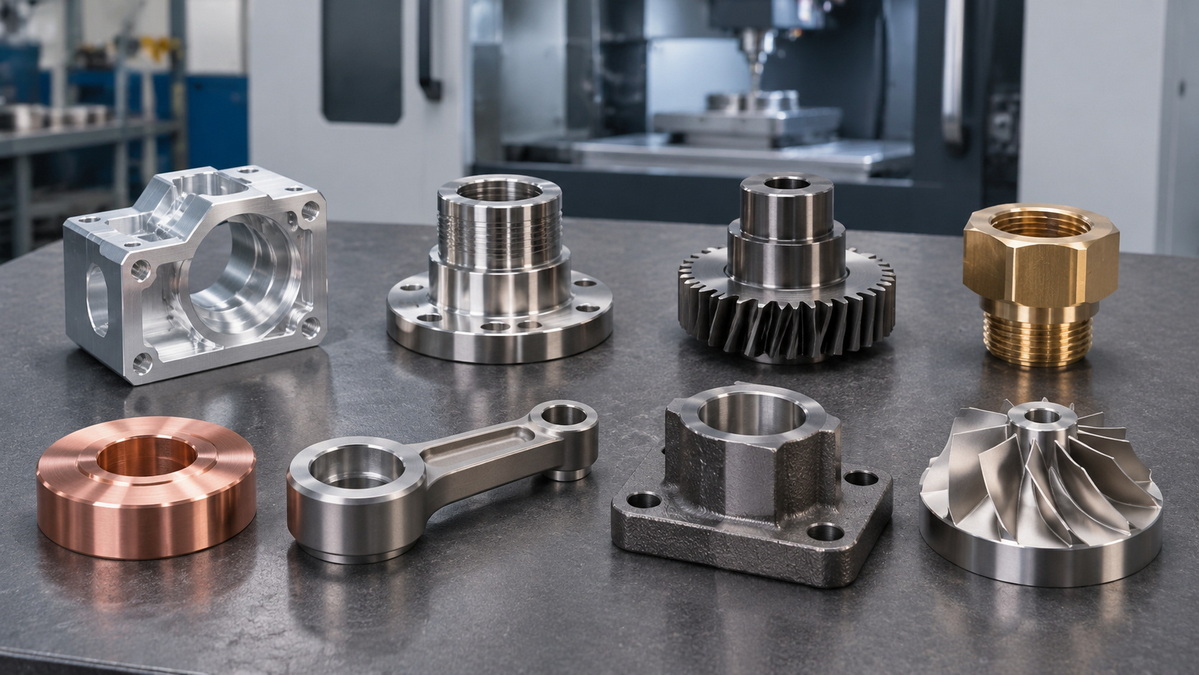
CNC machining removes material from a workpiece through operations such as milling, turning, and drilling. Metal fabrication is broader and can also include laser cutting, bending, stamping, and welding.
These processes do not place identical demands on materials.
A grade that machines efficiently may be unsuitable for a tightly bent enclosure. Likewise, a sheet selected for formability may not provide the strength or dimensional stability required for a precision shaft.
For example, 6061 aluminum is a common machining option, while 5052-H32 is frequently selected for formed sheet metal. Their processing advantages are different.
Before comparing prices, establish whether the part should be machined from solid stock, fabricated from sheet, or produced through a combination of processes.

The following table provides a starting point, not an automatic material approval. Final selection requires application-specific engineering review.
| Material family | Example grades | Main advantage | Important limitation | Typical applications |
|---|---|---|---|---|
| Aluminum | 6061-T6/T651, 7075-T651 | Low weight and efficient machining | Strength, corrosion behavior, and formability vary | Housings, brackets, fixtures |
| Stainless steel | 304, 316/316L | Corrosion resistance | Work hardening and cutting heat | Equipment parts, fittings |
| Carbon and alloy steel | Low-carbon steel, 4140 | Strength and broad processing options | Corrosion protection may be necessary | Shafts, mounts, machinery parts |
| Brass | C360 | Excellent machinability | Composition must suit application requirements | Turned fittings, connectors |
| Copper | Application-specific copper grades | Electrical and thermal conductivity | Chip control and burr formation | Conductive parts, heat-transfer components |
| Titanium | Ti-6Al-4V | Strength relative to weight | Difficult machining and higher cost | Specialized lightweight components |
| Cast iron | Gray and ductile grades | Useful wear and structural characteristics | Behavior differs substantially by grade | Housings, machinery components |
| Nickel alloys | Inconel 625, 718 | Demanding thermal and corrosion performance | High cutting forces and tool wear | Energy and aerospace components |
Aluminum is often worth evaluating first for housings, fixtures, brackets, and general mechanical components. It combines low density with useful mechanical properties and generally favorable machinability.
6061 offers a practical balance of cost, machinability, and versatility. The T6 or T651 designation matters because it identifies the material condition rather than merely its chemical composition.
7075 is appropriate when higher strength justifies additional material and processing costs. It is not automatically the better option for every aluminum component.
When comparing 6061 and 7075, check loading, environmental exposure, finishing, joining requirements, and stock availability. For bent sheet components, assess a forming-oriented grade separately.
Stainless steel is valuable when corrosion resistance, cleanliness, and durability matter.
304 is a common general-purpose option. 316 contains molybdenum, providing improved resistance in certain corrosive environments, including many chloride-related conditions.
However, "stainless" does not mean immune to corrosion. Temperature, chemical concentration, surface condition, and component geometry all influence performance.
Machining also requires attention. Austenitic stainless steels can work-harden and generate substantial cutting heat. Suitable tooling, stable engagement, and controlled cutting conditions help manage these challenges.
For food-processing or medical applications, material selection alone does not establish suitability. Surface finish, cleaning requirements, documentation, and applicable specifications remain important.
Steel is a strong candidate for machinery parts, shafts, mounting features, and load-bearing components.
Low-carbon steels can provide economical solutions where extreme strength is unnecessary. Alloy steels such as 4140 offer additional options when toughness, fatigue performance, or heat treatment becomes important.
Avoid assuming that every carbon steel welds easily or responds identically to heat treatment. Carbon content, alloying elements, hardness, and delivery condition influence processing.
Specify whether the material will be supplied annealed, prehardened, or treated after machining. This decision affects tooling, sequencing, distortion risk, and final inspection.
Also define corrosion protection when the operating environment requires it.
Brass is useful for fittings, connectors, hardware, and other components requiring efficient machining and an attractive finish.
C360 is widely used for general machining and high-volume turned parts. Its machining advantages can reduce production time for suitable geometries.
However, brass grades are not interchangeable. Select the composition around service conditions and any restrictions applicable to the finished product.
For buyers, an important distinction is whether easy machining or a particular application requirement takes priority. The drawing should identify the approved alloy rather than simply stating "brass."
Copper is a strong candidate for electrical contacts, conductive components, and heat-transfer parts.
Its processing behavior differs from brass despite the connection between these material families. Copper can produce difficult chips, burrs, and challenging surface-finishing conditions.
Consequently, a simple-looking copper component may cost more to machine than an aluminum or brass alternative.
Review conductivity, mechanical loading, contact geometry, surface finish, and any coating requirements together. Changing the copper grade may improve manufacturability, but the finished component must still meet its electrical or thermal performance requirements.
Titanium offers an attractive combination of strength relative to weight, corrosion resistance, and biocompatibility. Ti-6Al-4V is a widely used machining alloy.
The trade-off is manufacturing difficulty. Low thermal conductivity and demanding cutting behavior concentrate challenges around the tool and cutting zone.
Titanium therefore deserves a clear technical justification rather than selection based on premium positioning alone.
For a lightweight bracket, compare its performance benefits against aluminum before committing. For a regulated medical component, do not treat the alloy name as proof of compliance; product-specific standards and manufacturing controls still apply.
Cast iron should not be treated as one uniform material.
Gray cast iron and ductile cast iron differ in their structure, mechanical behavior, and machinability. A statement that applies to one grade may be misleading for another.
Machining considerations also vary. Gray cast iron is generally relatively easy to machine, but abrasive constituents can affect cutting-edge life.
For cast components, assess the casting and machining plan together. Machining allowance, datum selection, and inspection access should be considered before production—not after the casting has been purchased.
Nickel alloys become relevant when elevated-temperature performance or challenging corrosion conditions exceed the capabilities of simpler materials.
Inconel 625 and 718 are useful examples, but they are not interchangeable. Alloy selection and material condition must match the engineering specification.
Heat-resistant superalloys can generate high cutting forces, substantial heat, and significant tool wear. Work hardening further complicates machining.
For these projects, request a manufacturing review early. The component's geometry, stock condition, and finishing sequence can materially affect feasibility and cost.
List the conditions the finished part will experience:
- Static and cyclic loads.
- Operating temperature.
- Moisture, salt, or chemical exposure.
- Weight restrictions.
- Electrical or thermal requirements.
- Contact with food, skin, or process fluids.
Separate mandatory requirements from preferences. This prevents overengineering and makes alternative materials easier to evaluate.
"Aluminum" or "steel" is insufficient for a production drawing.
Identify the alloy designation, applicable material specification, temper or hardness condition, and permitted substitutions.
For international sourcing, do not assume that similarly described regional grades are automatically equivalent. Have the responsible engineer approve any proposed substitution.
Thin walls, deep pockets, small internal corners, and difficult tool access can increase manufacturing risk.
Before upgrading the material, ask whether a geometry change could meet the same functional requirement more economically.
Adding support, changing wall thickness, or simplifying a pocket may improve manufacturability without requiring a premium metal.
Anodizing, coatings, heat treatment, and other secondary operations should be considered before the machining plan is finalized.
Identify which dimensions apply after finishing. Mark surfaces that require masking or special treatment.
This is especially important for threads, bearing seats, mating surfaces, and electrical contact areas.
Raw stock price is only one contributor.
A useful comparison includes material, setup, cutting time, tooling, finishing, inspection, scrap exposure, and delivery requirements.
The lowest material price does not necessarily produce the lowest finished-part cost. Compare quotations using the same drawing revision and acceptance criteria.
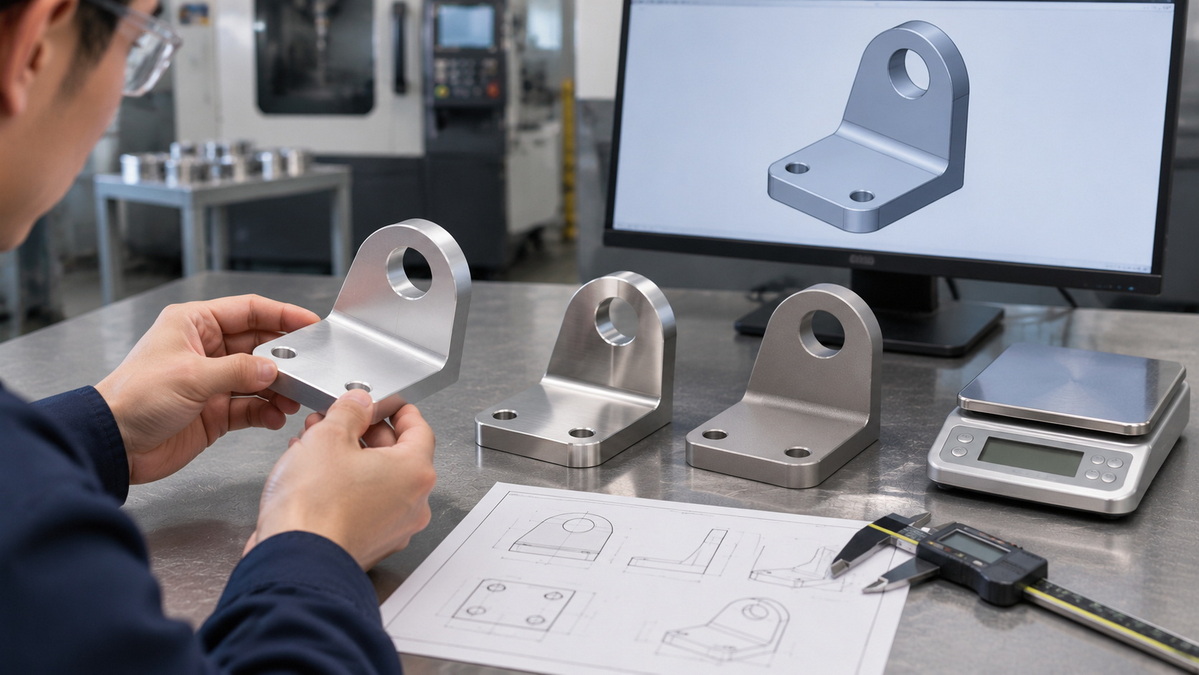
The following examples illustrate decision logic; they are not documented customer projects.
Start by evaluating 6061 aluminum for a machined housing.
If the component is primarily a thin enclosure, compare a sheet metal design instead. The manufacturing route may offer a larger saving than changing the machining alloy.
Compare 304 and 316 stainless steel against the actual fluid, temperature, and cleaning conditions.
Do not approve either grade solely because the part will operate "outdoors" or near seawater. Exposure details determine whether the material is appropriate.
Evaluate an alloy steel with a clearly specified condition and heat-treatment plan.
Define final hardness, critical fits, and inspection requirements before comparing supplier prices. Otherwise, apparently similar quotations may cover substantially different deliverables.
A reliable purchase specification connects the material requirement to the finished part.
For your RFQ package, include:
1. A controlled drawing and relevant 3D model.
2. Material grade, condition, and specification.
3. Quantity and expected repeat demand.
4. Critical dimensions and functional datums.
5. Surface finish and secondary operations.
6. Required material and inspection documentation.
7. Packaging and delivery requirements.
8. A written approval process for substitutions.
Request material certificates where the application requires them. Agree on any additional verification rather than assuming a generic inspection report confirms every material property.
This approach also makes quotations more comparable and reduces uncertainty before production.

U-Need is a precision manufacturing partner in China serving global brands, distributors, and manufacturers.
Its service scope includes custom precision parts machining, injection molds, stamping dies, cold-forging dies, and sheet metal fabrication through laser cutting, bending, and stamping.
Send U-Need your drawings, quantities, operating conditions, and finishing requirements. Request a project-specific review of the material choice and manufacturing route before confirming production.
The objective is not to select the most expensive metal. It is to establish a clearly specified, manufacturable solution that meets the component's actual requirements.
Common metal options include aluminum, stainless steel, carbon and alloy steel, brass, copper, titanium, cast iron, and nickel alloys. The appropriate choice depends on the application, specific grade, material condition, and manufacturing process.
6061 aluminum is often a practical starting point for lightweight housings, brackets, and fixtures. However, loading, temperature, corrosion exposure, and joining requirements may justify a different material.
No. Its improved resistance in certain corrosive environments can justify the additional cost, but 304 may adequately meet the requirement. Select against actual service conditions rather than assuming the higher-numbered grade is universally superior.
Sometimes, but the optimum choices can differ. A grade suited to machining may be less suitable for a demanding bend. Review temper, thickness, bend geometry, and forming requirements separately.
Their cutting behavior can increase tooling demands, machining time, and process-control requirements. Difficult geometry and stringent inspection requirements may further increase cost beyond the raw material price.
Include the exact grade, applicable specification, delivery condition, heat-treatment requirements, and permitted substitutions. Also identify finishing requirements and clarify whether critical dimensions apply before or after secondary processing.
1. TOPS Precision. "Top CNC Materials Used By Machine Shops In Metal Fabrication." Original article used to identify the subject coverage and gaps; the rewritten guide independently reorganizes the material around purchasing decisions. [topsbest-precision]
2. Protolabs. "A Guide to CNC Machining Materials Selection." Supports the general comparison of machining materials, 6061 versus 7075 aluminum, and the relationship between material, finishing, and production process. [protolabs]
3. Protolabs. "Finding the Right Corrosion-resistant Metals." Supports distinctions among 6061, 7075, and 5052 aluminum, as well as 304 and 316 stainless steel and corrosion-related finishing considerations. [protolabs]
4. Protolabs. "Manufacturing Materials Comparison Guide." Provides examples of specific grades used across CNC machining and sheet metal fabrication. The listed material availability belongs to Protolabs and is not presented as U-Need's inventory. [protolabs]
5. Protolabs. "Compare CNC Machining Materials." Supports the discussion of common machining alloys and C360 brass as a widely used general-machining material. [protolabs]
6. Protolabs. "Titanium CNC Machining." Supports titanium's strength-to-weight advantages, corrosion resistance, and machining challenges associated with low thermal conductivity and cutting behavior. [protolabs]
7. Sandvik Coromant. "Workpiece Materials." Supports grade- and condition-dependent machinability, distinctions among cast irons, stainless steel work hardening, and the cutting challenges of titanium and heat-resistant superalloys. [sandvik.coromant]
8. Protolabs. "What Is CNC Machining?" Supports the general material comparisons, including low-carbon steel and alloy steel characteristics. [protolabs]


