Views: 254 Author: U-Need Publish Time: 2026-07-21 Origin: Site
Content Menu
● Introduction: France's Role in Global CNC Turning
● How Experienced Buyers Evaluate High‑Quality CNC Turning Suppliers
>> Factory certifications and compliance
>> Engineering and R&D capability
>> Quality control and traceability
>> Delivery stability and supply‑chain resilience
● Selection Criteria for This France CNC Turning Shortlist
● Top CNC Turning Manufacturers and Suppliers in France (2026)
>> 1. U‑Need Precision Machinery Co., Ltd. – Flexible OEM Partner Supporting French Supply Chains
>> 2. DJC – Bar‑Turning Specialist from the Arve Valley
>> 3. Sagne Mécanique – High‑Precision Turning for Advanced Materials
>> 4. MÉCANUMÉRIC – Machine Builder Strengthening the French Turning Ecosystem
>> 5. Huron Graffenstaden – Multi‑Axis Turning and Milling Solutions
>> 6. Lathuille Hudry – Small and Medium Series Precision Machining
>> 7. Benoit Jolivet – Custom Precision Turning Subcontractor
>> 8. Clément SA – Precision Engineering and Special Machinery
● Comparison of Capacity, MOQ and Certification Focus
● France's Industrial Cluster Advantages for CNC Turning
● Buyer's Guide: From Factory Verification to Logistics
>> Verifying factory legitimacy and certifications
>> Sample approval and process qualification
>> Logistics and packaging considerations
● Common Pitfalls in CNC Turning Procurement and How to Avoid Them
>> Internal "red‑flag" guideline rarely mentioned publicly
● FAQ – Advanced Questions Procurement Managers Often Ask
● Conclusion and Next Steps for Procurement Managers
>> 1. How can I confirm that a supplier's quality certificate is still valid?
>> 2. How do I coordinate French CNC turning suppliers with an Asian OEM partner like U‑Need?
>> 3. What is an effective strategy for managing high‑mix, low‑to‑medium volume orders?
>> 4. How can I ensure environmental compliance in my machining supply chain?
>> 5. What should I look for during an onsite audit of a CNC turning facility?
France has developed a strong reputation for high‑precision CNC turning, especially for demanding sectors such as aerospace, automotive, medical devices, rail transport and industrial machinery. The country combines long‑established mechanical traditions with modern multi‑axis CNC equipment and digital process control.
Key industrial regions, including the Arve Valley and several eastern and south‑western clusters, bring together bar‑turning specialists, machine builders, tooling providers, and metrology experts. This ecosystem allows global buyers to source complex turned parts with tight tolerances, robust documentation and stable long‑term capacity.
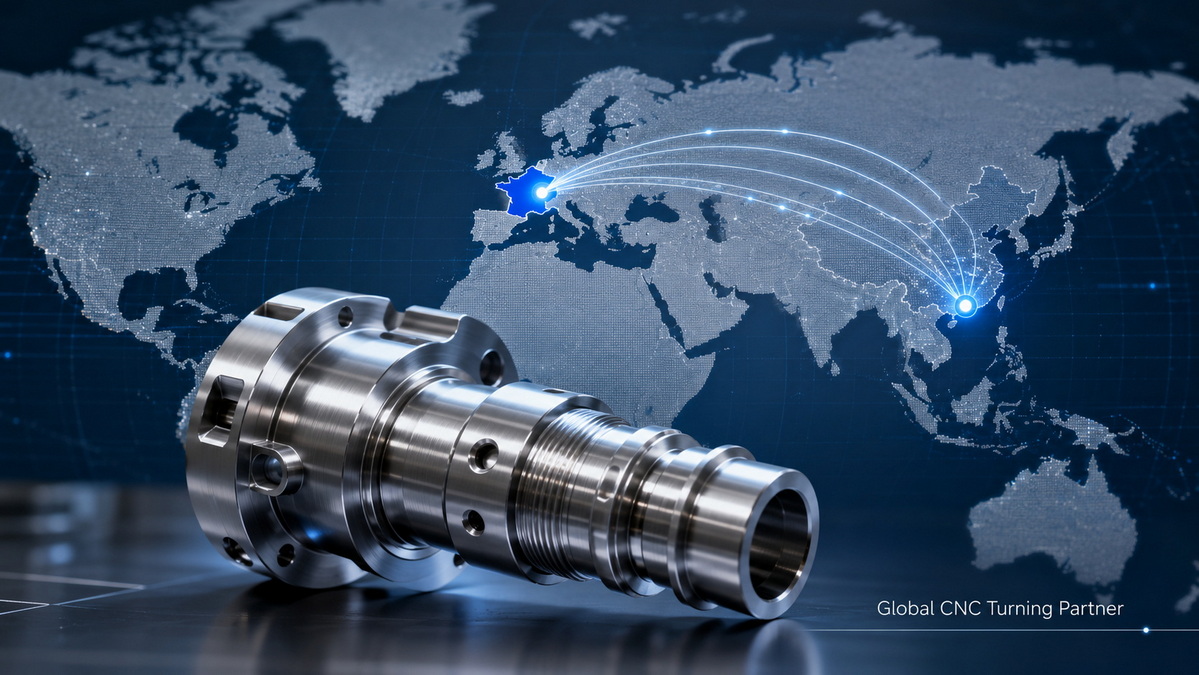
For procurement managers, French suppliers are often selected for high‑risk or safety‑critical components where proximity, engineering depth and traceability matter. At the same time, combining French capacity with cost‑efficient partners in Asia – such as U‑Need Precision Machinery Co., Ltd. – can create an effective global sourcing mix for prototypes, bridge production and volume components.
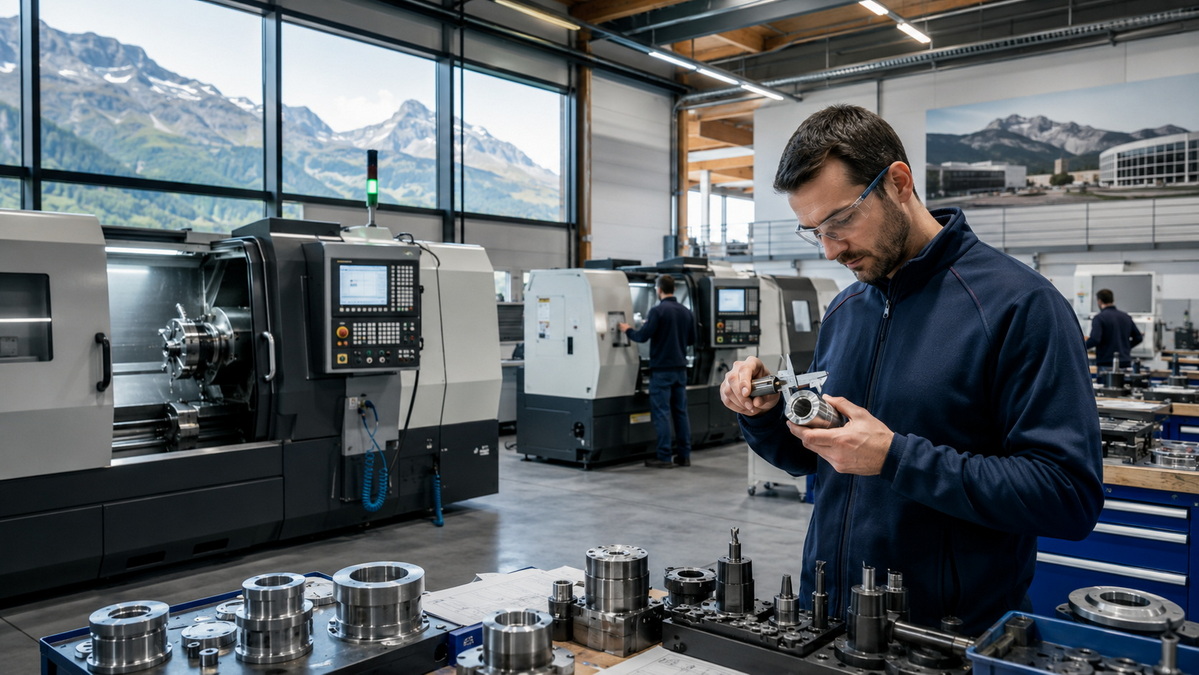
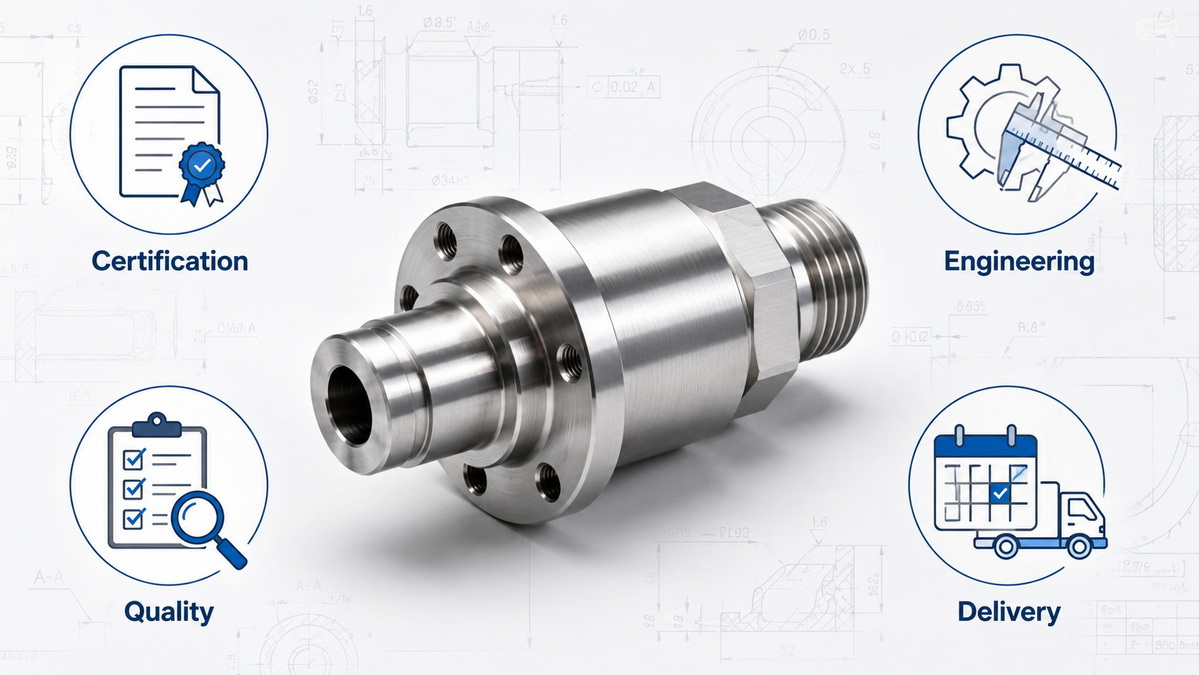
Professional buyers rarely shortlist a machining supplier without first checking its certification and compliance status. At a minimum, they validate:
- General quality management certification (such as ISO 9001) and, where relevant, sector‑specific certifications for aerospace, automotive or medical applications.
- The validity period, scope and issuing body of each certificate, ensuring that the document covers CNC turning and related operations rather than only secondary processes.
- Environmental and safety compliance, including adherence to RoHS and REACH requirements for materials and finishes, and conformity to CE‑related obligations for delivered assemblies when applicable.
These checks help ensure that processes, documentation and traceability meet international industrial expectations rather than only local norms.
Reliable CNC turning partners do more than simply "cut to drawing." They support the buyer's engineering team through the full product lifecycle. Experienced procurement professionals look for:
- In‑house CAD/CAM capabilities, including support for complex geometries, multi‑axis paths, and optimization of bar‑feeding and tooling strategies.
- Familiarity with key material families such as stainless steels, aluminum alloys, titanium, copper alloys and engineering plastics used in aerospace, automotive and medical sectors.
- The ability to provide design‑for‑manufacturability input, suggest more suitable materials or tolerances, and help balance performance and cost.
Suppliers with active R&D and process‑development teams usually respond faster to design changes and scale‑up requirements, which is critical for long‑term programs.
Robust quality control protects the buyer from hidden risks and inconsistent performance. Mature machining partners typically implement:
- Incoming material inspection, with mill certificates, identity checks and, for critical programs, spectrographic or hardness verification.
- In‑process inspection, including first‑article approval, statistical monitoring and documented control plans to keep key dimensions within tolerance.
- Final inspection with CMM, optical measurement or dedicated gauges, combined with clear documentation and lot traceability back to raw material batches.
Suppliers that can show well‑structured inspection plans, archived reports and consistent non‑conformity handling give buyers much greater confidence in long‑term cooperation.
With demand for CNC machinery in Europe increasing year by year, capacity planning and delivery reliability have become central evaluation criteria. Buyers pay attention to:
- Typical lead times for prototypes, pilot runs and serial production.
- Backup machines, redundant tooling and workforce planning that reduce the impact of breakdowns or demand peaks.
- Logistics capabilities, including export experience, packaging design, customs documentation and the ability to support different incoterms and destinations.
By comparing these factors across candidates, procurement managers can build a supplier portfolio that balances performance, risk and cost.
This guide focuses on companies that meet the following conditions:
- Strong operational base in France, with facilities integrated into local industrial clusters.
- Proven CNC turning capabilities, often including bar turning and multi‑axis machining, supported by documented quality systems.
- Experience serving demanding sectors such as aerospace, automotive, medical technology, optics or high‑end industrial equipment.
- Ability to deliver custom parts under OEM or ODM models, rather than only standard catalog products.
In addition, U‑Need Precision Machinery Co., Ltd., headquartered in China, is included as a representative example of a complementary partner frequently used by European buyers to support prototyping, bridge production and cost‑sensitive volume parts alongside French suppliers.
U‑Need Precision Machinery Co., Ltd. is a precision manufacturing company based in Dongguan, China, serving customers in more than 100 countries with CNC turning and related services. It is often used by global buyers to complement European suppliers with flexible, cost‑efficient capacity.
- Founded: 2016.
- Location: Dongguan, Guangdong, China.
- Core services: CNC turning, CNC milling, 5‑axis machining, precision parts machining, mold manufacturing (injection molds, stamping dies, cold‑forging dies), sheet metal fabrication (laser cutting, bending, stamping), 3D printing, assembly and surface finishing.
- OEM/ODM scope: End‑to‑end support from design input and DFM, through rapid prototyping and low‑volume runs, to mass production and optimized packaging.
- Key strengths:
- High precision capability, with tolerances down to ±0.001 mm on suitable part families.
- Multi‑stage inspection and standardized quality processes, contributing to high qualification rates for outgoing products.
- One‑stop integration of machining, tooling, sheet metal and 3D printing, reducing coordination overhead for small and mid‑sized brands.
In practice, many buyers position U‑Need as a "high‑value, flexible back‑end" partner while keeping critical or proximity‑sensitive parts with French suppliers. This mixed model helps balance cost, lead time and risk.
DJC is widely regarded as a leading French bar‑turning specialist situated in the Arve Valley, a region known for precision turning and mechanical components. The company combines legacy bar‑turning know‑how with modern CNC equipment.
- Location: Arve Valley, eastern France.
- Core services: CNC bar turning with multi‑spindle and single‑spindle machines, CNC turning centers, precision components in stainless steels, carbon steels, aluminum and other alloys.
- Typical markets: Automotive systems, industrial equipment, hydraulic and fluid components, and export customers across Europe and beyond.
- Service profile: Prototypes, small series and large production runs with technical support for material selection and manufacturability.
DJC is a strong candidate when buyers need stable, high‑throughput production combined with long‑term experience in European automotive and industrial supply chains.
Sagne Mécanique is frequently mentioned among France's top machining and turning companies due to its focus on difficult materials and high‑precision applications.
- Location: Loire region, France.
- Core services: CNC turning and machining of non‑ferrous metals, plastics and composite materials, covering rapid prototyping, small batches and continuous production.
- Typical markets: Medical technology, aerospace, automotive, optics, watchmaking and other industries where micro‑tolerances and surface finish are critical.
- Service profile: Engineering support, tooling development, and responsiveness to frequent design changes.
Sagne Mécanique is particularly attractive for parts that combine dimensional tightness with demanding aesthetic or functional surface requirements, such as medical housings, optical components or high‑end consumer products.
MÉCANUMÉRIC is a major French manufacturer of CNC machines whose equipment is used by many turning and machining shops across the country. While it is not a job shop, its technology strongly influences local production standards.
- Location: Marssac‑sur‑Tarn, France.
- Core products: 3‑axis, 4‑axis and 5‑axis CNC milling machines, special‑purpose equipment and machining solutions supplied to industrial users.
- Typical markets: General machining, plastics and composites processing, industrial equipment, and custom machine projects in France and abroad.
- Role in turning supply chains: Provides advanced machinery that supports productivity, multi‑axis capability, automation and compliance with modern safety and environmental requirements.
For buyers, a supplier's use of modern equipment from machine builders like MÉCANUMÉRIC can be a positive signal of investment in technology and process reliability.
Huron Graffenstaden is one of France's most recognized CNC machine brands, known for high‑precision milling and multi‑tasking turning centers.
- Location: Eschau, near Strasbourg, France.
- Core products: Vertical machining centers, 5‑axis machines and multitasking turning/milling equipment suitable for complex, tight‑tolerance parts.
- Typical markets: Aerospace, automotive, energy and general engineering sectors across Europe and internationally.
French machining and turning shops that operate Huron equipment often highlight their ability to handle complex geometries and multi‑operation parts efficiently. This can be important for buyers sourcing components with demanding tolerance chains and intricate features.
Lathuille Hudry is a precision machining specialist serving small and medium series production for domestic and international customers.
- Core services: CNC turning and machining of steels, aluminum and other alloys, with structured processes from RFQ through shipment.
- Production profile: Emphasis on continuous upgrades in CNC equipment and metrology to maintain strict quality and lead‑time performance.
This supplier is suitable for buyers who need repeated batches of parts with stable quality, yet do not require extremely high volume contracts.
Benoit Jolivet provides custom precision turning and machining services, often acting as a flexible subcontractor for OEMs and system integrators.
- Core services: CNC turning and machining centers, combined with finishing operations tailored to functional and dimensional requirements.
- Buyer focus: Close cooperation with engineering teams during project ramp‑up, supporting design refinement and manufacturability improvements.
Benoit Jolivet suits buyers who value adaptability and direct technical communication, particularly during prototype and pilot‑run phases.
Clément SA is an established precision engineering company with long‑standing experience in both component manufacturing and special‑purpose machine design.
- Core services: High‑precision machining operations combined with the design and manufacture of custom equipment, fixtures and jigs.
- Market role: Addresses project‑specific challenges that go beyond standard turning, supporting complex assemblies and unique engineering requirements.
For buyers managing ambitious engineering projects, Clément SA offers the advantage of combining precision part production with tailored process solutions.
Below is a simplified comparison to help buyers understand typical positioning. Actual data should always be confirmed in RFQs and audits.
| Supplier / role | Typical capacity & focus | Indicative MOQ style | Certification & compliance focus |
|---|---|---|---|
| U‑Need Precision Machinery (China) | Prototypes to mass production; multi‑process (turning, milling, molds, sheet metal) with high dimensional precision. | Very flexible; accepts single‑piece customization and small batches, scalable to large volumes. | Structured quality system with multi‑stage inspection; supports documentation aligned to international industrial standards. |
| DJC (France) | High‑volume CNC bar turning with multi‑spindle lines; metals for automotive and industrial components. | Strong in small to large series once part is validated. | General industrial quality management and sector approvals; suitable for long‑run parts. |
| Sagne Mécanique (France) | High‑precision turning/machining for advanced materials and demanding surface requirements. | Focus on small and medium series of complex, high‑value parts. | Quality systems aligned to medical, aerospace, optics and precision industries. |
| MÉCANUMÉRIC (France) | CNC machine manufacturing; equipment used by turning and machining shops. | Not applicable (machine builder, not a job shop). | CE‑marked machinery, safety and environmental compliance; productivity and energy‑efficiency focus. |
| Huron Graffenstaden (France) | Multi‑axis machining and turning centers for complex parts. | Not directly job‑shop oriented; supports capacity of machining companies. | Compliance with machine safety and integration into modern digital manufacturing environments. |
| Lathuille Hudry (France) | Small and medium series precision machining. | Mid‑range MOQs; optimized for recurring batches. | General industrial quality management, emphasis on on‑time delivery. |
| Benoit Jolivet (France) | Custom precision turning and machining subcontractor. | Small to mid‑volume orders; responsive to design changes. | Quality practices tailored to customer requirements and project‑specific inspection plans. |
| Clément SA (France) | Precision machining plus special equipment and jig design. | Project‑based MOQs aligned with custom engineering. | Long‑standing engineering practice; compliance frameworks depending on sector and project. |
France's strength in CNC turning is not only the result of individual companies; it also reflects regional industrial ecosystems.
In the Arve Valley and other mechanical clusters, bar‑turning specialists, machinists, machine builders, toolmakers and metrology companies operate in close proximity. This supports rapid problem‑solving, shared know‑how and reliable subcontracting networks. Vocational schools and technical institutes in these regions strengthen the talent pipeline, maintaining a workforce familiar with both traditional turning and modern CNC practices.
For global buyers, these cluster advantages translate into more robust supply chains, easier backup sourcing within the region, and a higher likelihood of finding specialized partners for niche applications.
When evaluating CNC turning suppliers – in France or abroad – procurement managers typically:
- Request business registration documents and verify them through national company registries or local industrial associations.
- Obtain up‑to‑date certificates for quality management and sector‑specific requirements, checking their validity, scope and relevance to machining operations.
- Assess whether the supplier understands and implements environmental and safety regulations, particularly for materials, finishes and machine operation.
These steps help filter out unreliable partners early, before significant resources are committed.
Before committing to serial production, experienced buyers rely on structured sample approval processes:
- Machining samples or first articles are produced according to the final drawing, with full dimensional reports, material certificates and surface‑finish evidence.
- For automotive or similar sectors, formal process approval methods are used to document capability indicators, control plans and traceability.
- Where hybrid sourcing is planned (for example, a French supplier plus U‑Need), parallel samples and first articles are produced to verify interchangeability of parts across suppliers.
A disciplined approach at this stage reduces downstream issues and avoids costly rework during mass production.
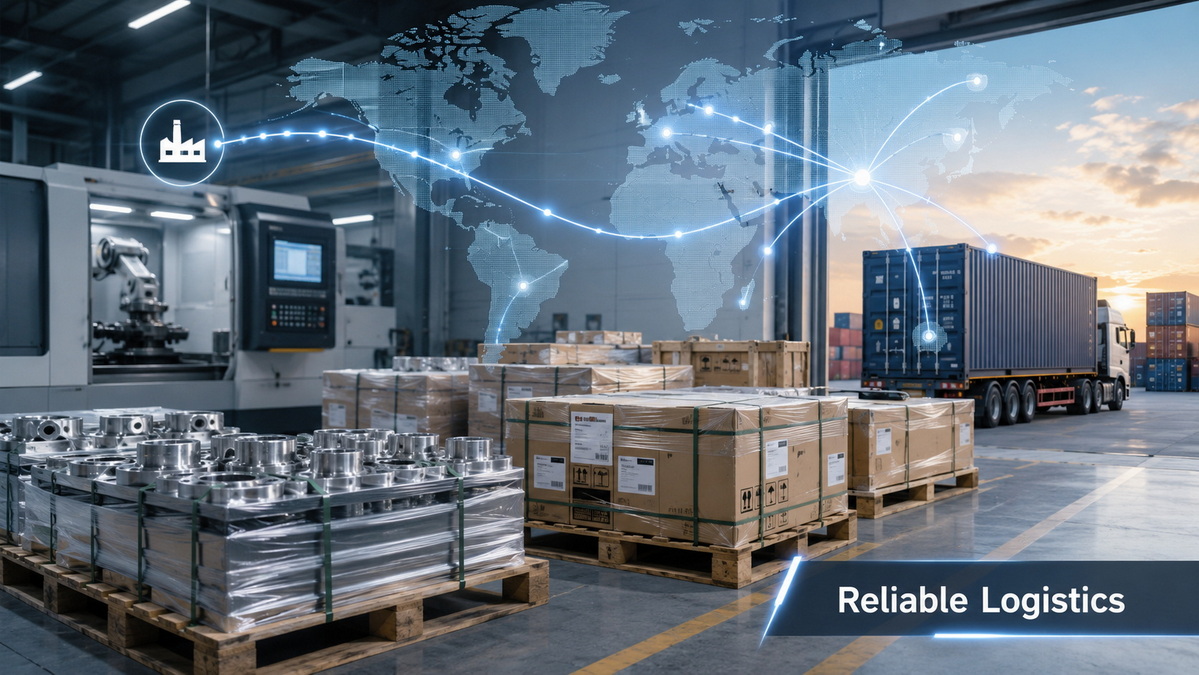
Even with perfect machining, poor logistics can undermine part quality. Buyers should therefore:
- Align packaging design with part sensitivity, using appropriate trays, separators, anti‑corrosion methods and protective outer cartons or crates.
- Confirm that suppliers understand export requirements, including documentation, labelling, HS codes and destination‑specific rules.
- Consider eco‑friendly packaging options when shipping into European markets, where environmental expectations are rising.
Thoughtful logistics planning supports stable deliveries and reduces damage risks.
Global buyers frequently encounter a small set of recurring problems when sourcing turned parts:
- Material substitution, where a cheaper alloy is used instead of the specified grade, potentially compromising fatigue, corrosion or mechanical performance.
- Unannounced process changes, such as different tooling, cutting parameters or subcontracted operations, leading to variation in dimensions or surface quality.
- Inadequate deburring and edge finishing, resulting in assembly issues, safety concerns or accelerated wear.
- Weak documentation and traceability, which make it difficult to perform effective root‑cause analysis when failures occur in the field.
Addressing these pain points requires a combination of technical and procedural controls.
A widely adopted internal rule among experienced procurement professionals is to avoid relying solely on mill certificates for critical parts. Instead, they quietly allocate budget for random third‑party or in‑house verification of incoming materials, using spectrographic analysis, hardness testing or other methods.
This practice is seldom emphasized in marketing content, but it is one of the most effective ways to detect material downgrading or mix‑ups before they affect end customers. It is particularly important when switching suppliers or ramping volume.
Additional avoidance strategies include:
- Defining a controlled process status for safety‑critical components, where any change in tooling, machines or subcontractors triggers formal re‑approval.
- Requesting photographic records of packaging, labelling and palletization during first shipments, to verify that logistics standards are correctly applied.
- Maintaining dual‑sourcing for key part families, for example using one French supplier and one Asian partner, to reduce regional disruption risk and benchmark performance over time.
France offers a mature and technically advanced environment for CNC turning, supported by strong regional clusters, experienced suppliers and innovative machine builders. For global buyers, combining French partners with flexible OEM capacity from companies like U‑Need Precision Machinery Co., Ltd. can create a resilient, cost‑effective supply network for both complex and volume parts.
By applying structured evaluation criteria, demanding robust quality and traceability, and proactively managing logistics and material verification, procurement managers can build long‑term relationships that support stable production, competitive costs and reliable performance across diverse industries.
Request a clear copy of the certificate showing scope, issuing body and expiration date. Then cross‑check the document with the issuing organization, either through its public database or by direct inquiry. If the certificate cannot be verified or does not explicitly cover machining activities, treat this as a warning sign and investigate further.
Start by harmonizing technical documentation: identical drawings, tolerance schemes, material specifications, inspection plans and packaging requirements. Conduct parallel first‑article approvals at both suppliers and compare dimensional and material reports. Only once both sources demonstrate stable capability should you allow interchangeable supply for the same part numbers.
Use more specialized French suppliers for complex, high‑value parts and early development phases, and delegate simpler or stabilized references to a flexible partner like U‑Need. Negotiate framework agreements or annual volumes with call‑off orders to balance pricing stability with agility, and consolidate families of similar parts to reduce quoting overhead.
Request clear declarations covering material and finish compliance, and ask suppliers to describe how they manage restricted substances and waste. For operations involving European end markets, check that partners invest in energy‑efficient equipment and pollution control measures. Internal audits and occasional third‑party reviews can help validate these commitments.
Focus on machine inventory and condition, inspection equipment, material storage and labelling practices, process documentation and workforce training. Select a production batch at random and trace it from raw material receiving through machining, inspection, packaging and shipment. This practical exercise often reveals the true level of traceability and procedural discipline.
1.Europe CNC Machine Market Size, Share and Forecast to 2034 – Market Data Forecast: https://www.marketdataforecast.com/market-reports/europe-cnc-machine-market
2.France CNC turning and machining industry overviews and manufacturer listings (DJC, Sagne Mécanique, Huron, MÉCANUMÉRIC, etc.), various industrial guides and sector blogs, including: https://www.want.net/supplier/france-supplier/
https://www.kemalmfg.com/cnc-machining/companies/france/
https://www.mecanumeric.com/produits/
3.U‑Need Precision Machinery Co., Ltd. official website – corporate profile and capabilities: https://www.uneedprecisionmachine.com/


