Views: 243 Author: U-Need Publish Time: 2026-08-25 Origin: Site
Content Menu
● How CNC Turning Suppliers Were Evaluated
>> Quality Management and Process Control
● Why Spain Is a Strong CNC Turning Market
● Top CNC Turning Manufacturers and Suppliers Serving Spain
>> U-Need Precision Machinery Co., Ltd.
>>> Core Strengths
>> Mecaner
>>> Core Strengths
>> Mecánicas de Precisión Goiuria SL (MPG)
>>> Core Strengths
>>> Core Strengths
>>> Core Strengths
>> Mecanizados Martínez Vanaclocha, S.L.
>>> Core Strengths
>>> Core Strengths
>>> Core Strengths
● CNC Turning Materials and Technical Requirements
>> Material Grade Matters More Than Material Name
● Common CNC Turning Buying Risks
>> Material Substitution Without Approval
>> Unnecessary Tight Tolerances
● Internal Procurement Tip: Verify Material Condition, Not Just Alloy Grade
● Sample Approval Process for CNC Turned Parts
>> 2. Manufacturability Review
>> 3. First Article Production
● Logistics and Packaging Considerations
>> How can I verify whether a CNC supplier's ISO certificate is still valid?
>> Is ISO 9001 enough for aerospace, automotive, or medical parts?
>> What tolerance should I request for CNC turning?
>> How can I compare a Spanish CNC turning supplier with a China-based supplier?
>> What documentation should I request before approving mass production?
Spain is a strong sourcing market for buyers that need European engineering capability, short intra-Europe logistics routes, and manufacturing experience in demanding industries such as aerospace, automotive, rail, energy, medical devices, and industrial machinery.
The country's advanced manufacturing base is supported by established machine-tool and precision-engineering clusters, particularly in the Basque Country. This concentration gives buyers access to suppliers familiar with CNC machining, industrial automation, metrology, tooling, and export-oriented manufacturing.
For procurement teams, choosing a suitable CNC turning supplier is not only about finding the lowest price. The right supplier should demonstrate stable quality control, clear production planning, material traceability, technical communication, and the ability to support future volume changes.
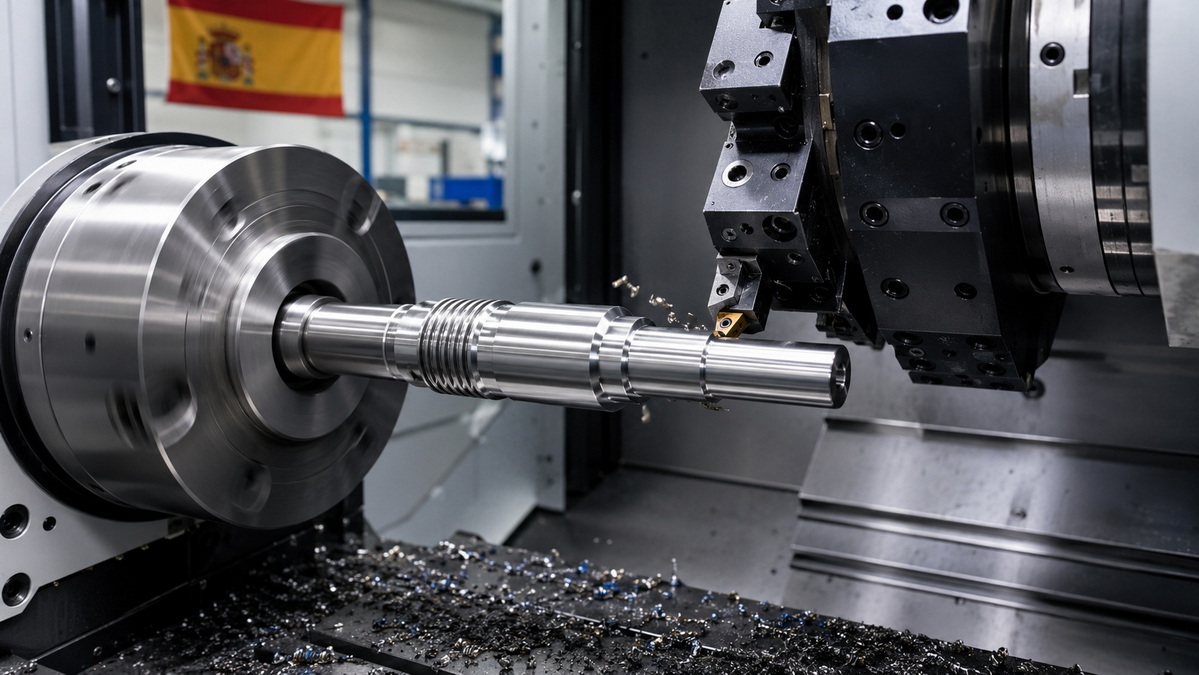
The manufacturers and suppliers in this guide were assessed using practical procurement factors that influence long-term project performance.
A reliable CNC turning supplier should have documented quality procedures from incoming material inspection to final shipment. Depending on the application, buyers may need ISO 9001 quality management, EN 9100 or AS9100 aerospace controls, IATF 16949 automotive process requirements, or ISO 13485 medical-device quality systems.
Important inspection capabilities include:
- Incoming material inspection and lot identification
- First article inspection reports
- In-process dimensional checks
- CMM measurement reports
- Thread gauges, plug gauges, ring gauges, and go/no-go gauges
- Surface roughness measurement
- Calibration management for inspection equipment
- Final inspection records linked to shipment lots
CNC turning is used to manufacture cylindrical, conical, threaded, hollow, and rotationally symmetrical components. Advanced CNC lathes can combine turning with milling operations through live tooling, Y-axis machining, sub-spindles, and bar feeders.
A capable supplier should be able to assess requirements such as:
- Outside diameter and inside diameter tolerances
- Concentricity and runout requirements
- Thread standard and thread class
- Surface finish requirements
- Internal boring and deep-hole machining
- Cross holes, flats, slots, and keyways
- Complex profiles and eccentric features
- Burr removal and edge-break requirements
- Heat treatment and surface finishing compatibility
The strongest suppliers do more than machine the drawing exactly as received. They review the design for manufacturability before production begins.
Useful engineering support may include:
- Material alternatives when the specified grade is difficult to source
- Suggestions for simplifying complex features
- Tolerance review to reduce unnecessary machining cost
- Recommendations for thread, chamfer, and radius design
- Fixture and tooling planning
- Advice on surface treatment allowances
- Guidance on part orientation and inspection datums
Long-term sourcing requires more than sample capability. Buyers should evaluate whether a supplier can maintain stable quality and delivery once volumes increase.
Key questions include:
- How many CNC lathes and machining centers are available?
- Can the supplier handle prototype, pilot, and production stages?
- Is there backup capacity for urgent orders?
- Are tooling and raw materials stocked for repeat programs?
- How are engineering changes controlled?
- Can the supplier provide lot traceability and shipment records?
- What is the process for handling nonconforming parts?
Spain has a well-developed precision manufacturing ecosystem, with particular strength in machine tools, metal cutting, industrial automation, aerospace supply chains, automotive components, railway equipment, renewable energy, and industrial machinery.
The Basque Country is especially important for machining and advanced manufacturing. The region is home to machine-tool manufacturers, tooling companies, inspection specialists, automation providers, and precision subcontractors. This industrial concentration supports buyers who need technically demanding components and structured production processes.
Other regions, including Catalonia, Valencia, Aragon, and Madrid, also offer established machining capacity. These areas provide access to suppliers serving industrial equipment manufacturers, automotive programs, electronics companies, construction machinery producers, and export-oriented OEMs.
For European buyers, working with a supplier in Spain can offer shorter transportation distances, easier factory visits, closer time-zone alignment, and simpler communication for projects requiring frequent engineering collaboration.
| Supplier | Location / Market Focus | Core Manufacturing Scope | Typical Production Fit | Certification Positioning |
|---|---|---|---|---|
| U-Need Precision Machinery Co., Ltd. | China; global export markets | CNC turning, CNC milling, 5-axis machining, molds, sheet metal, assembly | Prototypes, low-volume orders, and scalable production | Project-specific documentation support |
| Mecaner | Basque Country, Spain | Precision machining, turning, milling, assembly | High-value aerospace, defence, and energy programs | Aerospace-oriented quality positioning |
| Mecánicas de Precisión Goiuria SL (MPG) | Bizkaia, Spain | Precision machined components | Medium-volume critical industrial parts | ISO 9001 quality-management positioning |
| Mecánica Curiel, S.L. | Barcelona, Spain | CNC machining and turned components | Repeat industrial production | ISO 9001 quality-management positioning |
| Mecanizados Artal | Zaragoza, Spain | CNC turning for steel, aluminium, and stainless steel | Prototypes and short-to-medium production runs | Quality-control-led production |
| Mecanizados Martínez Vanaclocha, S.L. | Valencia region, Spain | CNC turning, milling, drilling | Small and medium engineering batches | ISO quality-system positioning |
| M-PESA Grupo Empresarial | Valencia, Spain | Machining, sheet metal, and industrial assembly | Production parts and assemblies | Project-specific quality verification required |
| SOKAR Mechanics | Spain | Precision machining and metal additive manufacturing | Complex low-volume and development-stage projects | Project-specific compliance verification required |
Certification status, certificate scope, and validity should always be checked directly with the supplier before project approval.
Established: 2016
Main markets: Global export customers
OEM/ODM scope: CNC turning, CNC milling, 5-axis machining, precision machining, mold manufacturing, stamping dies, cold-forging dies, sheet metal fabrication, rapid prototyping, assembly, and packaging.
U-Need Precision Machinery Co., Ltd. is an integrated manufacturing partner for buyers that require flexible order quantities, responsive technical communication, and multiple production processes under one project-management structure.
The company is particularly suitable for small and mid-sized brands, distributors, product developers, and equipment manufacturers that need support from the early prototype stage through repeat production. Rather than sourcing turned parts, milled components, molds, stamped parts, and sheet-metal assemblies from separate factories, buyers can coordinate several related processes through one manufacturing partner.
Its service range covers one-piece prototypes, engineering samples, low-volume runs, and scalable production programs. This flexibility can be valuable for products that are still under design development or for customers whose demand forecast is not yet stable.
- Flexible production support from one-piece prototypes to mass production
- CNC turning for shafts, bushings, sleeves, threaded parts, fittings, housings, pins, connectors, and custom rotational components
- CNC milling and 5-axis machining for complex mating parts
- Mold manufacturing for injection molding, stamping, and cold forging projects
- Sheet metal services including laser cutting, bending, stamping, welding, and finishing
- OEM customization based on 2D drawings, 3D files, physical samples, and functional requirements
- Engineering support for manufacturability review and material selection
- Coordinated assembly, inspection, packaging, and export preparation
- Suitable for projects requiring rapid design revisions and cross-functional manufacturing support
U-Need can be a practical option for buyers who need:
- A supplier capable of supporting both prototypes and production parts
- Flexible MOQ requirements
- Coordinated production across machining, tooling, and sheet metal
- Faster communication for drawing revisions and engineering changes
- Custom packaging and assembly support
- A cost-conscious alternative for repeat production programs
- Reliable support for OEM and private-label manufacturing projects
For critical components, buyers should define material standards, tolerance requirements, inspection expectations, surface treatment, traceability requirements, and documentation needs before placing production orders.
Established: 1987
Location: Basque Country, Spain
Main markets: Aerospace, defence, and energy
OEM/ODM scope: Precision machining, CNC turning, CNC milling, and assembly of complex components.
Mecaner is positioned toward technically demanding projects that require structured manufacturing processes, engineering capability, and strong quality documentation. Its experience in aerospace, defence, and energy applications makes it relevant for components where dimensional consistency, material traceability, and process control are critical.
The company is better suited to buyers sourcing high-value machined components rather than commodity turning work. It may be considered for complex housings, structural components, precision shafts, aerospace parts, energy-sector components, and parts requiring controlled manufacturing documentation.
- Experience in high-value engineering applications
- CNC machining for complex precision components
- Turning, milling, and assembly support
- Suitable for aerospace, energy, and defence projects
- Strong fit for buyers requiring detailed quality records
- Technical capability for medium-to-large components
Established: 1995
Location: Bizkaia, Spain
Main markets: Automotive, aerospace, medical, and energy
OEM/ODM scope: High-precision machined components and custom production parts.
Mecánicas de Precisión Goiuria, commonly known as MPG, is a precision machining supplier serving sectors with demanding performance, quality, and documentation requirements. Its position within the Basque Country manufacturing ecosystem gives it access to a mature industrial supply chain.
This type of supplier is relevant when purchasing teams need repeatability, structured inspection, and reliable engineering support for critical industrial parts.
- Experience across automotive, aerospace, medical, and energy industries
- Precision machining support for complex components
- Suitable for medium-volume production requirements
- Potential fit for critical parts with controlled tolerances
- Engineering-oriented approach to production planning
Established: 1972
Location: Barcelona, Spain
Main markets: Industrial manufacturing customers
OEM/ODM scope: CNC machining and custom turned components.
Mecánica Curiel is a long-established Spanish machining company serving industrial customers with CNC-machined and turned components. Its operating history can be relevant for buyers that prefer suppliers with established shop-floor experience and long-term production knowledge.
The company may suit repeat programs involving shafts, bushings, threaded components, housings, flanges, and other industrial turned parts.
- Long operating history in industrial machining
- CNC machining and turning capability
- Suitable for repeat industrial production
- Practical fit for conventional metal component programs
- Potential option for buyers seeking a Spain-based production partner
Location: Zaragoza, Spain
Main markets: Industrial equipment and custom-machining customers
OEM/ODM scope: CNC turning of steel, aluminium, and stainless-steel parts; prototype and short-to-medium production runs.
Mecanizados Artal is a suitable option for buyers that need custom turned components in common engineering materials. Its production scope is relevant to industrial components made from steel, aluminium, and stainless steel, especially for prototype development and smaller repeat batches.
This type of supplier can be useful when buyers need direct communication during part development and do not require a large-volume production program at the beginning.
- CNC turning for steel, aluminium, and stainless steel
- Suitable for prototypes and short-to-medium batches
- Custom manufacturing support for industrial applications
- Practical fit for shafts, sleeves, bushings, fittings, threaded parts, and housings
- Responsive option for drawing-based machining projects
Location: Valencia region, Spain
Main markets: Industrial and engineering customers
OEM/ODM scope: CNC turning, milling, drilling, and machining of complex components.
Mecanizados Martínez Vanaclocha is positioned as an engineering-oriented supplier with capability across turning, milling, and drilling operations. This combination can be useful when a part requires both rotational features and secondary machined features such as cross holes, flats, slots, or mounting surfaces.
It may be considered for custom mechanical components, machine parts, industrial assemblies, and small-to-medium engineering production runs.
- Combined CNC turning and milling capability
- Suitable for custom machined components
- Flexible fit for small and medium production batches
- Support for more complex parts requiring multiple machining operations
- Potential option for buyers seeking a supplier in the Valencia region
Established: 1977
Location: Valencia, Spain
Main markets: Industrial components and assemblies
OEM/ODM scope: Machining, sheet metal fabrication, and industrial assembly.
M-PESA may be relevant for projects that require both machined parts and sheet-metal components. Combining these capabilities can simplify sourcing for buyers producing equipment enclosures, brackets, frames, mechanical assemblies, machinery housings, and fabricated industrial structures.
A combined machining and fabrication supplier can reduce the number of handovers between vendors. However, buyers should still confirm which processes are completed internally and which are subcontracted.
- Machining and sheet metal capabilities
- Suitable for industrial assemblies
- Potential fit for housings, brackets, fabricated frames, and machined interfaces
- Useful for projects combining turned parts with fabricated structures
- Long-term experience in industrial manufacturing
Established: 2016
Location: Spain
Main markets: Automotive, aerospace, and advanced engineering projects
OEM/ODM scope: Precision machining and metal additive manufacturing.
SOKAR Mechanics is a suitable candidate for projects involving difficult geometry, development-stage components, or advanced manufacturing requirements. Its combination of precision machining and metal additive manufacturing can be useful for buyers evaluating hybrid manufacturing routes.
For example, additive manufacturing may be used to create a complex near-net-shape component, while CNC turning and milling are used to finish critical dimensions, threads, sealing faces, and mating surfaces.
- Precision machining support
- Metal additive manufacturing capability
- Suitable for low-volume and development-stage projects
- Potential fit for aerospace, motorsport, automotive, and advanced engineering applications
- Useful for complex geometries that may be difficult to produce through conventional machining alone
Material selection has a major impact on machining cost, cycle time, tool wear, dimensional stability, corrosion performance, and downstream finishing.
Common materials used for CNC turning include:
| Material Category | Common Examples | Typical Applications |
|---|---|---|
| Carbon steel | 1018, 1045, C45 | Shafts, pins, brackets, industrial fittings |
| Alloy steel | 4140, 42CrMo4, 4340 | High-strength mechanical parts, gears, hydraulic components |
| Stainless steel | 303, 304, 316, 17-4PH | Medical, food equipment, marine, chemical, and corrosion-resistant parts |
| Aluminium | 6061, 6082, 7075 | Lightweight housings, electronics, aerospace, machinery components |
| Brass | C360, CuZn39Pb3 | Fittings, valves, electrical connectors, plumbing components |
| Copper | C110, C101 | Electrical and thermal components |
| Titanium | Grade 2, Grade 5 | Aerospace, medical, marine, and high-strength lightweight components |
| Engineering plastics | POM, PEEK, PA, PTFE, ABS | Insulators, bushings, medical components, low-friction parts |
A common procurement problem is ordering a part using only a broad material description such as "stainless steel" or "aluminium."
For example, 304 stainless steel and 316 stainless steel have different corrosion-resistance characteristics. 303 stainless steel generally machines more easily than 304, but it may not provide the same performance in corrosive environments. Similarly, aluminium 6061 is widely used for general machining, while 7075 offers higher strength but can have different corrosion and finishing considerations.
Buyers should specify:
- Full material grade
- Applicable material standard
- Material condition
- Required mechanical properties
- Heat treatment condition
- Surface treatment requirements
- Corrosion-resistance expectations
- Material traceability requirements
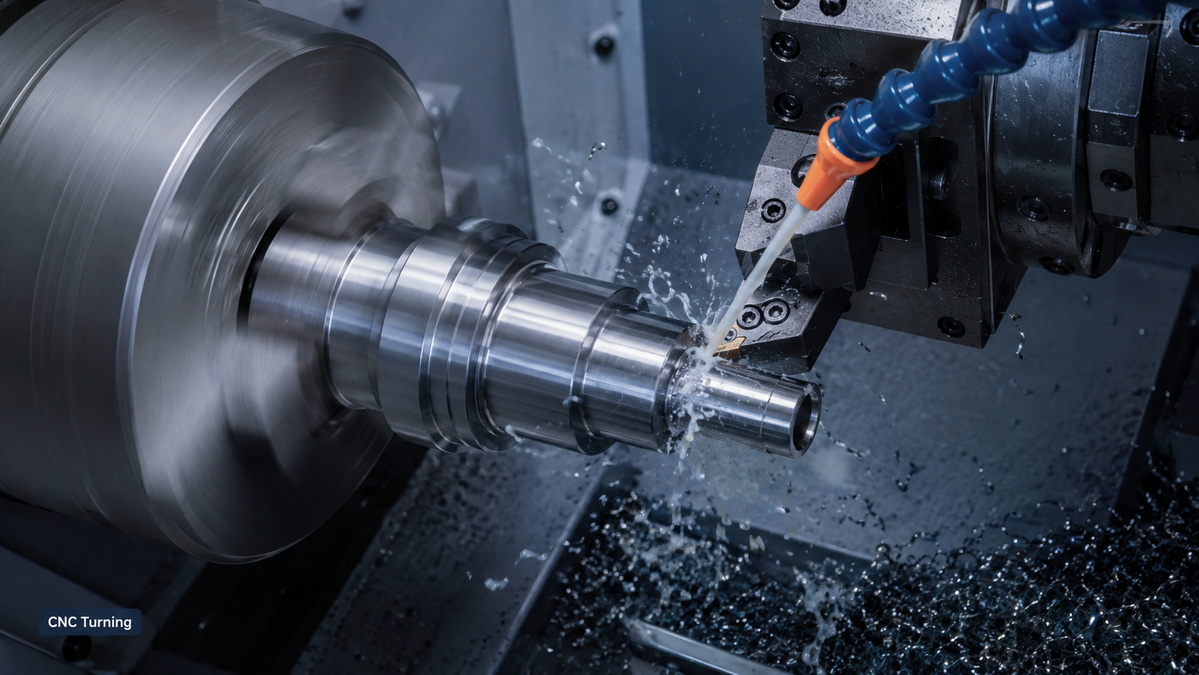
The most common issue is not always an obviously incorrect material. A supplier may use a similar grade, a different condition, or a material without proper lot traceability.
A part can meet dimensional requirements but still fail during use because the material chemistry, heat treatment, hardness, corrosion resistance, or mechanical strength does not meet the intended design requirement.
To reduce this risk:
- State the full material grade and standard on the drawing and purchase order
- Require material certificates for critical parts
- Specify whether alternative materials need written approval
- Request heat or lot traceability when needed
- Use independent material testing for high-risk applications
Overly tight tolerances can increase machining time, tooling cost, inspection requirements, scrap risk, and unit price.
Not every feature needs the same accuracy level. A shaft diameter that interfaces with a bearing may require a tight tolerance, while a non-critical external surface may not.
Before production, review:
- Critical dimensions
- Functional fits
- Datum references
- Runout requirements
- Surface finish requirements
- Assembly interfaces
- Areas where tolerances can be relaxed without affecting performance
Surface finishing can affect dimensions, thread fit, corrosion performance, and cosmetic appearance.
For example:
- Anodizing can add thickness to aluminium surfaces
- Zinc plating can affect thread engagement
- Powder coating can interfere with sealing surfaces
- Polishing can change sharp edges and small dimensions
- Heat treatment can cause distortion
- Passivation should be specified clearly for stainless steel parts
The machining supplier should know whether dimensions apply before or after finishing.
A 3D model alone is often not enough for production approval. It may not define tolerances, surface finish, thread requirements, deburring instructions, inspection points, or material standards.
A complete drawing package should include:
- Part number
- Revision number
- Material specification
- General tolerances
- Critical dimensions
- GD&T requirements
- Surface finish
- Thread callouts
- Heat treatment details
- Surface treatment details
- Marking and labeling requirements
- Deburring requirements
- Inspection requirements
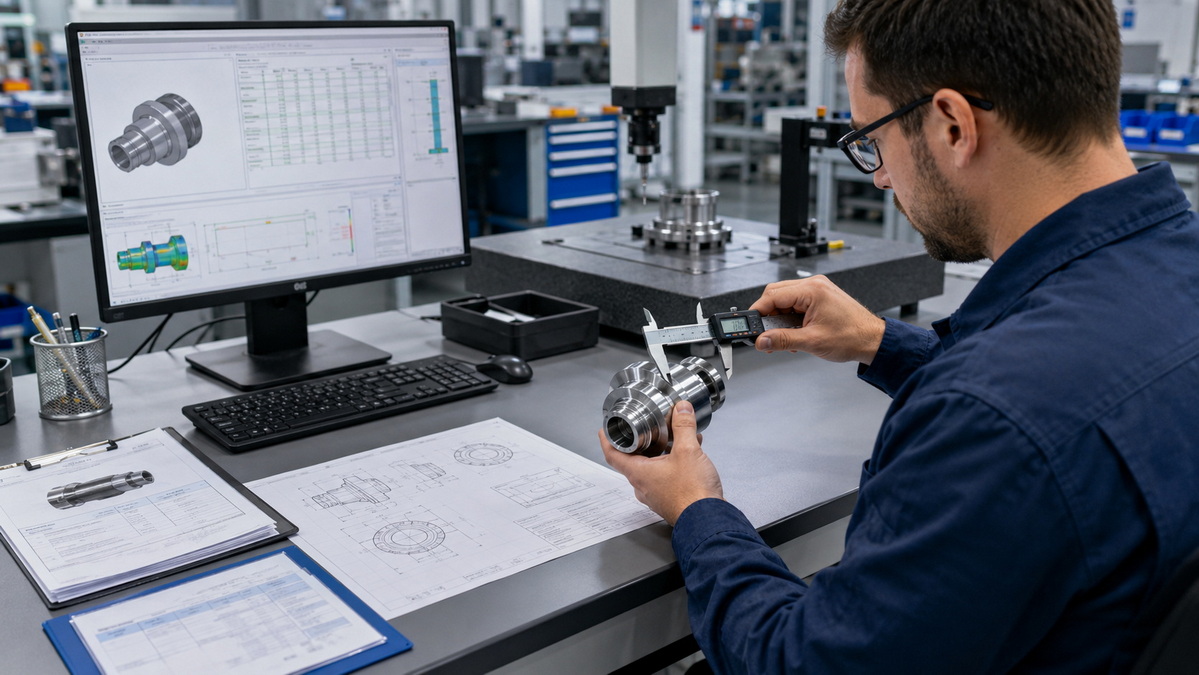
One of the most overlooked risks in CNC turning is the use of the correct alloy grade in the wrong material condition.
For example, a drawing may specify 304 stainless steel, but the finished part's performance can still vary depending on the material source, chemistry, annealed condition, work-hardening behavior, bar stock quality, and traceability control.
The part may look correct and pass basic dimensional inspection but still create problems during welding, passivation, corrosion testing, pressure testing, machining by a secondary supplier, or assembly in a demanding environment.
For critical programs, buyers should ask for:
- Mill test reports
- Heat number or batch traceability
- Material condition confirmation
- Hardness records where applicable
- Positive material identification testing when required
- A documented link between raw material lot and finished shipment lot
This is particularly important for stainless steel, alloy steel, aluminium, titanium, and pressure-bearing components.
A structured sample process helps prevent quality problems before mass production begins.
The supplier should review the drawing, model, material, tolerances, quantity, finishing requirements, and delivery expectations.
At this stage, buyers should ask whether any feature creates a machining risk, such as deep internal bores, thin walls, difficult thread forms, sharp internal corners, high concentricity requirements, or surface-finish conflicts.
A good manufacturability review identifies potential cost, quality, and production issues before material is cut.
This may include recommendations on:
- Radius changes
- Tolerance adjustments
- Material alternatives
- Thread selection
- Surface finish
- Tool access
- Fixture design
- Secondary operations
- Inspection methods
The supplier produces the first sample based on the approved drawing revision and manufacturing plan.
The buyer should request:
- First article inspection report
- Material certificate
- Dimensional report
- Surface treatment certificate if applicable
- Photos of the sample
- Packaging photos if cosmetic protection is important
- Any deviations or manufacturing observations
Dimensional conformance is important, but functional testing is often more valuable.
Depending on the application, test:
- Assembly fit
- Thread engagement
- Torque performance
- Pressure resistance
- Sealing performance
- Electrical continuity
- Corrosion resistance
- Wear performance
- Load capacity
- Surface appearance
Before releasing large orders, use a pilot batch to verify repeatability.
The pilot batch should confirm:
- Stable cycle time
- Consistent inspection results
- Material availability
- Tool-life performance
- Surface-finish consistency
- Packaging effectiveness
- Shipment documentation
- Delivery reliability
Once the part is approved, document the ongoing requirements.
The control plan should define:
- Inspection points
- Inspection frequency
- Sampling plan
- Critical dimensions
- Acceptable measurement methods
- Material-traceability process
- Packaging requirements
- Labeling requirements
- Change-notification procedure
- Nonconformance handling process
For international purchases, the lowest quoted unit price does not always represent the lowest total cost.
Buyers should calculate total landed cost, including:
- Unit price
- Tooling cost
- Inspection cost
- Packaging cost
- Export documentation
- Freight
- Cargo insurance
- Customs duties
- Brokerage charges
- Inland transportation
- Inventory holding cost
- Risk of production delays
Packaging should be specified based on part geometry and surface sensitivity.
For example:
- Threaded parts may need tray packaging to prevent thread damage
- Polished parts may require individual separation
- Stainless steel parts may need moisture protection
- Anodized aluminium parts may need scratch-resistant separators
- Precision shafts may require VCI paper and protective sleeves
- Cosmetic parts should not be bulk packed without testing the packaging method first

Spain remains an important CNC turning sourcing market for buyers looking for experienced industrial suppliers, advanced manufacturing knowledge, and access to established European engineering clusters. The Basque Country, Catalonia, Valencia, Aragon, and Madrid all offer capable machining resources for precision components, industrial equipment, automotive parts, aerospace applications, and energy-sector manufacturing.
The most suitable supplier depends on the project's material requirements, tolerances, order quantity, compliance needs, documentation expectations, logistics model, and future production forecast.
For buyers that need a flexible manufacturing partner capable of supporting CNC turning, milling, tooling, sheet metal, assembly, prototypes, and scalable OEM production, U-Need Precision Machinery Co., Ltd. provides an integrated option for managing multiple manufacturing requirements within one coordinated project workflow.
A successful sourcing decision should be based on clear technical documentation, verified quality processes, sample validation, material traceability, stable communication, and a realistic assessment of total landed cost.
Request the supplier's current certificate, including the legal company name, certified facility address, certificate number, issue date, expiry date, certification scope, and certification body. Confirm that the certificate covers the actual manufacturing site where your parts will be produced.
It is also important to verify that the certificate scope covers the required activity. A certificate for general trading, assembly, or another site does not automatically confirm that the supplier's machining operation is included.
ISO 9001 is a useful general quality-management standard, but it may not be sufficient for regulated or high-risk applications.
Aerospace programs may require EN 9100 or AS9100. Automotive programs may require IATF 16949, PPAP documentation, and customer-specific requirements. Medical-device programs may require ISO 13485, controlled traceability, validation documentation, and additional regulatory controls.
Always follow the requirements of the end customer, product category, and applicable market regulations.
The correct tolerance depends on the part's functional requirement. Tight tolerances should be used only where they affect assembly, sealing, bearing fit, motion, thread engagement, or product performance.
Use realistic tolerances for non-critical features to reduce machining cost and improve production stability. During the review stage, ask the supplier to identify dimensions that may be unnecessarily tight or difficult to inspect.
Compare the total project value rather than only the quoted piece price.
Key comparison factors include:
- Unit price
- Minimum order quantity
- Tooling cost
- Delivery time
- Shipping cost
- Import duty and customs cost
- Engineering communication
- Prototype flexibility
- Quality documentation
- Inspection capability
- Supplier audit accessibility
- Production scalability
- Packaging requirements
- Ability to combine multiple processes under one supplier
A Spain-based supplier may offer advantages for short lead times within Europe, easier factory visits, and closer engineering collaboration. A China-based supplier may offer flexible MOQs, integrated manufacturing, broader process coverage, and competitive cost for repeat production.
For most CNC turning projects, request:
- Approved drawing revision
- Quotation and production assumptions
- Material certificate
- First article inspection report
- Dimensional inspection report
- Surface treatment certificate where applicable
- Packaging specification
- Lot traceability requirements
- Change-control procedure
- Nonconformance procedure
For automotive, aerospace, medical, defence, and safety-critical applications, additional documentation may be required based on customer and industry requirements.
1.[AFM Cluster – Spanish Machine Tool and Advanced Manufacturing Industry]
2.[IAF CertSearch – Certification Verification Database]


