Views: 238 Author: U-Need Publish Time: 2026-11-21 Origin: Site
Content Menu
● Introduction: What a tight-tolerance supplier must prove
● How we selected the 10 companies
● 10 high tolerance CNC machining companies in China at a glance
● The supplier shortlist: Where each company fits
>> 1. U-Need Precision Machinery Co., Ltd. — Flexible OEM support for smaller and mid-sized brands
>> 2. Anebon Metal Products Co., Ltd. — Precision machining with related metal processes
>> 3. Shangchen / SC Rapid Manufacturing — Multi-process prototypes and pre-production builds
>> 4. FLYcncpart — CAD-led quoting for custom machined parts
>> 5. RapidDirect — Digital sourcing backed by owned and partner facilities
>> 6. Star Rapid — Rapid tooling and low-volume production
>> 7. WayKen Rapid Manufacturing Ltd. — Metal and plastic development prototypes
>> 8. 3E Rapid Prototyping (3ERP) — Pilot orders that compare CNC machining with other processes
>> 9. Dongguan Gensun Precision Machining Co., Ltd. — Export-oriented milling and turning
>> 10. HLH Rapid — Prototype-to-pilot programs with a UK contact point
● Buyer's guide: How to qualify a tight-tolerance CNC supplier
>> Write an RFQ that makes competing quotes comparable
>> Audit the job, not just the showroom
>> Insider pitfall: The prototype passes on a better process than production gets
>> Stop material substitution before the parts reach assembly
>> Approve the sample, then qualify the shipment
● Conclusion: Award the order on production evidence
>> 1. How do I verify that a supplier's ISO certificate has not expired?
>> 2. Can a shop advertising ±0.005 mm hold it on every feature in my drawing?
>> 3. Should I require a Cpk of 1.33 on a small pilot order?
>> 4. What should I do if my inspection lab and the supplier's CMM disagree?
>> 5. Is subcontracted anodizing, grinding, or heat treatment a reason to reject a supplier?
The best supplier for a tight-tolerance CNC part is the one that can hold the dimensions that matter across repeat orders, not the one that advertises the smallest tolerance. Start by evaluating four things: whether the proposed factory holds the right certifications, whether its engineers can improve manufacturability without compromising function, whether its quality-control team can prove conformance, and whether its production plan supports your delivery schedule. A prototype can answer whether a part is possible. A production-representative pilot tells you whether the supplier can make it repeatedly.
China's Pearl River Delta offers a useful concentration of suppliers. Dongguan combines precision machining with a mold and tooling ecosystem; Shenzhen offers a range of prototype-to-production services for product development teams; and Zhongshan adds options for low-volume machining and rapid tooling. This concentration makes it possible to compare different production routes within one region. It also makes subcontracting easier, which is why buyers should identify the machining, finishing, and final inspection sites before approving an order.
The China Machine Tool & Tool Builders' Association reported that China exported US$9.68 billion in metalworking machine tools in 2025, up 17.9% year over year. Its January–September 2026 report put exports in the same category at US$6.92 billion, down 2.7% from the corresponding period a year earlier. These figures describe trade in manufacturing equipment, not exports of custom CNC-machined parts. They provide industrial context, not evidence of any individual shop's capacity or quality.
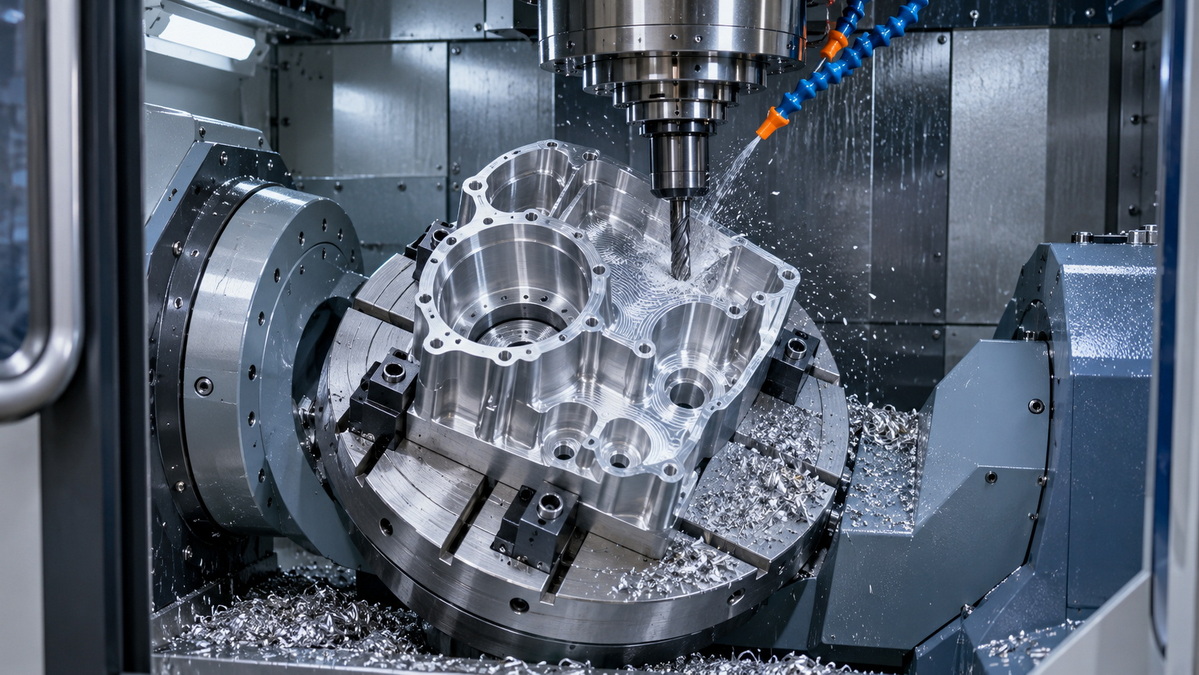
This is a buyer's shortlist, not an audited ranking by revenue, quality, or available capacity. U-Need publishes this guide and appears first; the order is not an independent assessment. Company websites and industry sources establish what each supplier offers or reports. They do not replace a factory audit, a certificate check, or qualification against your drawing.
| Selection criterion | Evidence to request before awarding a repeat order |
|---|---|
| Factory identity and certification | Registered name, manufacturing address, certificate number, issuing body, scope, and current status |
| Engineering and development support | A marked-up drawing identifying difficult features, proposed setups, material risks, and any design changes for approval |
| Quality control and metrology | A sample inspection report, gauge and calibration records, and a measurement plan for critical features |
| Production capacity and delivery | Available hours on the proposed machines, finishing and inspection capacity, and on-time delivery history for comparable orders |
| Export and change control | Traceable lot records, agreed shipping terms, approved subcontractors, and written rules for process or site changes |
Throughout this guide, a supplier's advertised order size or equipment count is a starting point for an RFQ, not a committed minimum order quantity or a reservation of production capacity. A missing public figure does not mean a supplier lacks the capability. It means the buyer should verify it directly.
| Supplier | Public capacity or production signal | Minimum order quantity (MOQ) | Public certification information |
|---|---|---|---|
| U-Need Precision Machinery Co., Ltd. | Reports 200+ machines across its manufacturing network and process mix; not a dedicated in-house CNC count | Advertises projects starting at one piece; confirm the applicable process and finish | Request a current certificate for the proposed site. |
| Anebon Metal Products Co., Ltd. | Prototypes, small batches, and custom production; no committed line capacity shown | Confirm by RFQ | Reports ISO 9001:2015; its corporate site also lists ISO 14001:2015. |
| Shangchen / SC Rapid Manufacturing | Multi-process prototype and pre-production offering; allocated capacity not stated | Confirm by RFQ | Request current site-specific documentation. |
| FLYcncpart | CAD-upload and design-review workflow; site-level output not verified | Confirm by RFQ | Request the legal entity, factory address, and certificates. |
| RapidDirect | Reports 700+ machines in its manufacturing network; confirm the assigned site and allocation | Confirm for the CNC route; molding terms do not establish CNC terms | Lists ISO 9001:2015, ISO 13485, ISO 14001, and IATF 16949; verify applicability. |
| Star Rapid | Multi-axis machining, prototypes, rapid tooling, and low-volume production | Publishes no minimum order restrictions; confirm project-specific charges | Lists ISO 9001, ISO 13485, ISO 14001, and ISO 45001. |
| WayKen Rapid Manufacturing Ltd. | CNC metal and plastic prototyping, plus low-volume manufacturing | Confirm by process, material, and finish | Reports ISO 9001 certification; verify the current certificate. |
| 3E Rapid Prototyping (3ERP) | CNC and complementary low-volume processes; verify output for the quoted route | Confirm by RFQ | Public profiles report ISO 9001; request issuer verification. |
| Dongguan Gensun Precision Machining Co., Ltd. | Advertises prototypes and runs of up to 1,000+ units; not a monthly capacity figure | Accepts prototype inquiries; confirm batch minimums | Publishes ISO 9001, ISO 14001, and ISO 13485 certificates. |
| HLH Rapid | Shenzhen manufacturing facility with on-site quality control, coordinate measurement, and 3D scanning | Confirm by RFQ | Lists ISO 9001, ISO 13485, and IATF 16949. |
Founded in 2016 in Dongguan, U-Need reports exports to Europe, the Americas, and Asia. Its offering includes custom CNC milling and turning, five-axis machining, grinding, electrical discharge machining (EDM), injection molds, stamping and cold-forging dies, and sheet metal fabrication. It also describes independent mold design and product development from customer drawings or samples. That makes it a candidate for OEM build-to-print work as well as projects that need design assistance before the manufacturing route is fixed.
U-Need is particularly relevant to smaller and mid-sized brands that want to develop a part without committing to production tooling on day one. Consider an equipment brand that needs one machined housing for an assembly check, a pilot batch after a design revision, and a stamped bracket once demand is established. U-Need's service mix allows the buyer to compare those options with one project contact. Its published rapid-response approach is worth testing with a real drawing: ask for a named engineering contact, a marked-up manufacturability review, and a timeline that separates machining, finishing, and inspection. For a fair value comparison, request separate prices for setup, inspection, and recurring units, and confirm which operations are performed in-house.
Founded in 2010 and based in Dongguan, Anebon reports serving customers in 47 countries and lists automotive, aerospace, and electronics among its applications. Its OEM services include CNC milling, turning, EDM, surface grinding, die casting, and sheet metal fabrication. This mix is useful when a buyer wants to compare a fully machined part with a cast blank that is finish-machined only on functional surfaces.
Anebon advertises tolerances down to approximately ±0.005 mm. Ask what feature, material, part size, and production conditions support that figure. A capability for a short, ground diameter does not establish the same capability for a thin-walled housing or a positional requirement across multiple setups. Have Anebon quote the specific critical dimensions it will inspect and document.
Shangchen markets to international product development and OEM teams. Its public offering combines CNC machining, sheet metal, 3D printing, and molding. It is a useful candidate when different parts in the same prototype assembly call for different processes: a machined bracket can test fit and load, while a printed cover may be sufficient for an early assembly review.
The supplier site reviewed did not establish the contracting entity's full registered name or founding year, or identify its largest export markets by country. Before approval, ask for the business license and actual machining address, and confirm who owns the final inspection report if several workshops contribute to one build.
FLYcncpart presents a direct CAD-upload workflow with a design review before production. It is worth screening for an engineered-to-print prototype when you want to see how well a supplier identifies drawing risks before quoting. The public page reviewed did not verify the company's legal name, founding year, main export markets, or standalone ODM design services.
Start with a non-sensitive test drawing. Ask for a response that identifies the controlled revision, the proposed inspection method, and the actual production site. Before uploading proprietary production files, confirm the contracting entity and confidentiality terms. A straightforward upload process is useful, but it is not evidence that the factory can repeat a difficult tolerance.
Industry profiles date RapidDirect to 2009. The company describes a mix of owned Chinese facilities and partner manufacturers, with international shipping that includes North America and Europe. Its OEM offering spans CNC machining, injection molding, sheet metal, and additive manufacturing. This makes it useful for buyers managing multiple part numbers or comparing production processes during a launch.
A large network gives a buyer alternatives, but the network's total machine count does not tell you which equipment is available for your order. Identify the proposed facility before approving the pilot, and require written approval before a repeat order moves to a different site. If the platform quotes several production routes, compare the inspection and traceability included in each one.
Established in 2005 in Zhongshan, Star Rapid was set up to serve Western buyers and now describes an international engineering team. It offers multi-axis machining, vacuum casting, finishing, rapid tooling, and injection molding. Its build-to-print services and manufacturability reviews make it a practical candidate for teams deciding when to move from CNC-machined prototypes to tooled production. The company distinguishes manufacturing feedback from a standalone product design service.
Star Rapid's no-minimum policy is helpful for prototype orders. For a production decision, ask whether a change of process, finishing line, or site would require a new first article. Also ask which material verification and dimensional reports are included in the quoted price.
WayKen operates a factory in Shenzhen and markets custom machining internationally. Its OEM work includes machined metal and engineering-plastic prototypes, vacuum casting, and rapid injection molding, with published applications in automotive and medical-device development. Public profiles disagree on its founding year, so verify the date against the registration for the entity you intend to contract with.
WayKen is a sensible RFQ candidate when a prototype must prove both fit and appearance. For a transparent plastic cover, for example, inspect the critical mounting dimensions separately from cosmetic finish. Agree on which surfaces must remain dimensionally controlled after polishing instead of approving the part on appearance alone.
Industry profiles date 3ERP to 2010 and place it in Zhongshan. Its public profiles describe CNC machining and low-volume manufacturing alongside vacuum casting and other complementary processes. It is a candidate for international development teams that want a functional machined prototype first and a second quote for a bridge process. A country-by-country breakdown of its main markets was not confirmed.
Ask for separate quotations for each manufacturing route. The price comparison should show tooling costs, any geometry changes, secondary machining, and the inspection plan. A lower piece price on a cast or molded version is only useful if it preserves the functional datums and interfaces validated on the machined prototype.
Gensun traces its founding to 2006 and details its subsequent move to Dongguan in its company history. It markets precision milling and turning to global customers, with published applications including electronics, telecommunications, and medical devices. Its scope includes build-to-print machining and engineering support for prototypes and repeat batches.
Gensun is worth considering when the purchasing priority is repeat supply of a machined metal component rather than a broad mix of prototype processes. For a turned shaft or milled housing, ask for comparable lot-level inspection evidence and the status of the machining and finishing sites. If your program requires ISO 13485, compare the certificate's scope with the work being quoted.
HLH Rapid lists a UK headquarters in Leeds and a manufacturing facility in Shenzhen, a useful arrangement for buyers who want a UK point of contact for China-based work. Its offering includes OEM prototypes, CNC machining, rapid tooling, and low-volume manufacturing. Public sources list different founding years, so use the registration of the contracting entity rather than a directory date.
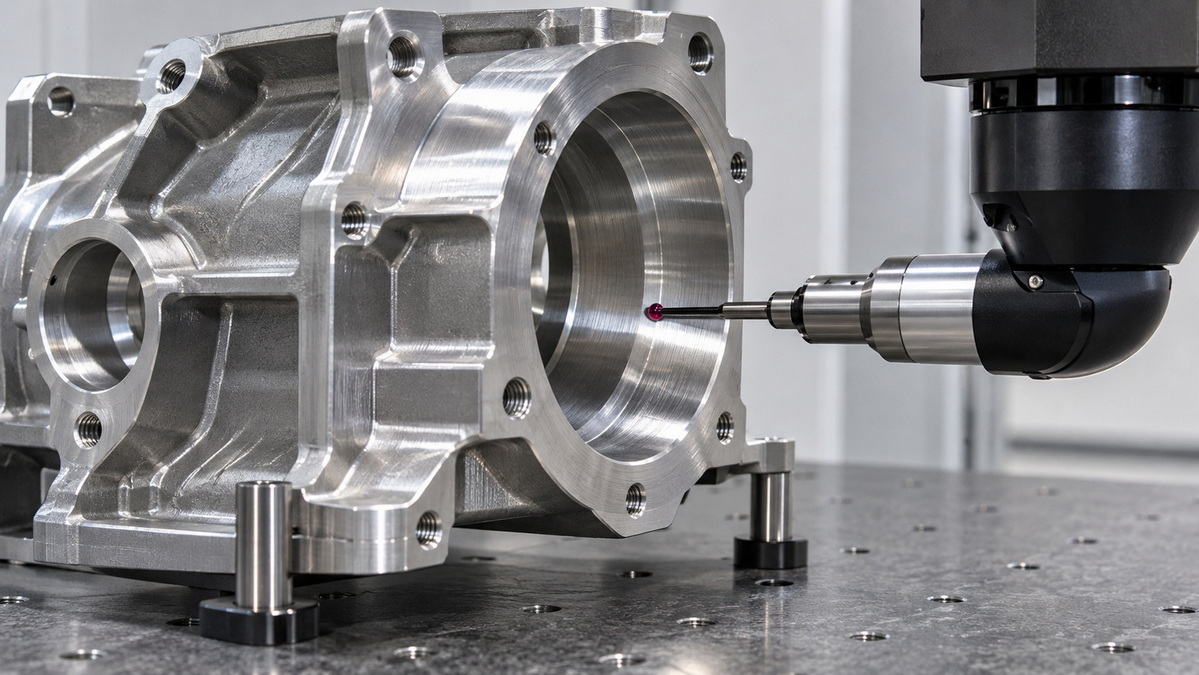
The company lists coordinate measuring machine (CMM) inspection and 3D scanning, alongside automotive and medical quality-system certifications. For a regulated program, confirm which features are measured, what is sampled, and where records are retained. "100% inspection" may tell you that every part was checked; it does not, by itself, tell you that every drawing characteristic was measured on every part.

1. Define the critical features. Supply a revision-controlled 2D drawing and the matching 3D model. Identify the dimensions that govern fit, alignment, or sealing. Use geometric dimensioning and tolerancing (GD&T) where appropriate, and name the agreed drawing standard, such as ASME Y14.5. A size callout on a hole does not, by itself, constrain where that hole sits relative to a mating surface.
2. Specify the material grade, condition, and stock form. For example, call out 6061-T6 aluminum or specify 17-4 PH stainless steel in the required heat-treated condition, such as H900. Where distortion matters, also control whether the supplier starts from plate, bar, or another stock form. State that substitutions require written approval.
3. Define acceptance after finishing. A tight bore may measure correctly before hard anodizing and fail after it. Specify whether dimensions apply before or after finishing, which surfaces or threads must be masked, and how acceptance will be checked. For a 20.000 ±0.010 mm bore, the acceptable size range is 19.990 to 20.010 mm at the specified inspection stage.
4. Quote the pilot and production lots separately. An RFQ for 5 samples, a 50-piece pilot, and subsequent 500-piece releases makes setup and recurring costs easier to compare. Ask suppliers to break out material, machining, finishing, inspection, packaging, and freight. Do not assume the lowest prototype price will produce the lowest recurring cost.
5. Match documentation to the intended market. ISO 9001 addresses quality management; ISO 14001 addresses environmental management. Neither establishes product-level compliance. CE marking applies only where relevant EU legislation requires it for the product in question; it is not a blanket certificate for a machine shop. RoHS concerns restricted substances in applicable electrical and electronic equipment. Where relevant, request evidence covering the supplied material and finish, not just a generic letter from the factory.
Ask the quoting supplier to identify the contracting entity, the manufacturing address, and the site responsible for final release. During a visit or live audit, follow one comparable order from receiving through machining, outsourced finishing, final inspection, and packing. Look for a visible link between the work order, drawing revision, incoming material lot, and finished shipment.
To test delivery reliability, ask for recent on-time delivery data for comparable work and clarify how the supplier defines "on time." A shipment leaving the factory on the promised date is different from an order reaching your warehouse on time. Ask which operation is the bottleneck: it might be an outsourced coating line, a grinding operation, or a single inspection machine rather than the CNC equipment.
A first article may be machined by a senior technician on a preferred machine, checked in a controlled room, and hand-adjusted to pass. Then the repeat order moves to a different fixture, stock form, subcontractor, or inspection setup. The prototype was conforming, but it never qualified the process that shipped the production parts.
Prevent this by approving a pilot made with the intended production route. Record the site, machine family, material condition, fixture and datum strategy, finishing source, and measurement method. Require approval before changes that could affect critical features. If a bore tends to become oval after the clamp is released, do not accept only measurements taken while the part is still in its machining fixture. Agree on how the free-state or assembled condition will be measured, according to how the drawing defines acceptance.
Require a mill test report tied to the actual heat or lot number. The traveler should carry that identifier from incoming stock to the finished batch; a generic material certificate PDF does not prove that the parts came from the documented stock. Ask how leftover stock is identified and how different lots are segregated.
For higher-risk orders, agree on independent verification using a method suited to the property you are trying to prove. A chemistry check and a temper or hardness check answer different questions. If the functional risk comes from heat-treatment condition, verifying the alloy family alone is not enough.
Use a ballooned first-article inspection report: number the drawing characteristics and match those numbers to actual measured results. Approve the drawing revision, material, finish, and packaging, not just the physical sample. For repeat production, require the pilot to reflect normal tool changes, operators, and handling where those variables could affect the part.
For logistics, agree on the Incoterm and named place, the responsible importer, and the documents needed for clearance. Compare landed cost rather than freight alone. Define how precision surfaces, bores, and threads should be protected, and verify what lot labels will appear on the packaging. Allow for transport, customs, and receiving inspection separately from the factory's production lead time.
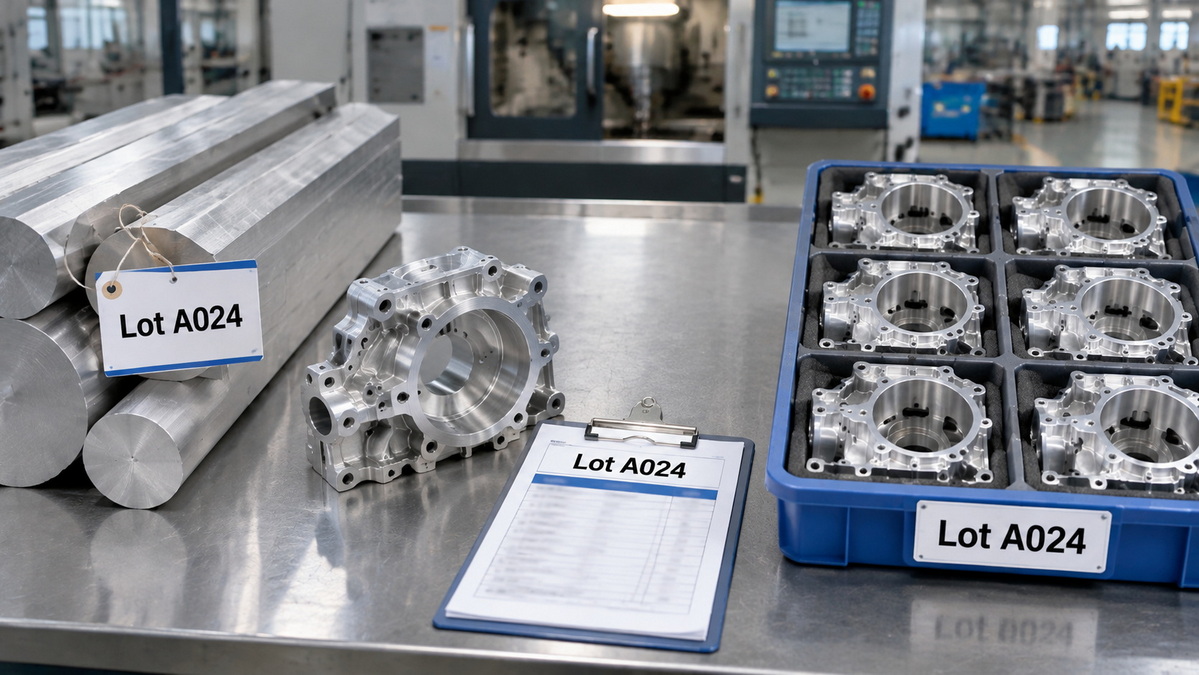
Choose two or three suppliers whose work matches your part. Give them the same drawing, annual demand estimate, inspection requirements, and delivery assumptions. Compare how they explain the hardest feature, how they verify the specified material, and whether they will reproduce the approved pilot route on repeat orders. That comparison is more useful than ranking quotes by the smallest advertised tolerance or lowest prototype price.
For an OEM project that combines machined parts with mold tooling or sheet metal, send U-Need your 2D drawing, 3D model, material and finish requirements, and expected order quantities at `contact@uneedpm.com`. Ask for a manufacturability review and separate quotations for the prototype, pilot lot, and repeat production so you can compare both costs and inspection commitments.
Request the certificate number, issuing body, legal company name, site address, scope, and dates. Search the number in CertSearch or the issuer's directory and check that the status is active. If the record is missing or inconsistent, contact the issuing body using independently obtained contact details. Check the scope and site as carefully as the expiration date: a current certificate that does not cover the facility or activity being purchased does not resolve the qualification question.
Do not assume so. Ask the shop to commit feature by feature, taking into account geometry, material, finish, part size, and inspection conditions. A supplier's advertised minimum is not a blanket promise. Mark the dimensions that genuinely need tight limits, and ask for measured evidence on the hardest one before approving production.
Do not use a numerical cutoff without first agreeing on the measurement method, sample plan, and production conditions. Cpk compares process spread and centering with the specification limits. It is meaningful only when the data represent a stable process and the measurement system is suitable. If you have five hand-picked prototypes, require actual measurements and an appropriate inspection plan rather than treating a Cpk calculated from that sample as proof of repeatability.
Hold the affected lot while both sides compare the same serialized parts. Check the drawing revision, datum alignment, probe or gauge method, temperature conditions, and how each system handles clamping. Agree on a referee method before remeasuring. If the disagreement comes from two legitimate interpretations of the drawing, correct the drawing rather than averaging the two results.
Not automatically. The issue is whether the outside process is controlled. Approve the processor where appropriate, require lot-level traceability, and define who performs final inspection after the outside operation. Make unapproved changes to the processing site or route a contract issue, even if the CNC machining itself stays at the original factory.
1.China Machine Tool & Tool Builders' Association — [2025 annual machine-tool industry report, reproduced by Casting Headline] and [January–September 2026 industry report, reproduced by China Industrial Control Network]. Both reports draw on China Customs trade data and national production statistics. [zhuzaotoutiao]
2.CertSearch — [Certificate search and verification], for checking accredited management-system certificates by company name or certificate number. [iafcertsearch]


