Views: 288 Author: U-Need Publish Time: 2026-06-28 Origin: Site
Bead blasting finish is one of the most practical ways to improve the appearance and surface consistency of machined parts without changing their critical dimensions. For precision manufacturing, it is especially valuable because it can create a clean, uniform, matte surface while helping parts look more professional and perform better in downstream finishing steps.
In this guide, we will explain what bead blasting finish is, how the process works, when to use it, and how to specify it correctly. We will also share practical shop-floor insights, common mistakes to avoid, and buyer guidance based on real manufacturing needs.

Bead blasting finish is a surface treatment process that uses fine, round media propelled at high speed to clean and texture a part's surface. Unlike aggressive abrasive methods, bead blasting is designed to produce a smooth, even cosmetic effect rather than remove large amounts of material.
In most precision manufacturing projects, the goal is to create a surface that is:
- Visually uniform.
- Free from machining marks.
- Ready for anodizing, painting, or coating.
- Less reflective and more premium in appearance.
This makes bead blasting a popular option for aluminum parts, stainless steel components, tooling parts, enclosures, prototypes, and consumer products.
The process is simple in concept but highly sensitive in execution. Small glass beads, ceramic beads, or other spherical media are accelerated by compressed air and directed at the part surface. The impact of each bead gently peens and smooths the peaks of the surface profile without cutting deep grooves.
A well-controlled bead blasting process depends on several variables:
- Media type and size.
- Air pressure.
- Spray angle.
- Nozzle distance.
- Blast time.
- Part material and hardness.
When these factors are balanced correctly, the result is a consistent matte finish with minimal dimensional impact.
Bead blasting is not just about appearance. It offers practical value across design, production, and assembly.
- It improves visual consistency across parts.
- It hides light machining marks and tool paths.
- It creates a better base for anodizing, powder coating, and painting.
- It can reduce glare on functional or consumer-facing surfaces.
- It helps products feel more refined and premium.
For many brands, bead blasting is the fastest way to move a part from "machined prototype" to "production-ready product."
Choosing the right finish depends on function, cost, and appearance. The table below helps clarify where bead blasting fits.
| Finish Type | Main Purpose | Surface Appearance | Typical Use Case |
|---|---|---|---|
| Bead blasting | Cosmetic smoothing and uniform texture | Matte, even, non-reflective | CNC parts, enclosures, decorative metal parts |
| Polishing | High gloss and shine | Reflective, mirror-like | Luxury parts, visible consumer products |
| Sandblasting | Stronger surface removal and cleaning | Rougher, more aggressive | Heavy cleaning, rust removal, surface prep |
| Brushing | Directional visual texture | Linear grain finish | Appliance panels, decorative metal surfaces |
For precision parts, bead blasting is often preferred when you want a clean appearance without an overly aggressive texture.
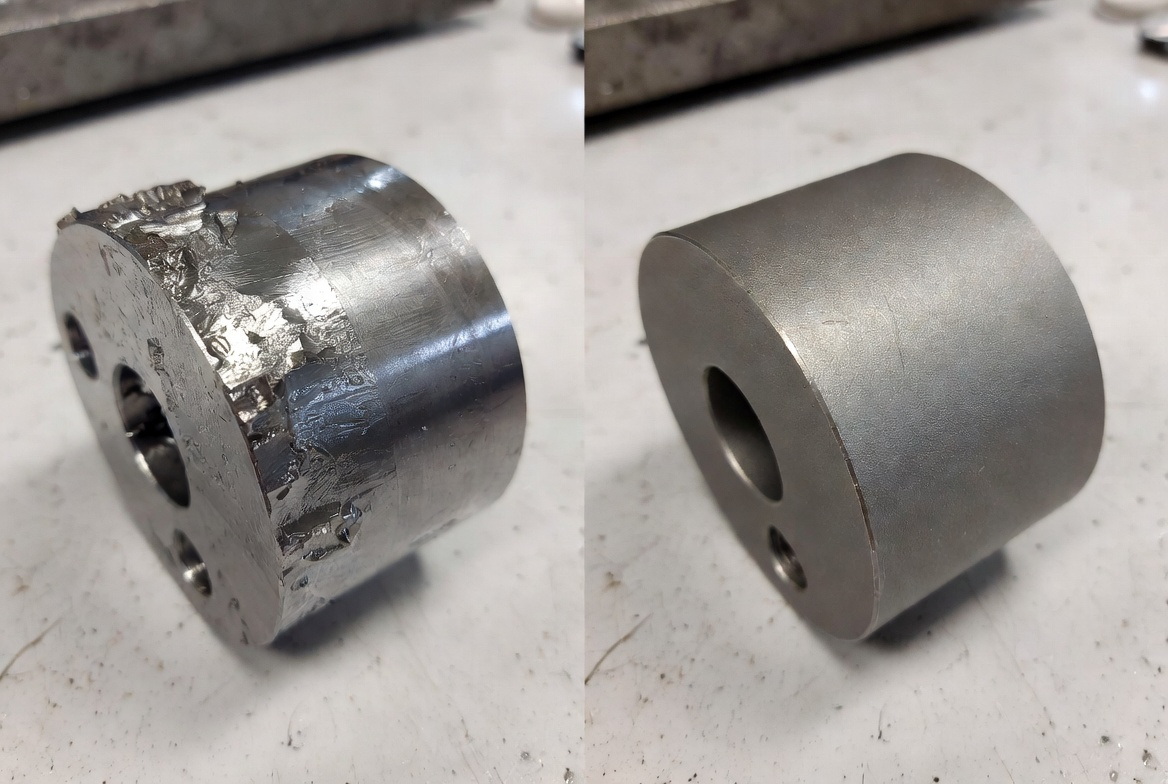
Not every material reacts the same way. Choosing the right combination of media and process settings is essential.
- Aluminum alloys.
- Stainless steel.
- Titanium.
- Brass.
- Some engineering plastics.
- Certain die-cast parts.
- Very soft metals.
- Thin-walled parts.
- Highly polished decorative surfaces.
- Parts with tight sealing or sliding interfaces.
As a rule, delicate parts should be blasted with lower pressure and carefully selected media to avoid surface distortion.
One of the most important mistakes buyers make is requesting a "matte finish" without defining what that actually means. In manufacturing, vague finish language often leads to inconsistent results.
Instead, specify measurable requirements such as:
- Surface roughness target, such as Ra.
- Accepted visual standard.
- Media type.
- Pressure range.
- Masking requirements.
- Sample approval process.
A more professional callout might read:
Bead blast finish on aluminum alloy, uniform matte appearance, Ra 0.8–1.6 μm, no visible machining lines at 30 cm viewing distance, critical holes and threaded areas masked.
This level of detail reduces disputes and improves repeatability across vendors.
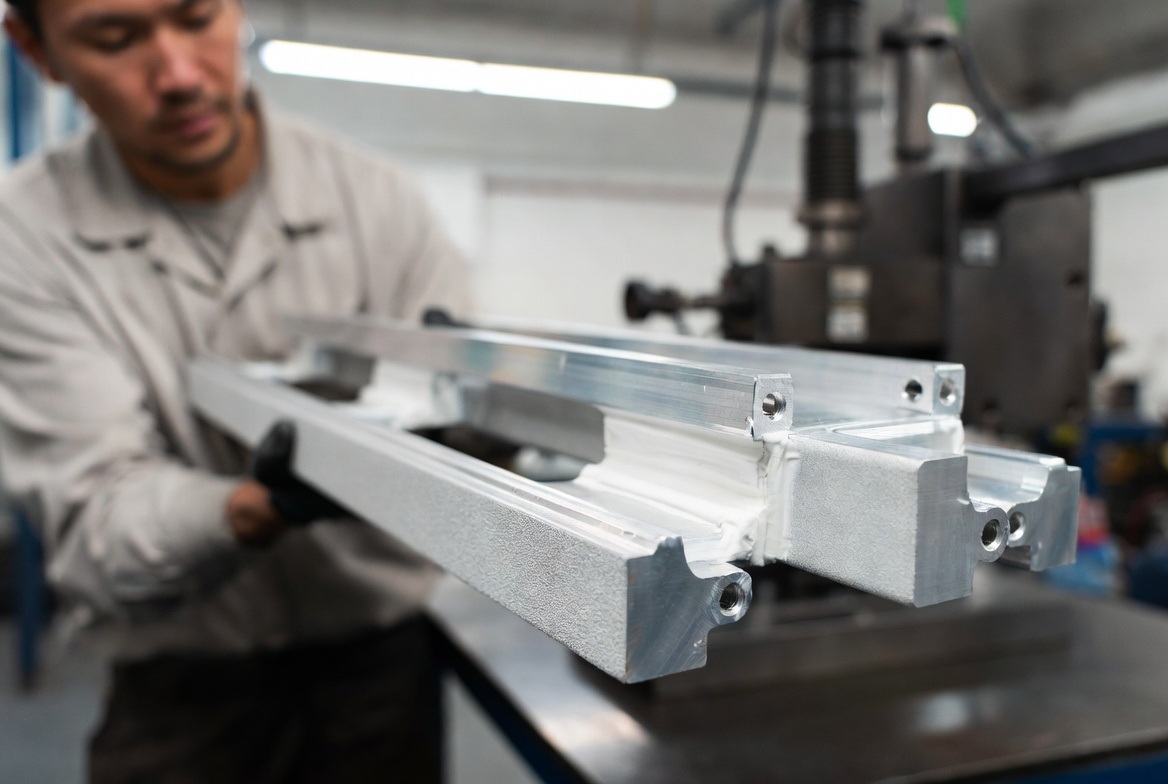
Here is a practical sequence used in many workshops and precision manufacturing lines.
1. Inspect the part for burrs, sharp edges, and contamination.
2. Mask critical holes, threads, sealing surfaces, and bearing interfaces.
3. Select the correct media based on material and finish target.
4. Set pressure, spray angle, and distance.
5. Blast evenly using overlapping passes.
6. Clean the part thoroughly after blasting.
7. Inspect the finish for uniformity, discoloration, and unwanted texture.
8. Approve or adjust the process if needed.
This structured approach helps maintain both cosmetic quality and dimensional reliability.
Even a simple finishing process can create problems if it is not controlled well.
- Using excessive pressure on thin parts.
- Failing to mask threaded holes or precision bores.
- Choosing the wrong media size.
- Over-blasting one area and creating uneven texture.
- Ignoring contamination from worn media or dust.
- Expecting all materials to respond the same way.
These mistakes can lead to rework, customer complaints, or performance problems in assembly.
Bead blasting is used across many sectors because it balances appearance, speed, and cost.
- CNC machined enclosures.
- Consumer electronics housings.
- Medical device components.
- Automotive brackets and covers.
- Aerospace brackets and light structural parts.
- Mold components and tooling surfaces.
For OEMs and industrial buyers, it is especially attractive because it supports both prototype and production workflows.
From a manufacturing standpoint, the best bead blast finishes come from process discipline, not guesswork.
- Always test on a sample before full production.
- Match media to the final coating or anodizing step.
- Keep blast pressure as low as possible while achieving the target effect.
- Standardize inspection under the same lighting conditions.
- Record the exact finish specification for repeat orders.
When a finish is controlled this way, it becomes much easier to scale from one batch to hundreds or thousands of parts.
Bead blasting is useful, but it is not always the right answer.
Avoid or reconsider it when the part requires:
- A mirror-polished appearance.
- Extremely tight surface-preservation requirements.
- High gloss decorative branding.
- Minimal surface contact on mating areas.
- A directional grain effect instead of uniform texture.
In these cases, polishing, brushing, or another finishing method may be more suitable.
For companies sourcing custom precision parts, bead blasting can make the difference between a technically correct part and a production-ready part. It improves consistency, supports branding, and often reduces the need for secondary visual correction.
At U-Need, bead blasting should be seen as part of a broader manufacturing strategy, not just a cosmetic add-on. When used correctly, it helps transform machined parts, molded components, and sheet metal pieces into polished final products that meet both engineering and commercial expectations.
Not all suppliers control bead blasting with the same level of discipline. A strong manufacturing partner should be able to explain:
- What media they use.
- How they protect critical dimensions.
- Whether they can match a reference sample.
- How they control surface roughness.
- What inspection method they use.
If a supplier cannot answer these questions clearly, finish consistency may become a risk.
If you are developing custom precision parts, molds, or sheet metal components, ask for a finish specification review before production starts. A well-defined bead blasting finish saves time, avoids rework, and improves both product quality and customer perception.
Bead blasting finish is used to create a clean, uniform, matte surface on metal or plastic parts while improving appearance and preparing parts for coating or anodizing.
Yes, but only minimally when done correctly. The process is mainly used for surface texturing and cleaning rather than heavy material removal.
Bead blasting typically uses round media and creates a smoother, more uniform finish. Sandblasting is usually more aggressive and produces a rougher surface.
It can if the pressure is too high, the media is too aggressive, or critical areas are not masked. Proper process control is essential.
Specify the finish type, target roughness, visual standard, masked areas, and any post-process requirements such as anodizing or painting.
1. RapidDirect, "Bead Blasting 101: Everything You Need to Know," [https://www.rapiddirect.com/blog/bead-blasting-finish-basics/].
2. Machining Quote, "Bead Blasting: Clean, Uniform, And Matte Finishes," [https://machining-quote.com/bolg/bead-blasting/].
3. Xometry, "All About Bead Blasting Your Parts," [https://www.xometry.com/resources/machining/bead-blasting-guide/].
4. JLC CNC, "Bead Blasting Guide: Process, Surface Finish and Texture," [https://www.jlccnc.com/blog/what-is-bead-blasting].
5. LEADRP, "Bead Blasting Overview," [https://www.leadrp.net/blog/bead-blasting-overview/].


