Views: 222 Author: Rebecca Publish Time: 2026-01-01 Origin: Site
Content Menu
● Who U-NEED Serves and Why It Matters
● U-NEED OEM Manufacturing Services
>> High-Precision CNC Machined Parts
>> Plastic Product Manufacturing
>> Silicone Product Manufacturing
● Materials, Tolerances, and Lead Times
>> Supported Materials and Processes
>> Tolerance Capability and Surface Finish
>> Typical Lead Times for OEM Projects
● Engineering Support, DFM, and Quality Control
>> Design for Manufacturability (DFM) and Engineering Cooperation
>> Inspection Capability and Quality Documentation
>> Continuous Improvement and Cost Optimization
● OEM Project Workflow from RFQ to Mass Production
>> Step 1: RFQ Submission and Technical Review
>> Step 2: Quotation and DFM Feedback
>> Step 3: Prototyping and Sample Approval
>> Step 4: Mass Production and Process Control
>> Step 5: Final Inspection, Packaging, and Shipment
● Industries and Application Scenarios
>> Consumer Electronics and Home Appliances
>> Automotive, Industrial, and Machinery
>> Medical-Related and Lifestyle Products
● Why Choose U-NEED over Generic Platforms
>> Direct OEM Partner, Not Just a Platform
>> Long-Term Cooperation and Supply Stability
● FAQs about U-NEED OEM Services
>> 1. What information should I prepare before requesting an OEM quotation from U-NEED?
>> 2. Can U-NEED support both prototypes and mass production for the same project?
>> 3. How does U-NEED ensure quality for overseas customers?
>> 4. What is the usual lead time for new OEM projects?
>> 5. Which industries are best suited to work with U-NEED?
U-NEED is a Chinese OEM manufacturing partner specializing in high-precision machining, plastic products, silicone products, and metal stamping for international brands, wholesalers, and manufacturers. U-NEED focuses on export-ready quality, engineering support, and stable supply for long-term cooperation.

Overseas buyers need suppliers that can combine engineering capability with predictable quality and delivery. U-NEED works with brand owners, wholesalers, and OEM/ODM manufacturers in Europe, North America, and Asia who require stable, compliant component production for their finished products.
For these customers, U-NEED provides one-stop support from DFM advice and prototype validation to tooling, mass production, and continuous optimization of cost and quality. This approach reduces supplier risk and communication costs for long-term OEM projects.
U-NEED offers CNC milling and turning for complex metal and plastic components with tight dimensional control. Typical parts include brackets, housings, custom fasteners, precision shafts, and functional prototypes used in automotive, electronics, industrial equipment, and consumer products.[1]
By combining process planning, tooling selection, and rigorous in-process inspection, U-NEED helps overseas customers maintain consistent tolerance, surface finish, and interchangeability between batches. This is especially important for assemblies that will be completed or serviced in other countries.[2]
U-NEED provides OEM plastic manufacturing through both CNC machining and molding routes, depending on project stage and volume. For early-stage products, CNC machining and small-batch molding help brands validate design, fit, and function without large upfront tooling investment.[3]
For stable or high-volume products, U-NEED supports plastic injection molding and related processes to ensure repeatable dimensions, optimized cycle times, and cost-efficient mass production. U-NEED's experience with export packaging and labeling helps align plastic parts with downstream logistics and compliance needs.[4]
Silicone parts are widely used in seals, gaskets, keypads, baby products, kitchenware, wearables, and medical-related accessories. U-NEED focuses on OEM silicone production with attention to material selection, hardness, color stability, and durability under real usage conditions.[5]
By combining mold design, venting, and curing control with incoming material checks, U-NEED supports applications where flexibility, sealing performance, or skin contact safety are critical for overseas brands. Tailored packaging and labeling further help customers meet retail and regulatory expectations in their target markets.[6]
Metal stamping is an efficient solution for large volumes of sheet metal parts such as brackets, terminals, covers, and reinforcement pieces. U-NEED designs and manufactures tooling for progressive, compound, or single-shot stamping depending on product geometry and batch size.[1]
Through robust die maintenance, clear material specifications, and statistical quality control, U-NEED helps customers achieve stable dimensions and mechanical performance over the entire tool life. This is especially valuable for long-running OEM projects with multi-year demand.[2]
U-NEED works with a wide range of metals and plastics commonly used in global OEM supply chains. Typical metals include aluminum alloys, carbon steel, stainless steel, brass, and copper for machining and stamping applications.[7]
For plastic and silicone parts, U-NEED supports engineering plastics, commodity resins, and silicone formulations selected according to mechanical properties, temperature resistance, appearance, and regulatory requirements. This allows buyers to match materials with end-use conditions and certification needs.[7]
Dimensional capability depends on material, geometry, and process, but U-NEED's CNC machining services are structured to meet tight tolerances and stable geometrical accuracy for demanding assemblies. Clear drawing definitions for datums, GD&T, and inspection points help align expectations between buyer and factory.[3]
For molded and stamped parts, U-NEED applies process-specific tolerance guidelines and capability studies to ensure that tool design and mass production performance can meet long-term requirements. Surface finishes can be adjusted through machining parameters, tool polishing, and secondary operations as needed.[4]
Lead time depends on product complexity, volume, and tooling requirements. Machined prototypes and small batches can typically be delivered faster than new-tooling molding or complex stamping projects.[3]
For new products, U-NEED collaborates with customers to plan prototype runs, pilot builds, and ramp-up schedules that align with product launch dates. This structured approach helps overseas brands avoid delays at later stages of their supply chain.[8]
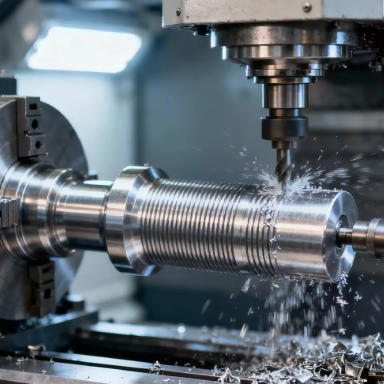
U-NEED offers engineering support from the RFQ stage, focusing on DFM suggestions that improve manufacturability, reduce cost, and stabilize quality. Typical recommendations include wall thickness optimization, draft angles, fillet radii, tolerance relaxation where feasible, and simplification of multi-part assemblies.[9]
By addressing manufacturability early, U-NEED helps customers avoid repeated design changes, tooling modifications, and unexpected production risks later in the project lifecycle. This is especially useful for brands with limited in-house manufacturing experience.[10]
U-NEED uses a structured quality system that can be aligned with international standards and customer-specific requirements. Dimensional checks may include basic measurement tools as well as more advanced equipment depending on tolerance and complexity.[11]
Quality documentation can be provided according to project needs, including first article inspection (FAI) records, dimensional reports, material certificates, and function test data. Clear traceability for batches and materials supports long-term reliability and after-sales support for overseas brands.[6]
For long-term OEM cooperation, U-NEED treats ongoing projects as a continuous improvement opportunity rather than a one-time transaction. Regular review of process performance, scrap rates, and customer feedback supports stable quality and cost optimization over time.[2]
This approach allows overseas customers to benefit from cumulative learning at the factory level, improving yield and reducing hidden costs in logistics, assembly, and warranty handling.[10]
Customers submit 2D/3D drawings, material requirements, quantities, and any special standards or packaging needs. U-NEED's engineering team reviews this information for manufacturability, risk points, and cost drivers before issuing a quotation.[8]
Clarifying tolerance requirements, critical surfaces, and functional interfaces at this stage ensures that the quote reflects a realistic process plan rather than just a price number.[9]
U-NEED issues a detailed quotation that may include price tiers by quantity, estimated lead times, and recommended adjustments for design or process. DFM feedback focuses on geometry, tolerance feasibility, and cost-effective process routes.[10]
This allows customers to compare different options, such as CNC machining versus tooling-based production, and to make informed decisions aligned with their target market and product lifecycle.[3]
For new products, samples or pilot batches are produced and documented according to agreed inspection plans. The customer reviews parts for fit, function, appearance, and packaging before confirming the standard for mass production.[4]
Feedback during this phase is used to fine-tune tooling, process parameters, and inspection methods so that full-scale production can proceed smoothly.[11]
Once samples are approved, U-NEED moves into mass production under controlled work instructions, inspection plans, and maintenance schedules. Key process parameters and quality indicators are monitored to ensure consistency between batches.[2]
Customers receive updates according to agreed communication schedules, giving visibility into production progress and shipment planning.[12]
Finished goods undergo final inspection based on the agreed sampling plan and specifications. Packaging is configured to protect parts in transit and support downstream assembly or retail needs at the customer's site.[4]
Shipping methods are chosen according to lead time and cost priorities, and documentation is prepared to support customs clearance and quality traceability in the destination country.[10]
U-NEED supports OEM components used in consumer electronics and appliances, including precision machined parts, plastic housings, silicone buttons, and stamped brackets. Consistent appearance and assembly fit are critical for these products.[1]
Stable supply and controlled packaging help brands maintain retail schedules and reduce field issue risk caused by component variability.[2]
For automotive and industrial applications, U-NEED focuses on robustness, dimensional stability, and reliable performance under long-term mechanical stress. Machined and stamped metal parts often require controlled tolerances and material certifications.[6]
By aligning inspection standards and documentation with customer requirements, U-NEED helps global buyers integrate components into safety-relevant or performance-critical systems.[11]
For medical-related accessories and lifestyle products, silicone and plastic components may require specific material grades, surface finishes, and packaging conditions. U-NEED collaborates closely with customers to translate regulatory and branding requirements into practical manufacturing controls.[6]
This combination of material control, documentation, and appearance quality helps overseas brands build trust with end users in demanding markets.[10]
Unlike purely digital sourcing platforms, U-NEED positions itself as a direct OEM manufacturing partner with focused experience in high-precision machining, plastic and silicone products, and metal stamping for export.
This direct model gives overseas buyers clearer communication with the production team, faster engineering feedback, and better control of quality and lead time on long-term projects.[2]
Collaborating with a capable OEM partiner rather than one-off orders. This supports stable process control, accumulated product knowledge, and proactive cost and quality optimization over time.[10]
For brands and wholesalers building multi-year product lines, this stability is more important than the lowest short-term price from anonymous suppliers.[1]
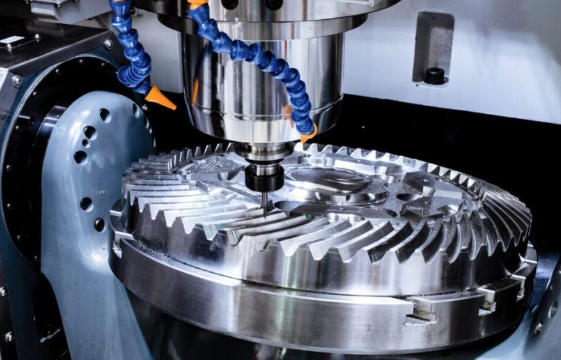
Prepare 2D drawings, 3D models, material specifications, expected quantities, target markets, and any special standards or packaging requirements. Clear tolerance and surface finish definitions help avoid misunderstandings at the quotation stage.[8]
If you already have reference samples or competitor components, sharing photos and basic dimensions can further clarify expectations for the OEM project.[3]
Yes. U-NEED can start with CNC machined or small-batch molded prototypes to validate design and then transition to tooling-based production for stable demand. This reduces up-front risk for new products.[3]
The same engineering team follows the project from prototyping to mass production, ensuring that process knowledge and lessons learned are preserved and applied.[10]
U-NEED applies structured quality control from incoming materials to final inspection, using appropriate measuring tools, sampling plans, and documentation aligned with project requirements.[11]
Reports such as FAI records, dimensional data, and material certificates can be provided to support customer quality systems and regulatory compliance.[6]
Lead time for new OEM projects depends on complexity, tooling needs, and order quantity. Prototype runs are typically faster than new tool development and validation.[3]
U-NEED works with customers to define a realistic schedule from RFQ through sampling and ramp-up so that production aligns with product launch and market plans.[8]
U-NEED is well suited for brands and manufacturers in consumer electronics, home appliances, industrial equipment, automotive-related products, and lifestyle or medical-related accessories that require stable OEM supply.[1]
The combination of machining, plastic, silicone, and stamping capabilities allows multi-component assemblies from different materials to be sourced from a single partner.[2]
[1](https://ecommercefastlane.com/best-platforms-for-sourcing-cnc-machined-parts-from-china/)
[2](https://www.apnnews.com/integrated-excellence-one-stop-on-demand-manufacturing-pioneer-in-china-rapiddirect/)
[3](https://www.rapiddirect.com/services/on-demand-manufacturing/)
[4](https://www.rapiddirect.com/services/3d-printing/)
[5](https://www.hxcmold.com/rapid-prototyping/)
[6](https://www.medicaldevicedirectory.com/company/887409/rapiddirect-co-ltd)
[7](https://www.rapiddirect.com/materials/)
[8](https://www.rapiddirect.com/our-platform/)
[9](https://roboticsandautomationnews.com/2022/11/16/rapiddirect-introduces-automated-dfm-feedback-tool-can-help-optimize-your-part-design/58110/)
[10](https://memuknews.com/technology/industry4-smart/make-on-demand-manufacturing-easier-and-faster-with-rapiddirect/)
[11](https://fttxnetwork.com/about/company-profile/)
[12](https://hk.linkedin.com/company/rapiddirect)


