Views: 233 Author: U-Need Publish Time: 2026-08-19 Origin: Site
Content Menu
● CNC Machining vs. Manual Machining: The Essential Difference
● CNC Machining vs. Manual Machining Comparison
● Accuracy, Tolerances, and Repeatability
>> A Practical Tolerance Example
● When Manual Machining Is the Better Choice
● When CNC Machining Is the Better Choice
● Understanding the True Cost of Machining
>> Questions to Ask Before Comparing Quotes
● How Part Design Affects the Process Choice
● Quality Control Should Be Defined Before Production
● A Six-Step Process for Choosing the Right Method
>> 1. Define the Part Function
>> 2. Identify Critical Features
>> 3. Estimate Real Production Volume
>> 4. Review Material and Finish Requirements
>> 5. Define Quality Expectations
>> 6. Select the Manufacturing Route
● Precision Manufacturing Support From U-Need
● FAQ
>> Is CNC machining always better than manual machining?
>> Is manual machining cheaper than CNC machining?
>> Can manual machining achieve tight tolerances?
>> What quantity makes CNC machining more cost-effective?
>> Can CNC machining be used for prototypes?
>> What information is needed for a machining quotation?
>> How can machining cost be reduced?
For buyers sourcing precision components, the decision should not rely on machine type alone. Part function, tolerance requirements, geometry, material, annual volume, quality documentation, and delivery schedule all affect the most suitable production route.
The central difference between CNC machining and manual machining is how the cutting process is controlled.
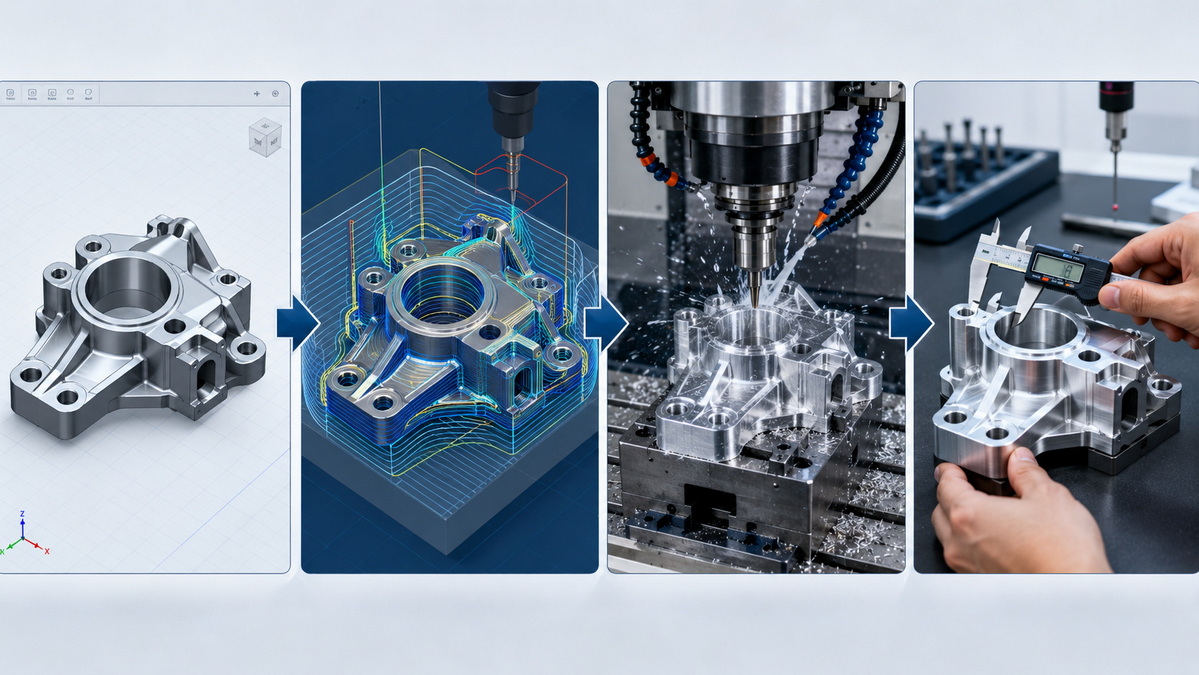
In CNC machining, a programmed digital file directs the movement of cutting tools and machine axes. The program controls operations such as milling, turning, drilling, boring, tapping, and contouring. Once the machining setup is verified, the machine can repeatedly produce the same part according to the approved program.
In manual machining, the machinist controls the machine directly. Handwheels, levers, dials, and visual alignment are used to move the cutting tool or workpiece. The machinist continuously adjusts the process based on measurements, experience, material behavior, and the condition of the cutting tool.
Neither process is automatically right for every project. The best choice depends on what the part must do, how many units are required, and how consistently each feature must be reproduced.

CNC stands for Computer Numerical Control. It is a subtractive manufacturing method that removes material from a metal or plastic workpiece until the final part shape is achieved.
The process normally begins with a 3D CAD model. Engineers and programmers use CAM software to create tool paths, machining sequences, cutting parameters, and machine instructions. The finished program is then loaded into a CNC milling machine, CNC lathe, turning center, machining center, or multi-axis machine.
CNC machining is commonly used to manufacture:
- Precision mechanical components
- Automotive and motorcycle parts
- Industrial equipment parts
- Robotics and automation components
- Aerospace and medical components
- Electronic housings and heat sinks
- Jigs, fixtures, and tooling components
- Prototype parts and low-volume production parts
A CNC machine does not replace skilled manufacturing expertise. It shifts that expertise into programming, workholding, tooling, setup control, process optimization, and inspection planning.
A well-managed CNC process requires the right combination of machine capability, cutting tools, fixtures, material knowledge, dimensional inspection, and experienced technicians.
Manual machining uses traditional equipment controlled directly by an operator. Common manual machines include lathes, milling machines, drill presses, grinders, and saws.
The machinist reads the drawing, aligns the workpiece, selects tools, sets speeds and feeds, monitors the cut, and measures the part throughout the production process. The result depends significantly on practical skill, attention to detail, and the machinist's ability to make adjustments during production.
Manual machining is commonly used for:
- Replacement parts for maintenance and repair
- Simple spacers, bushings, pins, and shafts
- Basic brackets and plates
- Low-volume custom parts
- Emergency repair work
- Quick fixture modifications
- Early-stage prototypes with simple geometry
Manual machining can produce accurate components when performed by an experienced machinist. However, it becomes more difficult to maintain the same dimensional consistency when quantities increase or when the part contains many complex features.
| Factor | CNC Machining | Manual Machining |
|---|---|---|
| Control method | Program-controlled machine movement | Operator-controlled movement |
| Part complexity | Suitable for complex 3D shapes and multiple features | Best for simple and accessible features |
| Repeatability | High when setup and inspection are controlled | Depends heavily on machinist skill |
| Setup requirement | Requires programming, setup, and program verification | Faster setup for simple jobs |
| Production volume | Suitable for prototypes through repeat production | Best for one-off or limited quantities |
| Labor involvement | Less continuous manual operation after setup | Requires constant operator involvement |
| Design revisions | Digital programs can be revised and controlled | Adjustments can be made directly during work |
| Quality documentation | Easier to support with digital inspection records | Requires more manual documentation |
| Cost structure | Higher initial setup cost, better scalability | Lower initial cost, higher labor per part |
| Typical applications | Precision parts, repeat orders, complex components | Repairs, simple parts, fast modifications |
The table provides a useful starting point, but it should not replace a manufacturing review. A simple component with a very tight tolerance may still benefit from CNC machining. A more complex part needed only once may still be suitable for manual machining if the geometry and acceptance criteria allow it.
Accuracy is often the first concern when comparing CNC machining with manual machining. However, "accuracy" is not a single promise that applies equally to every dimension on every part.
The achievable result depends on several factors:
- Part material and material condition
- Feature geometry and accessibility
- Required tolerance range
- Machine capability and machine condition
- Cutting tool selection and wear
- Workholding and clamping method
- Number of setups required
- Environmental conditions
- Measurement equipment and inspection method
- Operator, programmer, and quality-control experience
CNC machining is usually the more reliable choice when a part requires repeatable critical dimensions across multiple units. The same approved program can run again for future orders, helping reduce variation between batches.
Manual machining can achieve good precision, especially for simple features on a limited number of parts. However, the operator must manually position, measure, adjust, and control every operation. This creates more opportunity for variation when producing larger quantities.
Imagine a stainless-steel shaft with a finished diameter of 20.00 mm and a tolerance of ±0.02 mm.
Producing one or two shafts manually may be practical. A skilled machinist can measure each part carefully, make incremental cuts, and bring the diameter into specification.
Now imagine producing 2,000 shafts with the same tolerance. The process must account for tool wear, temperature changes, material variation, machine stability, inspection frequency, and consistency across shifts. In this situation, CNC turning is normally the stronger production route because the process can be standardized, monitored, and repeated.
For critical components, buyers should define more than the tolerance value. They should also identify the measurement method, inspection frequency, required documentation, and acceptance criteria before production begins.
Manual machining remains practical when the part is simple, the quantity is low, and the design may require immediate adjustment.
It is often the right option in the following situations:
1. One-off replacement parts
A maintenance team may need a single replacement bushing, shaft, sleeve, or spacer. Manual machining can avoid unnecessary programming time for a simple component.
2. Repair and modification work
Existing parts may need to be resized, re-drilled, repaired, or modified quickly. A manual machinist can make direct adjustments during the process.
3. Simple geometry
Parts with basic diameters, flat surfaces, through-holes, simple threads, and accessible features are often suitable for manual equipment.
4. Rapid design changes
For an experimental or developing component, manual machining can support fast adjustments before the geometry is finalized.
5. Very low production quantities
If a part is needed only once and does not have demanding complexity or tolerance requirements, manual machining may offer a practical cost advantage.
Manual machining should not be viewed as outdated. It remains an important capability for repair work, simple prototypes, maintenance operations, and specialized low-volume projects.
CNC machining becomes more valuable as part complexity, production quantity, repeatability requirements, and quality expectations increase.
Choose CNC machining when the project requires:
- Complex contours, pockets, surfaces, or profiles
- Multiple holes with controlled location and orientation
- Tight dimensional or positional tolerances
- Multi-face machining
- Repeat production across several batches
- Consistent surface finishes
- Fast production of larger quantities
- Controlled engineering revisions
- Material traceability or inspection documentation
- First-article inspection before full production
- Reduced risk of operator-to-operator variation
CNC machining is particularly effective for parts with numerous features that would otherwise require repeated manual positioning and measurement. A multi-axis machining center can access several faces of a part in fewer setups, helping improve efficiency and reduce cumulative alignment error.
For example, an aluminum electronics housing with internal pockets, threaded holes, exterior profiles, heat-dissipation fins, and strict cosmetic requirements is usually a better fit for CNC machining than manual production.
Comparing only the hourly machine rate can lead to poor sourcing decisions. A manual machine may appear less expensive per hour, while a CNC machine may have higher programming, setup, and equipment costs.
The real production cost includes much more than the machine itself.
For a one-off part, CNC programming may create costs that cannot be recovered. For repeat production, the initial setup cost can be spread across more units. CNC machining may then offer better cost control through shorter cycle times, lower labor content per part, and reduced variation.
- Is CAD/CAM programming included in the quotation?
- Will the approved machining program be retained for future orders?
- Which tolerances are included in the quoted price?
- Are tight tolerances limited to critical features only?
- Does the price include material, finishing, and packaging?
- Is a custom fixture or soft jaw required?
- Which inspection tools and methods will be used?
- Is a first-article sample required before full production?
- Are material certificates or inspection reports included?
- Is the quoted price based on prototype quantity or repeat production volume?
The lowest unit price is not always the lowest project cost. A poorly controlled process can create rework, assembly problems, delayed shipments, excess inspection, rejected batches, or warranty risk.
A part drawing can strongly influence whether CNC machining or manual machining is the most suitable route.
Certain design features increase the need for CNC machining:
- Deep pockets with narrow tool access
- Complex internal geometry
- Multiple threaded holes
- Angled holes or compound angles
- Tight positional tolerances
- Fine surface-finish requirements
- Multiple features across several faces
- Small radii and narrow slots
- Complex curved surfaces
- High repeatability requirements
Before production, a design-for-manufacturability review can identify opportunities to improve cost, lead time, and production reliability.
Useful design adjustments may include:
- Using standard thread sizes
- Avoiding unnecessary tight tolerances
- Increasing internal corner radii where possible
- Reducing extremely deep or narrow cavities
- Simplifying non-functional cosmetic features
- Making critical datums clear on the drawing
- Specifying only essential surface-finish requirements
- Using standard material sizes where practical
Small design changes can often reduce machining time, minimize special tooling requirements, and improve inspection efficiency without affecting the intended function of the part.
[Suggested image placement: Add a "Design for Manufacturability" visual showing an expensive deep narrow pocket beside a more machine-friendly revised design.]
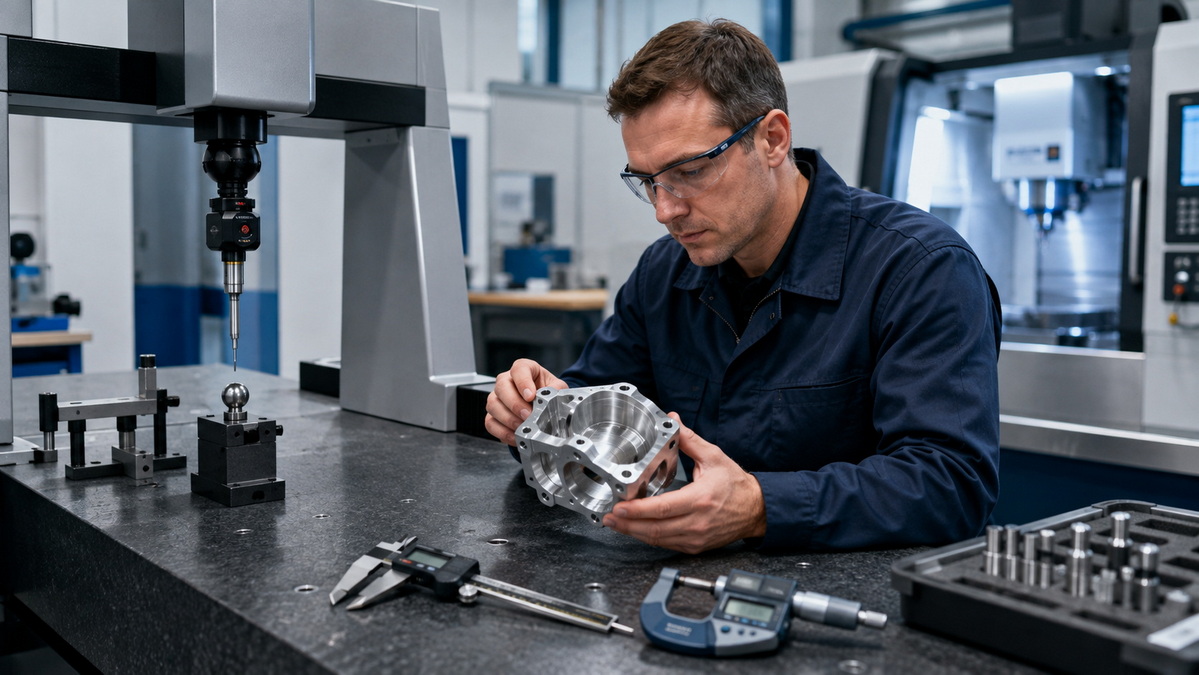
A precision-machined component should not be accepted based only on appearance. The part must be evaluated against the approved drawing, revision level, material specification, dimensional requirements, surface condition, and project-specific quality criteria.
A structured production workflow may include:
- Material identification before machining
- Drawing and revision review
- Workholding and setup verification
- First-piece measurement
- In-process inspection of critical dimensions
- Tool-wear monitoring
- Final dimensional inspection
- Surface-finish verification where required
- Visual inspection for burrs, scratches, dents, or contamination
- Packaging review before shipment
For projects with high functional risk, such as mating components, sealing surfaces, load-bearing features, or controlled assemblies, buyers should clearly state their inspection requirements in the RFQ stage.
Typical requested documents may include:
- Material certificates
- Dimensional inspection reports
- First-article inspection reports
- Surface-finish records
- Heat-treatment certificates
- Plating or anodizing certificates
- RoHS or REACH declarations when applicable
- Batch identification and traceability records
Defining quality requirements early prevents misunderstandings and helps ensure that the supplier selects the correct machining route, tools, inspection plan, and production controls.
Start by understanding what the part must do. Consider load conditions, mating parts, movement, sealing needs, corrosion exposure, temperature, electrical requirements, and visual expectations.
Mark dimensions and surfaces that affect fit, performance, safety, assembly, or appearance. These may include bearing seats, holes, threads, sealing grooves, flatness requirements, and datum surfaces.
Look beyond the first purchase order. Consider prototype quantity, pilot production, annual demand, repeat orders, and possible design updates.
Material selection affects tool wear, machining time, surface quality, and cost. Aluminum, stainless steel, brass, titanium, engineering plastics, and hardened steel all require different process planning.
Confirm how critical dimensions will be inspected and what documents are required. Decide whether first-article approval is necessary before the full batch begins.
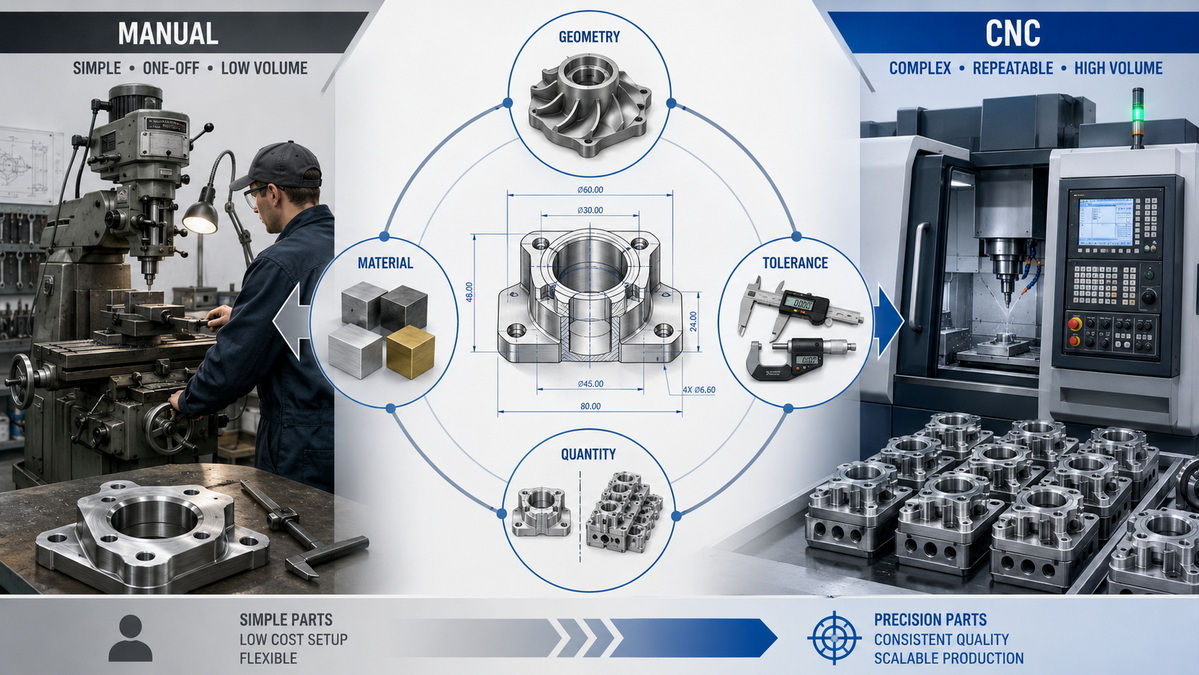
Use manual machining for simple, low-volume, quickly adjustable work. Use CNC machining for repeatable, complex, controlled, or scalable precision parts. For broader projects, consider whether machining, tooling, sheet metal fabrication, stamping, or molding should be coordinated through one manufacturing partner.
U-Need supports global brands, distributors, and manufacturers with integrated precision manufacturing solutions in China.
Our capabilities include:
- Custom precision parts machining
- CNC milling and CNC turning
- Prototype and production machining
- Injection mold manufacturing
- Stamping die manufacturing
- Cold-forging die manufacturing
- Sheet metal laser cutting
- Metal bending and forming
- Sheet metal stamping
- Manufacturing review and process coordination
A coordinated production approach can simplify sourcing for projects that require more than one manufacturing process. For example, a product may require CNC-machined aluminum components, sheet-metal brackets, custom injection-molded covers, and production tooling. Managing these requirements through a coordinated manufacturing plan can reduce communication gaps and improve consistency across the finished assembly.
For project evaluation, U-Need can review 2D drawings, 3D CAD files, material specifications, quantities, tolerance priorities, surface-finishing requirements, and delivery expectations to help determine a suitable manufacturing route.
CNC machining and manual machining both have an important place in modern manufacturing.
Manual machining is a practical choice for straightforward parts, repair work, quick modifications, and very low-volume requirements. It offers flexibility and direct operator control when a project does not justify digital programming and production setup.
CNC machining is generally the stronger option for complex parts, repeat production, controlled tolerances, consistent quality, and scalable manufacturing. Its value becomes increasingly clear when the project requires reliable output across multiple units or recurring orders.
The best decision begins with the part's functional requirements, not with a preference for a specific machine. By evaluating geometry, material, tolerances, volume, quality needs, and total production cost together, buyers can select a process that supports both performance and commercial success.
No. CNC machining is usually better for complex, repeatable, and production-oriented components. Manual machining can be more practical for simple one-off parts, repairs, quick modifications, and low-volume work.
Manual machining may cost less for a simple one-off part because it often requires less programming and setup. CNC machining can become more cost-effective when quantity, complexity, repeatability, and quality-control requirements increase.
Yes, an experienced machinist can achieve tight tolerances on suitable parts. However, CNC machining generally provides stronger repeatability when the same tight tolerance must be maintained across many units.
There is no fixed break-even quantity. The answer depends on the part geometry, machining time, programming effort, tooling, inspection requirements, material, and expected repeat orders. Complex or tolerance-critical parts may justify CNC machining even at low quantities.
Yes. CNC machining is widely used for functional prototypes because it can produce parts in production-grade materials such as aluminum, stainless steel, brass, titanium, and engineering plastics.
A complete quotation package should include a 3D CAD model, 2D drawing, material grade, required quantity, critical tolerances, surface-finish requirements, thread details, finishing requirements, quality documents, and target delivery date.
Costs can often be reduced by simplifying non-functional features, avoiding unnecessary tight tolerances, using standard thread sizes, increasing internal corner radii, reducing deep narrow pockets, selecting suitable materials, and completing a manufacturability review before production.
1. [RapidDirect: CNC Machining vs Manual Machining: Which Is Better?]
2. [Xometry: CNC vs. Manual Machining]
3. [Jarvis Cutting Tools: Comparing CNC vs. Manual Machining]
4. [NIST: Length and Dimensional Measurements]


