Views: 231 Author: U-Need Publish Time: 2026-07-22 Origin: Site
Content Menu
● Why Gear Manufacturing Matters
● Common Gear Types and Their Uses
>> Spur Gears
>> Bevel Gears
>> Worm Gears
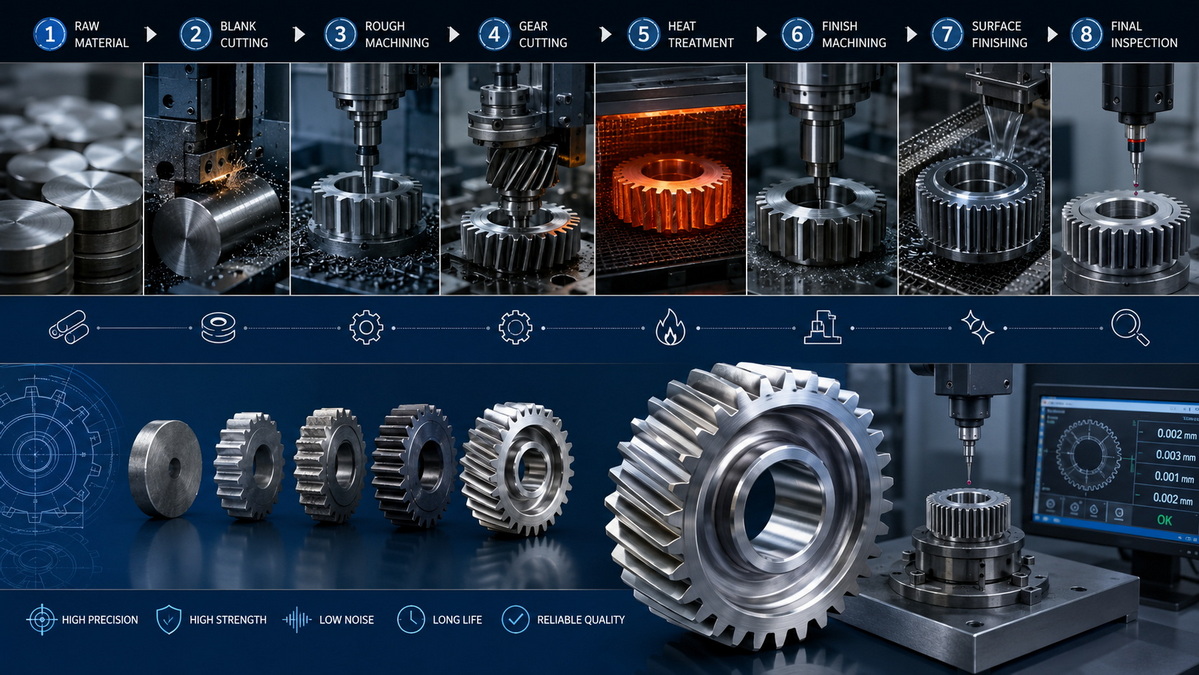
● The Main Gear Manufacturing Workflow
>> 4. Finishing
>> 6. Final Packaging and Delivery
● Material Selection for Gears
>> Alloy Steel
>> Carbon Steel
>> Cast Iron
>> Bronze
>> Hobbing
>> Shaping
>> Broaching
>> Grinding and Other Finishing Methods
● Heat Treatment and Surface Hardening
>> What to Confirm Before Production
● Inspection and Quality Control
● Choosing the Right Gear Manufacturing Process
● Industry Trends and Market Direction
● FAQ
>> 1. What is gear manufacturing?
>> 2. Which gear manufacturing method is most accurate?
>> 3. Why is heat treatment important for gears?
>> 4. What materials are most commonly used for gears?
>> 5. How do I choose the right gear supplier?
>> 6. Are plastic gears suitable for industrial use?
>> 7. What information should I send when requesting a quote?
Gear manufacturing is far more than cutting teeth into a metal blank. It is a disciplined engineering process that determines how smoothly a machine runs, how much load it can carry, how quietly it operates, and how long it will last. For industrial buyers, OEM teams, and product developers, the manufacturing route chosen for a gear can directly affect performance, cost, and reliability.
In modern manufacturing, gears are used in automotive systems, industrial machinery, robotics, energy equipment, and precision motion devices. Each application places different demands on tooth geometry, material strength, surface finish, and dimensional accuracy. That is why the best gear manufacturing strategy is rarely a one-step process.
A gear may look simple, but its function is highly technical. The tooth profile, pitch accuracy, hardness, and concentricity all influence how power is transmitted from one shaft to another. Even a small deviation in geometry can create vibration, noise, wear, or premature failure.
The quality of a gear is especially important in systems that run continuously or under heavy load. In these cases, gear performance is not just about fitting the part into an assembly. It is about ensuring stable motion transfer, consistent torque transmission, and long-term durability.
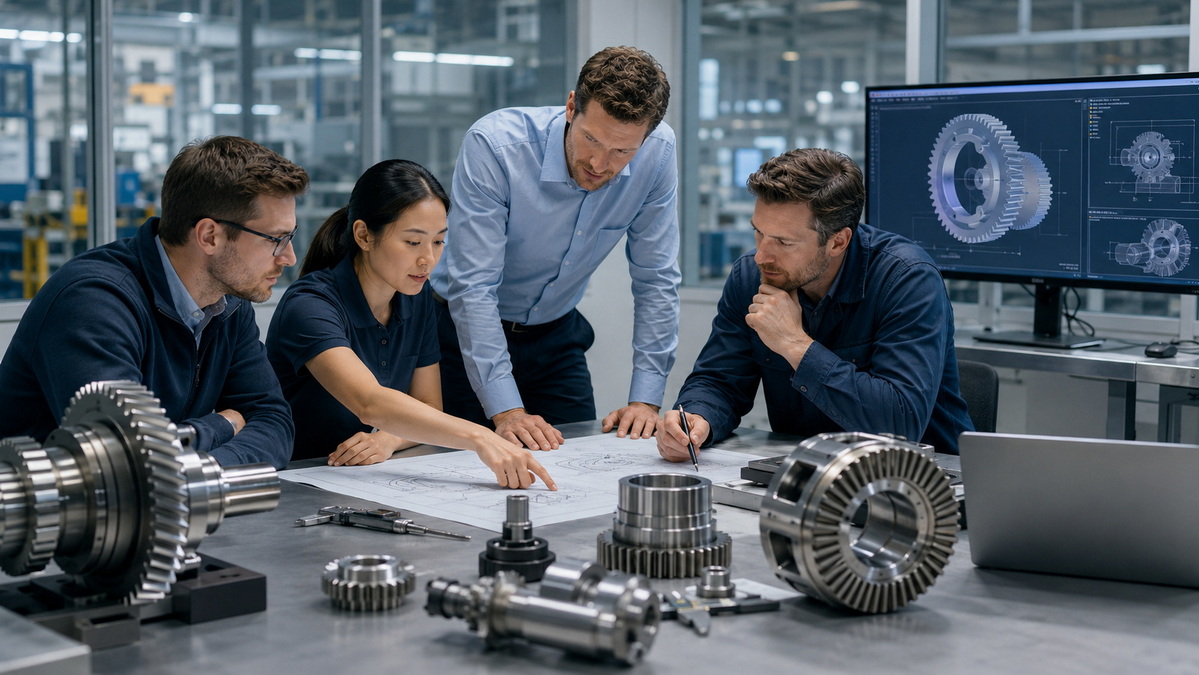
This is why gear manufacturing requires strong coordination between design, machining, heat treatment, and inspection. A weak link in any one of these stages can reduce the final quality of the part.
Different gear types are designed for different motion patterns and mechanical requirements. Before selecting a manufacturing method, it is important to understand the function of the gear itself.
Spur gears are one of the simplest and most common types. They have straight teeth and are typically used on parallel shafts. Their design makes them efficient to manufacture and suitable for many general-purpose applications.
Helical gears have angled teeth that engage more gradually than spur gears. This makes them smoother and quieter in operation. They are often used where noise reduction and load distribution are important.
Bevel gears are used to transmit motion between intersecting shafts. Their conical tooth form requires high precision during manufacturing to ensure proper contact and efficient performance.
Worm gears are commonly used when a high reduction ratio is needed. They can also provide compact transmission layouts and, in some cases, self-locking behavior. Their geometry and sliding contact make surface finish especially important.
Rack and pinion systems convert rotational motion into linear motion. They are common in steering systems, automation equipment, and positioning devices.
Gear production usually involves multiple stages rather than one single operation. The exact sequence depends on the material, tooth form, required accuracy, and production volume.
The process begins with choosing the right raw material and preparing the blank. The blank may be produced by forging, casting, blanking, or machining depending on the application and the required strength level.
The next step is creating the gear teeth. This may be done through hobbing, shaping, broaching, milling, or other machining methods. The selection depends on gear type, complexity, and production quantity.
Many gears require heat treatment to improve hardness and wear resistance. This step is essential for parts that will operate under high stress, repeated loading, or demanding environments.
Finishing operations refine the tooth profile and surface quality. Grinding, honing, shaving, and lapping are often used when higher accuracy or quieter operation is needed.
Inspection confirms whether the gear meets dimensional and performance requirements. This is one of the most critical stages because it verifies that the part is suitable for actual use.
The final stage includes cleaning, protection, packaging, and shipment. For precision components, proper packaging matters because tooth damage or corrosion can affect part quality before installation.
The right material has a major impact on gear life, strength, and manufacturing cost. Each material offers different benefits, so the choice must reflect the operating environment and mechanical load.
Alloy steel is widely used for high-strength gears. It offers strong wear resistance and good response to heat treatment, making it suitable for industrial and automotive applications.
Carbon steel is a practical and cost-effective option for many general-purpose gears. It is commonly used when performance requirements are moderate and production cost needs to remain controlled.
Cast iron is often selected for large gears or applications where moderate strength and good machinability are needed. It can also help reduce cost in certain designs.
Bronze is often used for worm gears and wear-sensitive applications. It performs well in situations where friction control and long service life are important.
Engineering plastics are used in low-load or noise-sensitive applications. They are lightweight and can offer good corrosion resistance, but they are not ideal for high-stress environments.
There is no universal process that suits every gear. The most appropriate method depends on geometry, load, quantity, and required precision.
Casting is often used for large blanks or lower-demand applications. Forging is preferred when higher mechanical strength is needed because it improves the internal grain structure of the material.
Hobbing is one of the most widely used methods for producing external spur and helical gears. It is efficient, repeatable, and well suited to both medium and high volumes.
Shaping is useful for internal gears and some special geometries. It is a flexible process, especially when the part design cannot be produced effectively by hobbing.
Broaching can be a fast and accurate method for certain internal profiles. It is often used when production volume justifies the tooling investment.
Milling and CNC machining are commonly used for prototypes, custom parts, and small batches. They offer flexibility and are useful when rapid design changes are expected.
Grinding, honing, shaving, and lapping are used to improve accuracy and surface finish. These operations are especially important when the gear must run quietly, carry heavy loads, or meet tight tolerances.
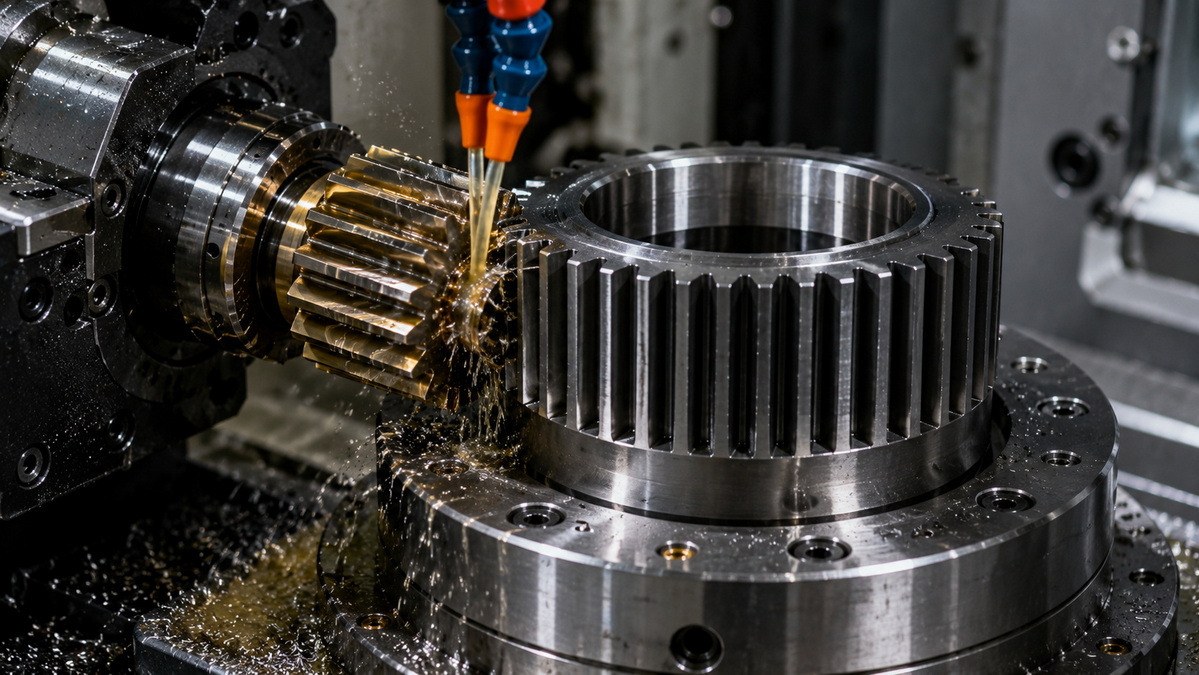
Heat treatment is one of the most important steps in gear production. It improves hardness, wear resistance, and fatigue life, which are all critical for gears that operate under demanding conditions.
Common heat treatment methods include carburizing, induction hardening, quenching, and tempering. The right method depends on material type, expected load, and whether the gear will be finished after hardening.
For high-precision parts, distortion control is a major concern. If a gear is hardened without proper control, it may warp or shift out of tolerance. That is why heat treatment planning should always be matched with machining and finishing strategy.
- Required hardness range.
- Whether post-heat-treatment grinding is necessary.
- Distortion tolerance after hardening.
- Batch traceability and process documentation.
Inspection is the stage that confirms whether the gear meets the required design and performance standards. It is not enough for a gear to look correct. It must also be measured and verified against engineering requirements.
- Tooth profile accuracy.
- Tooth lead accuracy.
- Runout and concentricity.
- Tooth thickness.
- Surface finish.
- Hardness.
- Backlash and fit.
A gear that passes visual checks may still perform poorly if its geometry is inconsistent. Uneven tooth contact can increase noise, reduce efficiency, and shorten service life. For this reason, inspection should be integrated into the entire production process, not treated as a final afterthought.

The best manufacturing route depends on the application, budget, and performance requirements. A prototype gear for testing may be made by CNC machining, while a large-volume industrial order may call for hobbing, heat treatment, and grinding.
| Factor | What to Consider |
|---|---|
| Accuracy | Tolerance level, surface finish, and gear quality |
| Volume | Prototype, small batch, or mass production |
| Load | Torque, shock, duty cycle, and wear resistance |
| Material | Steel, bronze, cast iron, or plastic |
| Lead Time | Tooling time and production schedule |
| Cost | Total manufacturing cost, not just part price |
A useful rule is this: as the performance requirement rises, finishing and inspection become more important. For high-load machinery, it is usually better to invest in precision and process control than to choose the lowest-cost option.
Gear manufacturing continues to evolve as industrial equipment becomes more precise, compact, and efficient. Demand is increasing in areas such as electric vehicles, automation, robotics, and renewable energy systems. These applications require better control of noise, friction, and long-term durability.
Manufacturers are also placing more attention on process stability, digital inspection, and material efficiency. Buyers now expect faster development, stronger traceability, and better engineering support from suppliers. As a result, gear manufacturing is becoming more technical and more service-oriented at the same time.
When sourcing gears from a supplier, it helps to confirm the technical details before production begins. This reduces misunderstandings and improves quote accuracy.
1. Confirm the gear type, module, pressure angle, and tooth count.
2. Share drawings, 3D files, and tolerance requirements.
3. Specify the material and required hardness.
4. Define expected production volume.
5. Ask about heat treatment and finishing steps.
6. Request inspection methods and sample reports.
7. Confirm lead time, packaging, and shipment requirements.
This checklist helps align the buyer and manufacturer early in the process. It also reduces revision cycles and lowers the risk of production delays.
U-Need supports global customers with precision manufacturing solutions that cover custom parts machining, mold manufacturing, and sheet metal fabrication. The company serves brands, distributors, and manufacturers that need reliable production support, engineering communication, and controlled quality.
With experience in precision components and manufacturing coordination, U-Need is positioned to support custom gear-related projects, especially when buyers need responsive service, technical clarity, and consistent production execution. The focus is not only on making parts, but on helping customers solve manufacturing problems efficiently.
Gear manufacturing is a discipline where precision, material knowledge, and process control all matter. The right gear can improve performance, reduce maintenance, and extend the life of an entire machine. The wrong one can create costly failures and endless troubleshooting.
For this reason, successful gear sourcing depends on more than price alone. It depends on choosing a manufacturing path that matches the real operating conditions of the application.
Gear manufacturing is the process of producing gears through blank preparation, tooth cutting, heat treatment, finishing, and inspection. It combines machining, material science, and quality control.
For many precision applications, hobbing followed by grinding or honing provides excellent accuracy. The best choice depends on the gear type, material, and tolerance requirements.
Heat treatment improves hardness, wear resistance, and fatigue life. It is especially important for gears used under heavy load or in continuous operation.
Common materials include alloy steel, carbon steel, cast iron, bronze, and engineering plastics. The right choice depends on load, cost, noise, and environment.
Look for a supplier that can handle material selection, machining, heat treatment, and inspection. Clear communication, technical support, and traceable quality control are also important.
Yes, in low-load or noise-sensitive applications. However, they are not ideal for high-torque or high-temperature environments.
You should provide drawings, 3D files, material requirements, tolerances, quantity, hardness needs, and any finishing or inspection expectations.
1.RapidDirect, "Gear Manufacturing 101: A Guide on the Gear Production ..."
https://www.rapiddirect.com/blog/gear-manufacturing/
2.U-Need, "Our Values | Precision Manufacturing"
https://www.uneedpm.com/values/
3.ANSI/AGMA 2000-A88, "Gear Classification and Inspection Handbook"
https://webstore.ansi.org/standards/agma/ansiagma2000a88
4.Gear Solutions, "A New Standard in Gear Inspection"
https://gearsolutions.com/features/a-new-standard-in-gear-inspection/
5.AGMA Store, "ANSI/AGMA 2015-1-A01"
https://members.agma.org/MyAGMA/MyAGMA/Store/Item_Detail.aspx?iProductCode=2015-1-A01&Category=STANDARDS
6.Reports and Data, "Gear Manufacturing Market Leadership Intelligence Report"
https://www.reportsanddata.com/report-detail/gear-manufacturing-market
7.Global Market Statistics, "Gear Manufacturing Market Size & Insights Report"
https://www.globalmarketstatistics.com/market-reports/gear-manufacturing-market-17977
8.Gear Technology Magazine, March/April 2026 Issue
https://www.geartechnology.com/issues/0326


