Views: 249 Author: U-Need Publish Time: 2026-09-19 Origin: Site
Content Menu
● Why Source Small Batch Machining in China?
● How We Evaluated Small Batch Machining Suppliers
● Top 10 Small Batch Machining Services Companies in China
>> 1. U-Need Precision Machinery Co., Ltd.
>> 3. WayKen
>> 4. HLH Rapid
>> 5. 3ERP
>> 7. XTJ CNC
>> 9. XCM CNC
>> 10. Haizol
● Materials and Technical Standards for Small Batch Machining
● Common Problems in Small Batch Machining
>> Material Grade Substitution
>> Tolerance Claims Without Process Control
>> Uncontrolled Surface Finishing
>> Outsourced Secondary Processes
● An Overlooked Buyer Tip: The First-Piece Approval Trap
● Buyer's Guide: How to Verify a Machining Supplier
>> 1. Review the Factory Profile
>> 2. Verify Quality Certifications
>> 3. Start with a Controlled Sample Order
>> 4. Approve the Manufacturing Package
>> 5. Plan Freight and Packaging
>> 1. How can I check whether a supplier's ISO 9001 certificate has expired?
>> 2. What is the typical MOQ for small batch CNC machining in China?
>> 3. Should I ask for a CMM report for every part?
>> 4. Can a CNC machining supplier provide RoHS or REACH documentation?
>> 5. How can I prevent a supplier from using lower-grade aluminum or stainless steel?
China remains one of the world's most practical sourcing destinations for small batch machining. The country combines extensive CNC equipment capacity, mature supply chains, competitive engineering resources, and a broad range of secondary manufacturing processes, including anodizing, plating, heat treatment, sheet metal fabrication, injection molding, and assembly.
For professional buyers, choosing a machining supplier is not simply about finding the lowest quotation. A low unit price can become expensive when a supplier uses incorrect material grades, does not control critical tolerances, delays surface finishing, or cannot repeat the same quality level in a second production batch.
The strongest small batch machining partners are those that can support a project from prototype validation through pilot production and repeat manufacturing. They should provide clear engineering communication, documented quality procedures, stable delivery schedules, transparent material sourcing, and the flexibility to handle changing product requirements.
This guide introduces ten small batch machining services companies in China that are relevant to global brands, distributors, manufacturers, product-development teams, and industrial procurement managers.
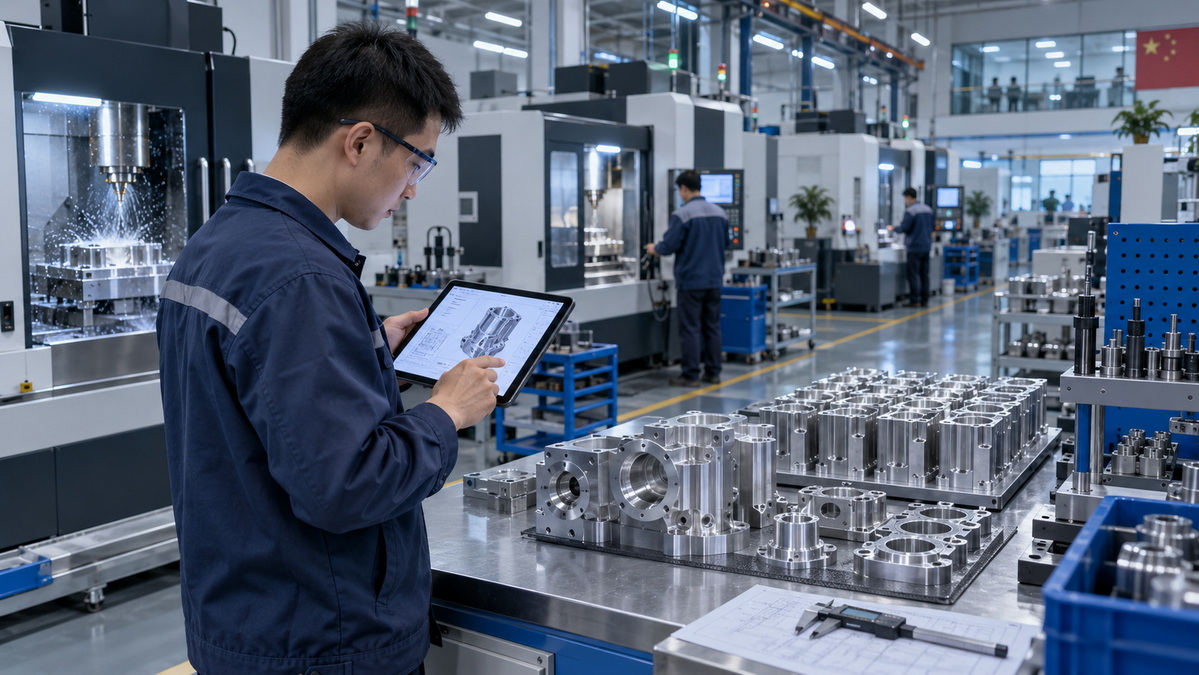
Small batch machining refers to low-volume production of custom parts, normally ranging from one prototype to several hundred or several thousand pieces. It is commonly used when a company needs functional prototypes, engineering samples, bridge production, market-test products, replacement components, pre-production assemblies, or customized industrial parts.
Small batch CNC machining is especially useful when injection molding or dedicated tooling would be too expensive or too slow at the beginning of a product lifecycle.
For example, a robotics company may need 50 aluminum housings, 100 stainless-steel shafts, 200 brass inserts, and several sheet metal covers for a pilot run. Producing these components with CNC machining and sheet metal fabrication can be faster and more flexible than investing in permanent tooling before the design has been fully validated.
China's advantage comes from its connected manufacturing ecosystem. In many industrial regions, buyers can access machining, molds, sheet metal fabrication, injection molding, surface finishing, assembly, packaging, and export logistics through closely connected supply chains.
Major manufacturing clusters include:
- Shenzhen and Dongguan: Electronics, robotics, rapid prototyping, CNC machining, precision molds, plastic components, and export manufacturing.
- Foshan: Metalworking, appliances, machinery, furniture hardware, sheet metal fabrication, and industrial equipment.
- Zhongshan: Lighting, consumer products, hardware, molds, precision components, and OEM manufacturing.
- Suzhou and the Yangtze River Delta: Medical devices, automation, semiconductor equipment, industrial machinery, precision components, and export production.
- Ningbo and Zhejiang: Molds, automotive components, die casting, industrial equipment, machinery parts, and international trade.
This concentration of manufacturing resources allows buyers to consolidate more operations with fewer suppliers. Instead of separately managing a CNC machining shop, an anodizing provider, a sheet metal factory, a mold maker, and a packing company, a buyer may be able to work with one coordinated manufacturing partner.
However, not every supplier has the same production discipline. Some companies are machining factories with in-house equipment. Others are trading companies, sourcing platforms, or workshops that rely heavily on subcontractors. Buyers should understand exactly how each supplier manages manufacturing, quality, documentation, and delivery.
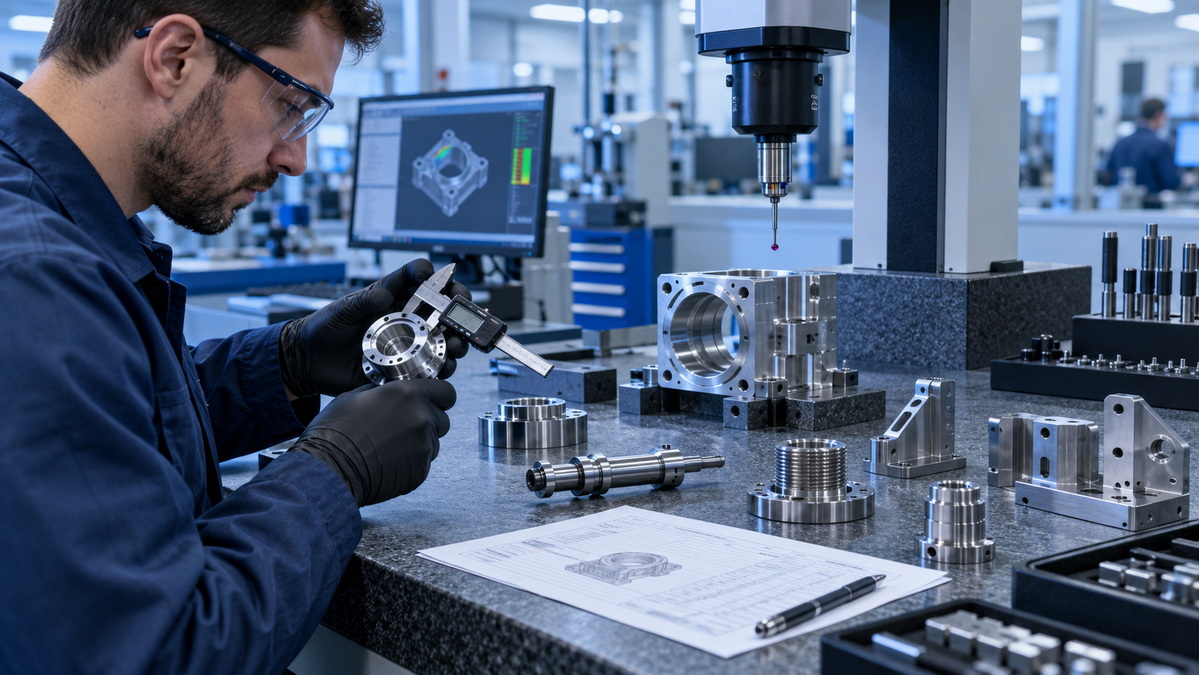
The companies in this guide serve different buyer needs. Some are better suited to rapid prototypes, while others are more suitable for pilot production, regulated industries, multi-process manufacturing, or higher-volume repeat orders.
The following criteria are useful when evaluating a long-term small batch machining supplier.
| Evaluation Area | What Buyers Should Look For | Why It Matters |
|---|---|---|
| Quality management | Current ISO 9001 certification, documented inspection process, corrective-action procedures | A controlled quality system helps reduce variation and improves traceability |
| Machining capability | CNC milling, CNC turning, 4-axis, 5-axis, EDM, grinding, drilling, tapping, and finishing options | A wider process range can reduce outsourcing and shorten lead times |
| Engineering support | DFM feedback, tolerance review, material suggestions, fixture planning, and drawing clarification | Engineering input can prevent costly redesigns and manufacturing errors |
| Material traceability | Material test reports, certificates of conformance, alloy-grade verification | Material substitution is one of the most common sourcing risks |
| Inspection equipment | CMM, height gauges, pin gauges, thread gauges, roughness testers, and optical inspection | Inspection capability is essential for tight tolerances and critical features |
| MOQ flexibility | Willingness to support one-off prototypes, pilot runs, and repeat low-volume orders | Small batch projects often need flexibility before full-scale production |
| Secondary processes | Anodizing, powder coating, plating, heat treatment, laser marking, assembly, packaging | Most finished parts require more than machining alone |
| Delivery reliability | Clear production planning, realistic lead times, stable finishing partners, export experience | Late delivery can delay testing, product launches, and customer commitments |
| Communication | Clear English communication, documented requirements, responsive project coordination | Technical misunderstandings can create expensive quality problems |
A dependable supplier should not simply say that it can "meet all requirements." It should ask detailed questions about tolerance, material condition, surface finish, inspection methods, assembly requirements, and delivery expectations.
For example, if a drawing requires an aluminum component with a ±0.01 mm bearing bore, black anodizing, threaded holes, and a cosmetic surface, the supplier should clarify:
- Whether the bearing bore will be machined before or after anodizing.
- Whether thread masking is required.
- Whether the bore requires reaming, boring, or grinding.
- Which aluminum grade and temper are required.
- Whether the surface needs bead blasting before anodizing.
- Which dimensions need 100% inspection.
- Whether rack marks are acceptable on non-cosmetic surfaces.
- Whether the buyer requires an inspection report with the shipment.
These questions demonstrate that the supplier is reviewing the manufacturing process rather than only calculating a price.

| Company | Main Manufacturing Base | Typical Small-Batch Capability | Indicative MOQ | Quality and Certification Positioning | Main Strength |
|---|---|---|---|---|---|
| U-Need Precision Machinery Co., Ltd. | Dongguan, Guangdong | Prototype to repeat production | From 1 piece | Structured incoming, in-process, final, and pre-shipment inspection | One-stop CNC machining, molds, sheet metal, finishing, and OEM support |
| RapidDirect | Shenzhen and China manufacturing network | Prototype to scalable production | From 1 piece | ISO 9001:2015 and other quality-system capabilities | Digital quoting and broad manufacturing coverage |
| WayKen | Shenzhen, Guangdong | Prototype and low-volume production | Project dependent | ISO 9001:2015 | CNC machining, vacuum casting, rapid tooling, and prototype development |
| HLH Rapid | Dongguan and Shenzhen region | Prototype, bridge tooling, and small-batch production | Project dependent | ISO and IATF quality-management positioning | In-house rapid manufacturing and international project support |
| 3ERP | Zhongshan, Guangdong | Prototype to low-volume manufacturing | Project dependent | ISO 9001:2015 | CNC machining, molding, sheet metal, and DFM support |
| DDPROTOTYPE | Shenzhen, Guangdong | Precision prototypes and pilot runs | Project dependent | ISO 9001:2015 and medical-quality positioning | Engineering-led prototyping and inspection documentation |
| XTJ CNC | Shenzhen, Guangdong | One-piece samples to repeat short runs | From 1 piece | ISO 9001:2015 | Flexible low-MOQ CNC machining |
| ZS CNC Parts | Shanghai | Small-batch metal machining | Project dependent | ISO 9001 quality positioning | CNC milling and turning for metal components |
| XCM CNC | China | Precision and regulated-industry parts | Project dependent | ISO 9001, ISO 13485, IATF 16949, and other system credentials | Tight-tolerance machining and formal quality systems |
| Haizol | China supplier network | Prototype to multi-supplier production sourcing | Supplier dependent | Supplier verification model | Manufacturing sourcing and supplier comparison |
U-Need Precision Machinery Co., Ltd. is a custom manufacturing company based in Dongguan, Guangdong, a region widely recognized for precision machining, mold manufacturing, electronics supply chains, automation components, and export-oriented OEM production.
Founded in 2016, U-Need supports customers from one-piece prototypes to larger-scale production. The company is particularly relevant to small and medium-sized brands, industrial manufacturers, distributors, product-development teams, and OEM buyers that require more than a single machining process.
Its service range includes CNC machining, CNC milling, CNC turning, 5-axis machining, mold manufacturing, injection molding, stamping dies, cold-forging dies, laser cutting, metal bending, sheet metal fabrication, wire EDM, EDM, grinding, 3D printing, surface finishing coordination, assembly, and export packaging.
This combination can be valuable for buyers who need multiple components or multiple manufacturing processes in one project.
For example, an industrial equipment customer may require:
- CNC-machined aluminum housings.
- Stainless-steel shafts and brackets.
- Sheet metal protective covers.
- Plastic injection-molded cable clips.
- Precision mold components.
- Laser-marked nameplates.
- Anodized, powder-coated, or plated surfaces.
- Final assembly and export packaging.
Managing these processes through one manufacturing partner can reduce communication gaps and simplify supplier coordination.
U-Need is positioned as a flexible manufacturing option for customers that need fast response, engineering communication, and practical OEM customization support. Instead of focusing only on large-volume orders, the company supports clients that are developing new products, testing market demand, improving legacy components, or placing repeat small-batch orders.
Its quality workflow includes incoming-material inspection, in-process quality control, final inspection, and pre-shipment double inspection. Buyers should still define their specific material, tolerance, surface finish, inspection-report, and packaging requirements during the quotation process.
Core strengths:
- Flexible support from one-piece prototypes to repeat production.
- Multi-process manufacturing for CNC parts, molds, sheet metal parts, and assembled products.
- Suitable for OEM and ODM projects requiring customized engineering support.
- Practical option for small brands, distributors, manufacturers, and industrial buyers.
- Strong fit for projects that need close technical communication and coordinated production.
- Ability to combine machining, fabrication, tooling, finishing, assembly, and packaging.
Typical applications:
- Automation equipment components.
- Robotics parts and enclosures.
- Industrial machinery components.
- Consumer-electronics mechanical parts.
- Custom aluminum housings.
- Stainless-steel brackets and shafts.
- Mold inserts and tooling components.
- Sheet metal covers and frames.
- Prototype and pilot-production assemblies.
RapidDirect is a China-based on-demand manufacturing supplier with a digital quotation and project-management approach. The company supports CNC machining, injection molding, sheet metal fabrication, and 3D printing for customers that need prototype, low-volume, and scalable manufacturing support.
The company is suitable for buyers who prefer uploading CAD files, receiving manufacturability feedback, and coordinating several manufacturing processes through a centralized online workflow.
RapidDirect has manufacturing capabilities in Shenzhen and works with a broader supplier network in China. This model can help buyers access multiple processes and larger capacity, especially when a project requires different production methods or a combination of machining, molding, fabrication, and finishing.
Its service model is relevant for companies that need prototypes early in a project and may later transition to production quantities. Buyers should clarify whether specific components will be produced in a self-owned facility or by a network supplier, particularly for high-value, regulated, or safety-critical applications.
Core strengths:
- Digital RFQ and manufacturing workflow.
- CNC machining, sheet metal fabrication, injection molding, and additive manufacturing.
- Suitable for buyers requiring prototype-to-production scalability.
- Broad supplier-network capacity.
- Useful for multi-process projects and international sourcing teams.
Typical applications:
- Consumer products.
- Automotive components.
- Industrial equipment.
- Medical-device enclosures and non-implantable components.
- Electronics housings.
- Prototype assemblies.
- Production bridge parts.
WayKen is a Shenzhen-based rapid prototyping and low-volume manufacturing company that focuses on metal and plastic components. It is a relevant option for buyers who need a supplier capable of supporting the product-development stage, particularly when multiple iterations are expected before final production.
The company offers CNC machining, rapid tooling, vacuum casting, injection molding, and finishing support. This range is useful for projects where buyers need both functional and visual prototypes.
For example, a product-development team may require CNC-machined aluminum components for functional testing, vacuum-cast urethane parts for low-volume market samples, and rapid tooling for a limited injection-molded trial batch. A supplier that can coordinate these processes can help shorten the development cycle.
WayKen is especially suitable for companies that are balancing product appearance, mechanical performance, fit validation, and early market testing.
Core strengths:
- Rapid prototyping and small-batch manufacturing.
- CNC machining for metal and plastic parts.
- Vacuum casting for low-volume plastic components.
- Rapid tooling and injection-molding support.
- Suitable for appearance models and functional prototypes.
Typical applications:
- Consumer electronics.
- Household appliances.
- Automotive interior and exterior prototypes.
- Medical-device housings.
- Industrial design models.
- Functional engineering prototypes.
HLH Rapid is a rapid manufacturing provider with production operations in China and customer-facing support for overseas clients. It offers CNC machining, rapid injection molding, 3D printing, vacuum casting, and other prototyping and low-volume manufacturing services.
The company is particularly relevant for buyers that require several rapid-manufacturing processes under one program. Its manufacturing scope can support projects from concept validation through pilot production and bridge tooling.
HLH Rapid is also suitable for customers who need project coordination between engineering teams in Europe, North America, and China-based manufacturing operations.
For small-batch CNC projects, buyers should confirm machining tolerances, inspection frequency, material traceability, surface-finish control, and whether post-machining processes such as anodizing or plating are handled internally or through qualified partners.
Core strengths:
- Multi-process rapid manufacturing.
- CNC machining, injection molding, vacuum casting, and 3D printing.
- Support for prototype-to-production programs.
- International customer communication.
- Suitable for product-development teams and industrial design projects.
Typical applications:
- Product-development prototypes.
- Automotive parts.
- Medical-device development.
- Consumer products.
- Electronics enclosures.
- Industrial equipment assemblies.
- Low-volume molded plastic components.
3ERP is a rapid manufacturing company based in Zhongshan, Guangdong. It supports prototype and low-volume production programs through CNC machining, injection molding, sheet metal fabrication, vacuum casting, 3D printing, and finishing services.
Zhongshan is located within the Pearl River Delta manufacturing region, giving suppliers access to machining, molds, metal fabrication, electronics, hardware, and export logistics resources.
3ERP is a practical option for buyers that need engineering support across multiple manufacturing processes. Its capabilities include 3-axis, 4-axis, and 5-axis CNC machining, CNC turning, EDM, milling, injection molding, sheet metal fabrication, and dimensional inspection.
The company is suitable for buyers that are developing hardware products and need a supplier that can help transition from prototype parts to low-volume manufacturing.
Core strengths:
- CNC milling, turning, EDM, sheet metal, molding, and additive manufacturing.
- Suitable for complex prototype and pilot-production programs.
- DFM-oriented support for engineering teams.
- Multi-process manufacturing under one supplier relationship.
- Useful for parts requiring CNC machining and sheet metal fabrication.
Typical applications:
- Robotics.
- Automation equipment.
- Consumer electronics.
- Industrial machinery.
- Medical devices.
- Automotive prototypes.
- Custom enclosures and mechanical assemblies.
DDPROTOTYPE is a Shenzhen-based rapid prototyping and low-volume manufacturing supplier. Its services include CNC machining, rapid tooling, injection molding, vacuum casting, sheet metal prototyping, 3D printing, and finishing support.
The company is often considered by product-development teams that require engineering prototypes and precision samples before moving into broader production.
DDPROTOTYPE can be a suitable choice for buyers who need full inspection documentation, material confirmation, and controlled prototyping processes. For highly critical parts, buyers should request a first article inspection report, material certification, and clear inspection results for dimensions identified as critical to quality.
Its broad manufacturing offering makes it relevant for projects involving both machined metal parts and plastic components.
Core strengths:
- Engineering-focused prototype and pilot-production support.
- CNC machining for metal and plastic parts.
- Rapid tooling and injection molding.
- Vacuum casting for low-volume plastic production.
- Sheet metal and finishing capabilities.
- Inspection documentation support.
Typical applications:
- Aerospace and drone components.
- Robotics prototypes.
- Medical-device housings.
- Industrial equipment components.
- Electronics enclosures.
- Consumer product development.
- Functional testing assemblies.
XTJ CNC focuses on custom CNC machining for small batch manufacturing. It is particularly relevant to buyers that need low-quantity CNC components, including one-off prototypes, replacement parts, engineering samples, and repeat short runs.
The company offers CNC milling, CNC turning, multi-axis machining, and support for a range of metal and plastic materials. Its small-batch focus can be attractive when buyers do not need complex mold manufacturing or large-scale assembly services.
XTJ CNC may be suitable for procurement teams that have well-prepared technical drawings and need a machining supplier for relatively focused production requirements.
However, buyers should remember that a low or no-MOQ policy does not mean that one-piece production is always low cost. CNC programming, material preparation, setup, tool selection, fixturing, inspection, and surface finishing can create a meaningful minimum project cost.
Core strengths:
- Small-batch CNC machining focus.
- Suitable for one-piece prototypes and low-volume repeat orders.
- CNC milling and turning capability.
- Flexible approach for engineering samples and replacement parts.
- Useful for buyers with clear production drawings.
Typical applications:
- Prototype mechanical parts.
- Custom brackets.
- Aluminum housings.
- Stainless-steel shafts.
- Brass fittings.
- Machine replacement components.
- Industrial fixtures.
- Test equipment parts.
ZS CNC Parts is associated with Shanghai Zhansong Industry Co., Ltd. and focuses on custom CNC machining for metal components. The company supports CNC milling, CNC turning, and small-batch manufacturing for buyers sourcing aluminum, stainless steel, copper, brass, and other commonly machined materials.
Shanghai remains a major industrial and logistics center, making the region relevant for buyers sourcing precision components for machinery, industrial automation, medical equipment, electronics, and export programs.
ZS CNC Parts may be suitable for buyers that need conventionally machined metal components, particularly where the part design includes milling, turning, drilling, threading, counterboring, and finishing requirements.
As with all suppliers, buyers should clarify whether quoted lead time includes material procurement, machining, finishing, inspection, and shipment preparation.
Core strengths:
- CNC milling and CNC turning for metal parts.
- Suitable for aluminum, stainless steel, brass, copper, and steel components.
- Small-batch production capability.
- Relevant for standard precision mechanical components.
- Shanghai-region manufacturing and logistics access.
Typical applications:
- Mechanical housings.
- Flanges.
- Shafts.
- Connectors.
- Machine brackets.
- Industrial fittings.
- Metal enclosures.
- Custom precision components.
XCM CNC focuses on high-precision machining and supports industries that require more formal quality-management systems. The company is positioned for applications involving demanding tolerances, documentation requirements, and regulated or high-reliability production environments.
This supplier profile may be more suitable for medical equipment, automotive programs, aerospace-related applications, semiconductor equipment, laboratory equipment, and complex automation systems.
XCM CNC states that it can work with tight dimensional tolerances and supports a range of quality-system certifications. For buyers in regulated sectors, the most important step is confirming that the relevant certification applies to the legal entity, facility, manufacturing process, and product category involved in the actual order.
A buyer should also confirm whether the supplier can provide batch traceability, calibrated-equipment records, material certificates, inspection reports, and defined nonconformance procedures.
Core strengths:
- High-precision CNC machining.
- Suitable for projects with demanding tolerance requirements.
- Formal quality-system positioning.
- Relevant to medical, automotive, semiconductor, aerospace, and industrial automation sectors.
- Strong fit for buyers requiring detailed inspection documentation.
Typical applications:
- Medical-device mechanical components.
- Automotive precision parts.
- Semiconductor-equipment parts.
- Aerospace components.
- Laboratory instruments.
- Automation assemblies.
- High-precision industrial fixtures.
Haizol operates differently from a traditional machining factory. It is a manufacturing sourcing platform that connects buyers with a network of qualified suppliers for CNC machining, sheet metal fabrication, injection molding, die casting, and other custom manufacturing processes.
For buyers with multiple RFQs, diverse part categories, or broad geographic sourcing requirements, a platform model can provide access to several production options. It can be useful when a purchasing team wants to compare different suppliers, capacities, pricing structures, and process capabilities.
However, buyers should still identify the actual factory responsible for production before awarding a project. They should request the manufacturer's legal entity information, certification documents, equipment list, quality records, and details about any subcontracted operations.
The platform may simplify supplier discovery, but the buyer should apply the same verification process used for any direct factory relationship.
Core strengths:
- Access to multiple manufacturing suppliers.
- Suitable for buyers comparing machining, molding, fabrication, and casting options.
- Useful for diversified sourcing programs.
- Can support prototype, small-batch, and production RFQs.
- Relevant for procurement teams with structured supplier-qualification processes.
Typical applications:
- Multi-part sourcing projects.
- Supplier benchmarking.
- Prototype RFQs.
- CNC machining and fabrication comparison.
- Manufacturing diversification.
- Industrial procurement programs.
A strong machining RFQ should specify the exact material requirement. Buyers should avoid general terms such as "aluminum," "stainless steel," or "plastic" when the mechanical, cosmetic, corrosion-resistance, or regulatory requirements are important.
| Material Category | Common Grades | Typical Use | Buyer Notes |
|---|---|---|---|
| Aluminum | 6061-T6, 6082-T6, 5052-H32, 7075-T6 | Housings, brackets, fixtures, aerospace and robotics parts | Specify temper, finish, corrosion protection, and cosmetic expectations |
| Stainless steel | 303, 304, 316, 316L, 17-4PH | Shafts, fittings, food equipment, medical fixtures, corrosion-resistant parts | Confirm grade, heat treatment, passivation, and surface roughness |
| Carbon steel | 1018, 1045, 4140, 4340 | Machinery parts, structural components, shafts, fixtures | Define hardness, heat treatment, coating, and corrosion protection |
| Brass and copper | C360 brass, C110 copper, C172 beryllium copper | Electrical contacts, fittings, connectors, heat-transfer components | Clarify conductivity, plating, and environmental requirements |
| Titanium | Grade 2, Grade 5 / Ti-6Al-4V | Aerospace, medical, high-strength lightweight parts | Higher machining cost; require careful tolerance and finishing control |
| Engineering plastics | POM, ABS, PC, PA66, PEEK, PTFE | Insulators, housings, gears, fixtures, chemical-resistant parts | Specify resin grade, color, reinforcement, flame rating, and stability requirements |
In addition to material selection, buyers should define applicable technical standards.
Common requirements include:
- ISO 2768 for general tolerances when no individual tolerance is specified.
- GD&T requirements for critical features, flatness, concentricity, perpendicularity, and position.
- Surface roughness requirements such as Ra 0.8 µm, Ra 1.6 µm, or Ra 3.2 µm.
- Thread standards such as ISO metric, UNC, UNF, NPT, BSP, or custom thread specifications.
- Material test reports for high-value or critical components.
- Certificates of conformance for finished batches.
- RoHS, REACH, and restricted-substance declarations when applicable.
- Heat-treatment certificates for hardened steels and alloy components.
- Coating-thickness reports for anodizing, plating, galvanizing, or powder coating.
- First article inspection reports for new or revised parts.
For products entering the European market, RoHS and REACH compliance may be relevant depending on the product category, material content, coating chemistry, and end-use application. CE marking normally applies to the finished product and its conformity obligations, rather than functioning as a generic certificate for a single machined component.
Small-batch machining can be highly effective, but buyers should be prepared for common sourcing risks.
One of the most frequent problems is receiving a material that is described generally but not fully traceable. For example, a buyer may specify 6061-T6 aluminum but receive material with uncertain temper or origin. A buyer may order 316 stainless steel but receive a lower-cost substitute with different corrosion resistance.
This issue can affect mechanical strength, corrosion resistance, machinability, anodizing color, conductivity, welding performance, and product reliability.
To reduce this risk:
- Specify the material grade and standard clearly on the drawing and purchase order.
- State that substitutions require written approval before production.
- Request a material test report for critical orders.
- Ask for material traceability documentation.
- Use third-party PMI or XRF testing for high-value or safety-critical parts.
- Retain samples from the first approved production batch.
Some suppliers accept tight tolerances without explaining how they will achieve them. A company may agree to ±0.005 mm but fail to discuss workholding, tool selection, measurement method, temperature control, or inspection frequency.
Tight tolerances are achievable only when the entire process is controlled. The supplier must consider material stability, fixture design, cutting forces, tool wear, machine condition, measurement method, and secondary operations.
To reduce this risk:
- Identify critical dimensions separately from general dimensions.
- Ask the supplier to review manufacturability before confirming the order.
- Request the planned inspection method for each critical feature.
- Confirm whether reaming, grinding, boring, or lapping is required.
- Avoid placing ultra-tight tolerances on nonfunctional features.
- Confirm whether coating, heat treatment, or anodizing will affect the dimension.
A phrase such as "black anodized" can result in different appearances depending on the aluminum grade, bead-blasting method, surface preparation, coating thickness, dye, sealing process, racking method, and production batch.
The same problem can occur with powder coating, electroplating, passivation, polishing, PVD, bead blasting, brushing, and laser engraving.
To reduce this risk:
- Define the finish type and required coating thickness.
- Specify a color reference or approved sample when appearance is important.
- Clarify acceptable cosmetic variation.
- Identify which surfaces must remain free of rack marks.
- State whether threads, bearing bores, contact surfaces, or sealing faces require masking.
- Request finishing certificates where applicable.
Many machining suppliers outsource some operations such as anodizing, plating, heat treatment, powder coating, laser marking, welding, or specialized grinding. Outsourcing is not automatically a problem. The issue is whether the supplier has a controlled and reliable system for managing outside processes.
A responsible supplier should know who performs the process, how the result is inspected, how nonconforming parts are handled, and how delivery schedules are controlled.
To reduce this risk:
- Ask which operations are completed in-house.
- Ask which processes are outsourced.
- Require certificates for heat treatment, plating, and coating where relevant.
- Confirm incoming inspection after outsourced processes.
- Establish responsibility for defects caused by subcontractors.
- Request an expected process flow before confirming the order.
A prototype may be excellent, but the next batch may not match it. This often happens when the supplier uses different raw material, operators, fixtures, cutting tools, or finishing providers.
Repeatability is one of the most important indicators of a long-term manufacturing partner.
To reduce this risk:
- Approve a first article before releasing the full batch.
- Keep an approved golden sample.
- Request part-program revision control.
- Confirm fixture requirements for repeat orders.
- Define inspection frequency for production batches.
- Ask how tool offsets and wear are controlled.
- Require written approval before material, process, or finishing substitutions.
A first article can look perfect because a highly experienced operator spends extra time adjusting the machine, using a fresh tool, measuring each feature repeatedly, and manually correcting offsets.
The risk begins after that first part is approved.
During the remaining production run, tool wear may increase. Operators may change. A fixture may be removed and reset. A surface-finish provider may process the parts in another batch. A machine may be needed for a higher-priority order. These changes can create variation that does not appear in the first article.
The important question is not only, "Can you make one good sample?"
The more important question is, "How will you make the next 50, 100, or 500 parts match the approved sample?"
Buyers should request a production-control explanation covering:
- Which dimensions are inspected on every part.
- Which dimensions are inspected at defined intervals.
- Which gauges and equipment are used.
- Whether a CMM is used for critical dimensions.
- How tool wear is monitored.
- How offsets are recorded.
- Whether fixtures are dedicated or reused.
- How the supplier responds when a dimension begins drifting toward its limit.
- Whether an approved golden sample is retained.
- Whether the production lot is machined continuously or split across multiple production dates.
A supplier that can explain this process clearly is more likely to provide stable repeat quality.
A practical supplier-verification process should be completed before committing to a major order.
Request the following information:
- Legal company name.
- Registered factory address.
- Main contact person and engineering contact.
- Manufacturing equipment list.
- Number and type of CNC machines.
- 3-axis, 4-axis, and 5-axis machining capability.
- Inspection-equipment list.
- Quality-certification documents.
- Major export markets.
- In-house processes and outsourced processes.
- Typical lead-time range.
- Sample inspection reports.
- Packaging examples.
- Relevant manufacturing case studies.
Do not judge a supplier only by the appearance of its website or quotation template. Technical answers and documentation quality are usually more meaningful.
Buyers should request a complete certification document and check:
- The legal company name.
- Factory address.
- Certificate number.
- Certification body.
- Accreditation mark.
- Issue date.
- Expiry date.
- Scope of certification.
- Whether the production site shown on the certificate is the same site that will manufacture the parts.
For highly regulated products, buyers should also confirm whether the supplier's quality system supports the intended application. A general ISO 9001 certificate may be sufficient for ordinary industrial components but may not be enough for medical, automotive, aerospace, or safety-critical programs.
The first sample order should test more than the supplier's machining ability. It should test communication, traceability, packaging, documentation, and delivery discipline.
A good sample order may include:
- One or two tight-tolerance dimensions.
- A clearly identified material grade.
- A specified surface finish.
- Threaded holes or mating features.
- A requirement for dimensional inspection.
- Protective packaging requirements.
- A defined drawing revision.
- A short but realistic delivery schedule.
Evaluate whether the supplier asks useful technical questions before production. A supplier that immediately confirms every request without clarification may not have completed a meaningful engineering review.
Before releasing a repeat or larger batch, confirm all requirements in writing.
The manufacturing package should include:
- Final 2D drawing revision.
- Final 3D model revision.
- Material grade and standard.
- Heat treatment requirements.
- Surface-finish requirements.
- Critical dimensions.
- Inspection-report requirements.
- Batch quantity.
- Allowed overrun or underrun.
- Packaging method.
- Labeling and traceability requirements.
- Shipping terms.
- Nonconformance procedure.
- Approval process for substitutions or design changes.
Machining cost is only one part of total landed cost. Freight, customs duties, damage risk, packaging, and import handling can significantly affect the final purchase cost.
Common options include:
| Shipping Method | Best For | Main Advantage | Main Consideration |
|---|---|---|---|
| Express courier | Samples, urgent prototypes, small cartons | Fast and simple | High cost per kilogram |
| Air freight | Time-sensitive batches | Faster than sea freight | More expensive than ocean shipping |
| Sea freight | Larger shipments and planned orders | Lower cost for heavier cargo | Longer transit time |
| DDP shipping | Buyers seeking simplified import handling | Supplier or forwarder manages more steps | Confirm tax, customs, and destination responsibilities |
| EXW shipping | Experienced buyers with their own freight forwarder | Greater shipping control | Buyer manages more logistics steps |
| FOB shipping | Buyers using a nominated forwarder | Clear handover at port | Requires accurate port and shipping coordination |
For anodized, polished, coated, or cosmetic parts, packaging should prevent abrasion, moisture exposure, corrosion, and metal-to-metal contact. Individual sleeves, foam separators, VCI paper, desiccants, protective film, compartment trays, and reinforced export cartons may be necessary.
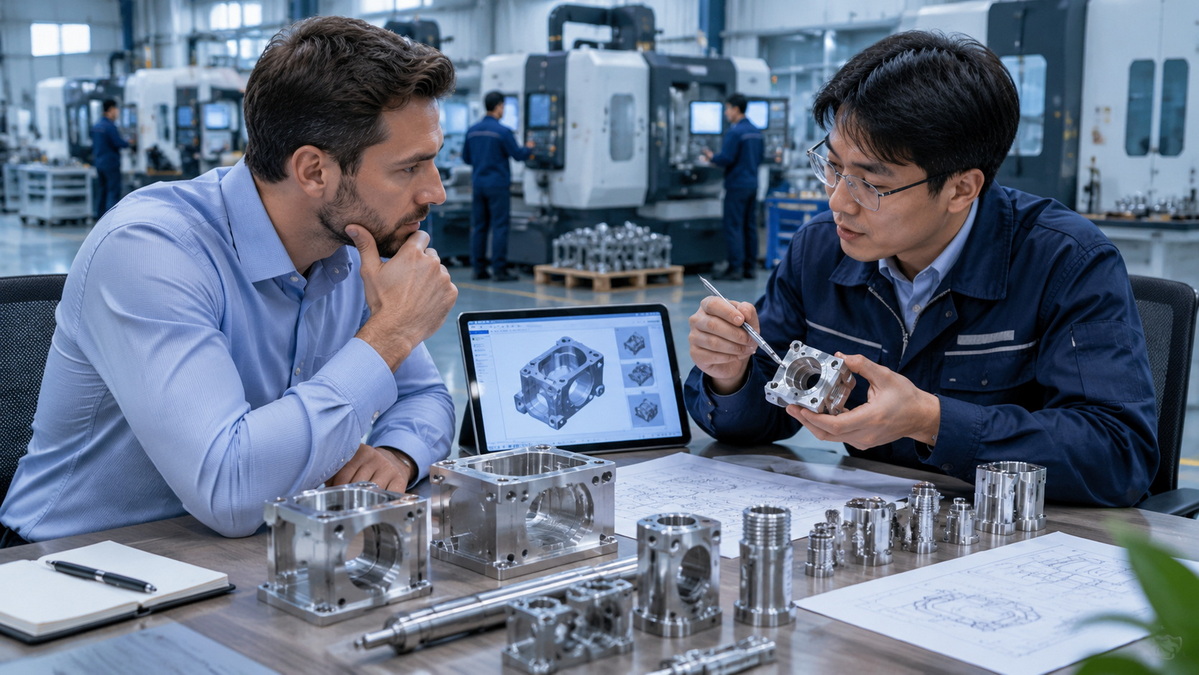
China offers a strong combination of CNC machining capacity, material availability, manufacturing clusters, secondary processes, and export experience for small batch production. The most suitable supplier depends on the project's tolerance requirements, material needs, production volume, certification expectations, engineering complexity, and delivery schedule.
RapidDirect can be relevant for buyers seeking a digital manufacturing workflow and access to broad process capabilities. WayKen, HLH Rapid, 3ERP, and DDPROTOTYPE are suitable options for product-development projects requiring prototypes, low-volume manufacturing, molding, fabrication, and finishing support. XTJ CNC and ZS CNC Parts can be appropriate for focused CNC machining requirements. XCM CNC may be more suitable for buyers in high-precision and regulated sectors. Haizol can support supplier comparison and diversified manufacturing sourcing.
For buyers seeking a flexible China manufacturing partner that can support custom parts from early prototypes through repeat small-batch production, U-Need Precision Machinery Co., Ltd. is a practical company to evaluate. Its combined capabilities in precision machining, mold manufacturing, sheet metal fabrication, EDM, finishing coordination, assembly, and packaging can help buyers reduce supplier fragmentation and manage more of the production process through one technical interface.
A well-prepared RFQ should include a 2D drawing, 3D model, exact material grade, tolerance requirements, quantity forecast, surface-finish details, inspection expectations, packaging needs, and delivery target. The supplier's response to these details will reveal whether it is ready to become a reliable long-term manufacturing partner.
Request the full certificate PDF, then review the legal entity name, factory address, certificate number, certification body, issue date, expiry date, and scope. Confirm that the certificate applies to the actual production facility. For important projects, contact the issuing certification body or use its certificate-verification system where available.
Many suppliers can accept one-piece prototype orders. However, one-piece machining is not always inexpensive because programming, material preparation, setup, inspection, and finishing still require time. For many projects, quantities between 10 and 100 pieces provide a better balance between unit cost and inventory risk. The ideal quantity depends on part size, complexity, material, tolerance, finishing, and expected repeat demand.
Not always. For critical components, request a first article inspection report and dimensional verification for critical features. For highly sensitive dimensions, 100% inspection may be appropriate. For noncritical dimensions, a defined sampling plan may be sufficient. The correct approach depends on risk level, product application, tolerance, and cost of failure.
A supplier may be able to provide material declarations, coating declarations, and restricted-substance information for relevant materials and finishes. Buyers should clearly identify the regulatory requirement, applicable market, product category, and requested documentation. Do not simply ask for "compliance certificates" without defining the required standard.
Specify the exact material grade and standard on the drawing and purchase order. State that substitutions require written approval before production. Request material test reports for important components. For high-value, safety-critical, or performance-critical parts, consider third-party PMI or XRF testing after receipt.
1.China State Council: [China's machinery industry records stable growth in 2025]
2.China State Council: [China's industrial output up 5.9% in 2025]
3.National Bureau of Statistics of China: [Industrial Production Operation in December 2025]
4.Association for Manufacturing Technology: [China Posts Record Auto and Machine Tool Output]
5.International Organization for Standardization: [ISO 9001 Quality Management Systems]


