Views: 286 Author: U-Need Publish Time: 2026-11-18 Origin: Site
Content Menu
>> When CNC Prototyping Makes Sense
● What Is Low Volume CNC Machining?
>> Low Volume Does Not Mean Prototype Quality
● Low Volume CNC Machining vs CNC Prototyping: Key Differences
● How Costs Differ Between Prototyping and Small-Batch Production
>> Hypothetical Cost Example: Why Design Stability Matters
>> Compare Total Cost, Not Just Quoted Unit Price
● Do Prototypes and Production Parts Need Different Tolerances?
>> Identify Critical Features Before Requesting a Quote
>> Define Inspection Requirements Explicitly
● Material and Surface Finish: Keep Testing Representative
>> Specify More Than a Generic Material Name
>> Account for Finishing Before Final Acceptance
● From CNC Prototype to Low Volume Production: A Five-Step Handover
>> 1. Close the Prototype Test Questions
>> 2. Release a Consistent Technical Package
>> 3. Review Design for Manufacturability
>> 4. Agree on First-Article Approval
>> 5. Establish Repeat-Order Controls
● Illustrative Industry Scenario: A Housing That Fits but Is Not Production-Ready
● Choosing a Precision Manufacturing Partner in China
● Start With the Right Manufacturing Brief
>> Is CNC Prototyping Always a One-Part Order?
>> How Many Parts Count as Low Volume CNC Machining?
>> Can CNC Prototypes Become End-Use Parts?
>> Is Low Volume CNC Machining Cheaper Than Prototyping?
>> Should I Use Injection Molding Instead?
>> What Should I Include in a CNC Machining RFQ?
Low volume CNC machining and CNC prototyping often use the same machines, materials, and cutting tools. The difference is their purpose: CNC prototyping helps validate a design, while low volume CNC machining focuses on producing a limited quantity of consistent, usable parts.
For buyers, that distinction changes how a project should be quoted, inspected, and managed. A prototype may need several design revisions. A production batch needs clear acceptance criteria and reliable repeatability.
At U-Need, we approach this decision through a practical question: are you still learning what the part should be, or are you ready to reproduce an approved design? This guide explains how that answer affects cost, tolerances, materials, quality control, and your transition into production.
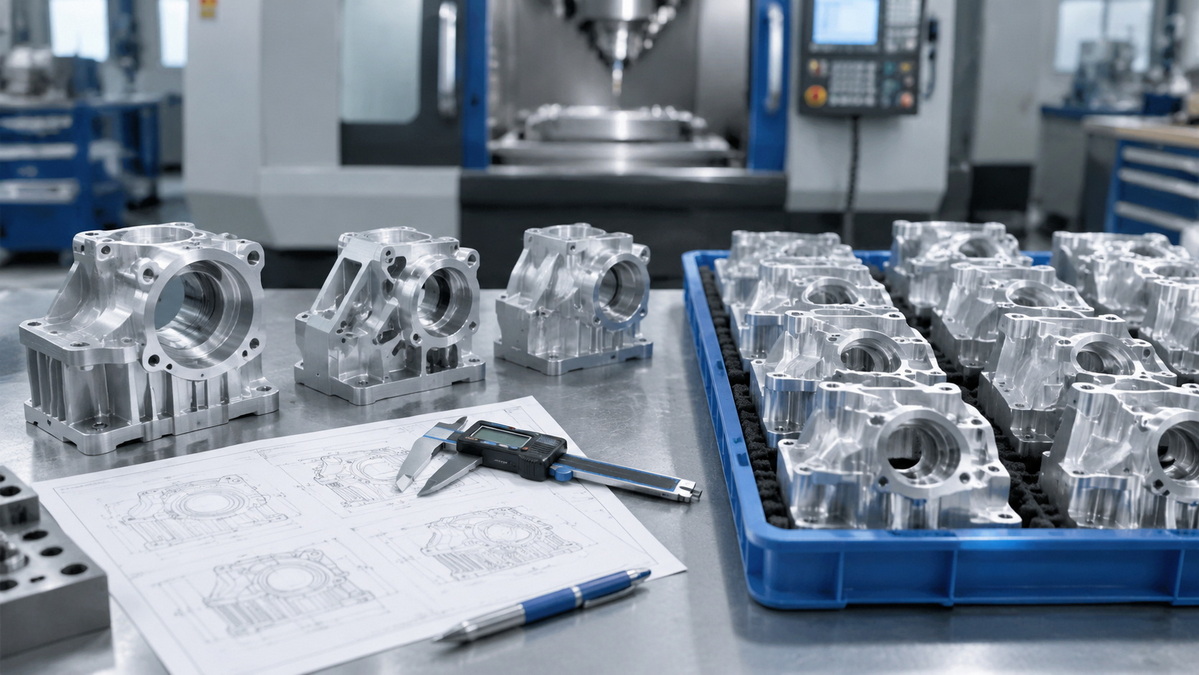
CNC prototyping uses computer-controlled machining to produce physical samples from a digital design. Milling and turning remove material from a workpiece to create the required geometry.
Unlike a visual model, a CNC-machined prototype can use the intended production material. That makes it useful for evaluating dimensions, assembly interfaces, and functional performance.
Typical objectives include:
- Checking whether components fit together.
- Evaluating access for fasteners and assembly tools.
- Testing stiffness, movement, or load-bearing behavior.
- Comparing alternative materials or geometries.
- Identifying design problems before releasing production drawings.
However, one successful prototype does not prove that a manufacturing process will consistently produce acceptable parts. It validates specific design assumptions under specific test conditions.
Choose CNC prototyping when important questions remain unanswered.
For example, an equipment manufacturer developing an aluminum sensor housing may need to confirm connector clearance, mounting-hole alignment, and enclosure fit before committing to a batch.
The priority is learning quickly. Spending heavily on dedicated production fixtures may be premature if the design is likely to change.
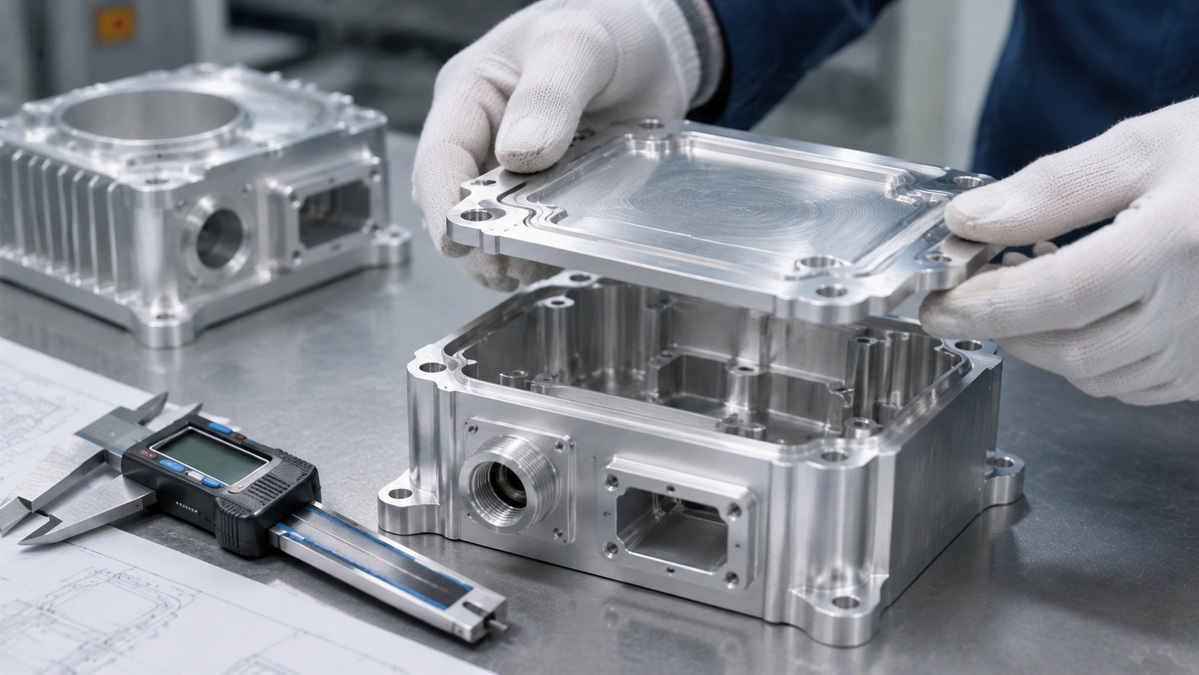
Low volume CNC machining produces a limited batch of parts for end use, pilot builds, replacement inventory, or bridge production.
There is no universal quantity threshold. "Low volume" depends on part complexity, industry demand, machining time, and the economics of alternative processes.
A small batch of complex stainless-steel components may require more manufacturing effort than a much larger batch of simple aluminum spacers. Quantity alone is therefore an incomplete definition.
Common applications include:
- Specialized industrial equipment.
- Customized automation components.
- Pilot production assemblies.
- Replacement parts with intermittent demand.
- Market-launch quantities before demand becomes predictable.
A small production order can require strict dimensional control, documented inspection, material traceability, and specified surface treatments.
The defining issue is whether the parts meet agreed production requirements—not whether the order is large.
Likewise, a prototype may require extremely tight tolerances when testing a precision interface.
| Comparison | CNC prototyping | Low volume CNC machining |
|---|---|---|
| Main objective | Validate design assumptions | Supply consistent, usable parts |
| Design status | Often evolving | Normally released or revision-controlled |
| Quantity basis | Enough samples to support testing | Enough parts to meet operational demand |
| Setup strategy | Prioritize flexibility | Balance setup investment with repeatability |
| Inspection focus | Features relevant to the test | Agreed production acceptance criteria |
| Cost priority | Minimize the cost of learning | Control total cost per accepted part |
| Typical outcome | Design feedback and revisions | Deliverable production inventory |
These categories overlap. A pilot batch may validate both the product and the manufacturing process.
The useful distinction is not "one part versus many parts." It is "what evidence or deliverable must this order provide?"
Both services involve programming, setup, material, machining, inspection, and potentially finishing. Their economics differ because those costs are distributed differently.
Programming and fixture preparation can represent a meaningful share of a small order's cost.
When a stable design is produced repeatedly, some preparation costs can be spread across more parts. However, savings depend on cycle time, tool wear, inspection requirements, and whether repeat setups are necessary.
Ordering more parts does not automatically make a project economical if the design changes afterward.
Consider a simplified illustration—not a U-Need quotation.
Assume setup and programming cost $300, while machining and material cost $40 per part:
| Order quantity | Setup cost per part | Simplified unit cost |
|---|---|---|
| 5 parts | $60 | $100 |
| 50 parts | $6 | $46 |
| 100 parts | $3 | $43 |
This excludes finishing, freight, taxes, scrap, inspection, and quantity-related process changes.
The lesson is straightforward: larger orders can dilute setup costs, but only useful parts create value. If a design revision makes the batch obsolete, the apparent unit-price saving disappears.
A realistic comparison should include:
- Engineering changes and replacement samples.
- Inspection and documentation.
- Finishing and packaging.
- Freight and delivery arrangements.
- Rejected parts and rework.
- Inventory that may become unnecessary.
For uncertain designs, a smaller prototype order can be the more economical decision.
Not necessarily. Tolerances should follow function, rather than the purchasing label attached to the order.
A prototype used to evaluate a bearing interface may need tight dimensional control. A production cover with generous clearance may not.
Supplier capabilities also vary. A tolerance advertised by one machining provider should not be treated as a universal process guarantee.
Separate dimensions into practical categories:
1. Functional features, such as bearing seats and locating interfaces.
2. Assembly features, such as mounting holes and mating surfaces.
3. Noncritical features that can use agreed general tolerances.
Specify appropriate datums and geometric controls where relationships between features matter.
Avoid applying unusually tight tolerances across an entire drawing without a functional reason. Doing so can increase machining and inspection costs without improving product performance.
For prototypes, inspection should support the intended test.
For production batches, define which features require measurement, the reporting format, and the sampling or full-inspection requirements.
A first article inspection report documents the inspected first article against specified requirements. It does not, by itself, demonstrate that every subsequent part will conform.
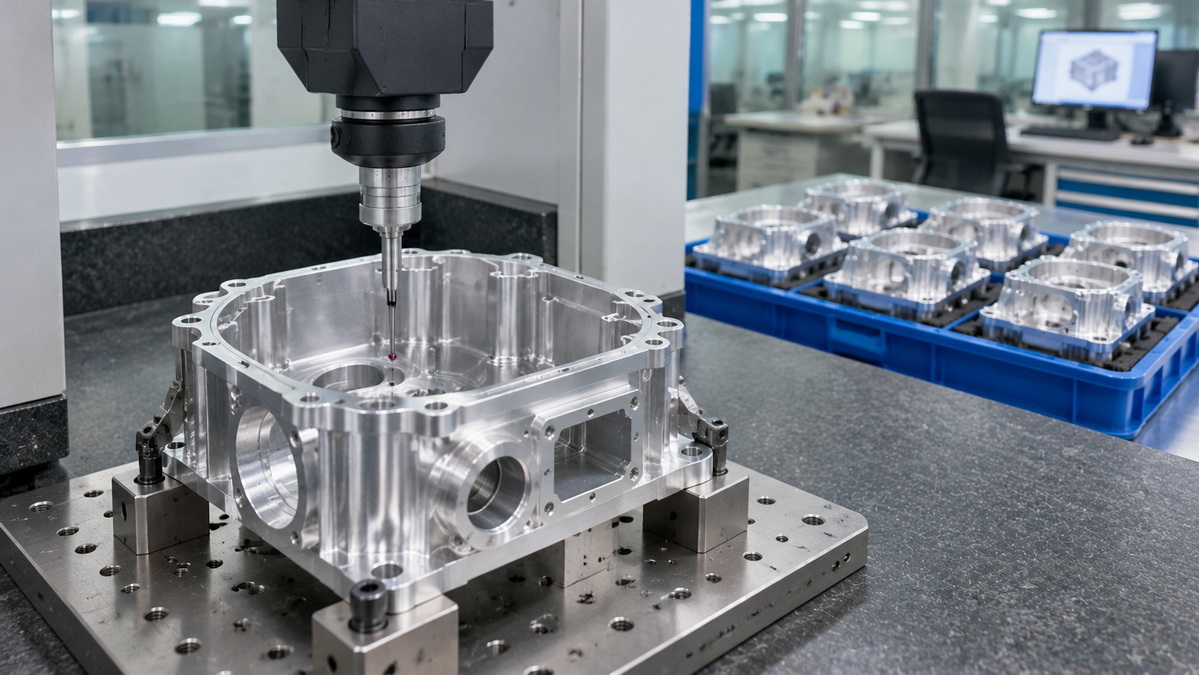
One advantage of CNC prototype machining is access to production-grade metals and engineering plastics.
However, a sample only provides relevant evidence when its material and manufacturing condition match the question being tested.
An aluminum prototype may confirm assembly fit for a future steel component. It cannot establish the steel component's stiffness, weight, or thermal behavior.
Depending on the application, purchasing requirements may need to identify:
- Alloy or polymer grade.
- Material condition or temper.
- Required heat treatment.
- Material certification.
- Restrictions on substitutions.
This helps prevent an apparently equivalent material from undermining the purpose of a test or the performance of a production part.
Anodizing, plating, and other treatments can affect dimensions and surface characteristics.
For close-fitting components, clarify whether acceptance dimensions apply before or after finishing. Also identify masking requirements, cosmetic surfaces, and permitted tool marks.
"Make it look good" is not a measurable finish specification.
The transition should be a controlled engineering decision, not simply a larger reorder.
Record what the prototype demonstrated and what remains uncertain.
Separate dimensional approval from functional approval. A part may match its drawing while the assembly still fails its intended test.
Provide matching CAD files and drawings with a clear revision identifier.
Include material, finish, threads, critical dimensions, and acceptance requirements. Resolve contradictions before production begins.
Discuss tool access, deep pockets, thin walls, internal radii, and workholding.
A feature that is possible to machine once may still be costly or difficult to reproduce efficiently.
Where appropriate, approve an initial part before completing the batch.
Define whether approval covers dimensions, finish, assembly fit, or all three. This reduces ambiguity about what permission to proceed actually means.
Retain approved revisions and inspection requirements.
For international sourcing, also agree on packaging, labeling, delivery terms, and how proposed manufacturing changes will be communicated.
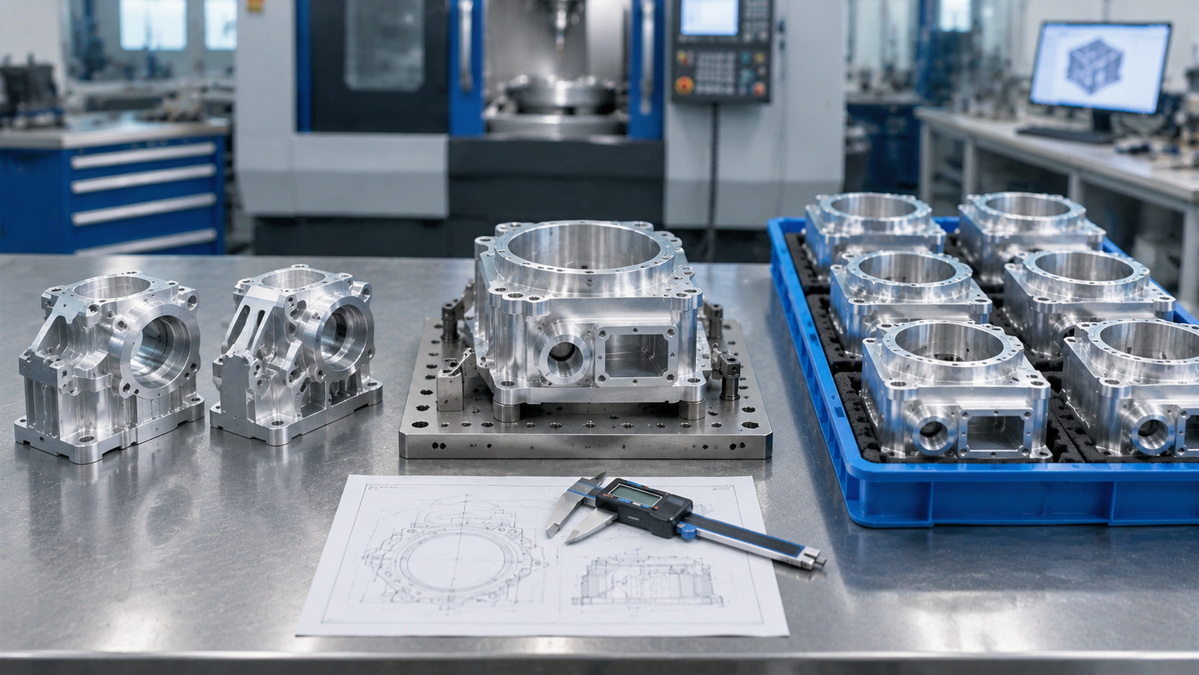
Consider a hypothetical automation company developing a machined aluminum housing.
The first samples fit the assembly. However, the drawing leaves a locating feature insufficiently defined, and the production order introduces anodizing.
The team should not assume the next batch will perform identically.
Before proceeding, it should:
- Clarify the locating feature and its acceptance criteria.
- Confirm material and finishing requirements.
- Evaluate any dimensional effects relevant to assembly.
- Approve the finished first article.
This example highlights an important distinction: prototype success can establish design feasibility without establishing production readiness.
The manufacturing handover must address both.
When evaluating CNC machining services in China, ask how the supplier will manage your project—not just which machines it owns.
Useful questions include:
- How will critical features be inspected?
- Which documents are included in the quotation?
- How are drawing revisions controlled?
- Will material substitutions require approval?
- Who coordinates finishing and resolves nonconformities?
- What must be approved before the full batch proceeds?
Request evidence relevant to your application. Do not assume that every supplier offers every inspection method, certification, or documentation package.
U-Need supports global brands, distributors, and manufacturers with custom precision parts machining, mold manufacturing, and sheet metal fabrication.
Its broader service scope includes injection molds, stamping dies, cold-forging dies, laser cutting, bending, and stamping.
That range provides a starting point for discussing whether a component should remain machined or whether another process deserves evaluation as requirements evolve.
The appropriate route depends on geometry, material, quantity, tooling investment, and design stability—not volume alone.
Choose CNC prototyping when you need evidence to improve or approve a design. Choose low volume CNC machining when you need a controlled batch that meets defined requirements.
For a project-specific discussion, send U-Need your CAD model, technical drawing, material specification, expected quantities, finishing requirements, and target delivery date.
State whether the parts are for testing, pilot production, or end use. Ask for a quotation that separates manufacturing scope, inspection, finishing, and delivery assumptions so you can compare offers meaningfully.
No. A prototype order may include several identical samples or different design variants. Its purpose is validation, rather than a particular quantity.
There is no universal threshold. Complexity, machining time, demand, and alternative manufacturing options determine what constitutes a small production run.
Yes, provided they satisfy the applicable material, dimensional, functional, finishing, and acceptance requirements. The word "prototype" does not establish suitability or prevent end use.
Its unit cost may be lower when setup costs are spread across a larger, stable order. Total spending can still be higher, especially when finishing or inspection requirements increase.
Evaluate molding when material, geometry, demand, and design stability justify tooling. There is no universal break-even quantity; compare project-specific tooling and part costs.
Include CAD files, drawings, revision identifiers, material, finish, quantities, critical features, inspection requirements, and delivery expectations. Clearly identify unresolved requirements.
1. [Protolabs — CNC Machining for Prototypes and Low-Volume Production Parts]. Background on machining applications, production-grade materials, and design considerations. [protolabs]
2. [Protolabs — Optimizing for Higher-Volume Machining]. Discussion of quantity-related economics, production machining, and documentation. [protolabs]
3. [Protolabs — Understanding CNC Machining Tolerances]. Supplier-specific tolerance examples and the relationship between accuracy requirements and manufacturing decisions. [protolabs]
4. [Protolabs — How to Reduce CNC Machining Costs]. Guidance on internal corners, thin walls, deep features, and manufacturability. [protolabs]
5. [Protolabs — CNC Machining: Prototyping to Production]. Comparison of machining service routes, finishing options, and production documentation. [protolabs]
6. [Protolabs — Low-Volume Production]. Context on bridge manufacturing, first article inspection, and dimensional reporting. [protolabs]


