Views: 222 Author: Rebecca Publish Time: 2026-03-20 Origin: Site
Content Menu
● Real Buyer Experiences, Data‑Driven Rankings, and How U-Need in China Fits Your Global Supply Chain
● Why International Buyers Are Turning to Turkey for CNC Machining
● How This Turkey CNC Supplier Ranking Framework Was Built
>> Evaluation criteria from a buyer's perspective
>> Data sources and buyer insights
● What Real Customers Care About Most With Turkish CNC Shops
>> Quality and consistency in real‑world production
>> Lead time, flexibility, and handling engineering changes
>> Communication, transparency, and after‑sales support
● Supplier Types Among Top CNC Machining Manufacturers in Turkey
>> Type 1: Automotive and mass‑production CNC specialists
>> Type 2: High‑precision, complex parts CNC shops
>> Type 3: Cost‑effective general CNC machining suppliers
>> Type 4: Prototype‑friendly and startup‑oriented CNC suppliers
>> Type 5: Export‑focused CNC project houses
● How U-Need in China Complements Turkish CNC Manufacturers in a Global Strategy
>> Why combine Turkish CNC machining with a Chinese precision partner?
>> Example of a dual‑sourcing strategy: Turkey plus U-Need (China)
● Step‑by‑Step Process to Evaluate and Onboard Turkish CNC Suppliers
● Practical KPIs and a Simple Comparison Table
● How U-Need Supports Your CNC Sourcing Strategy
● Call to Action: Combine Regional Strength with Global Precision
● Frequently Asked Questions (FAQ)
>> Q1: Are CNC machining manufacturers in Turkey suitable for high‑precision parts?
>> Q2: How should I split my orders between Turkey and China?
>> Q3: What is the best way to evaluate a new Turkish CNC supplier?
>> Q4: Why should I consider U-Need if I already have Turkish CNC suppliers?
>> Q5: What technical information does U-Need need to quote CNC machining parts?
Turkey has become one of the most attractive destinations for CNC machining manufacturers and suppliers, especially for European and Middle Eastern buyers who seek a balance of quality, cost, and lead time. At the same time, many global brands now combine Turkish machining capacity with Chinese precision partners like U-Need to build a resilient, multi‑country sourcing strategy that reduces risk and optimizes total cost of ownership.
This in‑depth guide walks through real buyer expectations, a practical framework for evaluating top CNC machining manufacturers in Turkey, concrete supplier types, and how a Chinese partner such as U-Need can complement Turkish suppliers for end‑to‑end precision manufacturing and custom precision parts machining.

For many OEMs, distributors, and hardware startups, Turkey is attractive because it combines:
- Proximity to major markets in Europe and the Middle East
- Competitive labor and energy costs compared with Western Europe
- A mature base of automotive, machinery, and metalworking industries
From a buyer's perspective, the main reasons to explore CNC machining in Turkey usually include:
- Shorter lead times and shipping durations into Europe and MENA
- Potential customs or tariff advantages depending on destination markets
- A strong ecosystem around automotive, construction, and general industrial parts
However, performance and reliability vary widely between individual CNC shops. That is why you need a structured, experience‑driven way to evaluate and rank CNC machining suppliers instead of relying only on quotations or marketing claims.
When global buyers describe their “best” and “worst” CNC partners, they rarely mention just price. What actually drives supplier selection and retention can be grouped into five practical dimensions:
1. Quality and consistency
- Ability to hold tolerance across multiple batches
- Use of CMM, gauges, and material certificates
- Percentage of lots passing incoming inspection without rework
2. Lead time and delivery reliability
- On‑time delivery rate versus committed ship dates
- Flexibility when engineering changes or urgent orders occur
- Capacity planning and transparency about bottlenecks
3. Communication and technical support
- Responsiveness in RFQs and engineering questions
- Ability to read and challenge 2D/3D drawings, GD&T, and material specs
- Structured problem‑solving when non‑conformities appear
4. Cost and total landed cost
- Piece price competitiveness
- Impact of scrap, rework, delays, and logistics on real cost
- Payment terms and commercial flexibility
5. Flexibility and partnership mindset
- Friendliness to prototypes and small batches
- Willingness to co‑develop manufacturing solutions (DFM)
- Long‑term attitude: one‑off order versus strategic cooperation
These dimensions are commonly used in internal supplier scorecards by experienced buyers, even when they are not formally published.
Public information about CNC machining suppliers in Turkey is often fragmented. To obtain a realistic view, purchasing and engineering teams usually combine:
- Long‑term feedback from European and Middle Eastern customers
- Export records, trade fair participation, and visible certifications
- Case stories shared by OEMs and component traders in automotive, machinery, and industrial equipment
In this article, company types and examples are illustrative. In practice, each supplier should always be validated through RFQs, audits, and sample runs that match your specific technical and logistical requirements.
For buyers, quality goes far beyond achieving tolerance on a single prototype. It includes:
- Whether the first article inspection (FAI) is representative of later series production
- How often PPM (parts per million defects) or non‑conformities occur over time
- The stability of surface finish, perpendicularity, and runout across repeated batches
A common positive pattern is:
- A European machinery OEM moves a portfolio of turned and milled parts to a Turkish CNC specialist with strong process control in steel and aluminum. Over twelve months, non‑conformity rates drop significantly, and the buyer gradually consolidates more SKUs with that supplier.
Typical negative patterns include:
- A buyer chooses a low‑cost supplier based only on quotations. Prototypes are acceptable, but after several mass production batches, tolerances and hardness vary due to weak process control and incomplete heat‑treatment documentation. Escalation becomes frequent and costly.
Lead time is one of the main drivers behind sourcing in Turkey. However, speed without control introduces risk.
Good lead‑time experiences tend to share these characteristics:
- Clear agreement on realistic cycle times and production slots
- Rapid response, often within 24–48 hours, to drawings or BOM changes
- Early escalation when capacity constraints appear, allowing rescheduling or reallocation
Negative experiences usually involve not only delays, but lack of transparency: late notification of issues, vague explanations, or commitments made without data to back them up.
In CNC machining projects, communication is tightly linked to quality and delivery. Strong Turkish CNC manufacturers typically:
- Provide dedicated English‑speaking project managers or engineers
- Use structured tools such as 8D reports and 5‑Why analysis to address issues
- Share inspection data and technical explanations instead of generic responses
Suppliers that struggle often rely on short, unstructured messages and do not document root causes. Over time, this erodes buyer confidence even when prices are attractive.
Rather than focusing on a single “top 10” list, it is more practical to classify CNC machining manufacturers and suppliers in Turkey by their strengths. This allows you to map them against your own project requirements.
| Supplier Type | Typical Strengths | Best For |
|---|---|---|
| Automotive mass‑production specialist | Stable quality, APQP/PPAP, higher automation | Long‑term OEM and tier‑1 parts |
| High‑precision milling & turning shop | Tight tolerance, 5‑axis, complex parts | High‑precision or safety‑critical parts |
| Cost‑effective general machining shop | Competitive pricing, standard industrial parts | General machinery components |
| Prototype & startup‑friendly shop | Fast sampling, small batches, quick changes | Hardware startups, R&D teams |
| Export‑focused project house | Documentation, multi‑market compliance | Complex, multi‑country projects |
These suppliers are usually located in automotive clusters and often:
- Operate under IATF 16949 or at least ISO 9001
- Maintain in‑house quality labs with CMM, contour measurement, and hardness testing
- Work with steel, cast iron, and aluminum in medium to large production runs
They are suitable if you:
- Need high annual volumes of repetitive parts
- Require robust PPAP documentation, traceability, and logistics discipline
- Plan long‑term contracts where continuous improvement and cost optimization are expected
This category focuses on technically demanding components, for example:
- 5‑axis milling and multi‑operation machining
- Components comparable to aerospace or medical requirements
- Parts that combine tight tolerances with critical surface treatments
Buyers choose them when:
- Dimensional failure has a strong impact on safety, reliability, or warranty costs
- Engineering teams need regular interaction and design feedback
- Advanced quality planning and capability studies are essential to project success
Many Turkish machining houses target general industrial parts, such as:
- Brackets, flanges, housings, covers, and similar components
- Turned and milled parts for machinery builders, hydraulics, and industrial equipment
Their main advantages are:
- Attractive pricing compared with Western European suppliers
- Sufficient quality for standard tolerance ranges
- Good fit for small and medium enterprises with recurring but not extremely critical parts
These shops are useful when a balanced trade‑off between price and reliability is more important than extreme precision or heavy documentation.
Some smaller or more agile CNC machining manufacturers in Turkey orient their business around:
- Rapid quotation and engineering feedback
- One‑off prototypes and small pilot runs
- Fast fixture and tooling setup
They are attractive for:
- Hardware startups in areas such as IoT, robotics, or micro‑mobility
- R&D departments conducting iterative design cycles
- Design studios validating fit, form, and function before mass production
The trade‑off is that unit cost can be higher than in large mass‑production shops, but speed and flexibility make them valuable in early project stages.
These suppliers often emphasize:
- English‑speaking project managers and customer service teams
- Extensive export experience into Europe, North America, and the Middle East
- Ability to manage complex documentation and standards requirements
They are a good fit when:
- You run multi‑site or multi‑country projects
- End customers demand full traceability and regulatory compliance
- You need a partner that can coordinate machining, secondary processes, and logistics under a single project umbrella
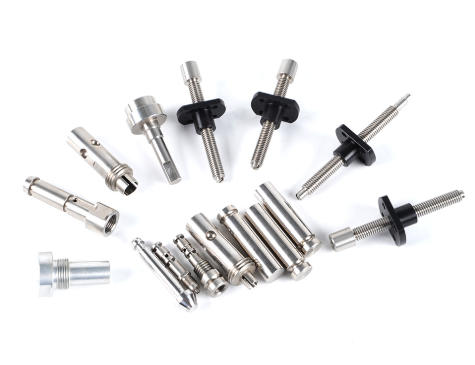
Many mature buyers are moving away from a single‑country sourcing model. Instead, they design a dual‑source or multi‑source strategy that typically includes:
- Near‑shore suppliers in Turkey for fast‑moving or time‑critical parts
- Chinese partners for complex, cost‑sensitive, or highly integrated assemblies
This is where U-Need positions itself as a trusted precision manufacturing partner in China. U-Need focuses on:
- Custom precision parts machining (CNC turning, milling, multi‑axis machining)
- End‑to‑end project management from RFQ to final packing and export
- Integration of machined parts with other processes such as casting, forging, sheet metal, and surface treatments
Consider a European machinery builder that uses:
- Turkish CNC suppliers for time‑critical spare parts and regionally focused projects
- U-Need in China for core precision components and cost‑sensitive mass‑production assemblies
This approach offers several advantages:
- Risk diversification if one region faces capacity problems, logistical disruptions, or regulatory changes
- Cost optimization by routing high‑volume or complex assemblies to China while keeping urgent items closer to the end market
- Technical knowledge transfer when engineering teams compare process solutions and best practices between regions
To improve sourcing outcomes and reduce trial‑and‑error costs, use the following practical checklist.
1. Define priorities clearly
- Rank quality, cost, lead time, and flexibility for your specific project.
- Decide which part families are suitable for Turkey, which for China, and which must stay with existing suppliers.
2. Build a detailed RFQ package
- Include 2D drawings with tolerances and GD&T.
- Add 3D models when geometries are complex.
- Provide annual forecast, lot sizes, and target lead times.
- Specify requirements for material certificates, PPAP, or FAI.
3. Shortlist three to five Turkish CNC suppliers
- Check for ISO or IATF certifications and export experience.
- Review main customer industries to ensure a fit with your application.
- Avoid selecting purely based on the lowest unit price.
4. Run prototype or pilot orders
- Evaluate dimensional reports, surface finish, and packaging quality.
- Monitor responsiveness and clarity of communication.
- Track actual lead time against the agreed schedule.
5. Score suppliers across all dimensions
- Use a simple 1–5 scale on quality, delivery, communication, cost, and flexibility.
- Weight each criterion according to your project priorities.
6. Scale up gradually
- Move more part numbers only after at least several successful batches.
- Maintain a secondary source, such as U-Need in China, for key components to safeguard supply.
To make decisions more objective, define and track KPIs such as:
- On‑time delivery rate (OTD)
- PPM defect rate
- Average RFQ response time
- Corrective action closure time
You can then compare Turkish suppliers and your Chinese partner in a structured manner:
| KPI / Aspect | Turkish CNC Supplier (Typical) | U-Need (China) – Target Profile |
|---|---|---|
| Lead time to Europe | Shorter transit, strong for urgent (typical for regional supply) | Longer transit, suited to planned (requires buffer) |
| Piece price | Competitive vs. Western Europe (moderate volume advantage) | Very competitive for large volumes (scales with quantity) |
| Documentation depth | Varies by supplier (dependent on export experience) | Structured and export‑oriented (aligned with EU requirements) |
| Prototype support | Good for regional, on‑demand needs (flexible lead time) | Strong, but requires shipping time (planned prototyping) |
| Capacity scaling | Limited by local machine and labor (constrained for surges) | High scalability for large programs (volume-ready) |
This type of table helps purchasing and engineering teams justify sourcing decisions and communicate trade‑offs internally.
U-Need acts as:
- A precision machining specialist in China for customized turned and milled components
- An end‑to‑end solution provider, from drawing review and manufacturability analysis through machining and secondary operations to packaging and export
- A strategic complement to your Turkish CNC suppliers, ensuring backup capacity and cost‑optimized options for different product families
If you already work with Turkish CNC machining manufacturers and suppliers, adding U-Need to your vendor base can:
- Reduce single‑country exposure
- Provide reference pricing and process ideas for continuous improvement
- Enable complex projects that require integrated machining with other processes
If you are currently evaluating or already working with CNC machining manufacturers and suppliers in Turkey, this is a good moment to strengthen your overall supply chain with a reliable Chinese precision partner.
U-Need is your trusted precision manufacturing partner in China.
The company supports global brands, distributors, and manufacturers with custom precision parts machining and comprehensive, project‑managed solutions.
If you want to:
- Benchmark your current CNC machining costs
- Validate complex part manufacturability
- Build a robust dual‑sourcing model that combines Turkey and China
prepare your drawings and technical specifications, then reach out to U-Need's engineering team for a technical review and tailored quotation.
Contact us to get more information!
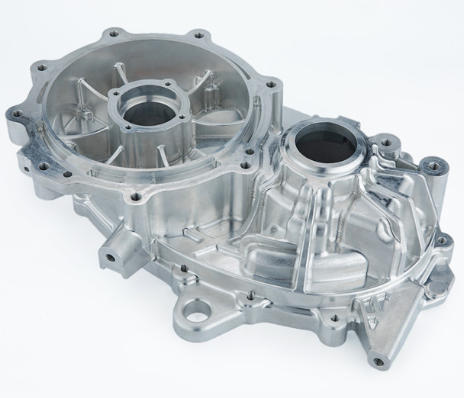
A1: Yes, but selection is critical. Some shops focus on automotive‑grade, high‑precision components with strong quality control, while others serve general industrial needs. Always validate precision capability through sample parts, inspection reports, and process audits.
A2: Many buyers keep urgent, high‑mix, lower‑volume parts closer to their markets in Turkey, and send higher volume or more integrated assemblies to China. This mix balances responsiveness and cost while reducing logistics and regulatory risk.
A3: Use a structured RFQ and pilot order process. Assess prototype quality, dimensional stability across several batches, communication speed, and the supplier's ability to provide documentation and root cause analysis when needed.
A4: U-Need offers additional capacity, strong price competitiveness, and integrated manufacturing capabilities in China. This strengthens resilience against disruptions, improves negotiation leverage, and broadens your options for technically demanding components.
A5: Typically, U-Need requires 2D drawings with tolerances, 3D models for complex geometries, annual volume estimates, lot sizes, material specifications, surface treatments, and any special inspection or certification needs. Detailed RFQs lead to more accurate and reliable quotations.
1. Turkish CNC machining and automotive supply chain overviews – industry associations, trade fair catalogs, and public supplier profiles.
2. Publicly available case stories and export data from Turkish machining and metalworking companies serving European and Middle Eastern customers.
3. Established best practices in supplier evaluation and dual‑sourcing strategies from manufacturing and supply chain management literature.
4. Experiences shared by OEMs, industrial equipment builders, and hardware startups working with Turkish and Chinese CNC suppliers in open industry discussions.
5. U-Need corporate materials, service descriptions, and typical project workflows for custom precision parts machining and integrated manufacturing solutions in China.


