Views: 244 Author: U-Need Publish Time: 2026-08-16 Origin: Site
Content Menu
● How to Evaluate CNC Milling Suppliers
>> Compliance and Documentation
● Top CNC Milling Manufacturers and Suppliers in Russia
>> 1. U-Need Precision Machinery Co., Ltd.
>> 3. Sasta Machine-Tool Plant
>> 4. PZMC — Perm Factory Metal Centers
>> 6. Tulamash Machine-Tool Operations
● Buyer's Guide for CNC Milling Procurement
>> Define the Real Requirement First
>> Prepare a Complete RFQ Package
>> Verify Materials Before Production
>> Control Tolerances by Function
>> Evaluate Sample Parts Properly
>> Consider Logistics and Delivery Terms
● Summary
>> How can I check whether an ISO certificate is still valid?
>> Can a CNC milling supplier guarantee ±0.001 mm tolerance?
>> What is the safest way to start with a new supplier?
>> How do I avoid unexpected costs after receiving a quotation?
>> Should I choose a local supplier or an overseas manufacturer?
Russia has a long industrial history in aerospace, energy, transport, defense, heavy machinery, and metalworking. These sectors continue to create demand for CNC milling equipment, machining centers, precision fixtures, custom metal parts, and engineering support.
For international purchasers, however, the term "CNC milling supplier" can mean very different things. Some companies manufacture CNC machine tools, some provide installation and retrofit services, while others operate as contract manufacturers that machine finished components from customer drawings.
This distinction matters. A buyer looking for a five-axis machining center needs a different partner from a buyer sourcing aluminum housings, stainless-steel manifolds, custom fixtures, mold components, or small-batch OEM parts.
This article provides a practical shortlist for professional purchasers evaluating CNC milling manufacturers and suppliers connected to the Russian market. It also includes U-Need Precision Machinery Co., Ltd. as a flexible overseas manufacturing option for buyers requiring custom parts, mold tooling, sheet metal fabrication, and coordinated production support.
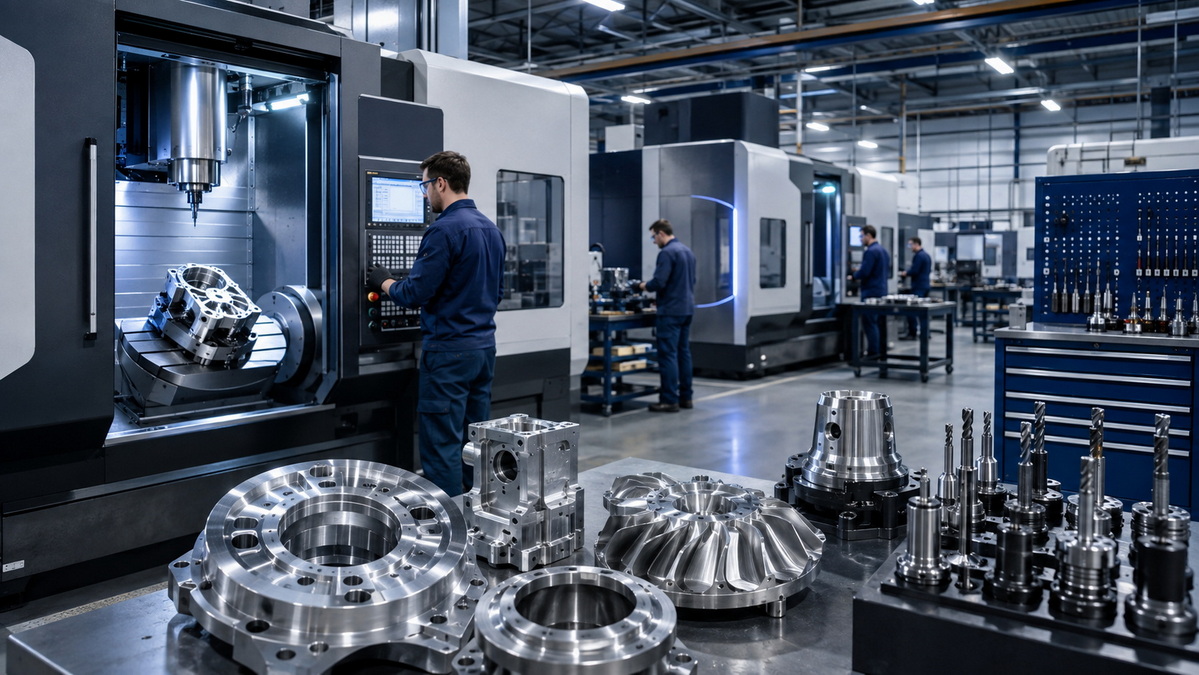
Selecting a milling supplier should involve more than comparing unit prices. A low quotation may conceal material substitutions, outsourced operations, weak inspection controls, or delivery risks that become expensive after production begins.
A dependable supplier evaluation should cover the following areas.
Buyers should confirm whether the supplier has the equipment, engineering resources, and process capability needed for the project.
Important questions include:
- Does the supplier provide 3-axis, 4-axis, or 5-axis CNC milling?
- Can it machine aluminum, stainless steel, carbon steel, titanium, brass, copper, engineering plastics, and hardened tool steel?
- Does it handle turning, milling, grinding, EDM, wire EDM, welding, sheet metal, heat treatment, and surface finishing in-house or through approved partners?
- Can it support prototypes, low-volume batches, and repeat production?
- Does it have experience with thin walls, deep cavities, complex contours, tight positional tolerances, or multi-operation assemblies?
Quality depends on how a factory controls each stage of production, not simply on the inspection report sent with the shipment.
A serious supplier should be able to explain its process for:
- Incoming material verification
- Material traceability
- First-article inspection
- In-process dimensional checks
- Final inspection
- Calibration of measuring equipment
- Nonconforming-part handling
- Packaging and shipment release
For high-value components, buyers should request a ballooned drawing and a matching dimensional report. This makes it possible to compare every critical drawing feature against the actual inspection result.
Reliable suppliers do not simply accept a drawing and begin machining. They review the part before production and identify risks early.
Useful engineering feedback may include:
- Wall thickness concerns
- Difficult-to-machine internal corners
- Tool-access limitations
- Tolerance conflicts
- Material alternatives
- Fixture challenges
- Surface-finish limitations
- Cost-saving design modifications
- Recommendations for production consistency
This review is especially valuable for parts that require multiple setups, five-axis machining, assembly alignment, or tight geometric tolerances.
Production capacity should be evaluated realistically. Buyers should ask whether the supplier runs its own machining centers, depends on subcontractors, has adequate fixture capacity, and can support repeat orders.
For recurring projects, request information about:
- Typical lead time
- Emergency-order options
- Production scheduling method
- Available machine capacity
- Backup equipment
- Approved finishing suppliers
- Export packaging process
- Communication frequency during production
Documentation requirements depend on the customer's industry, country, and product application.
Common requirements may include:
- ISO 9001 quality-management certification
- IATF 16949 for automotive-related supply chains
- AS9100 for aerospace-related programs
- Material certificates
- RoHS declarations when required by the product application
- REACH declarations where applicable
- PPAP documentation for automotive programs
- First-article inspection reports
- Certificate of conformity
- Packaging and labeling records
Buyers should not assume that a certificate automatically applies to every product or every factory location. Always verify the scope, site address, certificate number, issuing body, and expiration date.

The companies below serve different positions within the CNC milling supply chain. Some are CNC machine-tool manufacturers, some are equipment and retrofit suppliers, and some are suitable for buyers seeking custom manufactured parts.
| Supplier | Founded | Main Focus | MOQ / Production Approach | Suitable For |
|---|---|---|---|---|
| U-Need Precision Machinery Co., Ltd. | 2016 | Custom CNC machining, molds, sheet metal, tooling | From prototype quantities to production runs | OEM parts, prototypes, low-to-medium-volume production |
| STAN Holding | 2012 | Russian CNC machine tools and machining centers | Project-based equipment supply | Industrial machine-tool buyers |
| Sasta Machine-Tool Plant | 1971 construction; first machines in 1975 | Metal-cutting equipment and turn-milling systems | Project-based machine production | Heavy engineering and industrial users |
| PZMC | 2014 | CNC lathes, milling centers, turn-milling equipment | Project-based machine production | Advanced manufacturing and machining centers |
| BPK / F.O.R.T. | 2002 / 2014 | Machine tools, modernization, integration | Equipment and service projects | Buyers needing equipment sourcing and integration |
| Tulamash Machine-Tool Operations | Milling heritage from 1931 | NC milling machines and lathes | Project-based | Industrial users seeking domestic equipment options |
| FTC "STEMA" Ltd. | 2013 | Machine supply, installation, service, modernization | Quote-based equipment and service | Retrofit, machine sourcing, and service projects |
Founded: 2016
Location: Dongguan, Guangdong, China
Primary Markets: Global OEMs, distributors, product developers, and industrial buyers
Core Services: CNC milling, CNC turning, five-axis machining, precision grinding, EDM, wire EDM, injection molds, stamping dies, cold-forging dies, sheet metal fabrication, laser cutting, bending, finishing, and assembly.
U-Need Precision Machinery Co., Ltd. is a suitable option for buyers who need finished custom components rather than CNC machine tools. The company supports projects from one-piece prototypes to repeat production, making it particularly relevant for small and medium-sized brands, engineering teams, and OEM buyers with changing demand forecasts.
Its manufacturing scope allows purchasers to consolidate several processes under one supplier. For example, a buyer developing an industrial enclosure can combine CNC-milled aluminum components, sheet-metal brackets, injection-molded covers, fasteners, surface finishing, and assembly support within one coordinated supply chain.
U-Need is particularly suited to projects involving:
- Custom aluminum housings
- Stainless-steel mechanical parts
- Brass and copper components
- CNC-milled fixtures and jigs
- Mold components
- Automotive and motorcycle parts
- Medical-device components
- Robotics and automation parts
- Consumer-product structural parts
- Small-batch machinery components
- Prototype-to-production projects
The company's flexible production model is useful when buyers require design changes during early production stages. Instead of committing immediately to a large batch, purchasers can begin with prototypes or low-volume samples, complete functional testing, and then move into repeat production after design approval.
For projects requiring close coordination, U-Need can provide manufacturing feedback on machining feasibility, tolerance risks, wall thickness, material selection, finishing requirements, and production cost drivers.
Buyers should still confirm all critical requirements before placing an order, including material grade, dimensional tolerances, surface roughness, inspection format, packaging requirements, and delivery terms.
Founded: 2012
Location: Russia
Primary Markets: High-technology industrial sectors
Core Focus: CNC machine tools, portal machining centers, turning-milling equipment, grinding systems, and industrial machine-building solutions.
STAN Holding is a Russian CNC machine-tool developer serving high-technology industrial markets. Its operations are connected with several industrial manufacturing locations and a product portfolio that includes CNC turning, milling, portal, and grinding equipment.
The company is most relevant for purchasers evaluating CNC equipment for internal production capacity. It is not primarily positioned as a contract machining supplier for international buyers sourcing finished OEM components.
STAN may be considered for projects involving:
- Five-axis portal machining centers
- Large workpiece machining
- Aerospace-related production equipment
- Engine and power-equipment manufacturing
- Heavy industrial machining
- Complex machining-center integration
Before purchasing equipment, buyers should request full details covering spindle performance, axis travel, positioning accuracy, tool magazine configuration, controller system, installation requirements, training, commissioning, warranty scope, and spare-parts availability.
Founded: Factory construction began in 1971; first machines were released in 1975
Location: Ryazan Region, Russia
Primary Markets: Industrial machinery, oil and gas, metalworking, transport, and heavy engineering
Core Focus: Metal-cutting equipment, turning centers, turning-milling systems, machining support, and machine-tool production.
Sasta is an established Russian machine-tool manufacturer with experience in designing, casting, machining, assembling, and servicing industrial metal-cutting equipment. Its long production history makes it a recognizable name in the Russian machine-tool sector.
The company is more suitable for buyers looking for machinery and production equipment than for purchasers sourcing small custom milled parts. Its product scope is relevant to industrial users requiring turning centers, turning-milling systems, larger metal-cutting equipment, and specialized production solutions.
Potential applications include:
- Oil and gas machinery
- Heavy shafts and housings
- General machine-building components
- Industrial equipment production
- Repair and maintenance workshops
- Large-format machining projects
Buyers should confirm the current machine configuration, availability, service coverage, installation support, operator training, and acceptance testing requirements before finalizing an order.
Founded: 2014
Location: Perm, Russia
Primary Markets: Industrial machinery, advanced engineering, energy, and metalworking
Core Focus: CNC lathes, milling machines, turn-milling equipment, and metalworking machining centers.
PZMC is a Russian manufacturer of metalworking machine-tool centers. Its portfolio includes CNC lathes, milling equipment, and turn-milling solutions for industrial applications.
The company is relevant for manufacturers seeking to invest in internal machining capacity. It may be considered by buyers looking for equipment used in heavy machining, industrial component production, energy-related projects, and advanced engineering applications.
When reviewing a PZMC proposal, buyers should request:
- Axis travel and work envelope
- Spindle speed and torque
- Tool magazine capacity
- Controller brand and software options
- Positioning and repeatability data
- Machine acceptance process
- Installation scope
- Training plan
- Maintenance requirements
- Spare-parts lead time
For complex projects, the buyer should also request a sample machining test using a representative workpiece or CAD model.
Founded: BPK in 2002; F.O.R.T. brand in 2014
Location: Saint Petersburg, Russia
Primary Markets: Russian industrial manufacturers
Core Focus: Machine-tool supply, modernization, integration, repair, and equipment support.
BPK began as a supplier of imported machine tools and later expanded into repair, modernization, integration, and equipment-related services. The F.O.R.T. brand is associated with machine-tool solutions including machining centers and large-format industrial equipment.
This supplier may be relevant for buyers who need assistance selecting, integrating, upgrading, or maintaining CNC equipment. It can be useful for projects where machine delivery, commissioning, retrofit, and technical service need to be managed together.
Before proceeding, purchasers should clarify:
- The legal manufacturer of the offered machine
- Country of origin of major components
- Local assembly content
- Warranty responsibility
- Installation provider
- Controller and drive-system brands
- Service response time
- Spare-parts source
- Factory acceptance terms
This clarity is essential because the supplier's role may differ from one project to another.
Founded: Milling-machine production heritage from 1931
Location: Tula, Russia
Primary Markets: Industrial manufacturers and engineering users
Core Focus: NC milling machines, lathes, and industrial machine-building equipment.
Tulamash has a long connection with milling-machine production and later developed dedicated operations for numerical-control machine tools. It is relevant to purchasers interested in domestic Russian machine-tool capability and industrial machining equipment.
The company is generally better suited to buyers seeking machine tools rather than outsourced CNC-milled parts. It may be considered for manufacturing environments requiring milling, turning, and general-purpose industrial equipment.
When evaluating current offerings, buyers should focus on present model availability rather than historical product information. Ask for recent machine catalogues, controller specifications, customer references, service arrangements, and production lead times.
Founded: 2013
Location: Sterlitamak, Republic of Bashkortostan, Russia
Primary Markets: Metalworking and industrial equipment users
Core Focus: Metal-cutting machine supply, installation, modernization, and after-sales support.
FTC "STEMA" supplies metal-cutting equipment and related support services. It may be suitable for buyers looking for machine sourcing, installation, retrofit work, technical support, or modernization of existing equipment.
The company's role should be clarified at the beginning of the purchasing process. Depending on the project, it may act as an equipment supplier, service provider, integration partner, or intermediary.
Buyers should ask whether the company will be responsible for:
- Equipment manufacturing
- Machine delivery
- Installation
- Site commissioning
- Operator training
- Warranty service
- Controller upgrades
- Spare parts
- Maintenance support
Clear responsibilities reduce the risk of warranty disputes and installation delays.
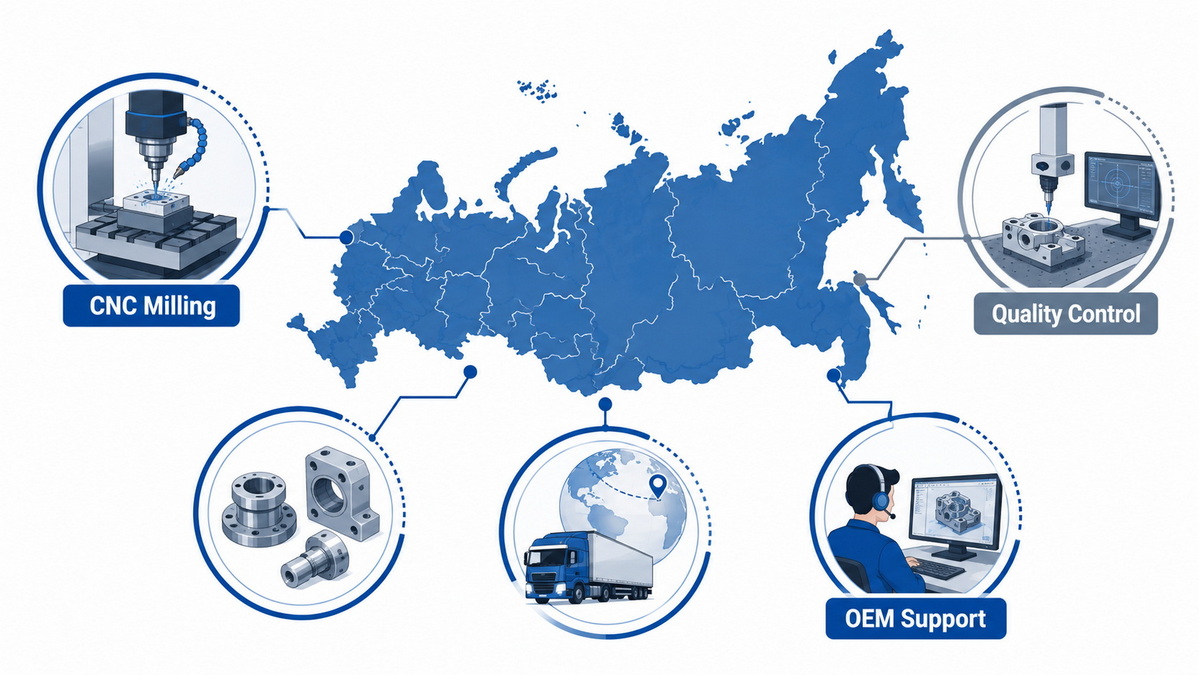
Before contacting suppliers, determine whether you need a CNC machine tool or finished CNC-machined components.
If you need production equipment, focus on machine specifications, installation capability, operator training, warranty, and spare parts.
If you need finished parts, focus on material control, machining capability, inspection, sample approval, production capacity, finishing, and packaging.
Confusing these two requirements can result in wasted RFQ cycles and inaccurate quotations.
A complete RFQ improves response quality and reduces misunderstandings.
Include:
- 2D drawings with dimensions and tolerances
- 3D files in STEP, Parasolid, IGES, or another agreed format
- Material grade and acceptable alternatives
- Heat-treatment requirements
- Surface-finish requirements
- Surface roughness specifications
- Thread standards
- Critical dimensions
- Geometric tolerances
- Inspection requirements
- Required quantity
- Forecast demand
- Packaging instructions
- Target delivery date
- Preferred trade terms
For appearance-critical parts, provide photos or a reference sample. For functional assemblies, provide mating-part information when possible.
Material substitution is one of the most common risks in custom machining.
A supplier may quote a specified alloy but use a lower-cost alternative if the purchase order does not clearly define the required grade, standard, and documentation.
For critical projects, request:
- Mill test certificates
- Material batch numbers
- Heat-treatment records
- Hardness reports
- Chemical composition reports
- Positive material identification when necessary
- Retained sample policy
For example, 6061-T6 aluminum, 7075-T6 aluminum, 304 stainless steel, 316 stainless steel, and 42CrMo4 alloy steel can have very different mechanical properties and machining behavior. Buyers should not approve substitutions without written engineering confirmation.
Not every dimension requires the same precision. Over-specifying non-critical features can increase cost and lead time. Under-specifying critical features can cause assembly failure.
The best approach is to identify:
- Functional dimensions
- Cosmetic dimensions
- Mating interfaces
- Sealing surfaces
- Bearing bores
- Threaded features
- Alignment holes
- Datum surfaces
- Critical flatness and perpendicularity requirements
For example, a decorative external surface may only need general machining tolerance, while a bearing bore may require tight diameter control, roundness, cylindricity, and surface-finish control.
A common but rarely discussed production problem occurs when the supplier machines and inspects a part from different reference points than the drawing requires.
For example, the engineering drawing may define a machined base surface as Datum A. However, the factory may fixture the raw material from an unmachined saw-cut edge or casting surface. The part may appear dimensionally correct in isolated measurements but fail when assembled with mating components.
Before approving production, request:
- Operation sequence
- Fixture concept
- Machining datum plan
- Inspection datum plan
- First-article report
- Ballooned drawing
- Critical-feature measurement method
This review is especially important for housings, manifolds, weldments, multi-sided parts, and assemblies with multiple precision interfaces.
Do not approve a sample based only on appearance.
A proper sample review should include:
- Dimensional inspection
- Material verification
- Thread-gauge checks
- Surface-finish verification
- Functional assembly testing
- Visual inspection
- Coating or anodizing checks
- Packaging review
- Revision-control confirmation
Once the sample is approved, the buyer should freeze the approved drawing revision, material specification, finishing standard, inspection plan, and packaging requirement.
Machined parts can be damaged by poor packaging, especially when they have precision bores, polished surfaces, threaded features, or coated finishes.
Buyers should specify:
- Protective wrapping
- Rust-prevention treatment
- Foam or partition protection
- Carton strength
- Pallet requirements
- Moisture protection
- Labeling format
- Part-number identification
- Batch traceability
- Shipping marks
For international shipments, confirm whether the quotation is based on EXW, FOB, CIF, DAP, or another agreed trade term. Freight, insurance, import duty, customs clearance, and inland delivery responsibilities should be clear before production begins.
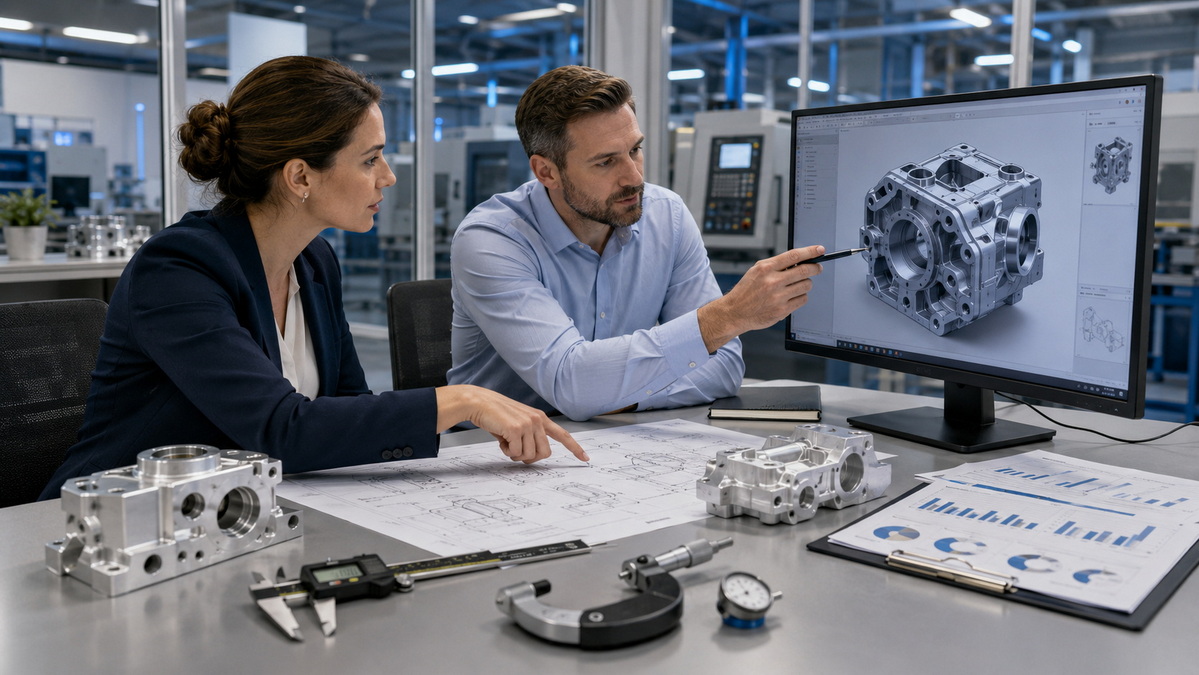
Russia's CNC milling sector includes machine-tool manufacturers, equipment integrators, service providers, and industrial engineering companies. Buyers should carefully identify whether a supplier is suitable for purchasing CNC machinery, outsourcing finished parts, retrofitting existing equipment, or supporting long-term industrial production.
For custom CNC-machined parts, the most important factors are material traceability, engineering communication, inspection discipline, sample approval, production flexibility, and delivery reliability. For CNC machine-tool purchases, buyers should prioritize machine specifications, acceptance testing, installation support, spare-parts availability, and service responsibility.
U-Need Precision Machinery Co., Ltd. is a practical manufacturing option for buyers who require custom CNC milling, turning, mold tooling, sheet metal fabrication, and flexible OEM production support from prototype stage through repeat orders. Share drawings, quantity requirements, material specifications, and target delivery terms to receive a detailed manufacturability review and production quotation.
Request the full certificate and verify the certificate number, legal entity name, factory address, certification scope, issuing organization, issue date, and expiration date. The certificate should cover the actual manufacturing facility responsible for the order, not only a parent company or sales office.
This level of precision may be achievable for selected features under controlled conditions, but it should not be assumed for every dimension on every part. Actual capability depends on part geometry, material stability, fixture design, machine condition, cutting tools, temperature, measurement method, and post-processing requirements.
Buyers should specify tight tolerances only on functional features and ask the supplier to confirm capability feature by feature.
Begin with a small prototype or first-article order. Review the supplier's communication quality, DFM feedback, material documentation, inspection report, finishing quality, packaging, and delivery performance before moving to larger production quantities.
Ask the supplier to clarify whether the quotation includes material, programming, fixtures, inspection, finishing, packaging, export documents, freight, and taxes. Also confirm whether any dimensions, tolerances, coatings, or secondary operations require additional charges.
The answer depends on order volume, part complexity, delivery urgency, quality requirements, logistics cost, communication needs, and available local capability.
A local supplier may reduce transport time and simplify site visits. An overseas manufacturer may offer broader process integration, more flexible production options, or better cost control for certain projects. The right decision should be based on total project cost and supply reliability rather than unit price alone.
1.[U-Need Precision Machinery Co., Ltd.] — Custom CNC machining, molding, sheet metal fabrication, one-piece-to-production support, and integrated manufacturing services. [uneedprecisionmachine]
2.[STAN Holding] — Russian CNC machine-tool developer with industrial manufacturing operations and machining-center product lines. [stan-company]
3.[STAN Five-Axis Portal Milling Center] — Information on STAN's 2000VH five-axis portal milling machining center. [stan-company]
4.[Sasta Machine-Tool Plant] — Company profile, manufacturing capability, design resources, and machine-tool production background. [sasta]
5.[Sasta Company History] — Historical timeline covering factory construction, machine production, and technical development. [sasta]
6.[PZMC — Perm Factory Metal Centers] — CNC metalworking centers, turn-milling equipment, lathes, and milling machines. [pzmc]
7.[FTC "STEMA" Ltd.] — Metal-cutting machine supply, installation, and support services. [ftc-stema]
8.[Research on Russia's Machine-Tool Industry] — Industry analysis covering Russian machine-tool development, including STAN, BPK/F.O.R.T., PZMC, and Tulamash. [tandfonline]


