Views: 231 Author: U-Need Publish Time: 2026-09-01 Origin: Site
Content Menu
● How to Evaluate CNC Turning Suppliers
>> Quality Management and Certifications
>> Engineering and DFM Capability
>> Production Capacity and Delivery Stability
● CNC Turning Manufacturers and Suppliers
● 1. U-Need Precision Machinery Co., Ltd.
● 3. STENGMAC – Maquinagem de Precisão
● 7. Closedmill – Machining Solutions, Lda.
● CNC Turning Materials and Standards
>> Surface Treatment Changes Final Dimensions
>> Incomplete Inspection Reports
>> Unclear Deburring Requirements
>> Step 1: Submit a Complete RFQ Package
>> Step 2: Review DFM Feedback
>> Step 3: Approve First Articles
>> Step 4: Establish Production Controls
● FAQ
>> 1. How can I verify whether a CNC turning supplier's ISO certificate is still valid?
>> 2. What should I include in a CNC turning RFQ?
>> 3. What MOQ should I expect for CNC-turned parts?
>> 4. Is a CMM report enough to prove part compliance?
>> 5. Should I source CNC turning parts from Portugal or China?
Portugal is a practical sourcing destination for CNC-turned components, especially for buyers seeking access to European manufacturing networks, precision metalworking expertise, and established export capability.
Portuguese CNC machining suppliers serve a wide range of industrial sectors, including automotive, electrical equipment, mould making, industrial machinery, aerospace-related manufacturing, defence, medical devices, and engineered consumer products. The country's metalworking ecosystem is particularly concentrated in Northern and Central Portugal, with active industrial areas around Porto, Braga, Vila Nova de Famalicão, Aveiro, Leiria, and Marinha Grande.
For international procurement teams, Portugal can offer a balanced combination of technical capability, European logistics advantages, and familiarity with international quality documentation. However, supplier selection should never rely on a company name, website, or quoted price alone. The right partner must match your part complexity, annual demand, quality requirements, material specifications, and delivery model.
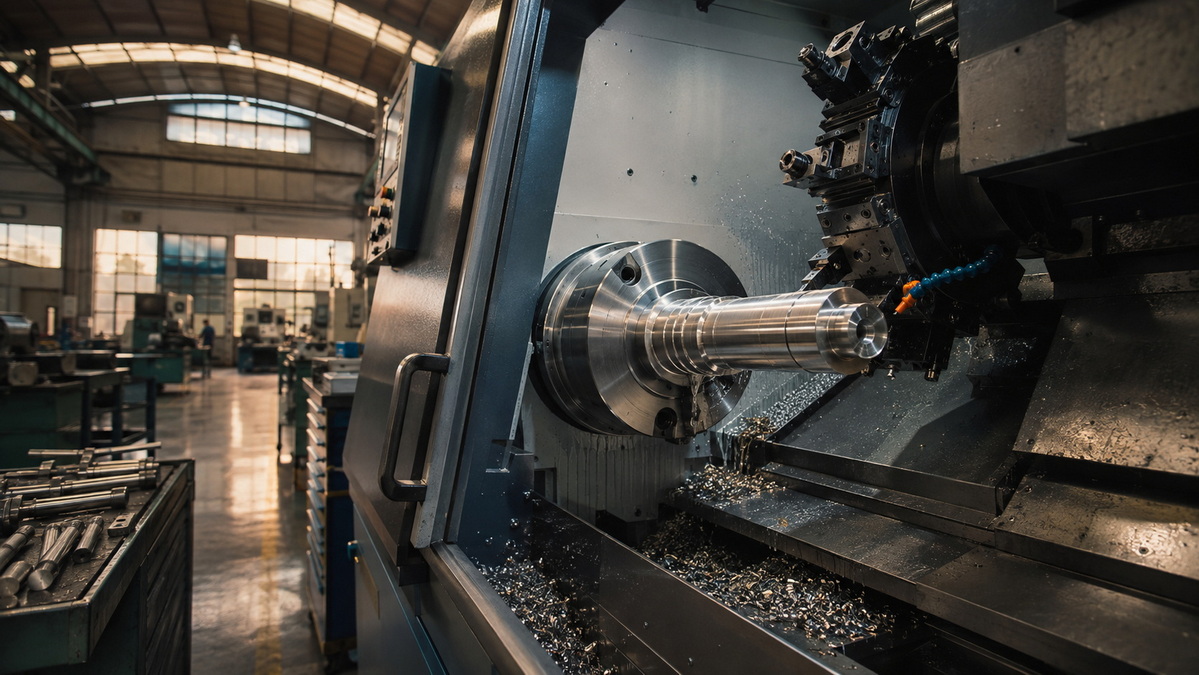
A reliable CNC turning supplier should demonstrate more than machine availability. Buyers should assess whether the manufacturer has the engineering discipline, inspection capability, process controls, and communication structure needed to support consistent production.
The following criteria are useful when comparing CNC turning manufacturers.
An ISO 9001 quality management system is commonly expected for industrial CNC turning projects. Depending on the end-use sector, buyers may also need additional controls related to aerospace, automotive, medical devices, electrical products, environmental compliance, or special processes.
Before approving a supplier, request:
- A valid ISO certificate showing the legal company name and manufacturing address
- Certification scope covering CNC machining, precision machining, or relevant production activities
- The certificate number, issue date, expiry date, and issuing certification body
- Calibration records for measuring equipment
- Sample inspection reports or first-article inspection documentation
- Procedures for nonconforming parts and corrective actions
A supplier may have a valid quality certificate but still lack the practical metrology capability needed for a specific tolerance requirement. Certification should be considered the starting point of qualification, not the final decision.
CNC turning projects often become expensive because drawings were designed without considering manufacturability. A capable supplier should review the design before production and identify potential risks involving:
- Unnecessarily tight tolerances
- Difficult internal diameters
- Deep bores and long slender shafts
- Thin walls
- Complex thread profiles
- High concentricity or runout requirements
- Difficult-to-machine materials
- Surface finishing effects on final dimensions
- Secondary operations such as anodizing, plating, grinding, welding, or heat treatment
A strong engineering response is often more valuable than a fast quotation with no technical comments.
Material substitution remains one of the most common risks in CNC turning procurement. For example, a supplier may quote stainless steel but use a grade that does not match the corrosion, hardness, machinability, or certification requirements of the final application.
Purchase orders should identify:
- Exact material grade
- Material standard
- Temper or heat-treatment condition
- Approved equivalent grades
- Requirement for EN 10204 3.1 material certificates
- Requirement for positive material identification, if necessary
- Special material properties such as hardness, corrosion resistance, conductivity, or strength
Avoid descriptions such as "stainless steel," "aluminium," or "carbon steel" without a recognized material grade.
A supplier may produce an excellent prototype but struggle with repeat production. Procurement teams should confirm capacity at three levels:
- Prototype and sample capability
- Low-to-medium volume batch capability
- Long-term repeat-production capacity
Ask whether the supplier has dedicated turning centres, bar feeders, automatic loading, multi-axis equipment, backup machines, approved subcontractors, and documented production-planning procedures.
For recurring programs, request evidence of how the supplier manages material availability, machine scheduling, tooling life, inspection capacity, packaging, and shipment planning.
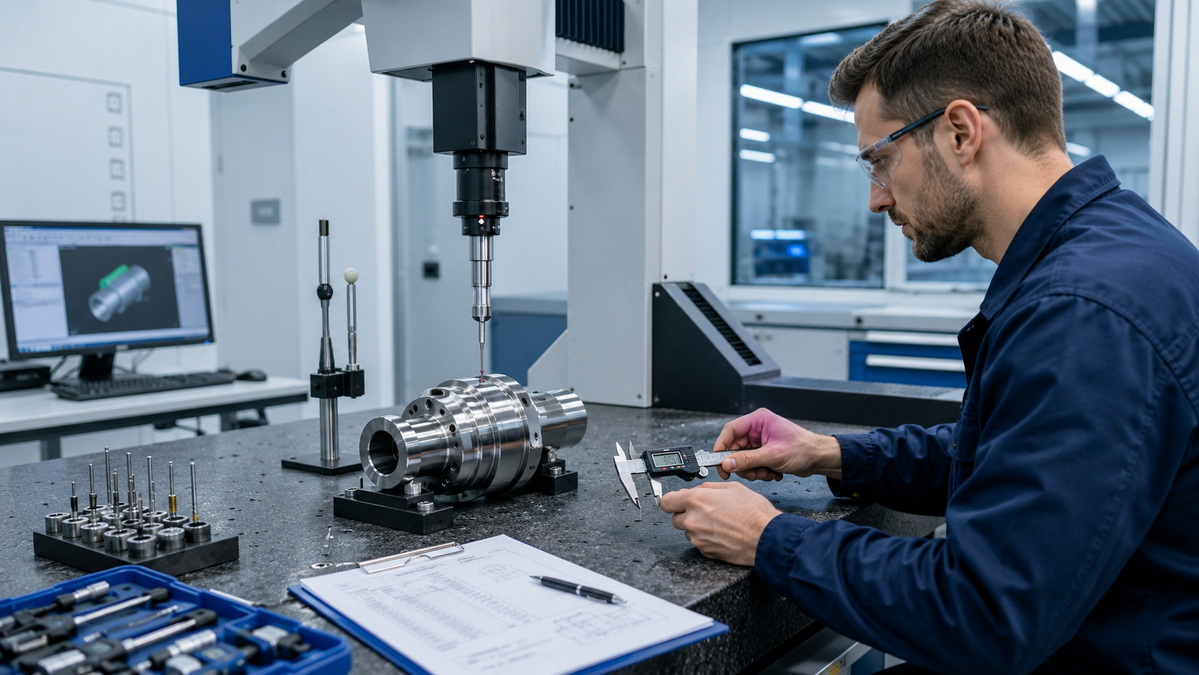
The following companies represent different sourcing models, technical specializations, and manufacturing strengths. The most suitable choice depends on whether your project prioritizes local Portuguese production, high-precision documentation, complex geometry, flexible quantities, multi-process integration, or cost-efficient scalable manufacturing.
| Supplier | Location / Supply Model | Main Focus | MOQ Suitability | Quality and Capability Focus | Suitable For |
|---|---|---|---|---|---|
| U-Need Precision Machinery Co., Ltd. | China; supports Portugal and global projects | CNC turning, milling, moulds, sheet metal, finishing, assembly | From one piece | Multi-process manufacturing and precision inspection | OEMs needing flexibility from prototype to volume production |
| Promecel | Braga, Portugal | Precision turning, milling, electrical and mechanical components | Quote-based | ISO 9001 and multi-axis machining | Industrial, electrical, and repeat-production parts |
| STENGMAC | Vila Nova de Famalicão, Portugal | Precision CNC machining and CAM-based production | Quote-based | ISO 9001:2015 quality system | Custom precision turned and milled components |
| Admatic | Portugal | CNC turning and milling | Quote-based | ISO 9001:2015 and CMM inspection | Low-to-medium volume precision parts |
| Mechanorma | Sintra, Portugal | Aerospace, defence, and precision engineering | Quote-based | Traceability-oriented production | High-value and high-criticality applications |
| RigorMill | Vila do Conde, Portugal | Precision mechanical parts, tools, components, and devices | Quote-based | Complex geometry and dimensional control | Custom machinery and engineering programs |
| Closedmill | Portugal | Customized CNC milling and turning | Quote-based | Flexible machining solutions | Mixed turning and milling projects |
MOQ, production capacity, and lead time should always be confirmed through a project-specific quotation. These variables depend on material availability, component size, machining cycle time, finishing requirements, inspection requirements, and forecasted annual demand.
U-Need Precision Machinery Co., Ltd. is a China-based custom manufacturing partner serving global brands, distributors, manufacturers, and product-development teams. It is a suitable option for buyers who need CNC turning as part of a broader manufacturing program rather than as an isolated process.
The company provides CNC turning, CNC milling, 5-axis machining, precision parts machining, injection mould manufacturing, stamping dies, cold-forging dies, laser cutting, sheet metal bending, surface finishing, assembly, and packaging support.
This wider service scope can be valuable when a buyer has a product involving several manufacturing processes. Instead of coordinating separate suppliers for turned components, milled housings, sheet-metal brackets, moulds, and finishing, buyers can consolidate more stages of the project under one manufacturing partner.
U-Need is particularly relevant for small and medium-sized brands that require:
- Prototype quantities from one piece
- Flexible low-volume production
- OEM customization support
- Engineering feedback before manufacturing
- Rapid communication during quotation and sample approval
- Scalable production after product validation
- Integrated machining, fabrication, finishing, assembly, and packaging
For CNC turning buyers, the most important advantage is not simply cost. It is the ability to coordinate multiple processes while maintaining a clearer production flow from design review through shipment.
The company is a practical candidate for projects involving aluminium, stainless steel, brass, copper, carbon steel, alloy steel, engineering plastics, and multi-process assemblies. Buyers should still define all critical dimensions, material certification needs, finish specifications, inspection requirements, and acceptable quality limits in the RFQ package.
Suitable for: Startups, small and medium-sized OEM brands, distributors, industrial equipment suppliers, and buyers requiring flexible custom production from prototype stage to repeat manufacturing.
Promecel is a Portuguese manufacturer founded in 1985 and based in Braga. The company operates in the electrical and mechanical component sectors and has experience serving technically demanding industrial markets.
Its machining capabilities include precision turning and milling, with equipment supporting parts across a broad size range. This makes it relevant for buyers sourcing turned mechanical components, industrial assemblies, electrical-system parts, and engineered metal components.
Promecel's long operating history can be valuable for projects that require mature production methods, structured quality processes, and repeatable manufacturing performance.
Key areas to evaluate during supplier qualification include:
- Maximum turning diameter and length for the specific part
- Number of turning centres available for repeat production
- Multi-axis machining requirements
- Material sourcing and traceability process
- Ability to manage secondary finishing and heat treatment
- Inspection reporting for critical dimensions
- Batch traceability and packaging requirements
Suitable for: Industrial machinery manufacturers, electrical-component producers, equipment OEMs, and buyers needing stable repeat production in Portugal.
STENGMAC is located in Vila Nova de Famalicão, an important industrial area in Northern Portugal. The company focuses on precision machining, producing parts, accessories, and machined components with CNC and CAM-supported manufacturing processes.
The company's positioning makes it relevant for buyers that need custom parts rather than standardized catalogue components. Its approach can suit projects requiring a combination of CNC turning, milling, drilled features, threaded features, and controlled dimensional inspection.
Northern Portugal has a strong industrial ecosystem that includes automotive supply, metalworking, machinery manufacturing, tooling, and component production. This can provide advantages when a project needs local subcontracting support for treatments, fabrication, tooling, or assembly.
When engaging STENGMAC, buyers should clarify whether the supplier can provide:
- First-article inspection reports
- Material traceability documents
- CMM dimensional reports
- Surface roughness verification
- Thread inspection records
- Finishing and coating certificates
- Production-part approval documentation
- Export packaging specifications
Suitable for: Buyers needing Portuguese-made precision parts with CNC turning and milling operations, particularly for industrial and mechanical applications.
Admatic is a Portuguese precision CNC machining company focused on CNC turning and milling. It presents a suitable sourcing option for buyers who need a specialist machining supplier with a quality-management structure and dimensional inspection capability.
The company highlights the use of calibrated metrology equipment, including gauges, profile projectors, and CMM equipment. This is important for turned components with critical diameters, thread specifications, concentricity requirements, tight fits, or geometric tolerances.
For buyers, a good initial RFQ should include:
- 2D PDF drawing
- 3D CAD file in STEP format
- Material grade and standard
- Required quantity and annual forecast
- Surface treatment details
- Critical tolerance callouts
- Surface roughness requirements
- Thread standards
- Inspection requirements
- Required delivery date
- Packaging expectations
A supplier that provides clear technical feedback on these details is generally more reliable than one that offers only a low unit price.
Suitable for: Buyers requiring precision turned parts, inspection documentation, small-to-medium batch production, and responsive quotation support.
Mechanorma is a Portuguese engineering and precision-machining company associated with aerospace, defence, and high-precision industrial applications. It is a relevant candidate for buyers with projects involving high-value components, demanding documentation, complex machining requirements, or strong traceability expectations.
Suppliers serving aerospace-related and defence-related industries often need stronger controls for part identification, material traceability, revision management, inspection records, and process consistency.
However, buyers should not assume that all aerospace-oriented suppliers are automatically suitable for every commercial CNC turning project. Aerospace-level documentation may increase cost and lead time. The best approach is to match documentation requirements to the actual risk level of the part.
For example, a simple non-critical spacer may not need the same process controls as a critical rotating component, medical device part, or safety-related assembly.
Suitable for: Aerospace-adjacent components, defence-related programs, industrial devices, precision assemblies, and projects where traceability is more important than minimum unit price.
RigorMill is a precision metalworking company located in Vila do Conde. It produces mechanical parts, tools, components, and devices, with CNC turning and milling capability for complex geometries.
This type of supplier can be a good option when the component is not a simple lathe part. Many modern CNC turned parts include milled flats, cross holes, tapped holes, slots, keyways, eccentric features, or complex geometric requirements that demand both turning and milling operations.
RigorMill may be relevant for projects that need:
- Turned shafts with milled features
- Tooling components
- Precision fixtures
- Custom mechanical assemblies
- Prototype equipment parts
- Engineering devices
- Small-batch industrial parts
Before approval, confirm machine envelopes, available tooling, preferred part size, inspection capability, sample lead time, and repeat-production capacity.
Suitable for: Engineering-led projects, custom machinery, tooling, mixed turning-and-milling parts, and complex mechanical components.
Closedmill provides customized CNC milling and turning solutions for a range of industrial applications. It may be a suitable option for buyers seeking a Portuguese machining partner for custom projects involving both rotational and prismatic features.
A supplier with combined turning and milling capability can reduce handling between operations and simplify responsibility for dimensional relationships between turned and milled features.
For example, a component may require an accurately turned bearing diameter, a milled mounting flat, drilled radial holes, tapped threads, and anodizing. Using one supplier for the complete machining route can reduce variation caused by transferring the part between multiple factories.
Because publicly available information may not reveal the full scope of capacity, buyers should use a structured technical assessment before placing long-term orders.
Request:
- Machine list
- Maximum turning diameter and length
- Maximum milling envelope
- Quality certification details
- Material and finishing capability
- Inspection equipment list
- Sample inspection report
- Production lead-time estimate
- Previous experience with similar materials and tolerances
Suitable for: Buyers with custom parts requiring combined CNC turning and milling operations in Portugal.
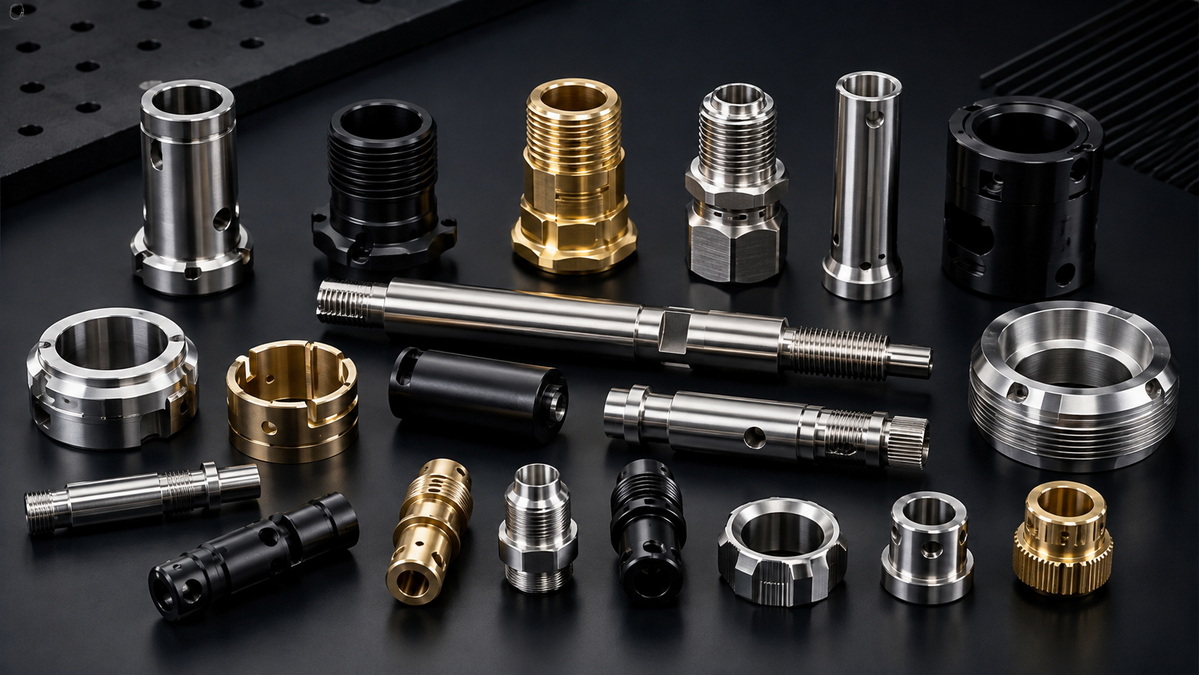
The selected material affects machining time, tooling cost, surface quality, corrosion resistance, mechanical performance, and final part price. Procurement teams should align the material specification with the part's real operating environment.
| Material Type | Common Grades | Typical Applications |
|---|---|---|
| Aluminium | 6061-T6, 6082-T6, 7075-T6 | Housings, brackets, aerospace-related components, lightweight structures |
| Stainless steel | 303, 304, 316, 316L, 17-4PH | Food equipment, medical components, marine parts, valves, corrosion-resistant parts |
| Carbon steel | C45, 1018, 1045 | Shafts, pins, mechanical components, industrial structures |
| Alloy steel | 4140, 42CrMo4, 4340 | High-strength shafts, gears, automotive components, load-bearing parts |
| Brass | C36000 and equivalent grades | Fittings, connectors, valves, electrical components |
| Copper | Cu-ETP, CuCrZr | Electrical contacts, thermal components, conductive parts |
| Engineering plastics | POM, PEEK, PA, PTFE, PC | Insulators, bushings, wear components, lightweight assemblies |
Common finishing options for CNC-turned parts include:
- Anodizing
- Hard anodizing
- Zinc plating
- Nickel plating
- Electroless nickel plating
- Powder coating
- Black oxide
- Passivation
- Polishing
- Bead blasting
- Brushing
- Heat treatment
- Grinding
The finish must be included in the drawing and purchase order. Buyers should define coating thickness, colour requirements, masking areas, corrosion-resistance requirements, cosmetic standards, and whether dimensions apply before or after treatment.
A supplier may use a lower-cost material grade that appears visually similar but performs differently in service. Stainless steel 304 and 316, for example, have different corrosion-resistance properties. Aluminium 6061 and 7075 have different strength and machining characteristics.
To reduce this risk, require material certificates and specify the accepted standard. For safety-related, aerospace-related, medical, or high-value industrial applications, consider positive material identification.
This is one of the most overlooked issues in CNC turning procurement.
A part may pass dimensional inspection immediately after machining but fail after anodizing, plating, heat treatment, or coating. This is especially important for threads, close-tolerance bores, sealing diameters, press fits, bearing seats, and mating surfaces.
For example, electroless nickel plating can increase surface thickness and make a previously compliant thread too tight. Hard anodizing can affect hole dimensions and surface appearance. Heat treatment can create distortion in thin or long components.
To avoid this issue:
- State whether dimensions apply before or after finishing
- Define coating thickness range
- Identify masked areas
- Require thread-gauge checks after finishing
- Approve a finished first article
- Confirm whether grinding or reaming is required after treatment
A dimensional report can look professional while omitting the most important features. Buyers should verify that the inspection plan covers critical dimensions, threads, surface finish, concentricity, runout, material certificates, and post-treatment requirements.
The report should clearly identify:
- Part number
- Drawing revision
- Batch number
- Measurement equipment
- Inspection date
- Inspector
- Actual measured values
- Acceptance status
- Sampling quantity
"Deburr all edges" is often too vague for high-quality CNC turning projects. A sharp edge can create assembly problems, injuries, coating defects, or cosmetic complaints.
Where needed, specify an edge-break requirement such as:
> Remove all burrs and sharp edges. Break edges 0.2–0.5 mm unless otherwise specified.
For precision parts, ensure this instruction does not conflict with functional edges, sealing surfaces, threads, or sharp geometry that must remain intact.
A structured sample process reduces the risk of costly production defects.
Provide:
- 2D drawing
- 3D CAD model
- Material grade
- Quantity
- Annual forecast
- Required delivery date
- Surface treatment specification
- Critical dimensions
- Inspection requirements
- Packaging requirements
- Destination country
- Required shipping terms
The supplier should identify risks before production. Examples include difficult internal corners, unsupported thin walls, non-standard threads, tight tolerances, expensive material choices, or unclear finish requirements.
Do not approve production based only on photographs. Review the physical sample, dimensional report, material certificates, finish quality, thread fit, packaging, and assembly performance.
For repeat production, define:
- Approved sample reference
- Inspection frequency
- Sampling method
- Material traceability requirements
- Packaging standard
- Change-control procedure
- Delivery schedule
- Nonconformance handling
- Reorder lead time
Portugal can be an efficient production base for European customers because of its EU location and established road, sea, and air transport links. Buyers should still confirm transit time, customs handling, packaging requirements, and delivery responsibilities before placing orders.
For suppliers outside Europe, buyers should compare total landed cost rather than ex-works part price alone. Landed cost includes freight, duties, insurance, customs brokerage, packaging, quality-control costs, inventory carrying cost, and potential delay risk.
For small, urgent prototype shipments, express air courier may be appropriate. For repeat production, sea freight or consolidated shipping may offer better cost control. Components made from carbon steel or other corrosion-sensitive materials should use appropriate rust prevention, moisture protection, and export packaging.
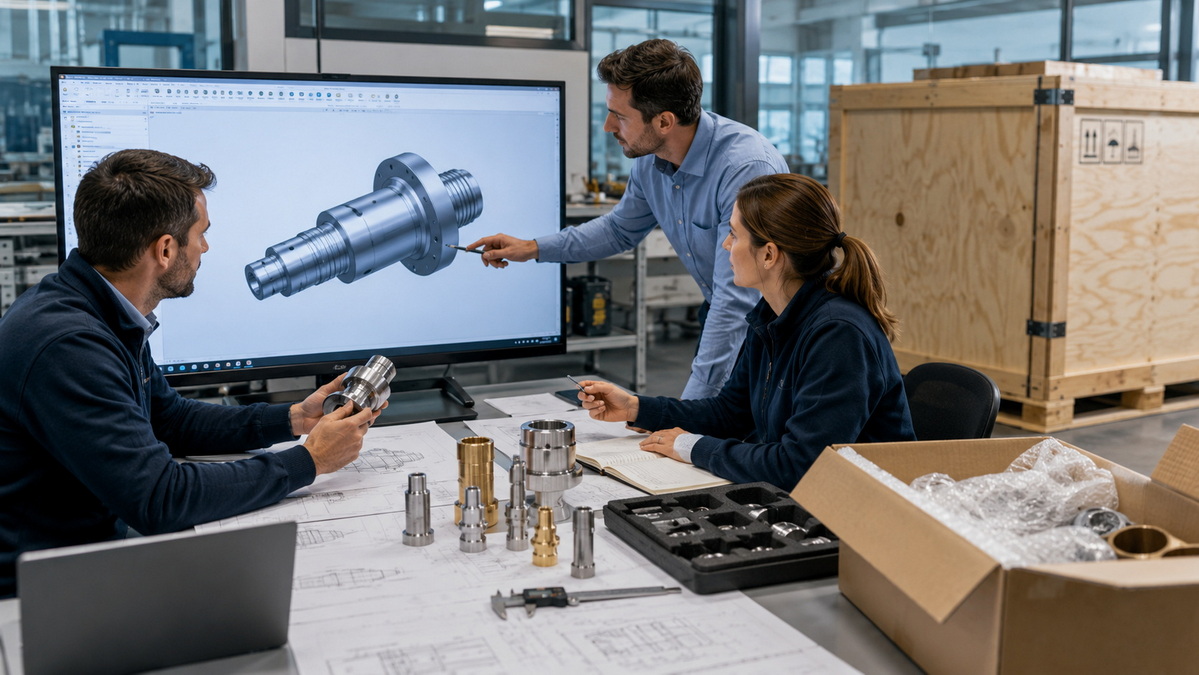
Portugal remains a relevant destination for CNC turning procurement, particularly for buyers seeking access to European precision machining, industrial know-how, and export-oriented production capability.
Promecel, STENGMAC, Admatic, Mechanorma, RigorMill, and Closedmill each offer different strengths for buyers evaluating Portuguese CNC turning options. Their suitability depends on the project's part complexity, material requirements, quality documentation, annual volume, and logistics priorities.
For buyers that need more flexible quantities, integrated manufacturing processes, and dedicated OEM support, U-Need Precision Machinery Co., Ltd. provides an alternative supply model. Its CNC turning capability can be combined with CNC milling, mould manufacturing, sheet metal fabrication, finishing, assembly, and packaging, making it suitable for projects that require coordinated custom manufacturing rather than a single machining operation.
The most reliable sourcing approach is to issue a controlled RFQ to several suitable suppliers, assess their engineering feedback, verify their quality documentation, approve finished samples, and compare total project value rather than unit price alone.
Request the full certificate with the company's legal name, factory address, certification scope, certificate number, issue date, and expiry date. Contact the certification body directly or use its public certificate database to confirm the certificate remains active. Ensure that the certificate covers CNC machining or precision manufacturing at the actual production site.
A complete RFQ should include a 2D drawing, 3D file, material grade, quantity, annual forecast, tolerances, GD&T requirements, surface treatment, thread specifications, inspection requirements, target delivery date, packaging instructions, and destination country.
MOQ depends on the supplier, component complexity, setup time, material cost, and expected repeat demand. Many suppliers can produce prototypes and small batches, but the unit price may be higher due to programming, tooling, inspection, and setup costs. Provide both your immediate quantity and annual forecast for more accurate pricing.
No. A CMM report only confirms the dimensions that were measured. Buyers should also review material certificates, thread-gauge results, surface-finish verification, coating or heat-treatment certificates, visual inspection records, and final packaging controls.
Portugal can be advantageous for buyers needing European proximity, easier factory visits, regional logistics, and access to EU manufacturing networks. China can be advantageous for buyers requiring lower-volume flexibility, integrated manufacturing services, competitive total cost, and support for projects involving CNC turning, milling, mould tooling, sheet metal, finishing, and assembly. The best choice depends on the part's technical risk, order volume, delivery schedule, documentation needs, and overall supply-chain strategy.
1. [U-Need Precision Machinery Co., Ltd.]
3. [Promecel — Certification and Quality]
4. [Promecel — Machining Capabilities]
5. [STENGMAC — Precision Machining]
6. [Admatic — CNC Turning and Milling]
7. [Mechanorma — Precision Engineering]


