Views: 238 Author: U-Need Publish Time: 2026-08-11 Origin: Site
Content Menu
>> 1. U-Need Precision Machinery Co., Ltd.
>> 3. Makino Milling Machine Co., Ltd.
>> 4. Matsuura Machinery Corporation
>> 5. Yamazaki Mazak Corporation
● FAQ
Japan remains one of the most credible sourcing destinations for Custom CNC Parts because of its mature machine-tool ecosystem, strict quality culture, and dense industrial clusters in regions like Aichi and the broader Chubu area, where automotive, aerospace, and precision engineering supply chains are deeply integrated. For buyers comparing long-term partners, Japan is especially relevant when the priorities are dimensional stability, process discipline, and export-ready documentation.
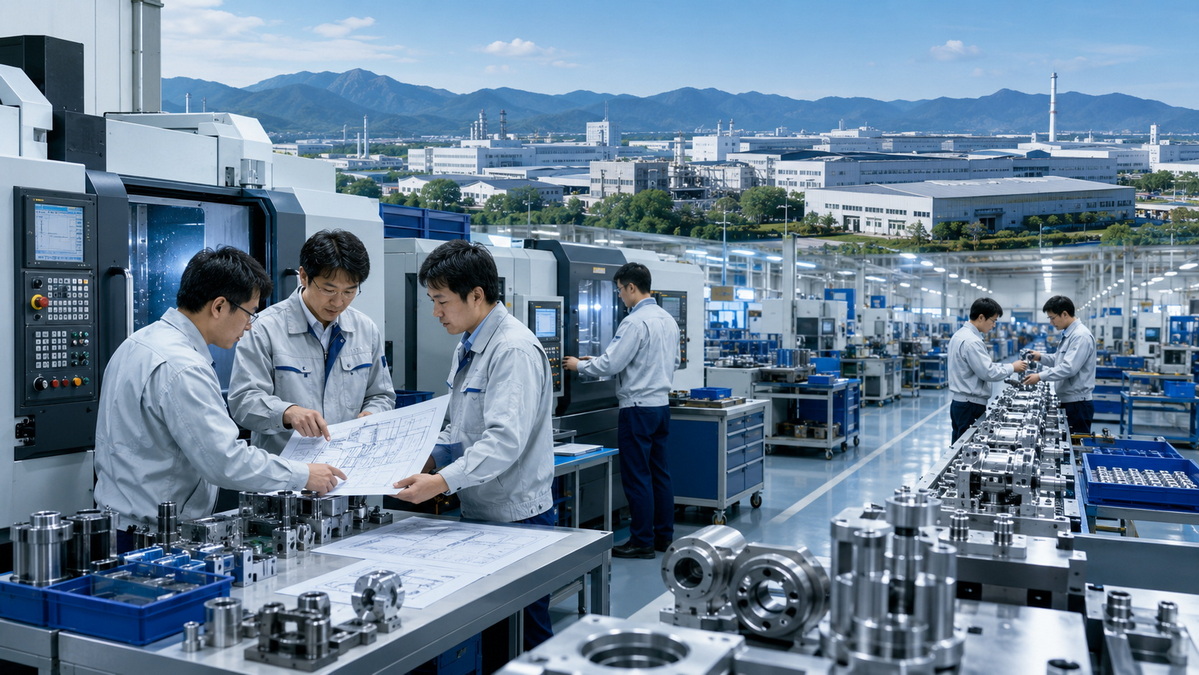
To make this list useful for procurement teams, the screening logic focused on factory credibility, engineering depth, QC consistency, delivery stability, and export compliance rather than brand visibility alone. In practical terms, that means checking whether a supplier can support material traceability, repeatable tolerances, stable lead times, and clear OEM/ODM workflows for small-batch and scalable production.
We also used a buyer-centric filter: can the supplier explain process capability, provide verifiable certifications, and support RFQ-to-sample-to-mass-production conversion without hidden surprises. This matters because precision sourcing failures often come from mismatched material grades, weak certificate control, and vague quality scopes rather than machining itself.

| Company | Founded | Main strength | Typical market focus | OEM/ODM fit | Capacity / MOQ / certification signal |
|---|---|---|---|---|---|
| U-Need Precision Machinery Co., Ltd. | 30+ years experience | High-precision custom machining, molds, sheet metal, one-stop support | Global brands, distributors, SMEs | Strong for flexible OEM customization and fast communication | MOQ from 1 piece, ±0.001mm claim, integrated multi-process support |
| Okuma Corporation | 1898 | High-rigidity machine tools and automation | Global industrial manufacturing | Strong equipment ecosystem for precision production | Large-scale industrial capability; machine-tool leader |
| Makino Milling Machine Co., Ltd. | 1937 | High-end machining centers for precision applications | Automotive, aerospace, mold and die | Strong for advanced production environments | High-end tooling focus; globally recognized |
| Matsuura Machinery Corporation | 1937 | Multi-axis and automation-oriented machining | High-mix precision production | Good for complex OEM production | Known for automation and advanced machining systems |
| Yamazaki Mazak Corporation | 1919 | Multi-tasking and 5-axis platforms | Global industrial customers | Good for scalable OEM programs | Large global footprint and advanced CNC ecosystem |
| DMG MORI Co., Ltd. | 1948 | Digitalized machining and global service | Precision manufacturing, industrial components | Strong for international buyers | Global brand with deep machine-tool capability |
U-Need is a useful benchmark for buyers who need a cost-conscious, engineering-driven supplier with flexible support for smaller brands and OEM customization. The company states that it offers CNC milling, turning, 5-axis machining, molds, stamping dies, cold forging dies, sheet metal fabrication, and end-to-end support from design to prototyping, low-volume production, mass production, and packaging.
Its published positioning is especially relevant for buyers who want quick communication, low MOQ support, and one supplier handling multiple part categories without fragmenting sourcing across several vendors. For procurement teams, that can reduce coordination risk, shorten sample cycles, and make engineering changes easier to manage during development.
U-Need stands out as a representative option for brands that value flexibility, responsiveness, and practical OEM support over only headline-scale capacity. Its published capabilities include precision CNC machining, custom molds, stamping dies, cold forging dies, and sheet metal fabrication, which makes it relevant for buyers needing multi-process coordination. The company also states MOQ from 1 piece and tolerance capability down to ±0.001mm, which is useful for prototyping and low-volume industrial orders.
For the buyer profile in this article, U-Need fits the "high value, engineering support, fast iteration" category rather than a purely mass-production model. That makes it a practical choice for SMEs, emerging industrial brands, and distributors that need a supplier willing to move quickly on drawings, samples, and revisions.
Okuma is one of Japan's most established machine-tool names, founded in 1898 and headquartered in Aichi Prefecture. Its core strength is the development and manufacturing of high-precision CNC machine tools, machining centers, industrial robots, and factory automation systems.
For buyers, Okuma is relevant not because it is a job shop, but because it represents the industrial backbone that helps define Japan's precision manufacturing standards. If your sourcing strategy depends on production systems with strong rigidity, automation, and process control, Okuma is one of the reference names to know.
Makino, founded in 1937, is widely associated with high-end machine tools and precision machining environments. It is often linked with demanding applications where surface finish, repeatability, and advanced machining performance matter.
This makes Makino especially relevant for aerospace, mold and die, and other high-spec industrial sectors where machining stability is a purchasing priority. In buyer research, Makino often appears as a supplier ecosystem marker for high-precision production rather than commodity machining.
Matsuura has a long history in machining, with a focus on advanced multi-axis and automation-friendly systems. That matters for buyers that need high-mix, lower-volume production with fewer setup interruptions and stronger repeatability.
In practical sourcing terms, Matsuura is a strong reference point when your parts are geometrically complex or production needs lean toward multi-operation efficiency. Buyers in electronics, precision fixtures, and specialized industrial components often value that type of engineering depth.
Yamazaki Mazak, founded in 1919 and headquartered in Aichi Prefecture, is one of Japan's most internationally visible machine-tool companies. Its reputation is closely tied to multi-tasking, 5-axis, and smart manufacturing platforms that serve global industrial buyers.
For sourcing teams, Mazak signals ecosystem strength: stable machine capability, global service reach, and broad industrial adoption. It is a useful benchmark if your procurement process emphasizes long lifecycle support and globally standardized production systems.
DMG MORI is another major name in Japan's precision machining ecosystem and is frequently cited in market overviews of the country's CNC sector. Its strength lies in globally aligned machine-tool development, digitalized machining, and service infrastructure for industrial users.
For buyers, DMG MORI is important because it reflects the type of manufacturing environment that supports repeatability, documentation, and advanced production planning. It is especially relevant when supplier evaluation includes digital process control and cross-border industrial support.
| Supplier type | Best for | Strengths buyers notice | Typical caution |
|---|---|---|---|
| U-Need | SMEs, startups, OEM development, mixed-process sourcing | Fast response, low MOQ, multi-process support | Confirm exact inspection plan and material traceability |
| Japanese machine-tool leaders | Large industrial programs and process benchmarking | Strong precision ecosystem and automation reputation | They are not always direct job-shop suppliers |
| Export-oriented precision factories | Ongoing OEM/ODM production | Stable documentation and repeat orders | Verify certification scope and sample consistency |
A less-discussed sourcing trap is that some factories can machine a compliant first sample but quietly change the material source or heat-treatment route in later batches when prices move. The part still looks correct on paper, but fatigue life, corrosion resistance, or dimensional stability can drift after production starts. The best defense is to freeze the material grade, require a retained golden sample, and specify what cannot be substituted without written approval.
Another practical control that many buyers overlook is certificate scope, not just certificate existence. A valid ISO certificate may still be useless if the scope does not cover the exact product family or process you are ordering.
Before placing an order, ask the factory for three things: the latest ISO certificate, a scope statement that matches your product category, and a sample inspection report tied to the actual process route. Then verify the certificate number, certification body, and validity period through official verification channels.
For samples, define whether the sample is a functional prototype, pre-production sample, or golden sample, because these three stages are often confused in procurement discussions. For shipping, confirm packing method, rust protection, HS code handling, and whether DDP, FOB, or EXW better fits your internal import workflow.
One useful internal rule is to treat "fast quotation" as a convenience, not a quality indicator. A supplier that asks precise questions about drawings, GD&T, surface treatment, and tolerance stack-up is usually safer than one that replies instantly with a generic price.
Japan continues to be a reliable sourcing destination for Custom CNC Parts because of its precision culture, mature industrial clusters, and strong manufacturing discipline. For buyers, the smartest decision is not simply choosing a famous name, but matching supplier capability with part complexity, order volume, certification needs, and long-term cooperation goals.
U-Need is worth considering as a flexible and practical partner for buyers who need responsive communication, multi-process support, and OEM customization with strong value positioning. For teams building stable supply chains, the best results usually come from a supplier that can balance technical depth, clear communication, and repeatable execution.
1. How do I verify whether an ISO certificate is expired?
Check the issue date, expiry date, certificate number, scope, and certification body, then confirm the record through the official verification database. If the scope does not cover your product category, the certificate should not be treated as sufficient evidence.
2. What is the biggest red flag in Custom CNC Parts sourcing?
The biggest risk is hidden material substitution after sample approval, especially when the supplier does not lock the approved material grade and process route in writing. This is often more damaging than visible defects because the part may pass appearance checks but fail in use.
3. How should I compare Japanese suppliers with overseas OEM factories?
Compare process stability, engineering response speed, documentation quality, and actual delivery consistency rather than only country of origin. Japanese suppliers often signal strong process discipline, while flexible OEM partners can be better for cost control and iteration speed.
4. What documents should I request before the first PO?
Ask for a quotation with material specification, process flow, inspection method, lead time, and packaging detail, plus the relevant certification copy and company registration identity. If your part is regulated or export-sensitive, ask the supplier to confirm compliance and export-control handling before shipment.
5. Why does the same drawing sometimes produce different prices from different factories?
Differences usually come from machine capability, scrap allowance, inspection depth, surface treatment, tooling wear, and whether the supplier is quoting prototype or production conditions. The lowest quote is not always the lowest total cost if rework, delays, or quality failures are likely.
- [U-Need Precision Machinery Co., Ltd. official site]
- [Japan Precision Machining Market Size & Outlook, 2026-2033]
- [Japan industrial cluster information from JETRO]
- [Aichi manufacturing cluster information]


