Views: 231 Author: U-Need Publish Time: 2026-08-05 Origin: Site
Content Menu
● What Is Conventional Machining?
>> Where conventional machining works well
● CNC Machining vs Conventional Machining
>> Precision and repeatability
>> Choose conventional machining when:
● U-Need Manufacturing Perspective
● FAQ
>> 1. What is the main difference between CNC machining and conventional machining?
>> 2. Is CNC machining always better than conventional machining?
>> 3. Why is CNC machining more expensive at first?
>> 4. Can conventional machining produce accurate parts?
>> 5. Which industries benefit most from CNC machining?
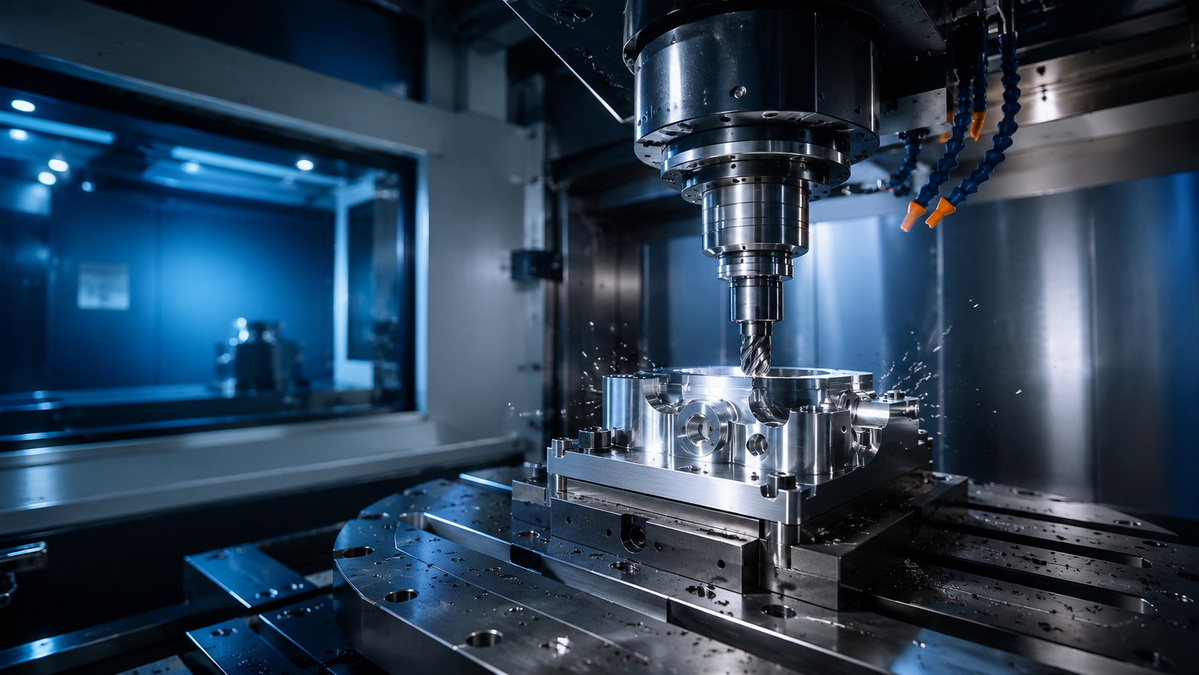
CNC machining stands for Computer Numerical Control machining. It is a subtractive manufacturing process in which computer-programmed instructions control cutting tools to shape metal or plastic workpieces with high repeatability and precision.
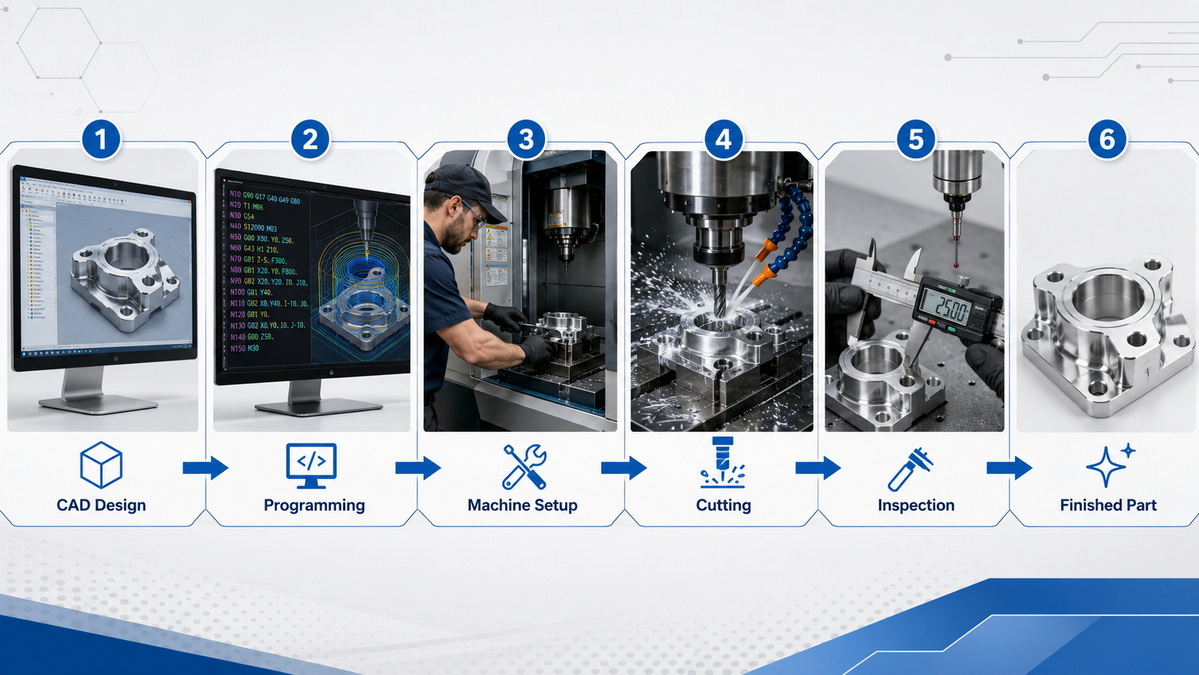
A typical CNC workflow includes CAD design, CAM programming, toolpath generation, machine setup, and automated cutting. Because the process is digitally controlled, it is especially effective for parts with tight tolerances, complex geometries, and production runs that must remain consistent from the first piece to the last.
- High repeatability for batch production.
- Strong complexity handling for intricate parts.
- Reduced dependence on operator judgment.
- Better fit for scalable production from prototype to mass manufacturing.
Conventional machining refers to manually operated or mechanically controlled processes such as turning, milling, drilling, boring, and grinding. The operator directly controls feed, speed, depth, and tool movement using handles, levers, or handwheels.
This method depends heavily on machinist skill, experience, and attention. For simple parts, repairs, custom adjustments, and very small quantities, conventional machining can be efficient and cost-effective because setup requirements are lower and changes can be made quickly during the process.
- Small batches or single-piece jobs.
- Simple geometries with loose tolerances.
- Repair and maintenance work.
- Hands-on prototyping when design changes are frequent.
The core difference is simple: CNC machining is computer-driven, while conventional machining is operator-driven. That difference affects precision, productivity, labor needs, cost structure, and the kind of parts each method can produce.
| Factor | CNC Machining | Conventional Machining |
|---|---|---|
| Control | Computer-programmed | Manual operator control |
| Accuracy | Very high and repeatable | Depends on operator skill |
| Complexity | Excellent for complex geometry | Better for simpler shapes |
| Production speed | Faster for repeat jobs | Slower for larger quantities |
| Labor demand | Lower per part after setup | Higher ongoing operator input |
| Best for | High-mix, medium-to-high volume, precision parts | Small jobs, repairs, prototypes |
| Cost profile | Higher initial setup, lower unit cost at scale | Lower startup cost, higher labor cost at scale |
This is why CNC is often the better choice for modern industrial supply chains, while conventional machining remains useful for niche, low-volume, or highly manual tasks.

If your project requires tight tolerances, CNC machining is usually the better choice. The process is guided by software, so dimensions stay more consistent across repeated runs, and human error is significantly reduced.
Conventional machining can still produce quality parts, but the result depends much more on the machinist's skill, fatigue level, and judgment. For demanding industries such as aerospace, medical devices, electronics, and automation, that variability can become a serious risk.
CNC machining is better suited for complex contours, pockets, angled surfaces, and multi-feature parts. Multi-axis machines can reduce setups and make complicated designs more manufacturable.
Conventional machining is best when the geometry is straightforward. If the part needs many angled operations or repeated identical features, manual processing quickly becomes slower and less stable.
For small quantities, conventional machining can be economical because the programming and setup burden is minimal. But once volume increases, CNC becomes much more efficient because the same programmed process can be repeated with less labor and less variation.
This is one reason manufacturers increasingly use CNC for serial production. The more parts you need, the stronger the cost advantage becomes.
CNC machining reduces dependence on constant human intervention. One skilled operator can oversee multiple machines, which improves labor efficiency and helps stabilize output.
Conventional machining requires more direct attention from a machinist throughout the process. That makes it harder to scale and more vulnerable to inconsistency, especially when production schedules are tight.
Conventional machining usually has a lower entry cost, which is attractive for short runs or simple work. However, the unit cost can rise quickly because of labor time, rework, and slower throughput.
CNC machining has a higher upfront cost for equipment, software, tooling, and programming. Yet for precision manufacturing, the long-term economics often improve because of faster cycle times, reduced scrap, and better repeatability.
- You need high precision.
- You need repeatable quality across batches.
- The part has complex geometry.
- You want to reduce labor dependency.
- You are building for scalable production.
- The job is small and simple.
- You need fast manual adjustments during production.
- The part is a one-off prototype.
- You are performing maintenance or repair work.
- Budget is limited and tolerances are not extreme.
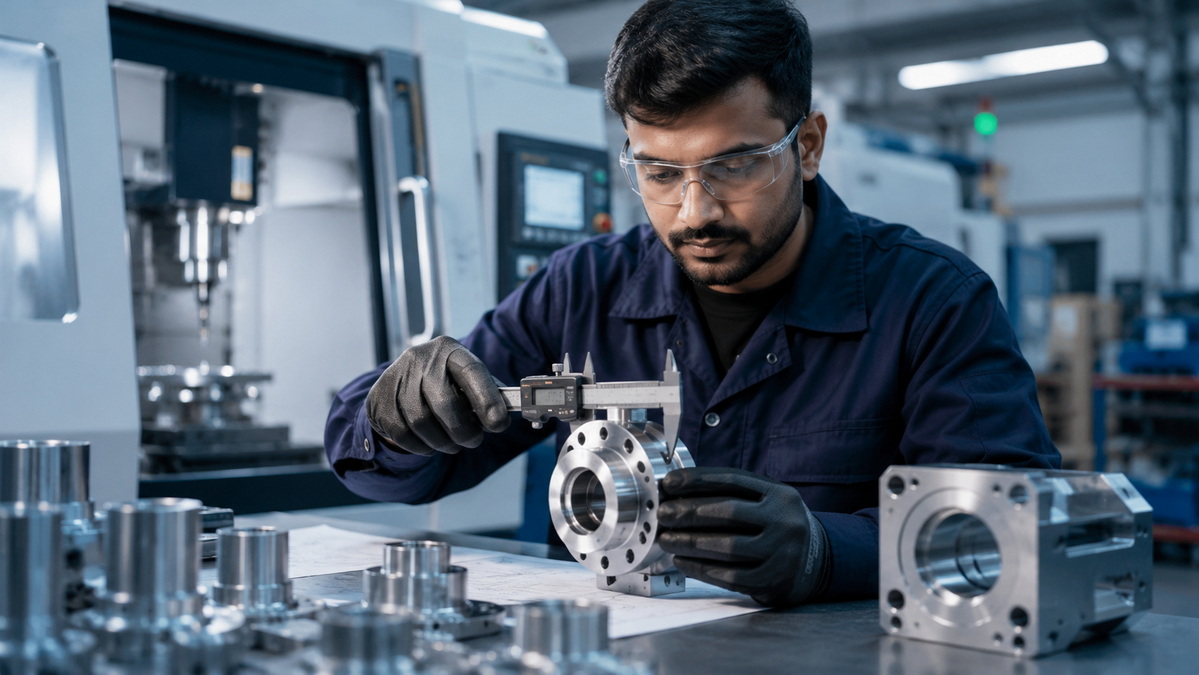
Many buyers compare only the machine type, but the real decision is about the manufacturing system behind it. A CNC machine alone does not guarantee quality; you also need strong process control, skilled programming, incoming material inspection, and reliable measurement systems. This is especially important when sourcing from overseas suppliers, where communication and quality expectations must be clearly documented.
For global brands and distributors, the better question is not "CNC or conventional?" but:
1. Which process best matches the part design?
2. What tolerance and inspection system will be used?
3. Can the supplier scale without losing consistency?
4. Will the process support long-term supply stability?
This is where experienced precision manufacturers add value. A capable partner can recommend the right process based on cost, geometry, lead time, and performance targets—not just based on machine ownership.
Recent industry trends show continued investment in automation, 5-axis machining, connectivity, AI-assisted process control, and workforce development. Manufacturers are prioritizing resilience, traceability, and stable quality rather than relying on manual speed alone.
This matters because modern supply chains need more than basic machining. They need documented quality, short lead times, repeatability, and scalable output. CNC machining fits that direction much better than conventional machining in most production environments.
At U-Need, we support global brands, distributors, and manufacturers with custom precision parts machining, mold manufacturing, and sheet metal fabrication. That means we understand the practical tradeoffs behind process selection, not just the theory.
Our view is simple: the best method is the one that protects part quality, stabilizes delivery, and lowers total risk. For complex components, scalable production, and demanding export projects, CNC machining is often the smartest choice. For simpler, low-volume, or highly customized work, conventional machining may still be the most efficient path.
If your priority is precision, repeatability, and scalable production, CNC machining is usually the better choice. If you need a simple part, a quick manual adjustment, or a low-volume repair job, conventional machining still has clear value.
For buyers seeking a dependable China-based partner, the most important step is choosing a manufacturer that can evaluate your design, advise on the right process, and deliver consistent quality from prototype to production.
Need help selecting the right machining process for your project? Contact U-Need for custom precision parts machining, mold manufacturing, and sheet metal fabrication support.
CNC machining is computer-controlled, while conventional machining is manually controlled by an operator. This makes CNC more precise and repeatable.
No. CNC is better for precision, complexity, and scale, but conventional machining can be more practical for simple, low-volume, or repair work.
It requires equipment, programming, tooling, and setup. However, the unit cost often becomes lower in larger production runs because of efficiency and consistency.
Yes, but accuracy depends more heavily on operator skill and process control. It is less consistent than CNC for repeated production.
Industries that need tight tolerances and repeatability, such as aerospace, automotive, medical devices, electronics, and industrial equipment, benefit strongly from CNC machining.
1. RapidDirect. "CNC Machining vs. Conventional Machining: Key Differences."
[https://www.rapiddirect.com/blog/cnc-machining-vs-conventional-machining/]
2. Stecker Machine. "6 CNC Machining Trends OEMs Must Watch in 2026."
[https://www.steckermachine.com/blog/cnc-machining-trends]
3. TechPro CNC. "2026 CNC Machining Industry News: Top Trends Transforming Manufacturing."
4. EMC Precision. "CNC Machining vs. Conventional Machining."
[https://emcprecision.com/blog/cnc-machining-vs-conventional-machining/]
5. Worthy Hardware. "Why and How to Select CNC Machining Service in China?"
[https://www.worthyhardware.com/news/how-to-select-cnc-machining-service-in-china/]


