Views: 250 Author: U-Need Publish Time: 2026-11-14 Origin: Site
Content Menu
● How to Evaluate a Close Tolerance Machining Supplier
● What Close Tolerance Means in Practical Procurement
● Top 10 Close Tolerance Machining Companies in China
>> 1. U-Need Precision Machinery Co., Ltd.
>> 2. Anebon Metal — Anebon Metal Products
>> 3. Shangchen — Dongguan Shangchen Trade Co., Ltd.
>> 4. Shenzhen Feifan Hardware & Electronics Co., Ltd. — FLYcncpart
>> 5. Rapid Direct Ltd. — RapidDirect
>> 7. WayKen Rapid Manufacturing Limited
>> 9. 3E Rapid Prototyping — 3ERP
>> 10. Shenzhen DEK Manufacturing Co., Ltd.
● Supplier Comparison: Production Scale, MOQ, and Certifications
● Why China's Manufacturing Clusters Matter
● Materials, Standards, and Compliance: What Buyers Should Specify
>> Define the Material Beyond Its Common Name
>> Separate Quality Systems from Product Compliance
● Buyer's Guide: From Supplier Verification to Repeat Production
>> 1. Verify the Contracting Entity and Production Site
>> 2. Issue a Complete, Revision-Controlled RFQ
>> 3. Approve Samples with the Production Process in Mind
>> 4. Define Logistics and Acceptance Responsibilities
● The Overlooked Trap: A Correct Inspection Report Can Use the Wrong Datum
● Conclusion: Select the Supplier That Can Demonstrate Control
● FAQ
>> 1. How Can I Check Whether a Supplier's ISO Certificate Has Expired or Been Suspended?
>> 2. If a Supplier Advertises ±0.005 mm, Can I Apply That Tolerance to Every Feature?
>> 3. What If Our Inspection Results Differ from the Supplier's CMM Report?
>> 4. Does an Approved Prototype Prove the Supplier Can Maintain Production Quality?
>> 5. Should Every Machined Part Exported to Europe Have a CE Mark and RoHS Certificate?
Choosing a close tolerance machining supplier requires more than comparing unit prices or accepting a factory's advertised minimum tolerance. Procurement managers need to know whether a supplier can maintain dimensional consistency across production batches, verify material identity, control subcontracted processes, and deliver inspection records that match the actual parts shipped.
China offers a substantial manufacturing base for this work. The German Machine Tool Builders' Association's *Market Report 2025*, published in June 2026, puts China's machine tool production at approximately EUR 27.3 billion, representing 36% of global production. These figures describe manufacturing equipment—not the market value of outsourced precision parts—but they provide useful context for the country's machining infrastructure.
This guide compares ten China-based suppliers worth evaluating for custom precision components. It examines manufacturing flexibility, engineering support, quality systems, production scale, and the practical questions buyers should ask before awarding a long-term contract.
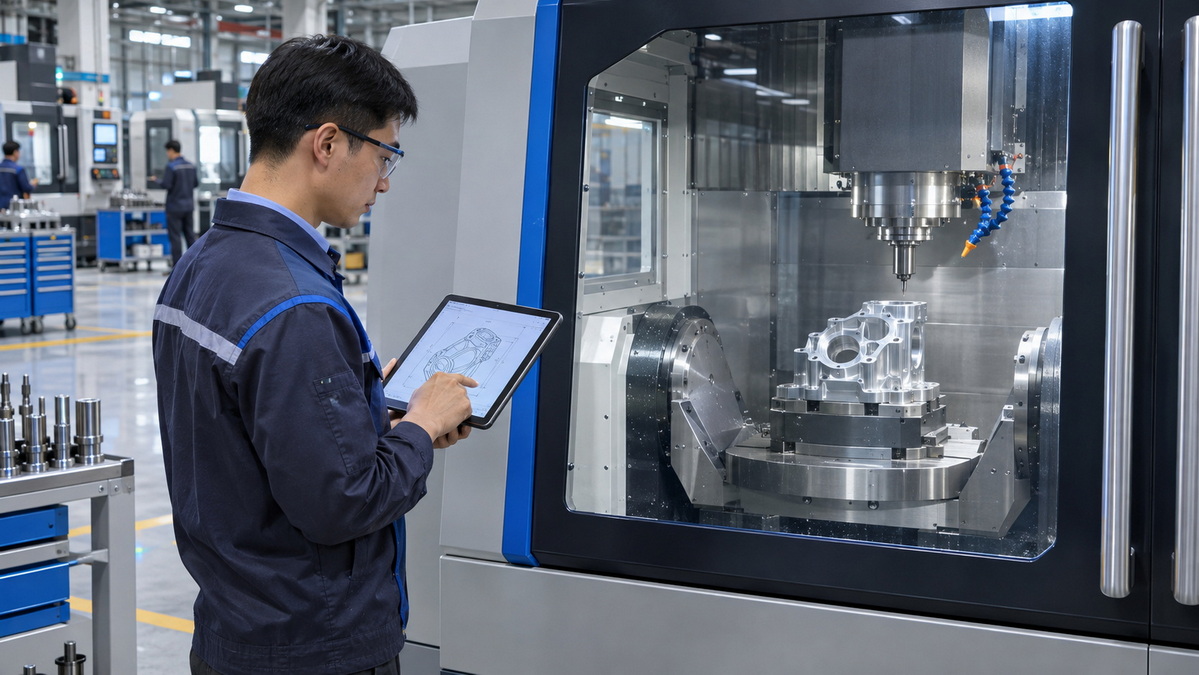
A credible assessment should connect a supplier's equipment and management systems to the actual requirements of your component. The following framework makes that evaluation more transparent.
| Evaluation area | What to examine | Evidence to request |
|---|---|---|
| Manufacturing suitability | Relevant milling, turning, EDM, grinding, and finishing processes | Process routing for a comparable component |
| Engineering and development | Drawing review, fixture design, material selection, and tolerance analysis | Written manufacturability feedback |
| Quality management | Document control, calibration, traceability, and corrective action | Current certificates, inspection procedures, and sample reports |
| Measurement capability | Equipment suitable for the specified dimensions and geometry | Calibration records and a feature-specific inspection plan |
| Delivery reliability | Scheduling, bottleneck management, and subcontractor control | Recent delivery records and a proposed production schedule |
| Commercial flexibility | Prototype support, repeat-order pricing, and change management | Itemized quotation and written order conditions |
These criteria are a purchasing framework, not numerical scores assigned to the companies below. The shortlist includes suppliers with different operating models: integrated manufacturers, prototype specialists, and businesses combining internal production with manufacturing networks.
A smaller supplier with a suitable process and disciplined inspection may be a better fit than a larger company whose equipment is poorly matched to your part.
An advertised capability such as ±0.005 mm should be treated as a starting point for engineering discussion, not a universal promise.
Anebon, FLYcncpart, and DEK publish capabilities reaching ±0.005 mm on selected work. However, buyers should obtain written confirmation covering the specific material, feature size, geometry, surface condition, and production quantity involved.
For purchasing purposes, distinguish three separate questions:
1. Can the supplier make an acceptable sample?
2. Can it measure the critical features reliably?
3. Can it repeat the result throughout the production run?
A technically complete drawing also needs more than dimensional limits. Geometric dimensioning and tolerancing communicates acceptable variation in features and their relationships. Datum references establish the basis for evaluating location, orientation, and other geometric requirements. NIST identifies ASME Y14.5 and ISO 1101 among the standards governing tolerance specification.
Accordingly, your request for quotation should identify:
- Material grade and required condition.
- Critical dimensions and geometric tolerances.
- Datum structure and applicable drawing standard.
- Surface finish and treatment requirements.
- Inspection and traceability deliverables.
- Whether acceptance applies before or after finishing.
- Any required functional or assembly checks.
Website: [https://www.uneedprecisionmachine.com/]
Established: 2016
Location: Dongguan, Guangdong
Reported markets: Europe, the Americas, and Asia
U-Need provides custom precision machining alongside injection mold manufacturing, stamping dies, cold-forging dies, laser cutting, bending, and metal stamping. Its company profile also describes independent mold design and custom development based on customer drawings or samples.
Its most relevant positioning is as a flexible manufacturing partner for small and medium-sized brands that need more than a standalone machining operation. A project involving precision components, tooling, and sheet metal can potentially be coordinated through one commercial interface rather than several unrelated vendors.
U-Need emphasizes reasonable pricing, rapid responses, delivery coordination, and technical innovation. These are useful service priorities for overseas purchasing teams, although their actual commercial value should be tested through quotation quality, engineering responsiveness, and pilot-order performance.
OEM/ODM scope: Build-to-print precision components, custom mold development, tooling, and coordinated fabrication. Its published design-and-development capabilities support discussion of selected development tasks, but responsibility for product validation and design ownership should be defined contractually.
Buyer verification priority: Establish which processes are performed internally and which use partner facilities. U-Need describes a manufacturing network with more than 200 machines across processes; this should not be interpreted as a verified count of company-owned CNC machines. Also distinguish its 2016 establishment date from its separate claim of more than 30 years of manufacturing expertise.
Established: 2010
Location: Dongguan, Guangdong
Reported market reach: 47 countries; regional sales shares are not disclosed
Anebon combines CNC machining, die casting, sheet metal fabrication, and additive manufacturing. Its website states ISO 9001:2015 certification and advertises machining tolerances down to ±0.005 mm, with selected lead times beginning at five business days. These are supplier-published capabilities rather than independently verified commitments.
Its principal advantage is process breadth. Buyers developing metal components may benefit from comparing machined, fabricated, and cast alternatives with the same supplier, particularly when a prototype is expected to evolve into repeat production.
OEM/ODM scope: Customer-specified precision components, CNC milling and turning, casting, sheet metal work, and manufacturing-oriented engineering support. Anebon identifies automotive, aerospace, and electronics among its served industries.
Buyer verification priority: Ask for feature-specific tolerance confirmation, current certification documents, and a clear distinction between in-house and partner operations. Its website's prominent trading identity is "Anebon Metal"; confirm the complete contracting entity on its business license, quotation, and bank documentation rather than relying on a brand name alone.
Established: 2007, according to its published company description
Location: Dongguan, Guangdong
Reported markets: Overseas OEM brands, wholesalers, and manufacturers; regional shares are not disclosed
Shangchen describes capabilities covering rapid prototyping, CNC machining, precision batch production, turning, sheet metal fabrication, 3D printing, and mold making. Its published profile identifies automotive, medical, electronics, aerospace, sports, and consumer products as application areas.
Its appeal is the ability to coordinate several manufacturing routes during product development. Buyers evaluating whether a component should be machined, formed, molded, or produced through a combination of processes may find this breadth useful.
OEM/ODM scope: Drawing-based custom components, prototype development, manufacturing support, and coordinated production across metal and plastic processes.
Buyer verification priority: Clarify the manufacturing and export entity before contracting. A related official contact page lists Dongguan Shangchen Trade Co., Ltd. among its export operating names and uses the same telephone number shown on the Shangchen website. This supports a connection, but does not establish that every listed process operates under one legal entity or at one facility.
Request the business license, actual production address, current certificates, and a process ownership map.
Established: Not clearly disclosed on the reviewed company page
Location: Shenzhen, Guangdong
Reported markets: North America, Europe, the Middle East, and Asia
FLYcncpart identifies its operating company as Shenzhen Feifan Hardware & Electronics Co., Ltd. Its company page reports more than 200 CNC machines, including automatic lathes, Swiss-type sliding-head lathes, CNC lathes, and multi-axis machining centers. It also states ISO 9001 certification.
The equipment mix makes it a candidate for evaluation where a program combines turned components, milled features, and repeat production. The company lists electronics, medical devices, automotive, robotics, and energy systems among its applications.
OEM/ODM scope: Custom machined components, prototype-to-production support, surface finishing, and coordinated international delivery. Its published workflow includes drawing review, material inspection, first article inspection, in-process checks, and final inspection.
Buyer verification priority: Obtain a part-specific capacity and MOQ statement. Its company page contains an example showing "50,000 pcs/month" under both production capacity and MOQ. That ambiguity should not be converted into a general purchasing requirement without written clarification.
Established: 2009
Location: Shenzhen, Guangdong
Reported markets: Worldwide; North America and Europe are specifically addressed in its service information
RapidDirect combines internal facilities with a China-based manufacturing network. Its published history dates its first self-owned Shenzhen factory to 2009 and describes subsequent expansion into networked production and digital quotation services.
Its core strength is procurement coordination across CNC machining, injection molding, sheet metal fabrication, and 3D printing. This operating model can suit buyers managing multiple components or several manufacturing processes within one product program.
OEM/ODM scope: Build-to-print parts, manufacturability review, prototyping, and scalable production. Its public materials describe an online quotation platform and engineering support rather than an unrestricted product-development service.
Buyer verification priority: Identify the actual manufacturing location and applicable quality system for each critical component. RapidDirect's published network figures differ between pages, illustrating why a network-wide machine count should not be treated as guaranteed capacity available to your order.
Its company history reports ISO 9001:2015 certification in 2020 and ISO 13485:2016 certification in 2022; verify the current certificates and their site-specific scope.
Established: 2005
Location: Zhongshan, Guangdong
Reported markets: Global customers across more than 60 countries
Star Rapid focuses on rapid prototyping, tooling, and low-volume manufacturing. Its capabilities include multi-axis CNC machining and plastic injection molding, supported by an international engineering and management team.
Its published history places particular emphasis on inspection investment and incoming material verification. For buyers, this makes material identity and measurement procedures useful subjects for a technical qualification discussion rather than relying solely on a general quality statement.
OEM/ODM scope: Custom component manufacturing, tooling, finishing, and manufacturability review. Star Rapid explicitly states that it does not provide a standalone product design service, an important distinction for buyers expecting a complete original-design development partner.
Buyer verification priority: Review the current certificate documents rather than older website descriptions. Its dedicated certification page lists ISO 9001:2015, ISO 14001:2015, ISO 45001:2018, and ISO 13485:2016.
Established: Exact founding year not stated on the reviewed company page; it reports more than 20 years of industry experience
Location: Shenzhen, Guangdong
Reported markets: International customers; regional sales shares are not disclosed
WayKen specializes in rapid prototyping and low-volume manufacturing of metal and plastic parts. Its services include CNC machining, vacuum casting, sheet metal fabrication, rapid tooling, injection molding, and additive manufacturing.
Its published machining capabilities include three-axis and five-axis processes, making it relevant to development teams sourcing complex prototypes and small production batches. The company also describes dedicated project management support from prototype through production.
OEM/ODM scope: Custom component manufacturing, prototype development, manufacturing engineering, and production transition support. Buyers needing original product design should define that requirement separately.
Buyer verification priority: WayKen's company page lists ISO 9001, IATF 16949, and ISO 14001. Request the certificates, covered site addresses, and certified activity descriptions, especially where an automotive program requires a specific manufacturing scope.
Established: 2008
Locations: Shenzhen and Dongguan operations are described on its company website
Reported markets: More than 3,000 companies across 50 countries
HLH offers CNC machining, rapid tooling, injection molding, sheet metal work, vacuum casting, and additive manufacturing. Its company information describes a 12,000-square-meter facility divided into dedicated manufacturing zones.
Its principal strength is multidisciplinary development support. Buyers sourcing several prototype components—such as a machined bracket, plastic enclosure, and sheet metal assembly—can evaluate multiple processes through a coordinated supplier relationship.
OEM/ODM scope: Custom prototypes, low-volume components, tooling, finishing, and assembly-related work. Its website advertises support from individual prototypes to substantial production quantities, although actual capacity depends on the process and component.
Buyer verification priority: Identify the exact HLH entity and facility handling the order. Request current certificates for that location, together with a process-specific production and inspection plan, rather than assuming that every group location has identical capabilities.
Established: 2010
Location: Zhongshan, Guangdong, with a North American division in Missouri
Reported markets: Worldwide customers, supported by its China and North American presence
3ERP provides CNC machining, vacuum casting, die casting, additive manufacturing, tooling, injection molding, and sheet metal prototyping. Its published information emphasizes rapid prototyping and low-volume manufacturing, including runs of 1–1,000 pieces.
For procurement teams, its value lies in supporting the transition from an engineering sample to a controlled small production batch. The company reports more than 50 production machines and describes in-house milling, turning, and EDM capabilities.
OEM/ODM scope: Build-to-print prototypes, production components, tooling, and manufacturing support across several processes.
Buyer verification priority: Match the inspection package to the drawing. 3ERP describes incoming, first article, in-process, and final inspection, together with ISO 9001:2015 certification. Specify which dimensional results, material records, and inspection reports must accompany each shipment.
Established: 2002
Location: Shenzhen, Guangdong
Reported principal markets: North America, Europe, and Australia
DEK publishes a machining-focused service range covering CNC milling, CNC and Swiss-type turning, EDM, surface and cylindrical grinding, and other precision processes. Its company page reports more than 100 CNC machines and no minimum order quantity.
Its combination of machining, EDM, and grinding makes it a candidate for parts requiring a more involved process route than milling alone. It identifies its origins in precision mold components, including pins and guide bushes.
OEM/ODM scope: Custom machining to customer requirements, manufacturability review, and coordinated finishing. DEK states that it does not provide tooling design as a standalone service.
Buyer verification priority: Confirm the current ISO 9001:2015, ISO 13485, and AS9100D certificates it reports, including their issuing body, scope, and covered address. For demanding components, request examples demonstrating the proposed combination of machining and secondary precision processes.

The figures below are supplier-published indicators, not audited available capacity. Machine counts, factory floor area, and advertised order ranges measure different things and should not be treated as directly interchangeable.
"Not confirmed" means the reviewed material did not establish a reliable general requirement or current certificate—not that the supplier lacks the capability.
| Supplier | Published scale or production indicator | MOQ / order flexibility | Published certification information |
|---|---|---|---|
| U-Need | Manufacturing network reports 200+ machines across processes | From one piece to mass production | Not confirmed from the reviewed company page |
| Anebon Metal | Prototype, small-batch, and customized production services | Confirm by component | ISO 9001:2015 |
| Shangchen | Prototyping and precision batch production | Confirm by component | Current certificates require confirmation |
| FLYcncpart / Feifan | Reports 200+ CNC machines | Website example is ambiguous; obtain written MOQ | ISO 9001 stated |
| RapidDirect | Internal facilities plus manufacturing network | Prototype through high-volume production; confirm exact MOQ | Company history reports ISO 9001:2015 and ISO 13485:2016 |
| Star Rapid | Prototyping, tooling, and low-volume manufacturing | Confirm machining batch requirements | ISO 9001, ISO 14001, ISO 45001, ISO 13485 |
| WayKen | Reports a 35,000-square-foot factory | Prototyping and low-volume production; confirm exact MOQ | ISO 9001, IATF 16949, ISO 14001 listed |
| HLH Prototypes | Describes a 12,000-square-meter facility | Advertises individual prototypes through production orders | Obtain current site-specific certificates |
| 3ERP | Reports 50+ production machines | Publishes low-volume production of 1–1,000 pieces | ISO 9001:2015 |
| DEK | Reports 100+ CNC machines | No minimum order stated | ISO 9001:2015, ISO 13485, AS9100D |
For a meaningful capacity comparison, ask every shortlisted supplier to quote the same component, annual demand, batch size, inspection requirements, and delivery schedule.
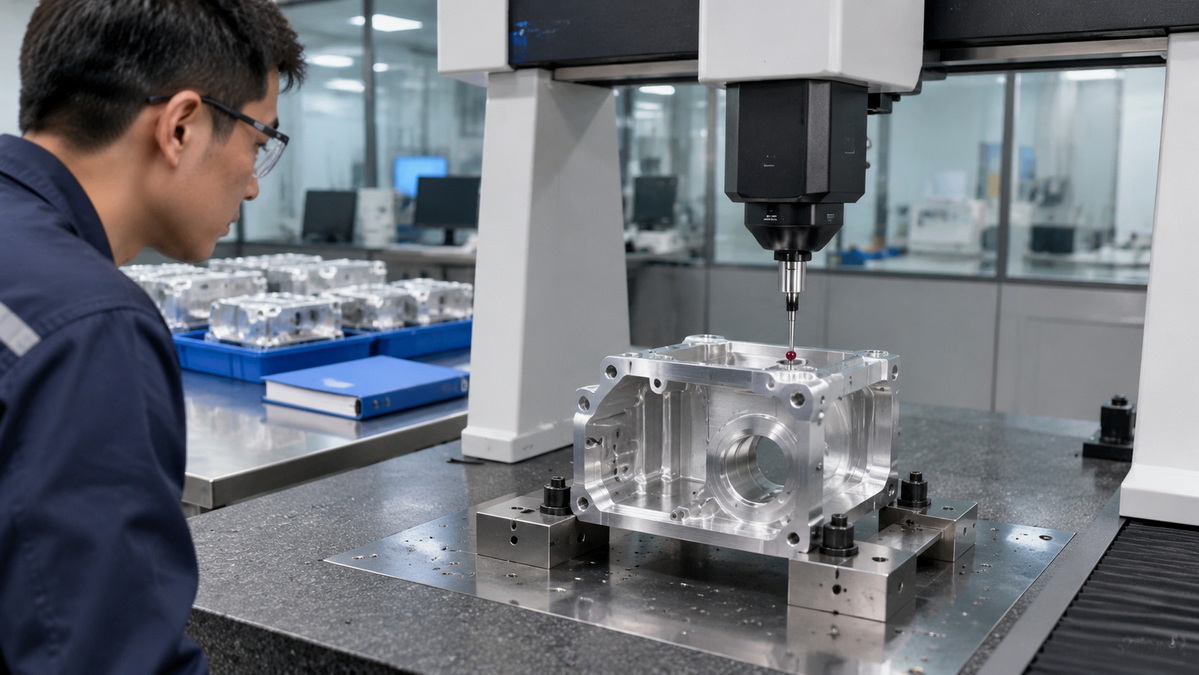
Several suppliers in this guide operate in Dongguan, Shenzhen, or Zhongshan. Their published locations illustrate the concentration of export-oriented custom manufacturing businesses in Guangdong. U-Need specifically describes using Dongguan's manufacturing ecosystem to coordinate suppliers and multiple processes.
For buyers, the practical question is not simply whether a supplier is located in a manufacturing cluster. It is whether that supplier controls the interfaces between machining, heat treatment, finishing, inspection, and shipment.
A concentrated supply base can offer coordination opportunities. It can also create hidden subcontracting layers. Ask who performs each critical operation and who retains responsibility when a dimension changes after an external process.
The national industry figures provide a similar lesson. China's manufacturing scale supports a broad sourcing market, but it does not independently prove the capability of any individual factory.
Suppliers in this guide publish capabilities covering aluminum, stainless steel, titanium, copper alloys, engineering plastics, and specialty materials. DEK, for example, lists specific stainless grades and multiple PEEK formulations, demonstrating why a generic material description may be insufficient.
A procurement specification should therefore identify:
- The governing material standard and exact grade.
- Required temper, hardness, or heat-treatment condition.
- Approved substitutions, if any.
- Material documentation and lot traceability requirements.
- Any application-specific restrictions.
To reduce substitution risk, request material records linked to the production lot and agree on any additional verification before ordering. Do not assume that a generic certificate attached to a shipment establishes the identity of every component.
CE marking is not a general factory-quality certificate. The European Commission states that it applies only to products covered by legislation that specifically requires it; products outside those requirements must not be CE-marked.
Similarly, RoHS concerns restrictions on hazardous substances in electrical and electronic equipment within its scope. The European Commission identifies ten restricted substances. Whether a machined component needs supporting declarations or test evidence depends on its material, finish, application, and role in the finished equipment.
For purchasing purposes:
- Verify the factory's management-system certificates separately.
- Determine the finished product's applicable legislation.
- Flow down relevant material and finishing requirements to suppliers.
- Specify the declarations and test reports required for your application.
An ISO 14001 certificate does not replace a part-specific material compliance declaration, and a RoHS statement does not establish dimensional capability.
Before paying a deposit, align the supplier's business license, quotation, contract, invoice, and payment beneficiary. Where a separate export entity is used, document that relationship.
Next, verify the actual manufacturing location. A video walkthrough or third-party visit should examine the proposed process, inspection area, material identification, and production records—not just a showroom or machine list.
Certificate verification should also cover the legal entity, site address, scope, and status. IAF CertSearch supports searches by company name or certificate details and provides information about validity and the accredited certification chain.
Send the same technical package to each supplier:
1. A revision-controlled drawing and matching CAD model.
2. Exact material and condition requirements.
3. Critical-to-function dimensions.
4. Surface treatment and cosmetic requirements.
5. Prototype, batch, and annual quantities.
6. Inspection, traceability, and documentation requirements.
7. Delivery destination and requested commercial terms.
Require suppliers to list exceptions explicitly. A quotation that silently assumes relaxed tolerances is not comparable with one that prices the full drawing.
A first article inspection should verify the agreed requirements before production release. Suppliers such as FLYcncpart and 3ERP describe first article inspection within their published quality workflows.
For your own approval process, request:
- A ballooned drawing and corresponding results.
- Material documentation.
- Confirmation of the manufacturing route.
- Identification of any sample-only rework.
- Functional checks where appropriate.
- Written approval before production changes.
Avoid approving a sample solely because it fits one assembly. Establish whether the measured characteristics and manufacturing method support repeat supply.
Ask the supplier and your freight or customs adviser to agree on:
- The selected Incoterm and named place.
- Customs classification and importer responsibilities.
- Packaging suitable for precision surfaces.
- Corrosion and moisture protection where required.
- Lot identification on packaging and documentation.
- Shipment release criteria.
- Nonconformance reporting and claim periods.
Do not let an attractive door-to-door freight quotation obscure responsibility for duties, customs clearance, damage, or rejected parts.
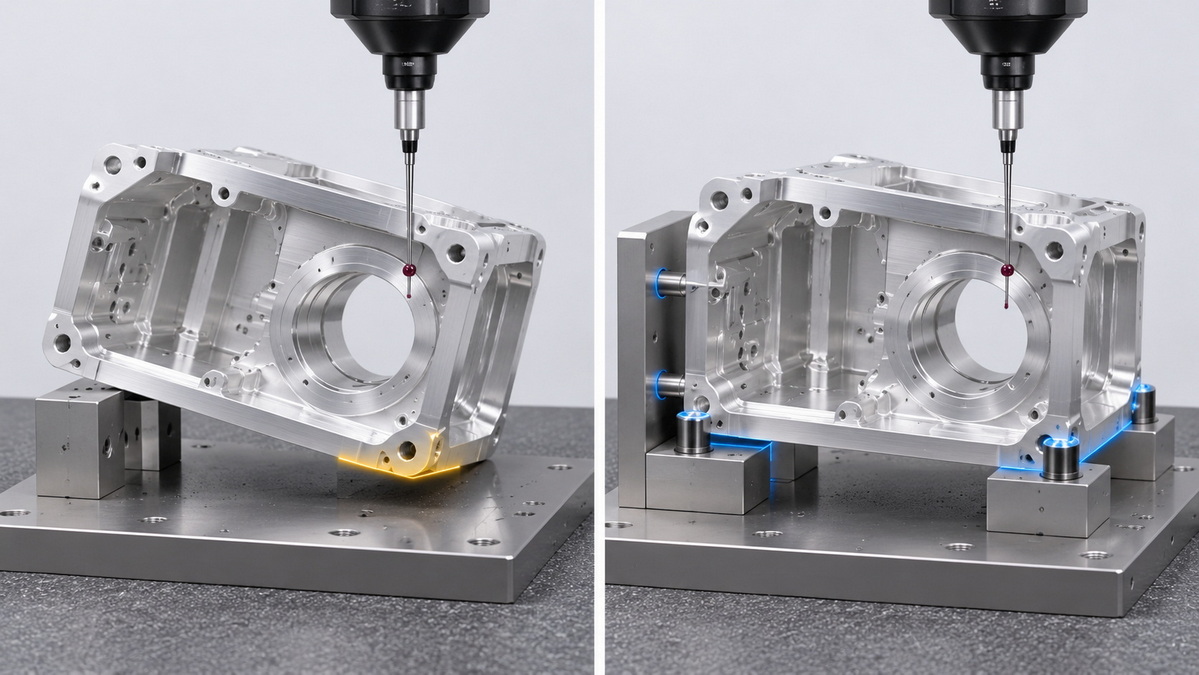
One of the most consequential close tolerance risks is not a visibly damaged part. It is a part accepted using a measurement setup that does not represent the drawing's intended datum structure.
Datums establish the reference framework for assessing geometric characteristics. NIST's work on datum systems explains that dimensions and geometric tolerances depend on these reference relationships. A measurement taken from a convenient surface can therefore answer a different question from the one posed by the drawing.
The practical safeguard is to agree on the inspection setup before production:
1. Identify the datum features.
2. Define how the part is supported or restrained.
3. Confirm which surfaces establish the alignment.
4. Agree on the method for evaluating critical geometry.
5. Retain the approved setup with the inspection plan.
Temperature is another potential source of disagreement. NIST identifies 20°C as the reference temperature for dimensional measurements and explains that thermal expansion contributes to measurement uncertainty. Parts measured under different thermal conditions can produce different results without either party deliberately misreporting them.
For tight features, record the inspection conditions and allow appropriate thermal stabilization. A report should describe how the result was obtained, not merely present a number.
The right close tolerance machining partner is the company that can connect your drawing to a credible process route, suitable measurement methods, traceable materials, and repeatable delivery.
This shortlist offers several distinct sourcing models. U-Need combines precision components with tooling and fabrication support; Anebon and Shangchen publish broad multi-process services; other suppliers provide different combinations of prototype expertise, production scale, digital coordination, and secondary precision processes. Their suitability must be established against your component—not inferred from list position.
For brands seeking flexible OEM support, U-Need is a practical candidate for technical evaluation because its published services span machining, mold development, and sheet metal fabrication, supported by a stated emphasis on responsive communication and custom development.
Send U-Need your drawing, material specification, critical tolerances, expected quantities, and inspection requirements. Request a manufacturability review, a clear process ownership breakdown, and a quotation that identifies what is included before proceeding to sample approval.
Obtain the complete certificate, not a cropped logo or screenshot. Check the company name, certificate number, standard, covered address, scope, issuing body, and dates.
Then verify the record through IAF CertSearch where applicable and through the issuing certification body. IAF CertSearch provides certificate validation and status information, including suspension, withdrawal, and expiry alerts. If a record cannot be located, investigate with the issuer rather than treating the absence alone as definitive proof of fraud.
No blanket assumption is justified. Supplier pages may advertise minimum achievable tolerances without establishing that they apply to every material, size, geometry, or production condition. Anebon, FLYcncpart, and DEK publish such capability figures, but these should be converted into a written, feature-specific commitment for your drawing.
Ask which dimensions require secondary processing, what inspection method will be used, and whether acceptance applies after all finishing operations.
First compare the drawing revision, datum alignment, support method, measurement locations, and thermal conditions.
A CMM report does not eliminate disagreement if the measurement setup differs. Datum definitions determine the geometric reference, while temperature and thermal expansion affect measured dimensions. Agree on a common method and, if necessary, use a mutually accepted independent laboratory.
An approved prototype establishes that the submitted sample met the agreed acceptance criteria. It does not, by itself, establish ongoing production consistency.
For qualification, require a pilot run using the intended process and an agreed inspection plan. Review first article, in-process, and final inspection evidence rather than relying only on the approved sample. Those stages are explicitly included in the published quality workflows of several suppliers in this guide.
Where statistical capability evidence is required, define the sampling plan and acceptance criteria before the pilot run rather than requesting a capability number without context.
No. CE marking is required only where applicable product legislation mandates it, and it must not be used on products outside those requirements. RoHS addresses electrical and electronic equipment within its scope, with component documentation depending on the application and applicable obligations.
Determine the regulatory requirements of the finished product first, then specify the supporting material and process documentation required from the machining supplier.
1.[German Machine Tool Builders' Association: Market Report 2025, published June 2026] — Industry production, international trade, and market context. The figures concern machine tools, not a separately measured close tolerance parts market. [vdw]
2.[IAF CertSearch] — Accredited management-system certificate verification. [iafcertsearch]
3.[European Commission: CE Marking Requirements] — Official guidance on when CE marking is required and permitted. [europa]
4.[European Commission: RoHS Directive] — Official information on restricted substances and regulatory scope. [environment.ec.europa]
5.[NIST: Dimensional Metrology and Calibration Questions] — Reference temperature and dimensional measurement considerations. [emtoolbox.nist]


