From 1 piece to mass production, our one-stop custom services ensure a worry-free experience for you.
Help Center

Geometric Dimensioning And Tolerancing

If you want to know more about the Geometric Dimensioning And Tolerancing, the following articles will give you some help. These news is the latest market situation, trend in development, or related tips of the Geometric Dimensioning And Tolerancing industry. More news about Geometric Dimensioning And Tolerancing, are being released. Follow us / contact us for more Geometric Dimensioning And Tolerancing information! Since its establishment, U-NEED has been adhering to the product and service concepts of “superior products”, “reasonable prices”, “punctual delivery” and “good reputation”. The products exported to Europe, America and Asia. U-NEED is firmly convinced that technological innovation is the lifeblood of enterprise development, quality of products and services is the core competitiveness of the enterprise. Service foremost and customer success is our endless pursuit!
  • Tight Tolerance CNC Machining Vs. GD&T Control: Which Features Need The Most Attention?
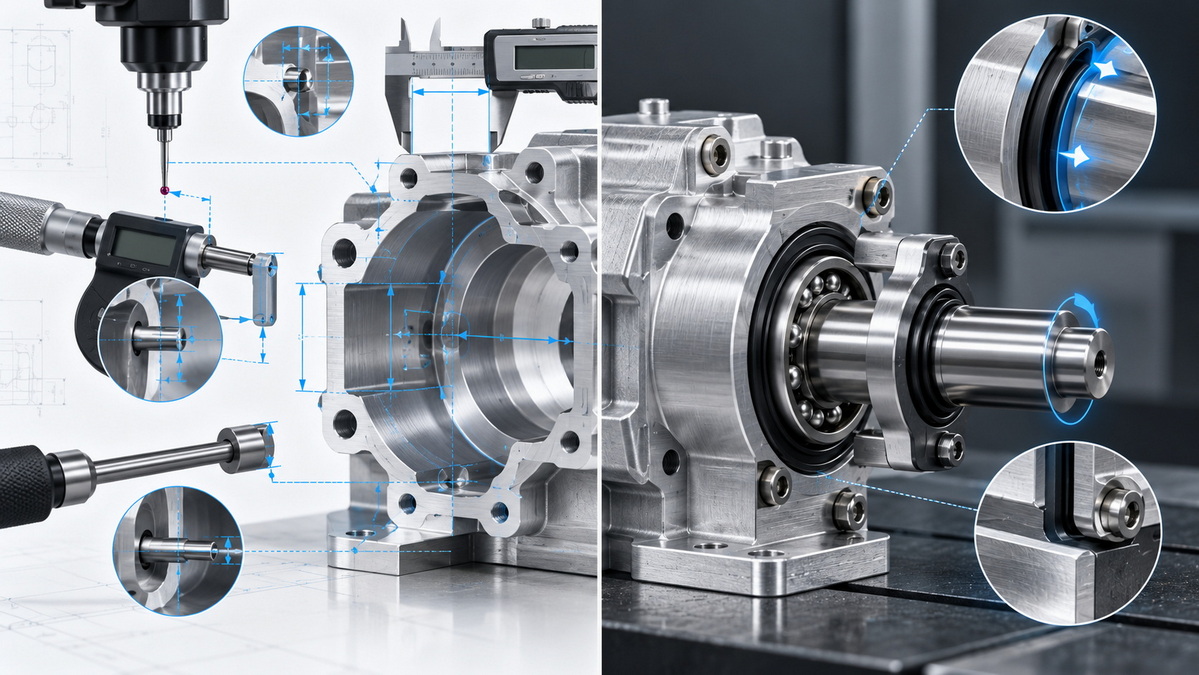
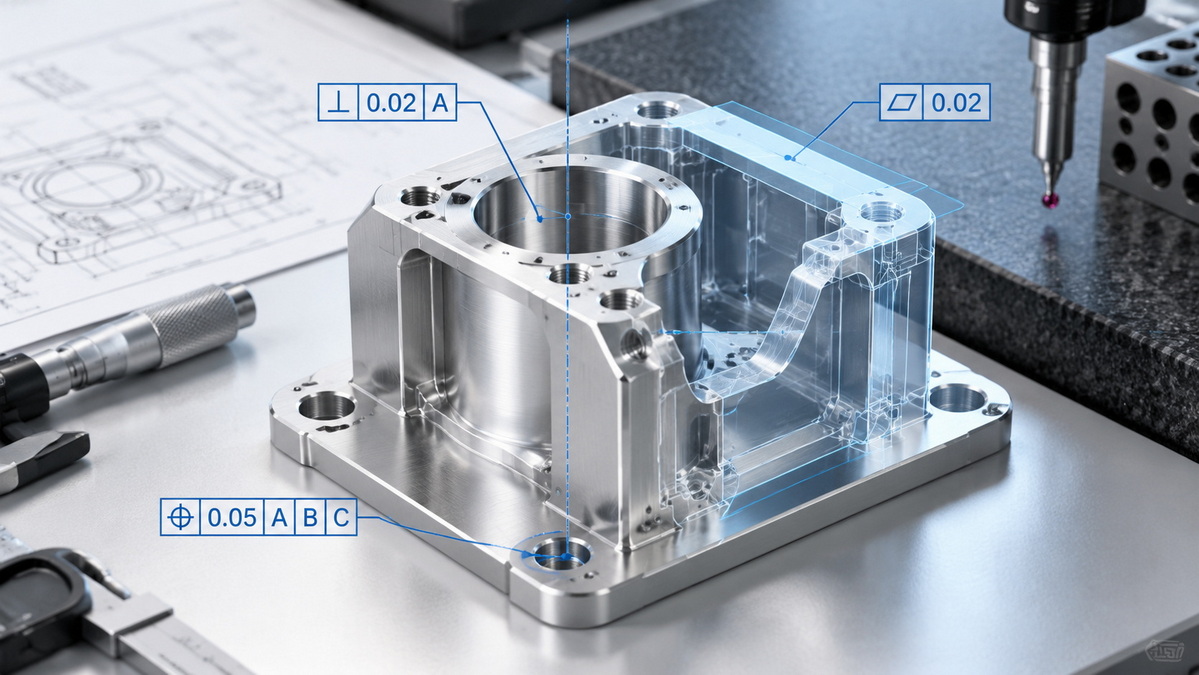
    Tight tolerance CNC machining and GD&T control serve different but closely connected purposes in precision manufacturing. Tight tolerances control the size of individual features, while GD&T controls the geometry and relationship between critical features. The features that require the most attention are usually mating holes, dowel holes, fastener patterns, datum surfaces, mounting faces, bearing bores, shaft journals, sealing surfaces, thin walls, deep pockets, and long slender components. The best design approach is to apply tight tolerances only where feature size matters and use GD&T where position, orientation, flatness, profile, or runout affects assembly and product performance. This reduces unnecessary cost while supporting consistent quality across prototypes and production parts.
    2026-10-06
  • Dimensional Tolerance Vs Geometric Tolerance in Precision CNC Parts What Is The Difference
    Understand the difference between dimensional tolerance and geometric tolerance in precision CNC machining. This guide compares size tolerance and GD&T controls, explains real-world applications, inspection methods, cost factors, and drawing-specification practices for reliable custom machined parts.
    2026-10-04
  • CNC Machining Tolerance Vs Part Function: How Tight Is Tight Enough?
    CNC machining tolerance should be selected according to part function, not simply by choosing the smallest possible number. Critical fits, sealing surfaces, moving interfaces, and alignment features may require tight control, while noncritical dimensions can remain more open. A function-based tolerance strategy reduces cost, improves inspection efficiency, supports reliable assembly, and helps precision parts perform consistently.
    2026-10-01
  • Tight Tolerance Machining Vs GD&T: What Should Be Specified on A CNC Drawing?
    Tight tolerance machining controls the allowable size variation of a feature, while GD&T controls a part’s geometry, orientation, location, form, profile, and rotational behavior. The most effective CNC drawings use tight tolerances for critical fits such as shafts, bores, seals, and press-fit features, then use GD&T to define how those features relate to functional datums and mating components. This approach improves manufacturability, inspection consistency, assembly reliability, and total production efficiency.
    2026-09-29
  • High-Tolerance CNC Precision Parts Vs Standard Parts: How Should Engineers Specify Tolerances?
    High-tolerance CNC precision parts are essential when dimensional accuracy directly affects fit, sealing, alignment, motion, safety, and product performance. Standard parts are more suitable for non-critical features that allow broader manufacturing variation. This guide compares both approaches, explains why tight tolerances increase manufacturing cost, outlines practical tolerance-specification methods, and shows how datum selection, geometric controls, stack-up analysis, process selection, and inspection planning can improve manufacturability and assembly reliability.
    2026-09-24
U-Need Precision Machinery Co., Ltd.
  +86 0769 23225585
 +86 15916761371
  contact@uneedpm.com
  Room 401-1, Building 4, SongHuZhiGu Research Center, No.6 Minfu Road, Liaobu Town, Dongguan City, Guangdong Province, China
523425

CAPABILITIES

RESOURCES

ABOUT

Subscribe
Copyright © U-Need Precision Machinery Co., Ltd. All rights reserved.     Privacy Policy  Sitemap