From 1 piece to mass production, our one-stop custom services ensure a worry-free experience for you.
Help Center

News and Events

  • Electrical Discharge Machining EDM A Practical Guide To Precision Manufacturing
    Electrical Discharge Machining (EDM) is a high-precision process used to manufacture complex metal parts, hardened tooling, molds, dies, narrow slots, deep cavities, and micro-holes. This guide explains how EDM works, compares wire EDM, sinker EDM, and EDM hole drilling, and helps manufacturers select the right process for precision components and tooling projects.
    2026-10-09
  • Precision CNC Machining Vs. Over-Tolerancing: Can Tighter Tolerances Increase Cost Without Improving Performance?
    This article explains the difference between precision CNC machining and over-tolerancing. It shows why tighter tolerances can increase machining cost, inspection time, lead time, and scrap risk without improving product performance. It also provides practical guidance on GD&T, tolerance stack-up, functional datums, supplier communication, and cost-effective precision manufacturing.
    2026-10-08
  • CNC Machined Drone Parts: A Practical Guide To Precision UAV Components, Materials, And DFM
    CNC machined drone parts support the precision, durability, lightweight performance, and repeatable assembly required by modern UAV systems. This guide explains common machined drone components, material selection, CNC machining versus 3D printing, vibration control, design-for-manufacturability principles, and scalable manufacturing options. Learn how U-Need supports custom CNC machining, injection molds, stamping dies, cold-forging dies, laser cutting, bending, stamping, and sheet metal fabrication for drone manufacturers worldwide.
    2026-10-07
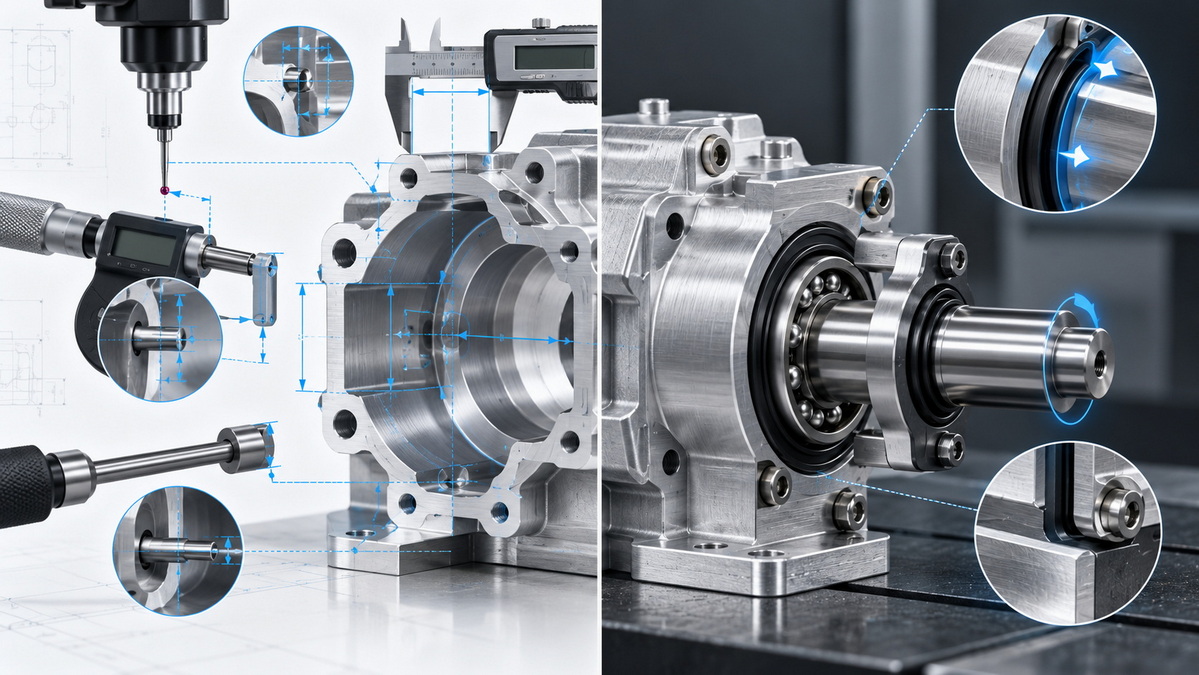
  • Tight Tolerance CNC Machining Vs. GD&T Control: Which Features Need The Most Attention?
    Tight tolerance CNC machining and GD&T control serve different but closely connected purposes in precision manufacturing. Tight tolerances control the size of individual features, while GD&T controls the geometry and relationship between critical features. The features that require the most attention are usually mating holes, dowel holes, fastener patterns, datum surfaces, mounting faces, bearing bores, shaft journals, sealing surfaces, thin walls, deep pockets, and long slender components. The best design approach is to apply tight tolerances only where feature size matters and use GD&T where position, orientation, flatness, profile, or runout affects assembly and product performance. This reduces unnecessary cost while supporting consistent quality across prototypes and production parts.
    2026-10-06
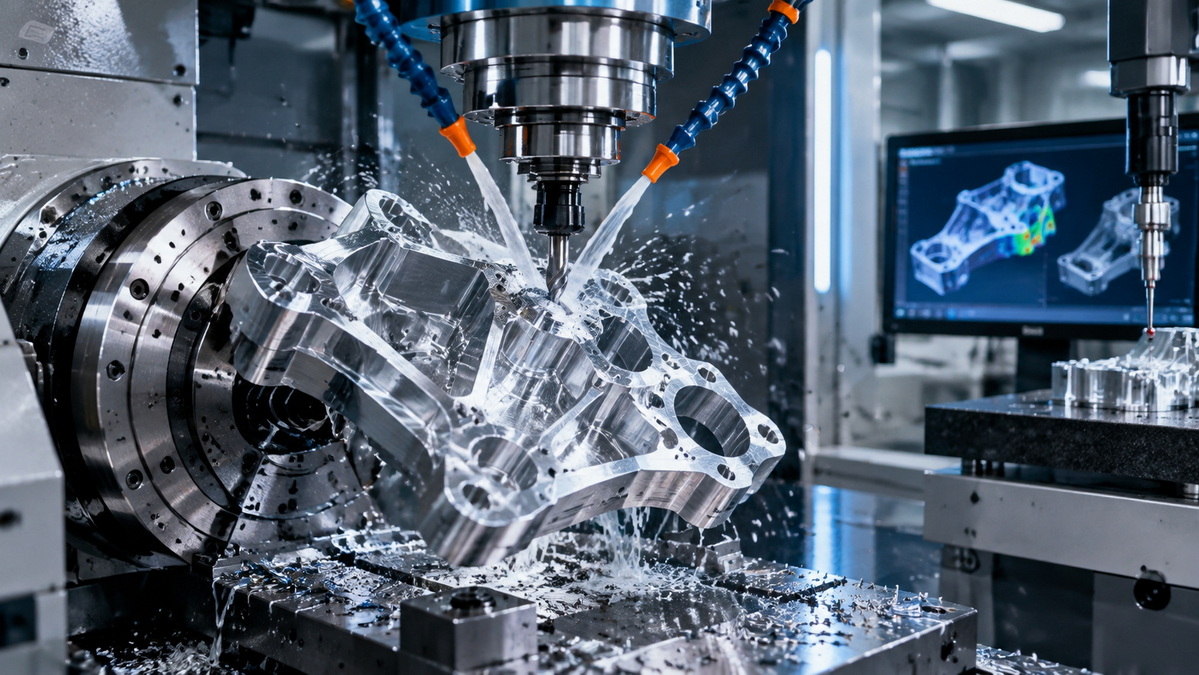
  • What Is 5-Axis CNC Machining? A Complete Guide To Complex Precision Parts
    Learn what 5-axis CNC machining is, how it works, and when it is the best choice for complex precision parts. This guide compares 3-axis, 4-axis, 3+2, and simultaneous 5-axis machining, explains major benefits and applications, and provides practical guidance for preparing a successful CNC machining project with U-Need.
    2026-10-05
  • Dimensional Tolerance Vs Geometric Tolerance in Precision CNC Parts What Is The Difference
    Understand the difference between dimensional tolerance and geometric tolerance in precision CNC machining. This guide compares size tolerance and GD&T controls, explains real-world applications, inspection methods, cost factors, and drawing-specification practices for reliable custom machined parts.
    2026-10-04
  • Top 10 Aluminum CNC Machining Services Companies in China (2026 Updated Expert Selection Guide)
    This 2026 guide reviews 10 notable aluminum CNC machining service companies in China for global procurement teams. Compare manufacturing capabilities, quality systems, order flexibility, aluminum-material expertise, production support, and sourcing risks before selecting a long-term supplier.
    2026-10-03
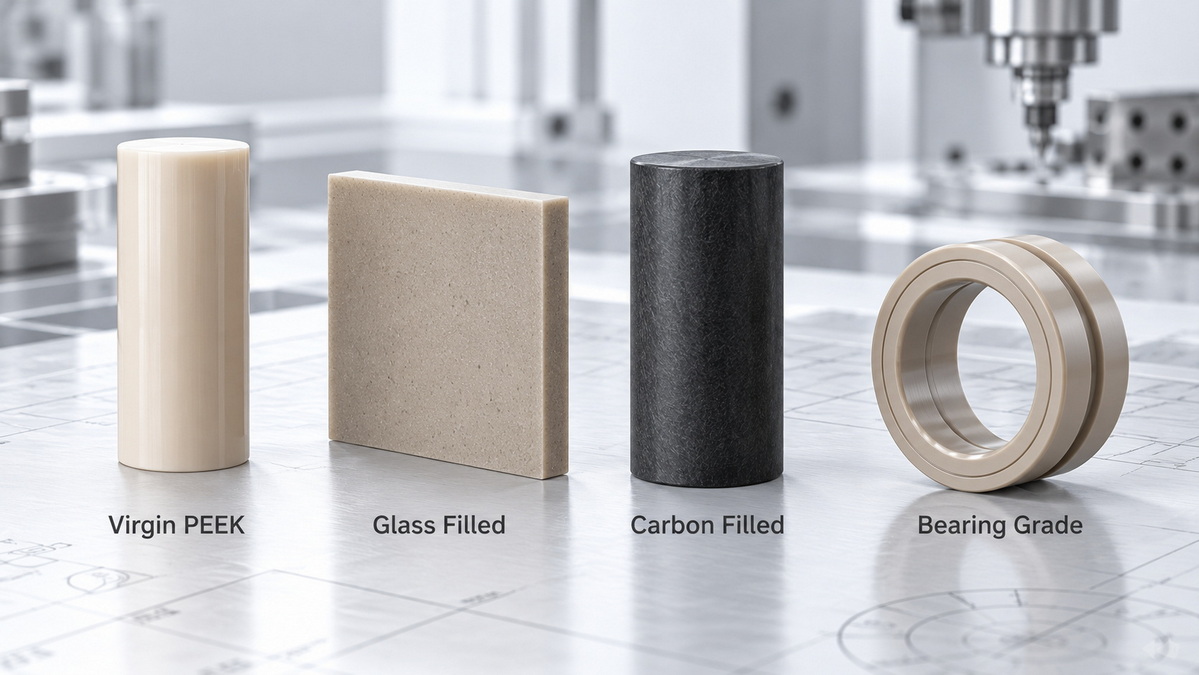
  • Machining PEEK: A Practical Guide To Precision CNC Parts, Tolerances, And Design for Manufacturability
    This article explains how precision PEEK machining supports high-performance components for medical, aerospace, semiconductor, oil and gas, automotive, and industrial applications. It covers PEEK material characteristics, common grades, annealing, CNC machining methods, achievable tolerances, design guidelines, common defects, and practical manufacturing considerations.
    2026-10-02
  • CNC Machining Tolerance Vs Part Function: How Tight Is Tight Enough?
    CNC machining tolerance should be selected according to part function, not simply by choosing the smallest possible number. Critical fits, sealing surfaces, moving interfaces, and alignment features may require tight control, while noncritical dimensions can remain more open. A function-based tolerance strategy reduces cost, improves inspection efficiency, supports reliable assembly, and helps precision parts perform consistently.
    2026-10-01
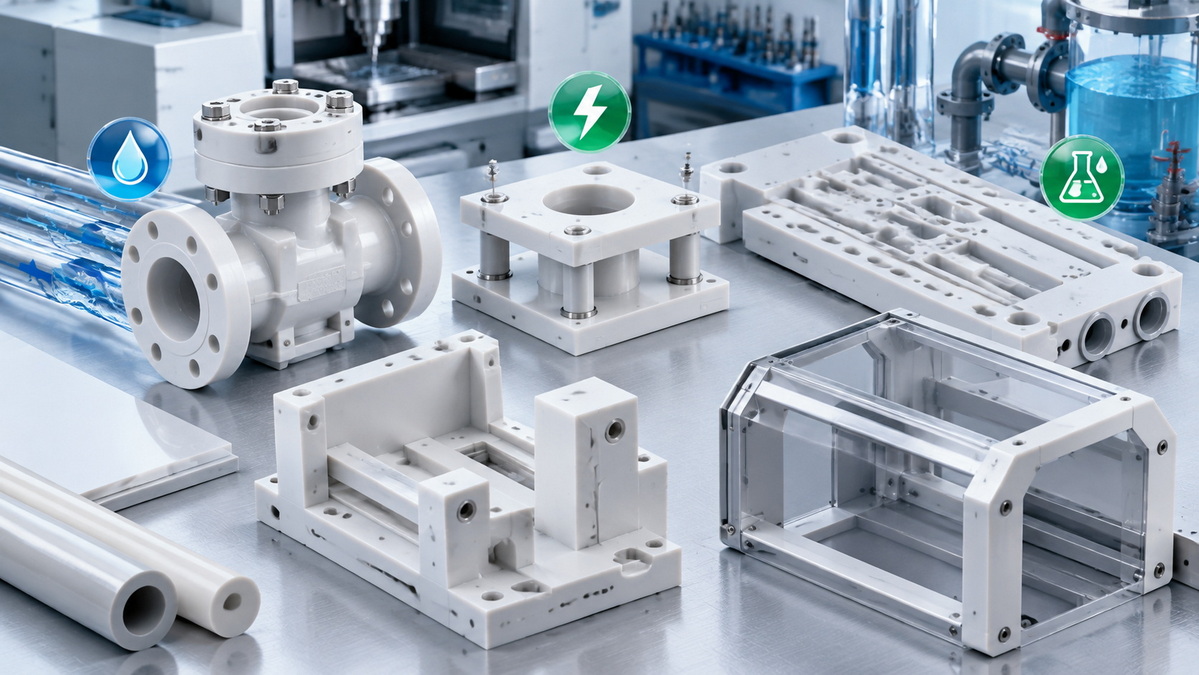
  • CNC Machining PVC: A Practical Guide To Precision, Quality, And Cost Control
    This guide explains how to CNC machine PVC for reliable industrial components. It covers PVC material properties, grade selection, heat control, sharp-tool requirements, chip evacuation, workholding, drilling, milling, turning, tolerances, common machining defects, design guidelines, and manufacturing-method comparisons. It also outlines how U-Need supports custom PVC machining, mold manufacturing, precision metal parts, sheet-metal fabrication, laser cutting, bending, and stamping for integrated industrial projects.
    2026-09-30
  • Total 48 pages  Go to Page
  • Go
U-Need Precision Machinery Co., Ltd.
  +86 0769 23225585
 +86 15916761371
  contact@uneedpm.com
  Room 401-1, Building 4, SongHuZhiGu Research Center, No.6 Minfu Road, Liaobu Town, Dongguan City, Guangdong Province, China
523425

CAPABILITIES

RESOURCES

ABOUT

Subscribe
Copyright © U-Need Precision Machinery Co., Ltd. All rights reserved.     Privacy Policy  Sitemap