From 1 piece to mass production, our one-stop custom services ensure a worry-free experience for you.
Help Center

Tight Tolerance CNC Machining

If you want to know more about the Tight Tolerance CNC Machining, the following articles will give you some help. These news is the latest market situation, trend in development, or related tips of the Tight Tolerance CNC Machining industry. More news about Tight Tolerance CNC Machining, are being released. Follow us / contact us for more Tight Tolerance CNC Machining information! Since its establishment, U-NEED has been adhering to the product and service concepts of “superior products”, “reasonable prices”, “punctual delivery” and “good reputation”. The products exported to Europe, America and Asia. U-NEED is firmly convinced that technological innovation is the lifeblood of enterprise development, quality of products and services is the core competitiveness of the enterprise. Service foremost and customer success is our endless pursuit!
  • Tight Tolerance CNC Machining Vs. GD&T Control: Which Features Need The Most Attention?
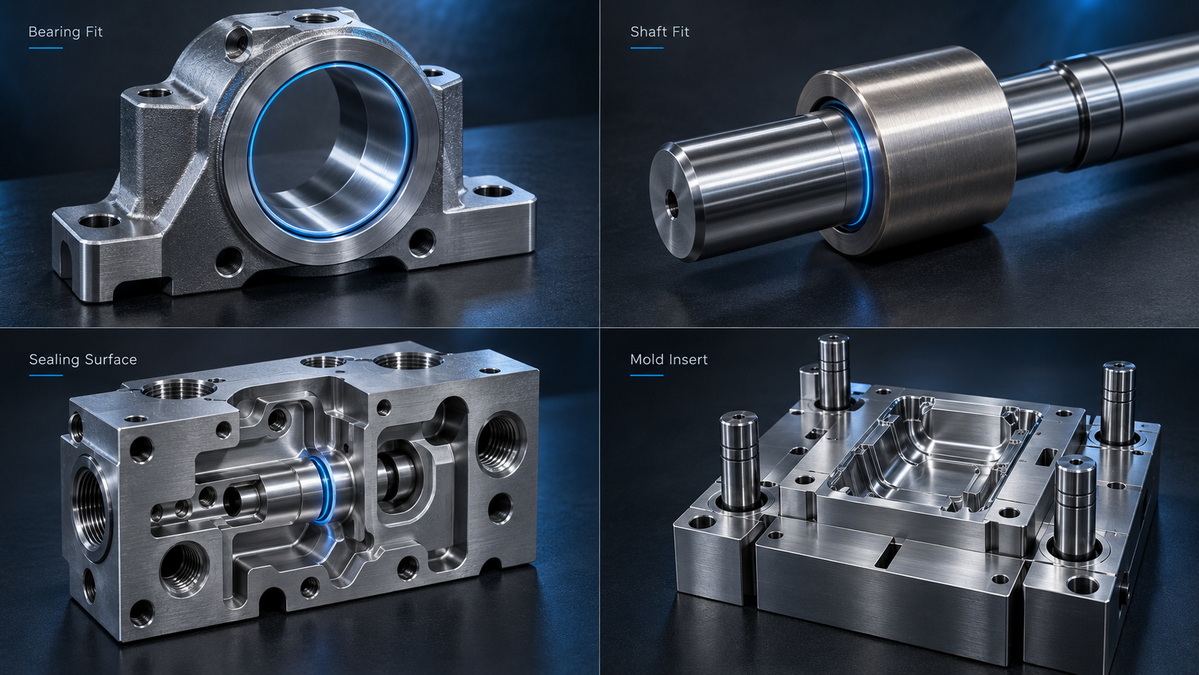
    Tight tolerance CNC machining and GD&T control serve different but closely connected purposes in precision manufacturing. Tight tolerances control the size of individual features, while GD&T controls the geometry and relationship between critical features. The features that require the most attention are usually mating holes, dowel holes, fastener patterns, datum surfaces, mounting faces, bearing bores, shaft journals, sealing surfaces, thin walls, deep pockets, and long slender components. The best design approach is to apply tight tolerances only where feature size matters and use GD&T where position, orientation, flatness, profile, or runout affects assembly and product performance. This reduces unnecessary cost while supporting consistent quality across prototypes and production parts.
    2026-10-06
  • Close Tolerance Machining Vs General Machining: Which Parts Actually Need It?
    Close tolerance machining is essential for features that control fit, motion, sealing, alignment, and reliability, including bearing seats, shafts, valve bores, precision mold components, and press-fit interfaces. General machining is more cost-effective for non-critical surfaces, brackets, covers, structural parts, and clearance features. The most efficient manufacturing strategy is to apply precision only where it protects product function and use practical tolerances everywhere else.
    2026-09-22
  • Tight Tolerance CNC Machining Vs Loose Tolerance Machining: How Does Tolerance Affect Cost?
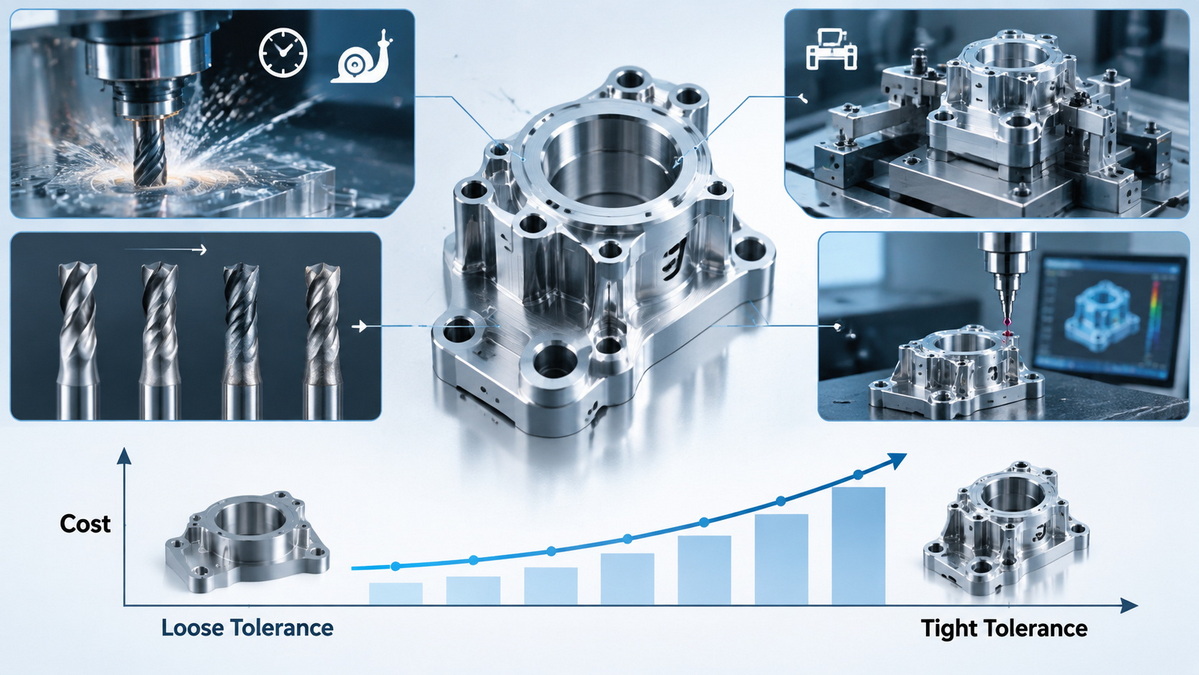
    Learn the difference between tight tolerance CNC machining and loose tolerance machining, including how tolerance affects machining cost, production time, inspection, scrap risk, material selection, and part performance. Explore practical tolerance strategies for bearing bores, sealing surfaces, shafts, molds, industrial equipment parts, and sheet metal components.
    2026-09-20
  • Understanding CNC Machining Tolerances: How U-Need Helps You Design for Real-World Precision
    Learn how CNC machining tolerances affect part accuracy, cost, and reliability—from standard ranges to ultra‑precision levels. Discover key design principles, cost drivers, and how U‑Need achieves micrometer‑level accuracy for demanding applications.
    2026-04-22
U-Need Precision Machinery Co., Ltd.
  +86 0769 23225585
 +86 15916761371
  contact@uneedpm.com
  Room 401-1, Building 4, SongHuZhiGu Research Center, No.6 Minfu Road, Liaobu Town, Dongguan City, Guangdong Province, China
523425

CAPABILITIES

RESOURCES

ABOUT

Subscribe
Copyright © U-Need Precision Machinery Co., Ltd. All rights reserved.     Privacy Policy  Sitemap